Lysosomal Storage Diseases
 Call Kai
 Learn
Learn Practice Test
 Spaced Repetition
 Match
Match Flashcards
 Knowt Play
1/66

There's no tags or description
Looks like no tags are added yet.
Name | Mastery | Learn | Test | Matching | Spaced | Call with Kai | Chat |
|---|
No analytics yet
Send a link to your students to track their progress
67 Terms
Lysosomes
- An organelle containing digestive enzymes that breakdown numerous biological structures

What can lysosomes breakdown?
- Proteins
- Nucleic Acids
- Carbohydrates
- Lipids
How do Lysosomal Storage diseases occur in general?
- Someone is born with the absence of one of the lysosomal enzymes → inability to breakdown complex molecules → accumulation → diseases
What is the inheritance of most lysosomal storage diseases?
- Autosomal recessive
Is there a known treatment/cure for Lysosomal Storage Diseases?
- Most have no treatment or cure
Sphingosine
- Long chain amino alcohol
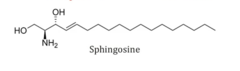
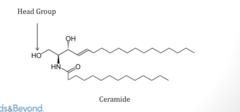
What happens when a fatty acid is added to the amino (NH2) of Sphingospine?
- Becomes ceramide

Sphingolipids
- Lipids (FAs) with a sphingosine backbone: ceramide, sphingomyelins, glycosphingolipids, gangliosides

Most of the accumulation that occurs in lysosomal storage disorders are what?
- Ceramide derivatives (all of them sphingolipids)
Ceramide Derivatives
- Occur when a "head group" is added to the OH on ceramide
- Important structures for nerve tissue
Key Ceramide Derivatives
- Glycosphingolipids
- Sulfatides
- Ganglioside
What happens when Ceramide derivatives are unable to be broken down?
- They accumulate in the liver/spleen → disease
Fabry's Disease: Deficiency and Accumulation
- D: α-Galactosidase A
- A: Ceramide Trihexoside
Fabry's Disease: Inheritance
- X-linked recessive
Unique bc/ most diseases are AR
Fabry's Disease: Symptoms
- Slowly progressive symptoms, beginning early childhood
- Neuropathy: Pain in hands/feet
- Angiokeratomas: Small dark, red/purple raised spots from dilated Surface Capillaries on skin
- Decreased sweat

Fabry's Disease: What organs does it effect?
- Renal: Proteinuria, Renal failure
- Cardiovascular: L Ventricular Hypertrophy, Heart Failure
- CNS: TIA/Stroke at early age
Fabry's Disease: Dx and Treatment
- Dx: Often misdiagnosed initially d/t subtly of symptoms
- Tx: Enzyme replacement → recombinant galactosidase
Fabry's Disease: Classic Case
- Child w/ pain in hands/feet
- Lack of sweat
- Skin findings
What is the most common lysosomal storage disease?
- Gaucher's Disease
Gaucher's Disease: Deficiency and Accumulation
- D: Glucocerebrosidase
- A: Glucocerebroside
Gaucher's Disease: Inheritance
- Inheritance: AR
Where do the lipids in Gaucher's disease accumulate?
- Spleen
- Liver
- Bones
Gaucher's Disease: Presentation
- Hepatosplenomegaly
- Easy bruising form low platelets
- Avascular necrosis of joints (joint collapse)
- Rarely: Gaze plasy, dementia, ataxia
Gaucher Cell
- Macrophage filled with sphingolipids (looks like crinkled tissue paper)

Gaucher's disease: What occurs in bones
- Severe bone pain due to bone infarction → d/t gaucher cells in intramedullary space
Gaucher's Disease Type I: Presentation
- Presents from childhood → adult
- Minimal CNS dysfunction
- Hepatosplenomegaly, bruising, anemia, joint problems
Gaucher's Disease Type I: Treatment
- Enzyme replacement therapy: Synthetic Glucocerebrosidase → relief from many symptoms → normal lifespan possible
Gaucher's Disease Type II: Presentation
- Presents in infancy with marked CNS symptoms
- Death < 2 years
Gaucher's Disease Type III: Presentation
- Childhood onset
- Progressive dementia
- Shortened lifespan
Gaucher's disease: Classic Case
- Child of Ashkenazi Jewish Descent
- Splenomegaly on exam
- Anemia, Bruising
- Joint pain/fractures
Sphingomyelin
A sphingophospholipid containing a sphingosine backbone and a phosphate head group.
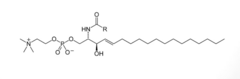
Neimann-Pick Disease: Deficiency and Accumulation
- D: Acid Sphingomyelinase
- A: Sphingomyelin
Neimann-Pick Disease: Presentation
- CHERRY RED SPOT IN BACK OF EYE
- Hepatosplenomegaly WITH neurologic defects (Differs from Gaucher's)
- Progressive neuro impairment → loss of motor skills (as sphingolipids accumulate)

Neimann-Pick Disease: Pathology
- Foam Cells: Large macrophages with lipids; found in spleen/bone marrow

Severe Neimann-Pick Disease: Prognosis
- Death
Neimann-Pick Disease: Classic Case
- Previously healthy child presenting with weakness/loss of motor skills
- Enlarged liver/spleen
- Cherry red spot in macula
Krabbe's Disease: Deficiency and Accumulation
- D: Galactocerebrosidase
- A: Galactocerebroside
Galactocerebroside is a major component of what?
- Myelin → if unable to breakdown Galactocerebroside and it accumulates → neuro impairment
Krabbe's Disease: Presentation
- Developmental delay, floppy limbs, loss of head control
- Absent reflexes
- Optic Atrophy: Vision loss
- Fever w/out infection
Krabbe's Disease: Prognosis
- Death < 2 yrs
What is unique about Krabbe's Disease?
- There is no liver/spleen/bone marrow involvement which is common in other lysosomal diseases
Krabbe's Disease: Histology
- Globoid cells: Globe shaped cells, often more than one nucleus
- Found w/in neuronal tissue

Tay-Sachs Disease: Deficiency and Accumulation
- D: Hexoamidase A
- A: GM2 Ganglioside
Gangliosides
- Glycolipids with a head group composed of oligosaccharides with a terminal sialic acid (NANA) molecule.

Which Lysosomal Storage Diseases are more common in the Ashkenazi Jewish Population?
- Gaucher's
- Neimann-Pick
- Tay-Sachs
Tay-Sachs Disease: Classic Presentation
- 3-6 months in age (Jewish)
- Developmental delay
- Exaggerated startle response
- CHERRY RED SPOT
Tay-Sachs Disease: Prognosis
- Death in childhood
Tay-Sachs Disease: Pathology
- Lysosomes with onion skinning: circles inside lysosomes that look like the skin of an onion

Metrachromatic Leukodystrophy: Deficiency and Accumulation
- D: Arylsulfatase A
- A: Sulfatides
Sulfatides are a major component of what?
- Myelin
Metrachromatic Leukodystrophy: Presentation
- ~2 yrs of age (most common)
- Ataxia: Gait problems, falls
- Hypotonia: Speech problems
- Dementia can develop
Metrachromatic Leukodystrophy: Prognosis
- Most children do not survive childhood
Fabry's: Buzzwords
- Hand/feet pain
- ↓ Sweat
- Rash
Gaucher's: Buzzwords
- Spleen
- Anemia
- Bone fractures
Metrachromatic Leukodystrophy: Buzzwords
- 2 yrs old
- Ataxia
Neimann Pick: Buzzwords
- Older child
- Liver/spleen
- Cherry red spot
Tay-Sachs: Buzzwords
- Baby
- Cherry spot
- Ashkenazi
- No spleen involvement
Glycoaminoglycans
- An unusual dissacharide found in ground substance that attracts sodium and holds water
What are Glycoaminoglycans important for?
- Important structure in cartilage/ligaments/tendons
- Regulates water and electrolyte balance in connective tissues
Hurler's and Hunter's Syndrome: MOA and Dx
- MOA: Inability to breakdown heparan and derma tan (GAGs)
- Dx: Mucopolysaccarides in Urine
Hurler's Syndrome: Deficiency, Accumulation, and Inheritance
- D: α-L-iduronidase
- A: Heparin and dermatan sulfate
- I: Autosomal Recessive
Hurler's Syndrome: Presentation
- Face abnormalities, short stature
- Intellectual disability
- Hepatosplenomegaly
- Corneal clouding
- Ear/sinus infections
Hunter's Syndrome: Deficiency, Accumulation, and Inheritance
- D: Iduronate 2-Sulfatase
- A: Heparin and dermatan sulfate
- I: X-Linked Recessive
Hunter's Syndrome: Presentation
- No corneal clouding
- Behavioral problems/learning difficulty
- Aggressive
I-Cell Disease
- Absent enzyme marker in Golgi apparatus (mannose 6-phosphate); empty lysosomes
- Similar to hurler's in symptoms
Pompe's Disease: Deficiency and Accumulation
- D: α-Glucosidase
- A: Glycogen in lysosomes
Pompe's Disease: Symptoms and Prognosis
- Muscle weakness and cardiac failure
- Often death in infancy/childhood