M8: Renal and Urologic Disorders, Kidney Disorders, Dialysis, and Urinary Tract Infections
 Call Kai
 Learn
 Practice Test
 Spaced Repetition
 Match
 Flashcards
 Knowt Play
1/74

There's no tags or description
Looks like no tags are added yet.
75 Terms
glomerulus
urine formation occurs here
GFR → glomerular filtration rate, amount of blood filtered each minute by glomeruli, normal is 125 mL/min
tubules
regulate water/acid-base balance through ADH (antidiuretic hormone) for water balance, and aldosterone for reabsorption of Na and water and excretion of K
kidney hormones
RBC production → erythropoietin
BP regulation → renin-angiotensin-aldosterone system (RAAS)
Vit. D activation → needed for Ca balance
bladder
serves as reservoir for urine (does not absorb), 100-200mL is first desire to void, 300-500mL is functional capacity with a strong urge to void
normal UOP → 1-2L/day, about 8 voids/day
muscles help to retain/release urine (urination, micturition, voiding all mean same thing)
urinary age-related changes
GFR falls ~1 mL/min per year after age 35-40
less kidney reserve → higher risk of drug side effects
less compliant bladder → nocturia, incomplete emptying
(females) increased infections/incontinence
(males) enlarged prostate alters urinary flow
weaker thirst response → dehydration risk
anuria
UOP <50mL/day
oliguria
UOP <400mL/day
dysuria
painful/difficult urination
hematuria
blood in urine
nocturia
awakening at night to urinate
polyuria
large V of urine
urinalysis
ideally taken from first void in morning, examine w/in 1 hour, identifies COMPONENTS of urine
urine culture
clean catch/midstream collection (must clean urethral area, void small amount into toilet, then void directly into sterile container), identifies ORGANISMS present in urine
safety in bowel prep or contrast
avoid magnesium products (mag citrate, milk of mag) → hypermagnesemia
avoid sodium phosphate (fleet) enemas → hyperphosphatemia, kidney injury
check BUN, creatinine, eGFR before bowel prep
iodine-based contrast can cause kidney injury (prehydration w/ IV NS is most effective prevention
creatinine clearance
best approximation of kidney fxn, most closely approximates GFR (if CrCl is 60 mL/min, so if GFR)
normal value varies by sex/age and declines w/ age
`24 hour urine collection nursing actions
place signs in bathroom (alerts all staff of test in progress so everyone saves specimens)
have client void first thing in the morning then discard the specimen
collect all subsequent specimens for 24hrs
end w/ first voided specimen the following morning
maintain the collected urine on ice in a dark container
keep usual diet/activity during the collection
creatinine
normal → males 0.6-1.2 mg/dL, females 0.4-1.0 mg/dL (elevates w/ kidney disease), byproduct of muscle metabolism
blood urea nitrogen
aka BUN, 8-20 mg/dL (8-23 >60y/o), rises w/ dehydration, byproduct of protein breakdown
C. "Begin the collection after discarding the first voided urine."
A nurse is teaching a patient how to properly collect a 24-hour urine specimen. Which of the following instructions should the nurse include?
A. "Save the first urine sample and include it in the collection."
B. "Keep the urine container at room temperature during the collection period."
C. "Begin the collection after discarding the first voided urine."
D. "You may add toilet paper to the collection container if needed."
B. Dysuria and hematuria
A nurse is assessing a patient who reports painful urination and notices blood in the urine. Which combination of terms best describes the patient's symptoms?
A. Anuria and nocturia
B. Dysuria and hematuria
C. Polyuria and anuria
D. Nocturia and polyuria
acute kidney injury
aka AKI, rapid loss of renal fxn d/t damage to kidneys
KDIGO definition is any one of the following…
creatinine up 0.3 mg/dL or more w/in 48hrs
creatinine 1.5x baseline or more w/in 7 days
UOP <0.5mL/kg/hr for more than 6hrs
some causes of AKI are reversible if identified/treated quickly (hypovolemia, HOTN, reduced CO, obstruction)
AKI categories
pre-renal → d/t hypoperfusion
intra-renal/intrinsic → actual damage to kidney tissue, acute tubular necrosis (ATN)
post-renal → obstruction
AKI phases
initiation → injury to kidney occurs
oliguria → UOP <400mL/day (0.5mL/kg/hr over 6hrs)
diuresis → gradual increase in UOP, GFR starts recovering, observes closely for dehydration, strict I&O
recovery → kidney fxn improves, may take several months
clinical manifestations of AKI
CNS → lethargy, drowsiness, headache, muscle twitching, seizures
renal → oliguria, anuria
uremia → fatigue to confusion, nausea/vomiting, pruritus, metallic taste in mouth
AKI assessment
lab values → urine studies, BUN, creatinine, GFR, electrolytes (Ca, P, K)
ultrasonography, non-contrast abdominal CT scan, cardiac monitoring/telemetry
AKI prevention
high mortality rate (10-80%) depending on patient
risk factors to assess for include nephrotoxic agents, environmental toxins, contrast induced AKI, older age, diabetes, pre-existing kidney disease (AKI on CKD)
AKI management
dependent on cause/contributing factor
maintenance IV fluids, blood transfusions, albumin infusion (if hypovolemia is d/t low protein), reduced dosing (renal dosing) or discontinuation of nephrotoxic meds, dialysis
AKI electrolytes/nutrition
hyperkalemia w/ ECG ∆ → IV dextrose 50%, insulin, calcium (plan urgent dialysis)
w/o ECG ∆ → K binders
hyperphosphatemia → phosphate binders (sevelamer preferred)
high Na, K, P foods may be restricted
high protein, high calorie diet → avoid protein restriction
renal dietitian is essential
AKI nursing interventions
monitoring fluid/electrolyte balance (strict I&O, daily weights, dietary teaching)
promote pulmonary fxn
prevent infection
provide skin care
psychosocial support
B. Nausea, pruritus, and confusion
A nurse is assessing a patient with acute kidney injury. Which of the following symptoms are most indicative of uremia?
A. Increased appetite and insomnia
B. Nausea, pruritus, and confusion
C. Bradycardia and dry skin
D. Polyuria and weight gain
C. Review the patient’s renal function and adjust the dose if needed
A patient with AKI is prescribed gentamicin, a potentially nephrotoxic medication. What is the nurse’s priority action before administering the medication?
A. Check the patient’s blood pressure
B. Assess the patient’s respiratory rate
C. Review the patient’s renal function and adjust the dose if needed
D. Administer the full dose regardless of lab values
chronic kidney disease
progressive/irreversible loss of kidney fxn, inability to excrete metabolic waste products and water, affects all body systems
CKD pathophysiology
kidney damage or decrease in GFR lasting 3 months or more, albuminuria signals damage and worsens it over time, ESRD/ESKD is final phase of CKD
CKD risk factors
diabetes, HTN, CVD, advanced age, obesity
(diabetes and HTN cause 3 out of 4 new ESKD cases)
stages of CKD

CKD early signs
damage to kidneys may occur w/o s/s, no ∆ in UOP, as GFR decreases BUN and serum creatinine levels increase
uremia
serious, life-threatening clinical syndrome that occurs when damaged or failing kidneys can no longer filter waste products out of the bloodstream
kidney fxn decline causes multiple body system symptoms, GFR <15 mL/min
anemia of CKD
decrease in erythropoietin production d/t decreased kidney fxn
ESKD signs by system
neurologic → confusion, asterixis, restless legs, seizures
integumentary → pruritus, gray/bronze skin, ecchymosis
cardiovascular → HTN, edema, hyperkalemia, pericarditis
pulmonary → crackles, Kussmaul respirations
gastrointestinal → uremic fetor, metallic taste, N/V, GI bleeding
hematologic → anemia
musculoskeletal → bone pain, fractures, renal osteodystrophy
reproductive → decreased libido, infertiltiy
potassium balance in CKD
K elevated in CKD, most serious electrolyte disorder in kidney disease
>5.0 mEq/L; peaked T waves, dysrhythmias
phosphate balance in CKD
phosphate elevated in CKD
unable to eliminate → need phosphate binding medications
heart health in CKD
hyperlipidemia!
most patients w/ CKD die from CV disease
CKD diagnosis
GFR, eGFR (calculated from routine blood creatinine), creatinine clearance, urine albumin-to-creatinine ratio (albuminuria)
either abnormal for 3 months or more = CKD
CKD management
maintain kidney fxn & homeostasis
medications → phosphate binders, vit. D, antihypertensives, iron, ESAs
nutritional therapy → regulate protein intake, fluid intake, potassium & sodium
before dialysis regulate (limit) protein, on dialysis protein needs to rise
referral to renal dietitian is essential
dialysis initiation or pre-emptive renal transplant
high potassium foods
dried fruits (raisins, apricots), bananas, potatoes (both white and sweet), avocados, beans and legumes, tomatoes and tomato products, oranges and orange juice
CKD nursing interventions
maintain accurate intake & output records, emotional support, monitor v/s, monitor nutritional status, monitor lab values (BUN, Cr, GFR, electrolytes), educate patients regarding self-care
older adults and kidney disease
fewer nephrons → less able to handle fluid/electrolyte shifts
signs are vague → HF/dementia can mask kidney disease
community AKI is 2-3x hospital rate (dehydration risk → low thirst, bed rest, confusion, fasting or bowel prep)
polypharmacy → nephrotoxic drugs, doses not adjusted for kidney fxn
some choose conservative management and palliative care over dialysis
C. Increased blood urea nitrogen (BUN)
A nurse is reviewing the lab results of a patient with CKD. Which of the following findings is most consistent with this condition?
A. Elevated glomerular filtration rate (GFR)
B. Decreased serum creatinine
C. Increased blood urea nitrogen (BUN)
D. Decreased serum phosphate
C. “I can eat canned soup for convenience.”
A nurse is educating a patient with Stage 3 CKD about dietary modifications. Which of the following statements by the patient indicates a need for further teaching?
A. “I will limit foods high in potassium.”
B. “I should reduce my protein intake.”
C. “I can eat canned soup for convenience.”
D. “I will monitor my fluid intake daily.”
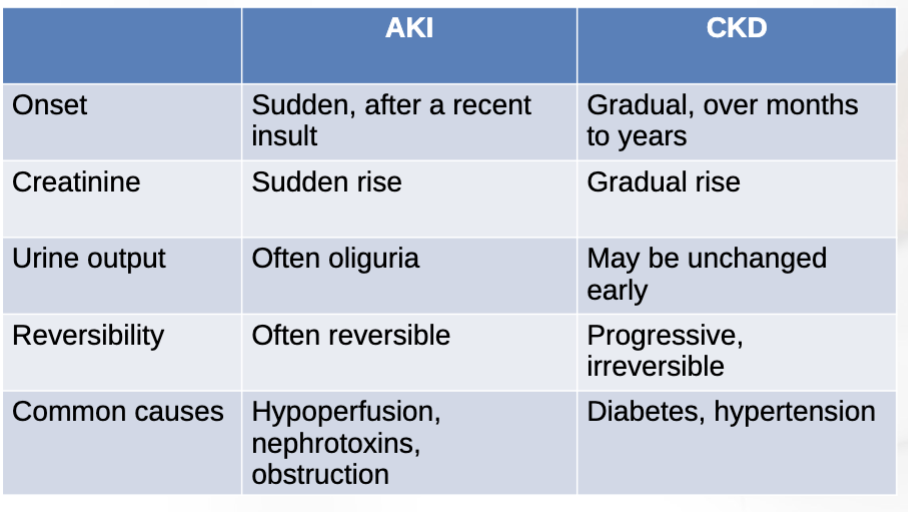
AKI vs. CKD
kidney replacement therapy
aka KRT; replaces kidney fxn when kidneys can no longer clear wastes, balance electrolytes, or regulate fluid
acute or chronic; options include hemodialysis, peritoneal dialysis, continuous kidney replacement therapy (CKRT), kidney transplant
dialysis methodology
wastes and extra fluids move from blood across semipermeable membrane into dialysis solution, corrects fluid/electrolyte imbalances, removes waste products
ESKD is usually treated w/ dialysis, transplant is treatment of choice when appropriate but organ shortage limits access
when to start dialysis
chronic → uremic symptoms no longer controlled w/ diet/meds (usually GFR <15mL/min or Stage 5)
urgent → rising K, fluid overload, worsening acidosis, pericarditis, advanced uremia (pericardial friction rub = urgent!)
decision shared by patient, family, nephrologist, team
hemodialysis
using the vascular system to filter the waste products out of the blood, can be short or long-term
access → AV fistula (attach artery and vein), AV graft (synthetic bridge btw artery and vein), temporary vascular access
AV access assessment
fistulas much less likely to clot than grafts
assess presence of thrill or bruit (indicates adequate blood flow)
assess color, sensation, motion (CSM)
notify provider w/ any change in patient condition
protecting the arm with AV access
NEVER perform BP measurement, IV line insertion, or venipuncture in an extremity w/ AV access
place signs on pt’s bed and label the wristband “No BP’s, blood draws, or IVs in this arm”
peritoneal dialysis
aka PD, peritoneal access is obtained by inserting a catheter through anterior abdominal wall (aseptic technique important to avoid peritonitis)
different approaches include continuous ambulatory peritoneal dialysis (CAPD, manual exchanges during the day) or continuous cyclic peritoneal dialysis (CCPD, cycler exchanges overnightthree phases )
fewer diet/fluid limits than HD, flexible schedule, not for pts w/ abdominal adhesions
three phases of PD cycle
inflow (fill), dwell (equilibration, osmotic agent = dextrose), drain (should be clear/light yellow)
cycle is repeated, going through all three phases is called an exchange
(warm dialysate fluid w/ dry heat, never microwave/soak in water)
complications of PD
exit site infection (ID/treat quickly), peritonitis (first sign → cloudy effluent; later signs → diffuse abdominal pain, rebound tenderness, fever; antibiotics, often intraperitoneal, for 14-21 days)
dialysis nursing care
monitor vascular access (assess for thrill/bruit over fistula/graft, no BP/IV/venipuncture in access arm!)
I&O
monitor uremic symptoms
monitor cardiac/respiratory status
control electrolytes & diet
manage pain & discomfort
monitor BP
prevent infection (HD catheter-bloodstream infection risk)
pharmacological considerations → renal dosing
fluids/diet patient teaching
daily weights → 1 kg gain = 1 L retained fluid
fluid allowance set by UOP, often ~1000-1500 mL/day
wt gain btw HD treatments → <4% of dry wt
Na ~2g/day; limit K and P foods (high P: dairy, nuts, seafood)
thirst → frequent oral hygiene
brief sessions, nonjudgmental tone, teach-back
b) Report the patient’s symptoms to the health care provider.
After the insertion of an arteriovenous graft in the right forearm, a patient reports pain and coldness of the right fingers. Which action should the nurse take?
a) Remind the patient to take a daily low-dose aspirin tablet.
b) Report the patient’s symptoms to the health care provider.
c) Elevate the patient’s arm on pillows above the heart level.
d) Teach the patient about normal arteriovenous graft function.
C. Thrill and bruit absent over the fistula site
A nurse is caring for a patient receiving hemodialysis. Which of the following findings should be reported to the healthcare provider immediately?
A. Weight loss of 2 kg after dialysis
B. Blood pressure of 100/60 mmHg
C. Thrill and bruit absent over the fistula site
D. Fatigue and nausea after treatment
B. Use sterile technique when connecting the catheter
Which of the following is a priority nursing action when initiating peritoneal dialysis?
A. Position the patient flat to promote drainage
B. Use sterile technique when connecting the catheter
C. Administer a diuretic before the procedure
D. Encourage the patient to void before starting dialysis
urinary tract infection
aka UTI, among most common bacterial infections (~60% of females and 12% of males have at least one UTI)
CAUTI → most common healthcare-associated infection
causes → most common pathogen is Escherichia coli (E. coli), with indwelling catheters (Proteus, Klebsiella, Pseudomonas, Staphylococcus)
UTI classification
location → upper (renal parenchyma, pelvis, ureters → pyelonephritis), lower (bladder → cystitis, urethra → urethritis)
systemic spread → urosepsis (life-threatening)
uncomplicated (normal urinary tract) or complicated (structural/functional problem, or catheter)
UTI pathophysiology
urinary tract above urethra normally sterile (defense mechanisms)
organisms from perineum ascend from urethra (contributing factors → instrumentation, sexual intercourse, diabetes(
hematogenous transmission → bloodborne, giving UTI to ourselves
CAUTI risk rises 3-7% each day a catheter stays in (prevention → avoid catheters, remove early, meticulous perineal care)
UTI clinical manifestations
lower UTI signs → burning on urination, frequency, urgency, nocturia, incontinence, suprapubic/pelvic pain, hematuria, cloudy/foul-smelling urine, back pain
upper urinary tract symptoms → chills, fever, fatigue, anorexia, leukocytosis, nausea, vomiting, back/flank pain, CVA tenderness
older adults → atypical presentation (delirium, new incontinence, malaise, nocturia, foul-smelling urine)
diagnosing UTIs
urine culture/sensitivity (before antibiotics)
UA dipstick for nitrites, WBCs, leukocyte esterase (pyuria = WBCs in urine)
culture also indicated → males, recent hospital/LTC stay, catheter, diabetes, 3+ UTIs/yr
UTI treatment
uncomplicated → patient teaching, adequate fluids, antibiotics for 3 days, consider risk for yeast infection
recurrent UTI → all of above, susceptibility testing, suppressive/prophylactic antibiotics, another 3-4 day course then nightly bedtime dose to prevent recurrence, cranberry capsules
pyelonephritis
kidney infection where bacteria ascend from bladder or spread through the blood (risks → obstruction from stones/BPH/strictures, reflux)
acute s/s → fever, chills, flank pain, CVA tenderness, N/V, lower UTI symptoms
diagnosis → urine culture/sensitivity, u/s or CT for obstruction
treatment → 2wks antibiotics, follow-up culture 2wks after
nursing care → I&O, 3-4L fluids/day unless contraindicated, temp q4h
chronic → repeated infections scar kidney, can lead to CKD
UTI prevention
health promotion, recognize at-risk pts
patient teaching → empty bladder regularly/completely, void after sex, evacuate bowel regularly, wipe front to back, adequate fluids, shower rather than bath, avoid irritants (coffee tea, soda, alcohol), cranberry juice
hospitalized patients → perineal hygiene
C. Obtain blood and urine cultures, then administer antibiotics
A nurse is caring for a patient admitted with pyelonephritis. The patient reports flank pain rated 7/10, has a temperature of 102.8°F, and is nauseated. The provider has written orders for IV antibiotics, IV fluids, antiemetics, and analgesics. Which intervention should the nurse implement first?
A. Administer the ordered antiemetic
B. Initiate IV fluid administration
C. Obtain blood and urine cultures, then administer antibiotics
D. Administer the ordered analgesic for pain
C. Emptying a urinary catheter drainage bag and recording output
A nurse is working with an experienced unlicensed assistive personnel (UAP) to care for patients on a medical-surgical unit. Which task related to UTI care can the nurse appropriately delegate to the UAP?
A. Teaching a patient how to collect a clean-catch urine specimen
B. Assessing a patient's suprapubic tenderness
C. Emptying a urinary catheter drainage bag and recording output
D. Evaluating whether a patient's UTI symptoms have improved