Reconstruction 26-27
 Call Kai
 Learn
 Practice Test
 Spaced Repetition
 Match
 Flashcards
1/25

There's no tags or description
Looks like no tags are added yet.
26 Terms
Reconstruction
1865-1877; the time period when the United States was trying to rebuild and repair after the Civil War
Southern Democrats
mostly former Confederates; they did not want the U.S. federal government involved in the affairs of the south; very opposed to giving former slaves civil rights
Radical Republicans
a group of Republicans who wanted to give former slaves full equality and civil rights immediately (

13th Amendment
Ended slavery in all states. 'Neither slavery nor involuntary servitude… shall exist within the United States…except as punishment for a crime.'

Convict leasing
for over 100 years, black people were victims of unfair trials and as convicts were put to work as unpaid laborers

Andrew Johnson
VP that became President after Lincoln was killed
Andrew Johnson's Plan
States can rejoin if they agree to end slavery; people who fought against the Union would be pardoned and their lands returned; very lenient towards former Confederates
Black Codes
Laws passed by former Confederates IMMEDIATELY after the Civil War to enforce White Supremacy and suppress former slaves
Radical Republican Reconstruction Plan
each state was required to form a new government without former Confederate leaders; Ratify the 14th Amendment, granting all people born in the US citizenship and equal protection under the law, ratify the 15th Amendment, giving black men the right to vote

Military Districts
PART OF THE RECONSTRUCTION ACTS. Congress had to divide the south into 5 military districts and send the army to occupy the area in order to ensure that former slaves were treated fairly.

Ku Klux Klan
organization that used intimidation and violence to suppress and control Black Americans by making them afraid to vote
14th Amendment
birthright citizenship: all persons born in the US are citizens and get equal protection under the law
15th Amendment
Guaranteed that black citizens had the right to vote
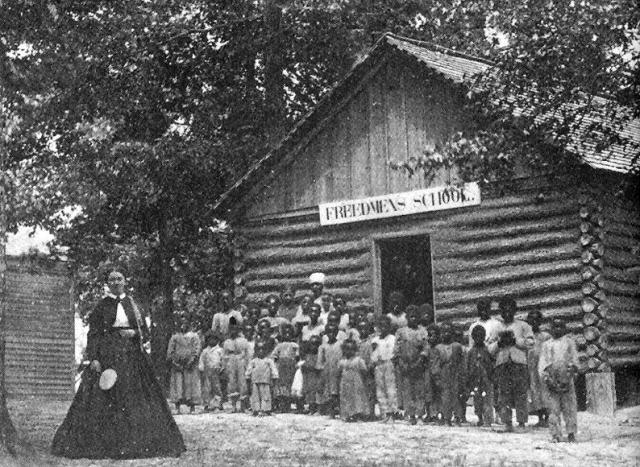
Freedman's Bureau
Government organization provided food housing clothes to formerly enslaved and poor white people who were left with nothing after the war; they also provided education

40 Acres and a Mule
General Sherman seized Confederate plantations and divided them into small plots, granting land and mules to formerly enslaved people to help them build independence and wealth. However, President Johnson later returned the land to former Confederate owners, stripping Black Americans of their hard-won property.


Sharecropping
people 'rent' and work land from a plantation owner; they pay their 'rent' in crops. unfair contracts, manipulation, and lying kept sharecroppers in a cycle of debt.
segregation
Separation of people based on racial, ethnic, or other differences

Compromise of 1877
A deal that settled the 1876 presidential election controversy, Republicans got to have their president (Hayes) in exchange for ending Reconstruction / removing federal troops from the South

Lincoln's Reconstruction Plan
VERY lenient; He died before it could be enacted : Once 10 percent of the eligible voters 1) swear an oath of loyalty to the United States and 2) agree that slavery was illegal
Plessy vs. Ferguson
a case that was brought to supreme court by black lawsuits to challenge the legality of segregation. The court ruled that segregation was legal as long as it was "equal"
Background: Homer Plessy basically Rosa-Parks-ed the train conductor. He, a man of African-American descent, was told to go to the “colored” train coach and he refused, taking it to court, but unfortunately lost.

Literacy Tests
way of denying African-Americans the vote in the South; tricky or unfair questions; literate African Americans still failed; white people were either exempt or given more help or more leniency; Black people were sometimes failed regardless of how well they did

Grandfather Clause
stated that anyone whose ancestor was an eligible voter was eligible to vote themselves. This allowed whites to avoid literacy tests. Former slaves' ancestors would not have been eligible to vote.
Examples of Black Codes
preventing former slaves from voting and forcing them to work on their former owner's plantation; controlling movement; forcing black children into indentured servitude
Jim Crow Laws
Segregation laws that came AFTER Reconstruction ended.

Poll Taxes
began after Reconstruction: required citizens to pay to vote; prevented the poor from voting; African Americans were more affected because they and their and their descendants hadn't acquired wealth yet
End of Reconstruction
Northerners were tired of Reconstruction and wanted to forget the Civil War. Compromise of 1877 officially ended Reconstruction.