Kantian Ethics
 Call Kai
 Learn
Learn Practice Test
 Spaced Repetition
 Match
Match Flashcards
 Knowt Play
1/53

There's no tags or description
Looks like no tags are added yet.
Name | Mastery | Learn | Test | Matching | Spaced | Call with Kai | Chat |
|---|
No analytics yet
Send a link to your students to track their progress
54 Terms
kant and duty

what are the problems with teleology

what does a priori mean
knowlegde which can be known through reason
what does a posteriori mean
knowledge based on senses and experience
kant bases morality on xxx knowledge
a priori
kant and reason
the thing that makes humans unique is our ability to reason
we all have reason so if we use it correctly we should all end up agreeing what is moral
reason and the moral law
there is an objective moral law which we can know through reason
morals are not connected to things like pleasure or situation but are universal - applicable to everyone and they do not change
if we follow our desires when making decisions we are n better than animals
what do kants views on reason and morality imply

good actions are done out of a good will
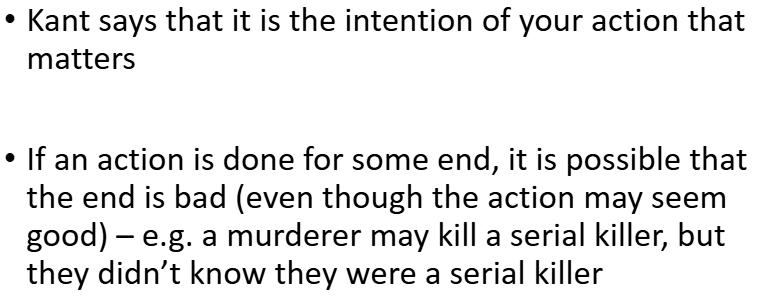
for kant what is good will
good without qualification
unconditional and intrinsically good
not good based on anything else
a good wills only motive is to ‘act for a sake of duty’
quote about good will being the only thing good without qualification


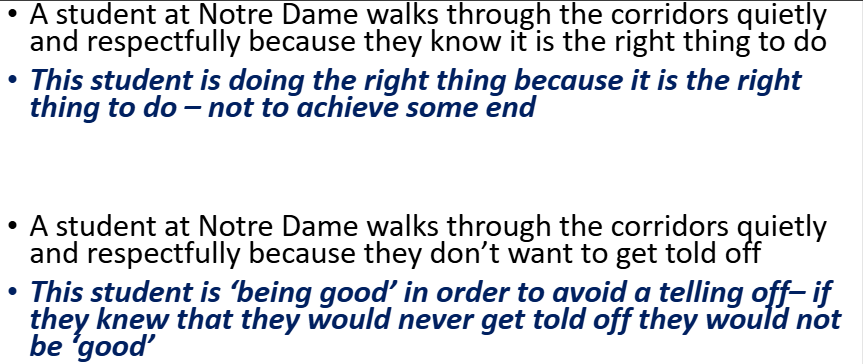
kants shopkeeper example
a shopkeeper keeps his prices the same for everyone so its fair but we cant assume hes doing this with good will/duty
why is the shopkeeper example not showing duty

what is deontology
the rightness or wrongness of action is determined by the action themselves
is kantian ethics deontological or teleogical
deontological
what is a maxim
the rule that we are following when we perform an action
what does imperative mean
a command - tells you what you ought to/should do
what is a categorical imperative
must be followed/not optional
they are followed because the action is intrinsically good for all
not got any personal reward or consequence
what is a hypothetical imperative
tells us what to do if we want something to happen
a command to achieve a desired result
example of a categorical/hypothetical imperative pair
do not lie (C)
do not lie if you want people to trust you (H)
what kind of ethical approach uses hypothetical imperatives
teleological
how do we work out what our duty is
we should devise a maxim based on the decision and then put it through tests (the three formulations)
if it fails one it is NOT moral
what are the three formulations
the formulation of the universal law
the formula of ends
the formula of the kingdom of ends
what is the formulation of the universal law

what is a contradiction to the law of nature

contradiction in the law of nature - suicide

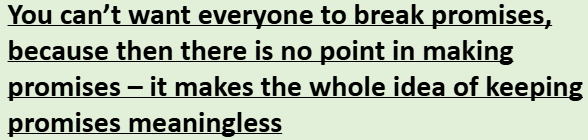
contradiction in the law of nature - making false promises
what is a contradiction in the will
a state of affairs would occur that no rational person could desire
contradiction in the will - neglected talents

contradiction in the will - helping others

what is the formula of the end in itself
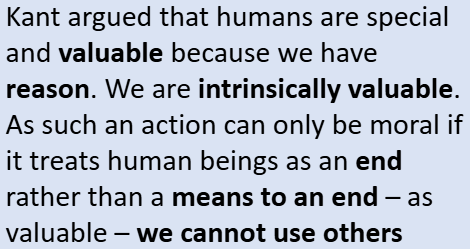
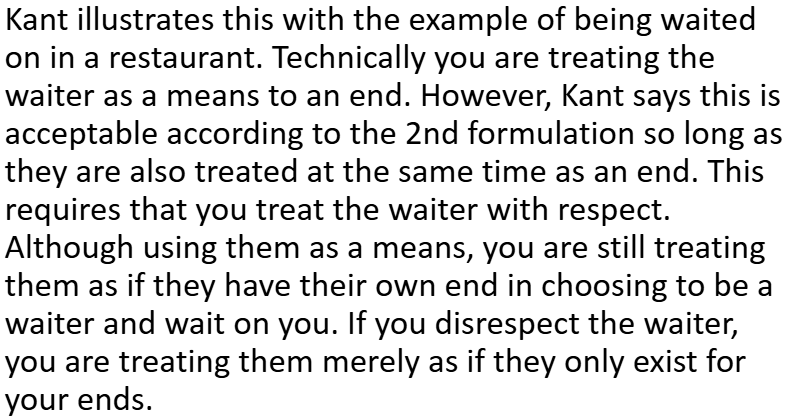
kants waiter example - formula of the end in itself
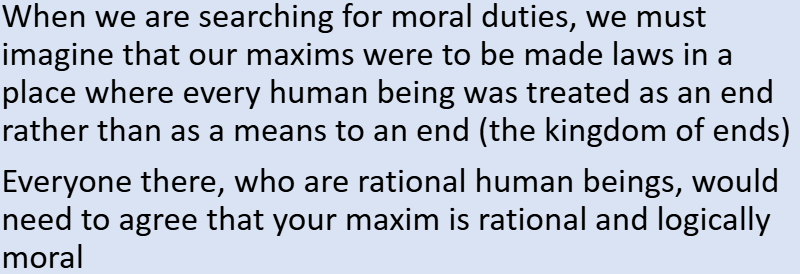
formula of the universal kingdom of ends
what is perfect duty
a duty which one must always do
we cannot add any expectation
what is imperfect duty
obligations to pursue general moral ends, but they allow flexibility in how and when they are fulfilled
axe man analogy

what are postulates
things that must be assumed for morality
what are the 3 postulates

ought….
implies can
postulate of freedom
it is essential that humans have free will
ought implies can
if a person is ought to do x the they must be able to do it
H.J Paton - are we truly free

kants suumum bonum

postulate of immortality

issue with the immortality and god postulate
does this not mean ultimately we do have a reward so we will never truly act on duty alone because we all want to be rewarded after death
postulate of god

what does kant think about his postulates

clash of duty response - jean paul satre
what do we do when there are two duties we are obliged to
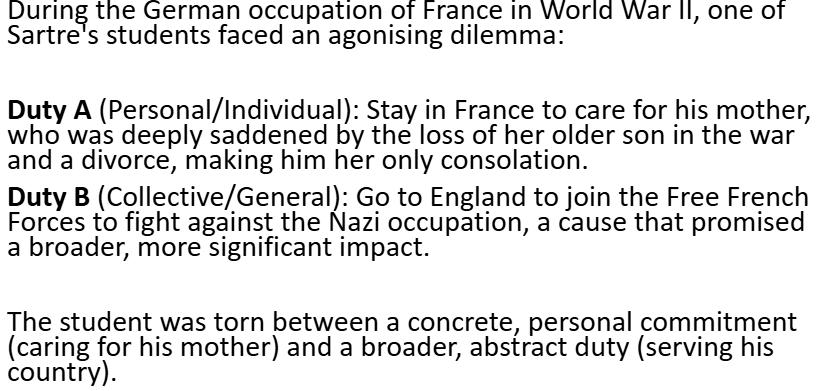
kants response to satre
these are both imperfect duties - both important but both have different ways of fulfilling them
hire a nurse and join the forces or stay and care for mother while working in a factory to support war effort
W.D. Ross’ approach

philipa foots response to kant
she argues what is missing from kants account is an adequate explanation of our motives and desires
only hypothetical imperatives can give us a reason to act but kants categorical imperatives takes no account of motives
she suggets we should not be conscripts forced to be virtuous but rather volenteers
J. Habermas’ response to Foot

humes response to kant
assumes all humans are capable of making rational decisions with being affected by emotions
assumes emotion is not as important as reason
reason should only serve the the desires and emotions of a human
basing morality purely on reason with no place for actions made because of sympathy or compassion is cold and inhumane - doesn’t fit with how humans live/act
hegels response to kant
he placed too low a value on special relationships
