Pellets, Extrusion and Pharmaceutical 3D printing
 Call Kai
 Learn
 Practice Test
 Spaced Repetition
 Match
 Flashcards
 Knowt Play
1/16

There's no tags or description
Looks like no tags are added yet.
17 Terms
Properties of pharmaceutical pellets
dense spherical agglomerates
0.5-1.5mm
Contain multiple drugs and excipients
Why are pharmaceutical pellets used ?
coated ones are used for modified release
Used to fill capsules or pressed into tablets
Can be administered directly
Possible to manufacture incompatibility ingredients in separate pellets - then incorporated into s single dosage form
They’re small and pass through the stomach quicker than tablets
What are some advanatages of their quick passage through the stomach ?
do not need to disintegrate
Better ability to pass through the pylorus intact
How are pellets and granules different ?
Pellets are larger
Pellets are commonly produced from granules - process called extrusion spheronisation
Making pellets
Granulation
Extrusion - granules made into a rod shape (like squeezing toothpaste)
Pelletisation - rough pellets made into cylindrical shape
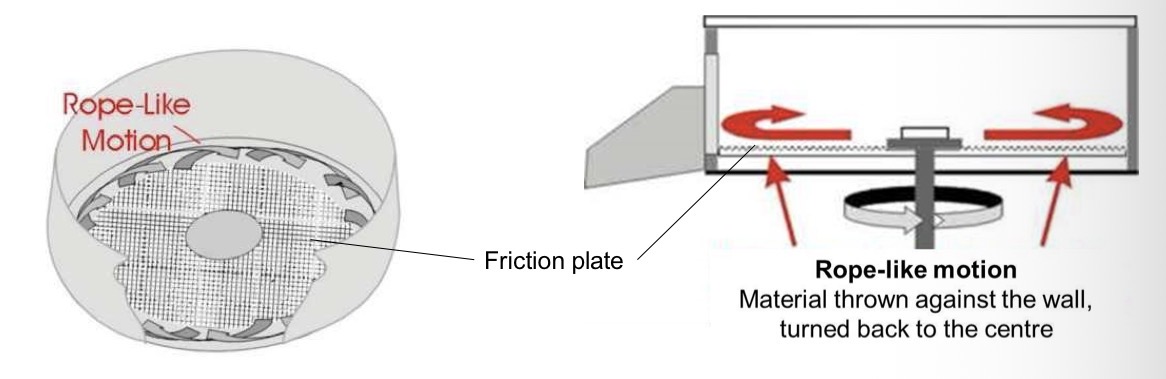
Spheronisation - pellets made spherical
Drying
Steps of extrusion
wet granules formed into agglomerates and then into long rods through an extruded

Steps of spheronisation

Mechanism of Spheronisation
plastic deformation
Break up of ‘dumb-bell’
Incorporation of fines
Difference between spheronised pellets vs crude granules
Spheronised pellets show;
greater density
Better flow properties
Lower friability
Narrower particle size distribution
More uniform packing
What does greater uniformity in particle properties lead to ?
Greater ease of handling
Easier and more uniform coating
Lower risk of dose dumping
More reproducible and predictable pharmacokinetic profile
Less irritation of the gator-intestinal tract
What are some important parameters for extrusion ?
Extruded screen design and extrusion speed - influence density and surface roughness of extrudate
Extrusion temperature - influence the wetness of the granulation mass
Properties of the feed material
Important parameters for spheronisation
spheronisation speed and mass of load
Momentum (mass x velocity) determines forces exerted on particles
Influences hardness, roundness, porosity, bulk and tapped densities, friability, flow properties and surface structure
Higher momentum generally leads to smaller and denser pellets
What other processes does extrusion influence ?
3D printing - raw material (containing drug + excipients ) is laid down layer by layer
Two different types of extrusion
Semi-solid extrusion
Hot melt extrusion
What type of medicine is extrusion and 3D useful for ?
personalised medicine - tailored doses, dosage forms with different shapes