Science test unit 3
 Call Kai
 Learn
 Practice Test
 Spaced Repetition
 Match
 Flashcards
 Knowt Play
1/100

Earn XP
Description and Tags
Good luck
101 Terms

What is the group to the Right of the Alpha Carbon called?
What is the group to the Left of the Alpha Carbon called?
Draw it
Right: Amino group
Left:Carboxyl group

How many Amino acids are there?
20

What molecule makes a chemical reaction happen?
Catalyst molecule

What kind of bond is need for Amino acids?
Hydrogen bonds

What is the process called when turning polymeres back into monomers?
Depolymerization

What is the chemical reaction for connecting building blocks together?
Dehydration reaction

What is the chemical reaction for breaking apart building blocks?
Hydrolisis

What are the main functional groups of life?
Carboxyl, Amino acids, Phosphate

How many bonds can Carbon have?
4
What are Poly-saccharides the same as?
Carbohydrates
Organic compounds are WHAT kind of molecule?
Carbon-based molecules
Glucose is also known as a, what?
Mono-saccharide

What are the 3 Poly-saccarides?
Starch, Glycogen, Cellulose

What are the 3 compounds in Lipids?
Triglycerides, Phospholipids, Steroids
In a structure, what are “tails”?
Hydrophobic/non-polar
Fatty acids
In a structure, what are “head(s)”?
Hydrophilic
Phosphate
In a structure, what does Amphipathic mean?
2 “faces”
what are Anabolic steroids? (3)
Synthetic variants of testosterone
Build up of muscle and bone mass
Sold as prescription drugs to treat certain diseases

What is a Catalyst?
A molecule that makes the chemical reaction happen
What are Proteins composed of?
C,H,O,N,S
Monomers=amino acids (aa)
What does peptide mean?
Proteins
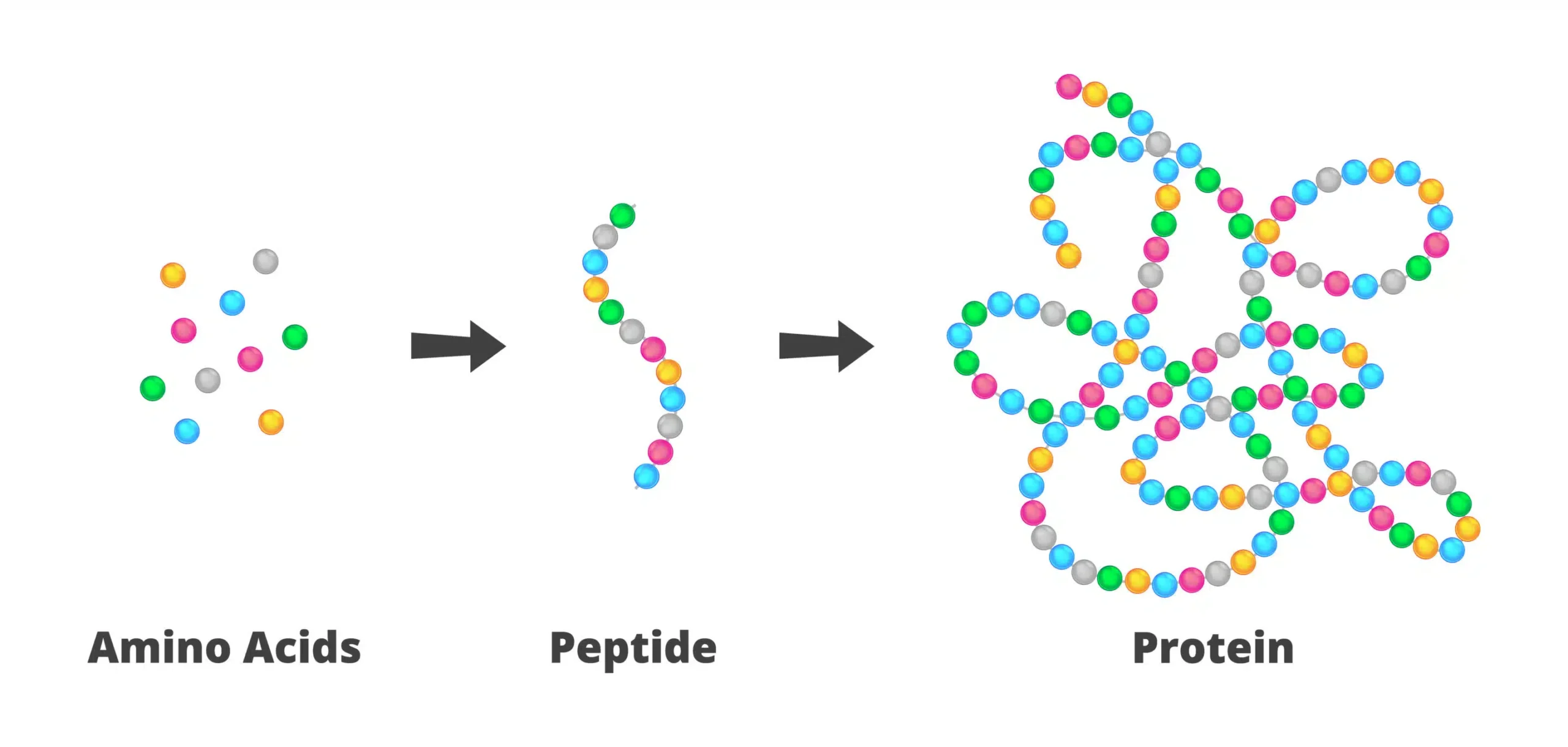
Memorise this
draw it
What is a Polypeptide chain?
Peptide bond formation=covalent bond
Variable in length
Variable in order of amino acids
What does DNA determine?
Determines the Sequence of order
What do amino acids determine?
3D shape of a polypeptide
What does Tertiary, secondary, and primary structure have in common?
Hydrogen bonds are important
What are macromolecules?
Very large molecules, also called polymers
What are C, H, O, N
Main elements present in organic compounds
What are Isomers?
Different compounds, same molecular formula
What is a functional group?
Group of atoms in organic compounds that affects the molecule’s function in a characteristic way
What is the Carboxyl group?
-COOH
one type of functional group
Part of amino acid molecule that is important in making a peptide bond with the amino group in another amino acid
What is the Hydroxyl group?
-OH
one type of functional group
What is the Amino group?
NH2
one type of functional group
Important in making a peptide bond with the carboxyl group of another amino acid
What is a Phosphate group?
OPO3²-
One type of functional group
What is Hydrophillic
Water loving
Polar
What is hydrophobic
Water hater
Non-polar
What are polymers
Large molecules made from identical building blocks (monomers) strung together
What are monomers
Individual building block
What is Polymerization
Process where monomers are linked to make a large molecule (polymer)
What is Dehydration synthesis
Chemical reaction where monomers are liked together to form polymers and water is REMOVED
What is hydrolysis
Chemical reaction where polymers are broken apart by the ADDITION of water
What is Monosaccharide
Simple sugar
Building block of polysaccharides
What is Disaccharide
Polymer that consist of 2 monomers
What is Oligosaccharide
Polymer that consists of 3-10 monomers
What is Polysaccaride
Polymer that consists of many momomers
What is Starch
Polysaccharide composed of glucose monomers
amylose: straight molecule
Found in plants
Used as energy supply
What is Glycogen
Polysaccharide composed of Glucose monomers
Polymer has branches
Found in animals
Used as energy supply, mostly found in liver and muscle cells
What is Cellulose
Polysaccharide composed of glucose monomers
Several polymere joined together by hydrogen bonds
Used for structure (form plant cell walls)
What is a Triglyceride
Used to store energy for cellular activity
Made out of glycerol (head) and 3 fatty acids (tails) linked by dehydration reaction
What are Fatty acids
Hydrocarbons (only composed of C and H)
Chain of carbons that can vary in length and the type of carbon-carbon bond
Storage of energy
What are Saturated acids
Fatty acids that have single bonds between C atoms
Straight “rigid” molecule
Solid at room temp.
What are Unsaturated fats
Fatty acids that have double bonds between C atoms
Area in the C chain where double bond can bend, “Flexible”
Liquid at room temp.
What is Monounsaturated
Fatty acids that have one double bond between C atoms
What is Polyunsaturated
Fatty acids that have more than one double bond between C atoms
What are Phospholipids
Lipid molecule with 2 fatty acid chain and phosphate group bound to glycerol
Mainly used for structure
What are Steroids
Lipid structures that have 4 connected rings of Carbon
Important for structure-e.g. cholesterol
Important for hormone synthesis
What is an R group?
Part of amino acid molecule that varies in 20 differnt types of aa
R groups can be charged, polar or nonpolar depending on properties
Group determines how the polypeptide get it’s speciic shape
What is a peptide bond
Link between 2 amino acids
Amino group of one is joined with the carboxyl group of the aother amino acid by dehydration reaction
What is conformation
Protein’s specific shape that determines it’s function, depends on the amino acid sequence
Conformation is always the same for a given amino acid sequence
what is a primary struture
Amino acid sequence (linear)
What is a secondary structure
Amino acid sequence is pleated or twisted to form pleated sheets or helix (coils, held in position by hydrogen reaction (loss of water)
What is Carbon?
Main element in organic compounds
What is Cholesterol
type of steroid
found int he cell membrane where it maintains the fluidity and integrity of the membrane
used to synthesize other steroids and materials
Energy storage and Structure
Main functions in Carbohydrates and lipids
Provide much of the energy that cells require by storing it as a reserve energy supply
Supply materials to build different cell structures
What are amino acids
Building blocks (monomers) of polypeptides (proteins)
Types (based on R groups): Nonpolar, polar, charged
What are proteins
Macromolecules with a wide variety of functions: Structural materials,
energy source,
horomones/nerurotransmitters,
enzymes,
immunities(Antibodies),
cell communication
What is a tertiary structure
Polypeptide chain with it’s distinctive 3D shape, where pleaded sheets and helix interact with each other
What is a Quaternary structure
More than one polypeptide chain with it's distinctive 3D shape connected(subunits)
More than 1 tertiary structure is connected
What is Denaturation
Process where a protein’s shape is altered, so it can no longer function
Polypeptide chains unravel and lose it’s shape
(Mainly becuase of temp. change, salt concentration, or pH)
What are Nucleotides
Building blocks(monomers) of nucleic acids
Each nucleotide had 3 parts: 5-carbon sugar, a phosphate group, a nitrogenous base, “sticky” parts are 3’ (3 prime) OH (hydroxyl) group and 5’ phosphate group
What are nucleic acids
Information-rich polymeres of nucleotides
Types: DNA, RNA
Molecules are very large
What are A,T,G, C
Adenine, thymine, Guanine, Cytosine
Nitrogenous bases in DNA
What are nitrogenous bases
Key part of nucleotide attached to the pentose in position 1’
What are A,U,G,C
Adenine, uracil, guanine, cytosine
What is a DNA backbone
Repeating sugar-phosphate chain
Forms from nucleotide monomers when the phosephate of one nucleotide attaches to the sugar of the next nucleotide
What is a double helix
Double chain of DNA
sugar-phosphate backbones with protruding bases are held together
What is DNA
Deoxyribonucleic acid
Bases: A,G,C,T
What is RNA
Ribonucleic acid
Bases: A, G, C, U
What are genes
specific nucleotide sequence that contains info. for amino acid sequence of a specific polypeptide
What is a coding region
DNA region that contains genes
What is a non-coding region
DNA region that does not contain genes
What are enzymes
Type of protein that speeds up a specific chemical reaction in celss by lowering the chemical barrier
Can be reused/recycled
= to catalyst
What is a substrate
Reactants
Molecule(s) that will CHANGE during a chemical reaction
what is a product
End result of a chemical reaction
What is a Active site
Where enzyme interacts with the enzymes’s substrate
R groups of aa in active sites are the ones that interact with the substrate
What is Energy of activation (EA)
Energy needed for a chemical reaction to happen

What does DNA determine
the SEQUENCE of an order

Hydrogen bonds are important in what kinds of structures?
Primary, secondary, tertiary, quaternary structures

This shape is best described as, what?
Beta sheet

This shape is best descried as a, what?
Alpha helix
Does DNA have oxygen in it?
No
Does RNA have oxygen in it?
Yes

How many hydrogen bonds are between A and T, A and U?
2

How many hydrogen bonds are between G and C?
3