cardiovascular phys exam 2
 Call Kai
 Learn
 Practice Test
 Spaced Repetition
 Match
 Flashcards
 Knowt Play
1/266

There's no tags or description
Looks like no tags are added yet.
267 Terms
what activates adenylate cyclase
binding catecholamines to beta-1 receptors
what does cAMP increase
open state of funny channels
what does an increase in open state of funny channels lead to
increase in heart rate
what phosphorylates L-type calcium channels
PKA
what do phosphorylated L-type calcium channels lead to
increased open state
what does increased open state of L-type calcium channels lead to
more intracellular calcium
what phosphorylates potassium channels
PKA
what do phosphorylated potassium channels lead to
increasing outward potassium current
what does an increasing outward potassium current as a result of potassium channel phosphorylation lead to
shortened AP
what phosphorylates phospholamban
PKA
what does phosphorylation of phospholamban lead to
inhibition of phospholamban
what does phospholamban do
inhibits SERCA
what does inhibition of phospholamban do
increases activity of SERCA
what does increased SERCA activity do
faster uptake of calcium and more calcium to be used
what inhibits adenylate cyclase
acetylcholine
what does inhibition of adenylate cyclase do
reduces PKA activity
what does reduced PKA activity do
reduced activity of funny channels and L-type calcium channels
what happens to KACh channels as a result of reduced PKA activity
activate
high potassium content in the blood
hyperkalemia
what happens to resting membrane potential during hyperkalemia
increases
what happens to depolarization during hyperkalemia
sustained
what happens to the atria and ventricles as a result of sustained depolarization
delayed conduction
when is hyperkalemia seen
kidney failure
low potassium content in the blood
hypokalemia
what happens to resting membrane potential during hypokalemia
decreases
what happens to potassium channels during hypokalemia
inhibited
what happens to potassium current during hypokalemia
increases inward current
when is hypokalemia seen
severe diarrhea
what competes with calcium for the troponin binding site
hydrogen
what does caffeine do to phosphodiesterase
inhibits
what happens as a result of phosphodiesterase inhibition
inhibits cAMP concentration
what do beta adrenoreceptor antagonists do
blocks affect of SNS
when are beta blockers given
for tachycardia
what do beta blockers do as a result of blocking the SNS (physiological response)
decrease heart rate and contractility
what do calcium channel blockers do
inhibit L-type calcium channels
what does inhibition of L-type calcium channels lead to (action potential)
decrease phase 0 action potential and force of contraction
what kind of effects do calcium channel blockers have
negative inotropic (decreases contractility) and negative dromotropic (decreases AV node conduction velocity)
what does adenosine activate
Gi protein
what happens as a result of activated Gi protein
decreased cAMP
what happens as a result of decreased cAMP from activated Gi protein
inhibits funny channels and L-type calcium channels
what happens as a result of inhibited funny channels (action otential and physiological effect)
decrease phase 4, which leads to negative chronotropy
ability to initate repeated, spontaneous production of action potentials
automaticity
ability to respond to external stimuli
excitability
ability to conduct impulses
conductivity
protective mechanism that prevents the cells from responding to repeated rapidly occurring external stimuli
refractoriness
recording of electrical currents in heart muscle on skin surface
ECG
what does an ECG actually measure
spread of cardiac currents in ECF
separated opposite electrical charges
dipole
which way is a vector
negative to positive
charge moving towards positive electrode
upward deflection
charge moving away from positive electrode
downward deflection
the average of all the instantaneous mean electrical vectors occurring sequentially
mean electrical axis
how many limb leads are there
6
what are the 6 limb leads
I, II, III, avf, avr, avl
what do the limb leads measure
electrical activity in the frontal plane
how many precordial leads are there
6
what do precordial leads measure
electrical activity in the axial plane
what are the two types of limb leads
bipolar and unipolar
measure electrical activity across two points
bipolar leads
measure electrical activity at one point
unipolar leads
what does the P wave represent
atrial depolarization
what does the PR interval represent
AV node delay and atrial contraction
how long should the PR interval be
0.2 s
what does the Q wave represent
septal depolarization
what does the R wave represent
depolarization of the ventricles
what does the S wave represent
depolarization of Purkinje fibers
what does the T wave represent
ventricular repolarization
why is the T wave positive
the last cells to depolarize are the first to repolarize, so the subepicardial cells repolarize before the endocardial cells
which part of the ecg is phase 0
qrs complex
which part of the ecg is phase 2
st segment
which part of the ecg is phase 3
t wave
what is the u wave though to represent
repolarization of Purkinje fibers
variation of normal heart rate/rhythm that is not physiologically justified
arrythmias
what kind of arrythmias are the most common cause of death in the us
ventricular
what 3 things does an arrythmia need
trigger, vulnerable window, and substrate
what is bradycardia
below 60 bpm
what is tachycardia
above 100 bpm
originate in the SA node, atria, or AV node
supraventricular arrythmias
originate in the ventricles
ventricular arrythmias
accelerated generation of action potential by normal pacemaker
altered normal automaticity
what are the two types of altered normal automaticity
tachycardia and bradycardia
accelerated generation of action potential by abnormal tissue
abnormal automaticity
what happens to the heart after an ectopic beat
can become refractory or incaple of responding to the next normal impulse in the SA node
to what does an ectopic beat happen in response
SNS stimulation or caffeine
what happens in delayed after depolarization
an extra stimulus during phase 4, after repolarization is complete, but before another AP
what is DAD associated with
increased concentration of calcium
how is DAD caused
spontaneous release of calcium from SR, which activates Na/Ca exchanger, increasing intracellular Na, and overloading calcium in the SR
what happens during early after depolarization
secondary voltage depolarizations during phase 3
what is thought to cause EAD
reactivation of L-type calcium channels
what are problems caused by tachycardia (3)
reduced diastolic filling time, decreased SV and coronary perfusion, increased myocardial oxygen demand
what problem is caused by bradycardia
impairs blood flow to organs
a P wave preceds each QRS complex and the RR intervals remian relatively constant
normal sinus rhythm

what is this
normal sinus rhythm
slow HR (<60 bpm) (rhythm name)
sinus bradycardia

what is this
sinus bradycardia
rapid HR (>100 bpm) (rhythm name)
sinus tachycardia
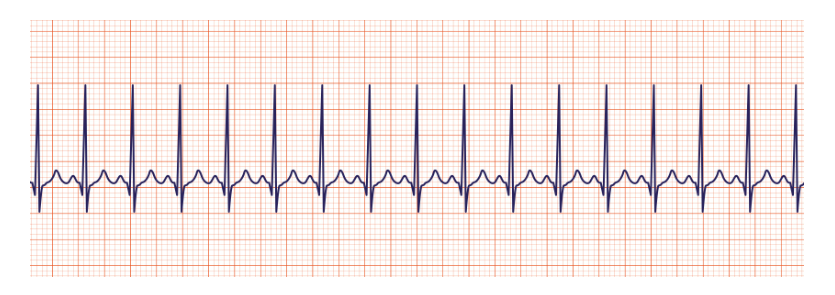
what is this
sinus tachycardia
acceleration of HR with inspiration and slowing of HR with expiration
respiratory sinus dysrhythmia
no HR
sinus arrest
rapid atrial ectopic tachycardia
atrial flutter