Motor development, Arithmetic development
 Call Kai
 Learn
 Practice Test
 Spaced Repetition
 Match
 Flashcards
 Knowt Play
1/41

There's no tags or description
Looks like no tags are added yet.
42 Terms
Dynamic Systems Theory (DST)
View that development is:
*Dynamic*: changes over time
*System*: with many elements interacting
The Dynamic Systems Theory emphasises multiple causes of motor development:
Increases in strength and weight
Neural mechanisms
Posture control
Balance
Perceptual skills
Motivation
In the DST, milestones are called ________
Attractors.

Fine vs Gross motor skills
*Fine* (smaller muscles)
- Grasping
- Drawing
- Object manipulation
*Gross* (larger muscles)
- Sitting
- Crawling
- Reaching

Stepping reflex
Reflex in which an infant displays alternating leg movements resembling walking. Disappears at ~2 months.
Why does the stepping reflex disappear?
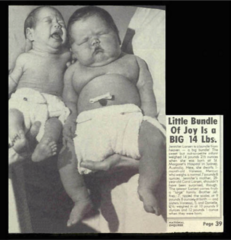
Rapid weight gain causes legs to get heavier faster than they get stronger.


Older babies in water vs Younger babies with ankle weights (*Stepping reflex*)
Older babies (past 2mo) - the reflex came back.
Younger babies (pre 2mo) - reflex gone.
How do we know that the stepping reflex disappearing isn't just neurological maturity?
Because babies can do the same behaviour when lying down (distributed gravitational pull)

Figure/Ground assignment
Identifying an object (figure) against its background. Helps with depth perception, attention and guiding reaching.

Figure/Ground Assignment *Study* (Ross-Sheehy et al., 2016)
Tested whether infants use symmetry as a cue.
Both screens showed motion:
*Consistent* cues: symmetrical figure in front; asymmetrical figure behind.
*Inconsistent* cues: asymmetrical figure in front; symmetrical figure behind.
Figure/Ground Assignment *Findings* (Ross-Sheehy et al., 2016)
Sitting infants perceived *symmetry as a cue* to figure/ground assignment. Sitting may be linked to developing depth perception.

Sticky mittens *study*
Have *velcro* that help children who are not yet reaching make contact with objects.
Parents were asked to give infants sticky mitten time for *10min/day for 2 weeks*


Sticky mittens *results*
After only one week infants' in the training groups grasped and reached significantly more often than their peers.
Effect persists for *12 months*.
BUT, *non-sticky mittens had higher performance*
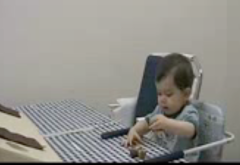
*Piaget's* A-not-B
Piaget task to test 8-10mo infants' representations.
Task:
Hide toy at *A*, infant finds (repeat ~6x)
Hide toy at *B*, infant searches *A, not B*
Piaget reasoned infants *do not* have object permanence til *~10mo*
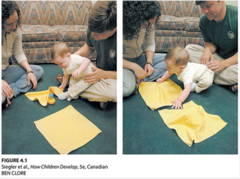
*DST's* account of A-not-B
Behaviour is shaped by past experience, especially attention to A and repeated reaching to A (nested timescales).
The error involves *attractors, motor memory and preservation of previous behaviour*.

*DST*: When can A-not-B errors persist?
Errors persist if:
There is no reaching on A
There are no objects
Unmarked locations (in 2-4 yrs)
Long delays (even in adults!)

*DST*: How can you reduce A-not-B errors?
If you change posture between trials errors are reduced (as less reliant on motor memory)
Self-locomotion in infants
*8 months*: capable of self-locomotion
*13-14 months*: independent walking


Adolph's (1997) longitudinal study on infants navigating slopes
A weekly longitudinal study tracking infants from their first week of crawling through their first few weeks of walking.
Knowledge does not transfer from crawling to walking-
*67% of infants plunged down all slopes* (but did become more cautious with experience)

Han & Adolph (2020, Wiley)
Toddlers observed in a lab playroom
Toddlers fell *563* times

Han & Adolph (2020, Wiley) *Results*
Infant fussed - *4% of falls*
Caregiver concern - *8% of falls* (rare)
Walking experience *doesn't predict* fussing+caregiver concern+recovery
Where do most child pedestrian injuries happen?
Mid-blocks

Crossing Roads with Friends (O'Neal et al, 2019)
Pairs of friends asked to cross virtual road
Traffic came from left at 25mph
No instructions to cross alone or together
- Adolescents took riskier gaps with friend than alone
- When solo, first crosser more risky + 12yo first crossers riskier than adults

Emergence of walking correlates with:
Both receptive and productive vocabulary
+
Children who walk make more bids for communication than same-age children who crawl
+
6-12-year-olds remember new vocabulary better if they exercise after learning the new words

Numerical Equality
The realisation that all sets of N objects have something in common
How early do infants show a sense of numerical equality?
*5 months*: at least to sets of 1-3 objects.

Subitising
A process by which adults and children can look at a few objects and almost immediately know how many objects are present
Basic principles underlying counting
*1 to 1 correspondence*: one object per number word
*Stable order*: always recite in same order
*Cardinality*: quantity = last number
*Order irrelevance*: left to right = right to left
*Abstraction*: any set can be counted
Most preschoolers seem to understand these principles.
Min strategy
Starting counting from the larger of two numbers
5 + 2

Min strategy study (Siegler and Jenkins, 1989)
Learning the min strategy, eight 4&5 y/os went *from 75% to 100% correct* in addition.
Used *multiple strategies*: fingers, retrieval, and min

Overlapping Waves Theory
When given challenging problems, children try out various problem-solving strategies and observe which work best/worst.
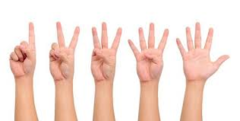
Finger-counting
A smart strategy:
- Significantly correlated with *better performance* and with *working memory ability*.
- Encouraging finger-counting may help children overcome *difficulties in arithmetic*.

Relationship between readings and maths
- Children who read at least once/week at 10yrs had better maths test scores than 16yrs (+10%)
- Reading for pleasure impact was ~4x greater than effect of parental education.

Maths Before Bedtime (Berkowitz et al., 2015)
Y1 Children's maths abilities improved after completing maths problems as part of their bedtime routine.
Storybooks and Maths Skills Study (Wang, Vasilyeva & Laksi, 2024)
Child+parent read storybooks where the maths information was implicit or explicit
*Implicit* Condition:
"They spent a long time sorting and lining up their toys neatly on the shelves [...]"
Maths only in illustration
*Explicit Condition*:
"Zibby put 2 teddy bears on her top shelf and 4 cars on the middle shelf [...]"
Maths in illustrations *and* text
Storybooks and Maths Skills *Results* (Wang, Vasilyeva & Laksi, 2024)
*Explicit condition* produced more maths-related extratextual talk such as:
- Counting
- Number comparisons
- Size and height comparisons
- Identifying shapes/patterns

Many features of boardgames teach maths understanding, such as:
• The greater the distance moved
• The more moves made
• The more number names spoken
• The more number names heard
• The more time has elapsed since the start

The Great Race Boardgame (Ramani & Siegler)
*Rules*:
Spin to go 1 or 2 spaces
As you play name the squares you count (e.g., '4, 5')
Do NOT count the moves (e.g., '1, 2')
(Control group named colours, had no numbers)
Directly builds foundational early numeracy and arithmetic development by teaching children how numbers map onto a physical space

Number Line Estimation Task
This task is quite challenging for a child.
- Children struggle with the idea that numbers are linear
The Great Race Boardgame Impact on Number Lines
*Colour* game group: *No* improvement
*Number* game group: *Significant* improvement
- Children's understanding was largely preserved 9 weeks later


CIRCULAR VERSION of The Great Race Boardgame Impact on Number Lines
*Control* group: very little improvement
*Circular* group: very little improvement
*Linear* group: *significant improvement*

Barriers to using boardgames in schools
- Lack of resources and training
- Need to prioritise official education recommendations
- Concern that playful aspects do not overshadow educational objectives
- Decline of play (at home and at school) after preschool years