Commercial gamebirds
 Call Kai
 Learn
 Practice Test
 Spaced Repetition
 Match
 Flashcards
 Knowt Play
1/38

There's no tags or description
Looks like no tags are added yet.
39 Terms
What are the main game birds reared in the UK?
Pheasants
Partridges (grey/ red legged)
Grouse (red/black)
capercaillie
ptarmigan
woodcock
What are the production phases of commercial gamebird?
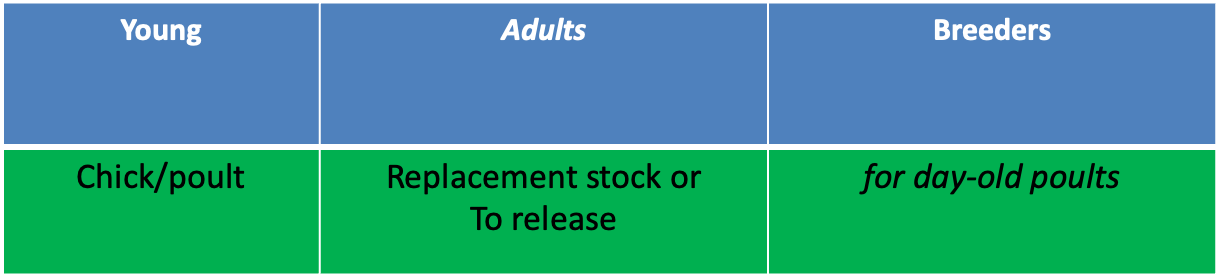

Where can the problems related to commercial gamebirds arise from?
Hatchery related
Hygiene and sanitation
Incubator conditions
Post-hatching issues
Infectious causes
List the problems that can affect young gamebird chicks (2-14 days old)
Yolk sac infection
Septicaemia (E. coli or Salmonella usually)
Starve out
Aspergillosis
Rotavirus
What are the two causes of yolk sac infection in young chicks? How do they differ
Infection in eggs: (Omphalitis/navel infection) peak mortality at 3 days
Environmental infection/ spread: peak mortality about 5-7 days
How do you prevent septicaemia?
Competitive exclusion onto chick/surroundings at day old
Hygiene and sanitation (reduce in environ.)
What are they clinical signs of starving out?
High mortality
Lethargic chicks
Empty gizzard + crop
Gizzard containing bedding material
What are the causes of starving out?
Breeding flock unhealthy
Prolong hatching period
Chill-effect after hatch
Temperature variation on arrival/house
Environment – ammonia, heat, carbon
Poor feed and water insufficient/distribution
What are the clinical signs of aspergillosis in chicks?
Gasping poults, weight loss, mortality increased
How is aspergillosis diagnosed, treated and prevented?
Aspergillus fumigatus
Dx: signs/lesions, nodules in lungs/ airsacs, culture
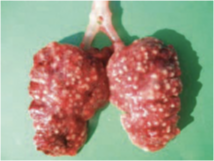
Tx: Not practiced, too expensive
Prevention: management, biosecurity

What gamebirds does rotavirus affect?
Pheasants and partridges
What are the signs of rotavirus? What are the sources of infection
Mortality, up to 70%, 4-14 days old
Signs – depression, dropped wings, closed eyes, huddling, ruffle feathers, death
Source of infection:
Egg shell contamination,
Environment (multiage)
How is rotavirus disagnosed, treated and prevented?
Diagnosed: signs/lesions, PCR
Tx: suitable disinfectant, in drinking water or spray, high dilution rate
Prevention: freq egg collection, cleaning and disinfection of eggs and between flocks/ pens/ batches
What are the diseases that affect young poults?
Spironucleosis
Trichononiasis
Coccidiosis
Bacterial infections
Parasites – worms
Enteric – Ascarids, Capillaria
Respiratory – S trachea
What are the causative agents of spironucleosis and trichonosiasis?
Spironucleus meleagridis (1-12 weeks)
Trichomonas gallinae (6-16 weeks)
Causing similar diseases
What are the clinical signs of spironucleosis and trichononiasis?
Watery diarrhoea, often yellow and frothy, dehydration, weight loss, depression, lethargy and death
Wet and moist environment, overcrowding, stress allows survival of organism
How is spironucleosis and trichononiasis diagnosed? How do they differ?
Necropsy, from fresh SI make smear and examine under microscope, differentiate the protozoa
Duodenum and ileum, mostly spironucleus
Caecum, trichomonas
How is spironucleosis and trichononiasis treated and prevented
Treatment – antibiotics and electrolytes
Prevention – keep environment dry and clean, avoid water leakages, substances that can desiccate these protozoa, reduce stocking density.
What is the most pathogenic species of Eimeria in young poults? What age does it mainly affect?
E. colchici in caecum
Normally 15 days to 16 weeks old
What are the clinical signs of coccidiosis?
Weight loss, lethargy, ruffle feathers, dropped wings, death
How is coccidiosis diagnosed, treated and prevented?
Dx: necropsy, gut smear for microscopic exam, faecal analysis
Tx: toltrazuril, amprolium
Prevention: dec stocking density, coccidiostat in feed (warm and moist environment is favourable for oocyst prolif)
What are the diseases that affect the releasing poults?
All the young poults diseases as well as
Enteritis/ dysbacteriosis
Stress
(in addition to dz affecting young poults)
What does enteritis/dysbacteriosis cause in releasing poults?
Scour in growing poults leading to dehydration
How is enteritis/dysbacteriosis diagnosed and treated?
Diagnosis – necropsy, inflammation GIT
Treatment – antibiotics, improves hydration, acidificaiton of water system, competitive exclusion products, electrolytes
What are the stress factors that are related to release in game birds?
Chill-effect following release to new environment/outside
Transport stress – ventilation, withholding food/water
Unfamiliar environment
Searching for food and water
Exposure to predators
What are the diseases that affect breeder game birds?
worm build-up
Respiratory diseases
Mycoplasma gallisepticum, Mg
Mycoplasma synoviae, Ms
Corona virus infections
Bacterial infections
What worms affect breeders, what signs do they cause?
S trachea
Heterakis gallinarum
Capillaria spp
Ascarid spp
Causes high mortality, poor food conversion and weight gain
How would you prevent and treat worm build up in breeders?
Pen management
Treat with flubendazole (in feed or water)
What are these lesions associated with?
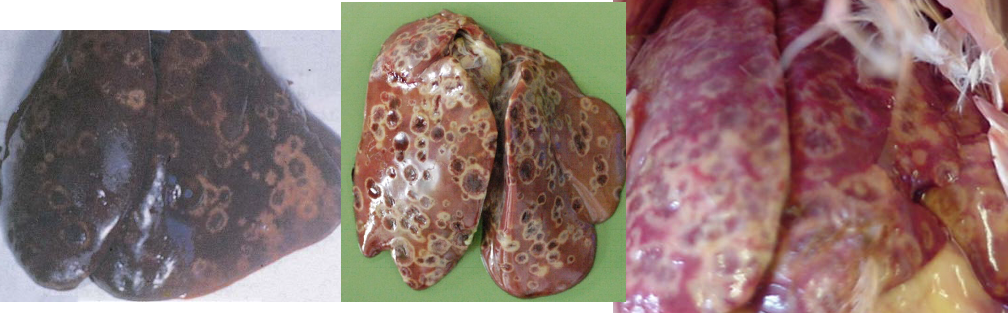
Blackhead/histomoniasis
Histomonas meleagridis
Intermediate host – Heterakis gallinarum
How is histomoniasis dx, tx and prevented?
Diagnosis – typical lesions
Prevention/treatment
No specific treatment against histomonas
Biosecurity – top priority
Control of worms – Heterakis, using Flubendazoel (as intermediate)
Tetracylines?

What mycoplasma can infect gamebirds?
Mycoplasma gallisepticum, Mg
Mycoplasma synoviae, Ms
Other mycoplasmas – M gallinaceum, M glycophilum, M iners, M imitans, M pullorum
What are the clinical signs of a mycoplasma infection in breeders?
Infrorbital sinus and eye swelling
Nose and eye discharge
Breathing difficulty
Weight loss and death
Dec egg prod and hatchability
Lameness
Exacerbated by stress factors
How is mycoplasma transmitted?
vertical (from parent to young bird) + horizontal transmission
How is mycoplasma infection prevented and treated?
Prevention: vaccine, autogenous
Tx: antibiotics- macrolides
What coronavirus affects gamebirds?
Pheasant coronavirus
What are the signs of cornavirus infection in gamebirds?
Adult – sudden death, urates in kidneys, drop in egg production/ hatchability
Young birds with swollen kidneys, urates deposition of visceral organs
How is pheasant coronavirus diagnosed, prevented and treated?
Dx: PCR
Prevention and Tx: no specific, some use inact. IBV (infectious bronchitis virus) vaccine in parent birds but biosecurity top priority
Recall the signs of Newcastle disease.
Dullness, depression, diarrhoea, neurological
Drop in egg production/quality
How is newcastle dz dx, tx + prevented?
Dx: PCR
Prevention/treatment: No specific tx, live and inactivated NDV vaccines, Biosecurity