Cell Types ,Cell Theory, Scientists, & Microscopes

0.0(0)
Studied by 0 people
call kaiCall Kai
learnLearn
examPractice Test
spaced repetitionSpaced Repetition
heart puzzleMatch
flashcardsFlashcards
Card Sorting

1/36

encourage image

There's no tags or description

Looks like no tags are added yet.

37 Terms

1
New cards

cell theory

Idea that: 1. ALL living things are composed of cells, 2. cells are the basic units of structure and function in living things, 3. new cells are produced from preexisting cells
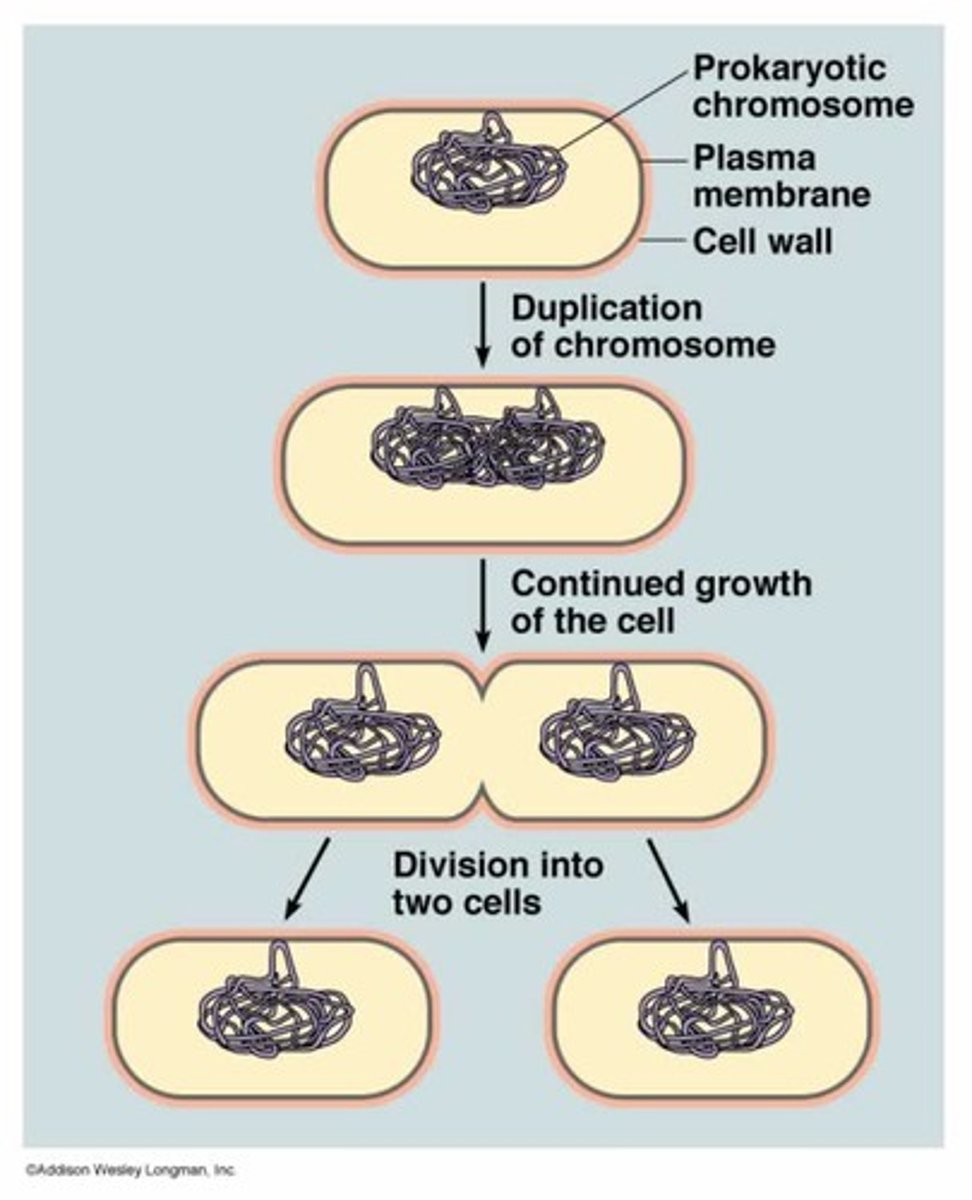
<p>Idea that: 1. ALL living things are composed of cells, 2. cells are the basic units of structure and function in living things, 3. new cells are produced from preexisting cells</p>
2
New cards

prokaryotic cell

very small simple cell that does NOT have a nucleus or other membrane-bound organelles ( Kingdoms Archaebacteria and Eubacteria)
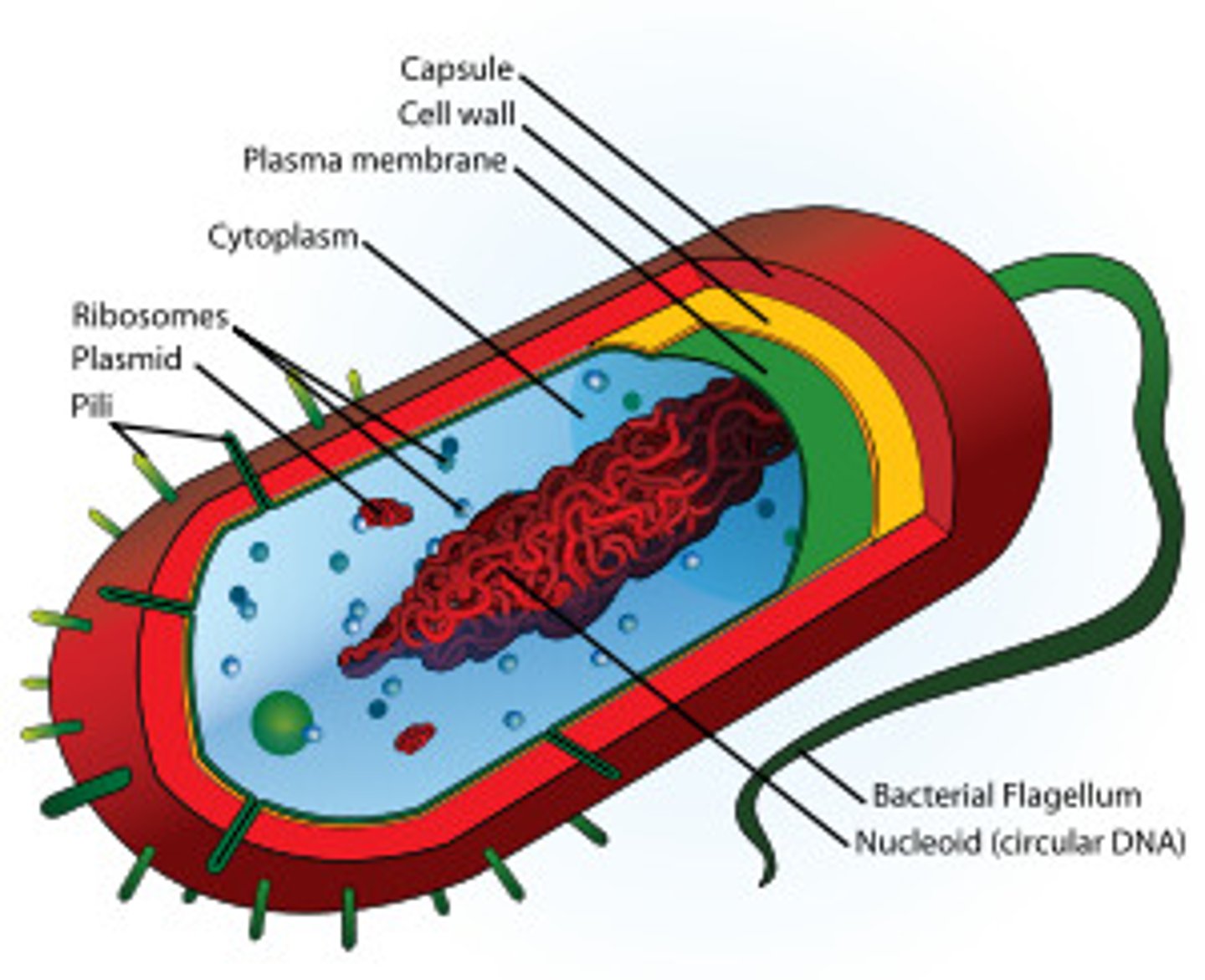
<p>very small simple cell that does NOT have a nucleus or other membrane-bound organelles ( Kingdoms Archaebacteria and Eubacteria)</p>
3
New cards

eukaryotic cell

Cell with a nucleus (surrounded by its own membrane) and other internal organelles ( Kingdoms: Fungi, Plantae, Protista, & Animalia)
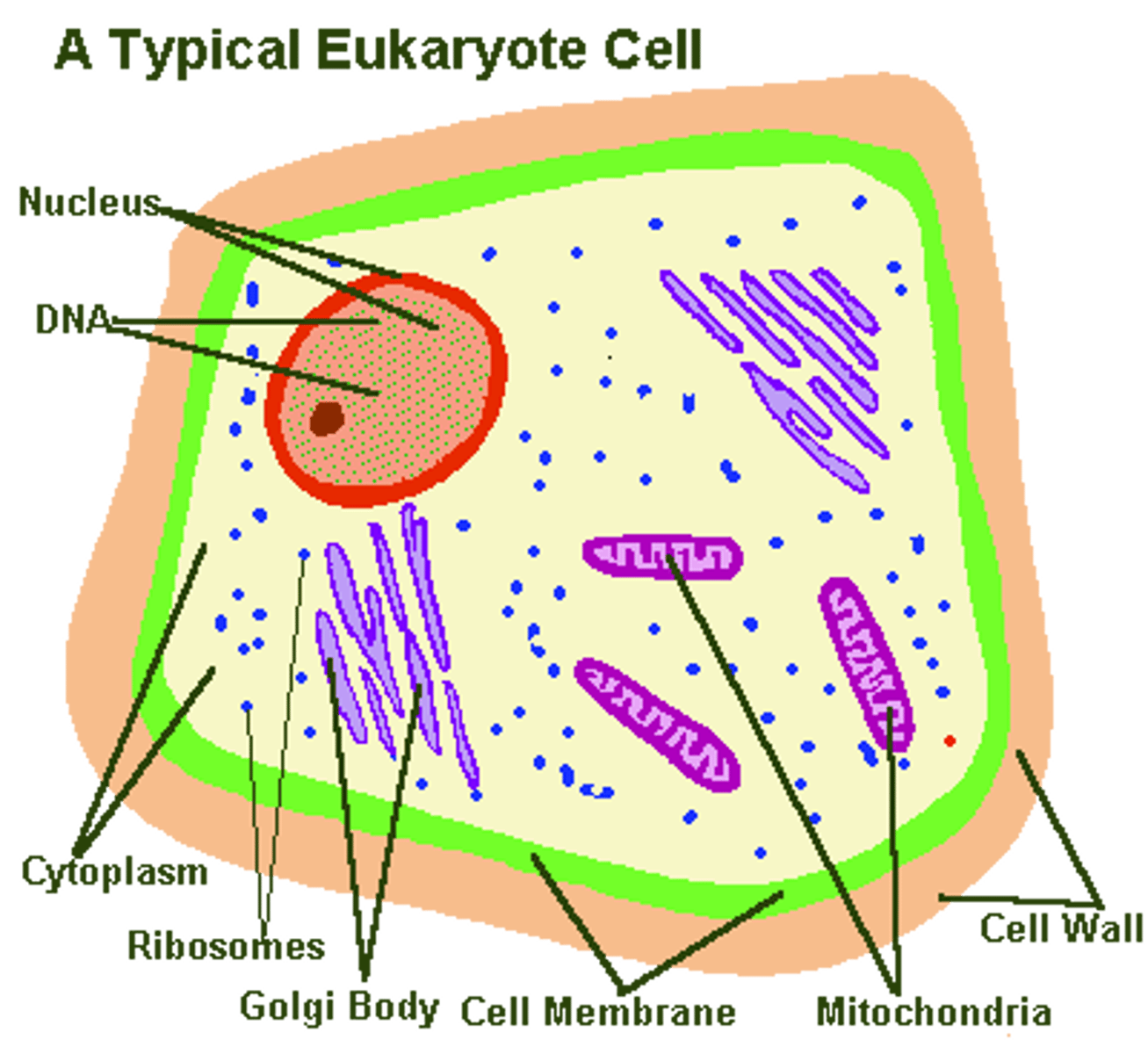
<p>Cell with a nucleus (surrounded by its own membrane) and other internal organelles ( Kingdoms: Fungi, Plantae, Protista, &amp; Animalia)</p>
4
New cards

Robert Hooke

Studied cork under the microscope and and named the structures he saw "cells", discovered cells, 1st to see cells
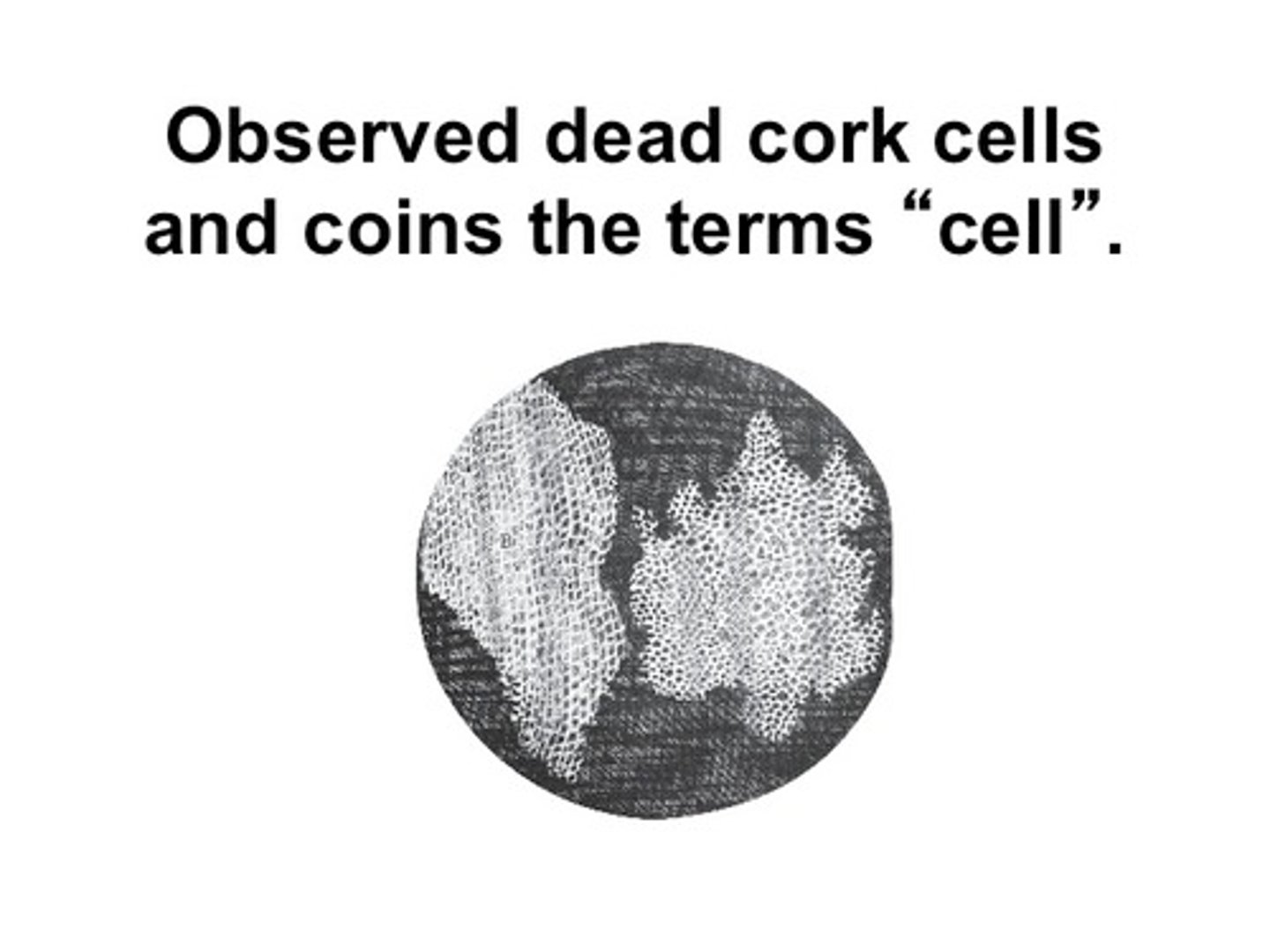
<p>Studied <strong>cork</strong> under the microscope and and named the structures he saw "cells", discovered cells, 1st to see cells</p>
5
New cards

Anton van Leeuwenhoek

Dutch scientist who looked at teeth scrappings and pond water, called the organisms he saw "animicules", further advanced the microscope, 1st to see LIVING cells
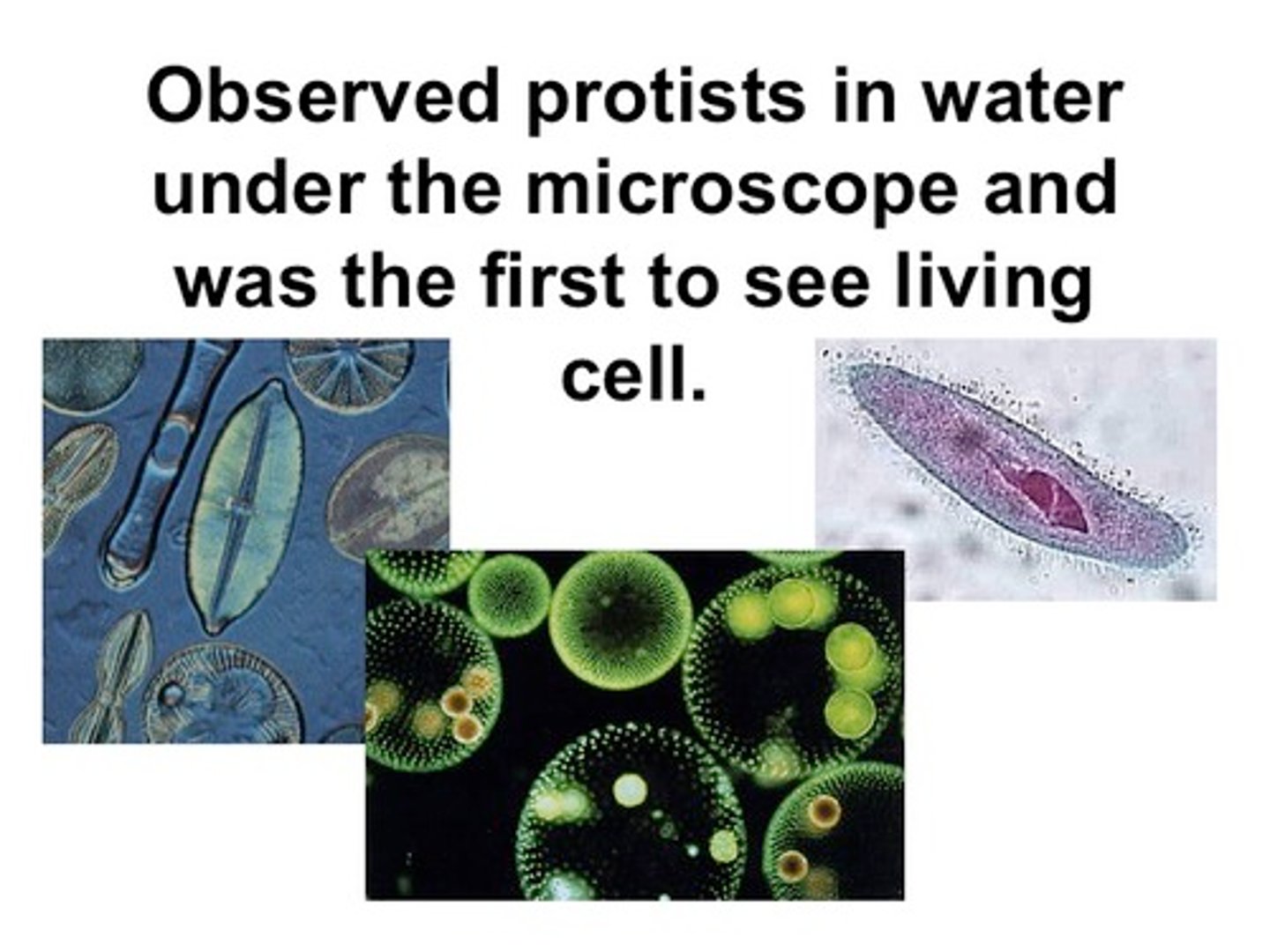
<p>Dutch scientist who looked at teeth scrappings and pond water, called the organisms he saw "animicules", further advanced the microscope, <strong>1st to see LIVING cells</strong></p>
6
New cards

Mathias Schleiden

German botanist who studied plant cells, he and Schwann contributed to cell theory by demonstrating that all living things are made of cells AND that cells are the basic structural unit of living things
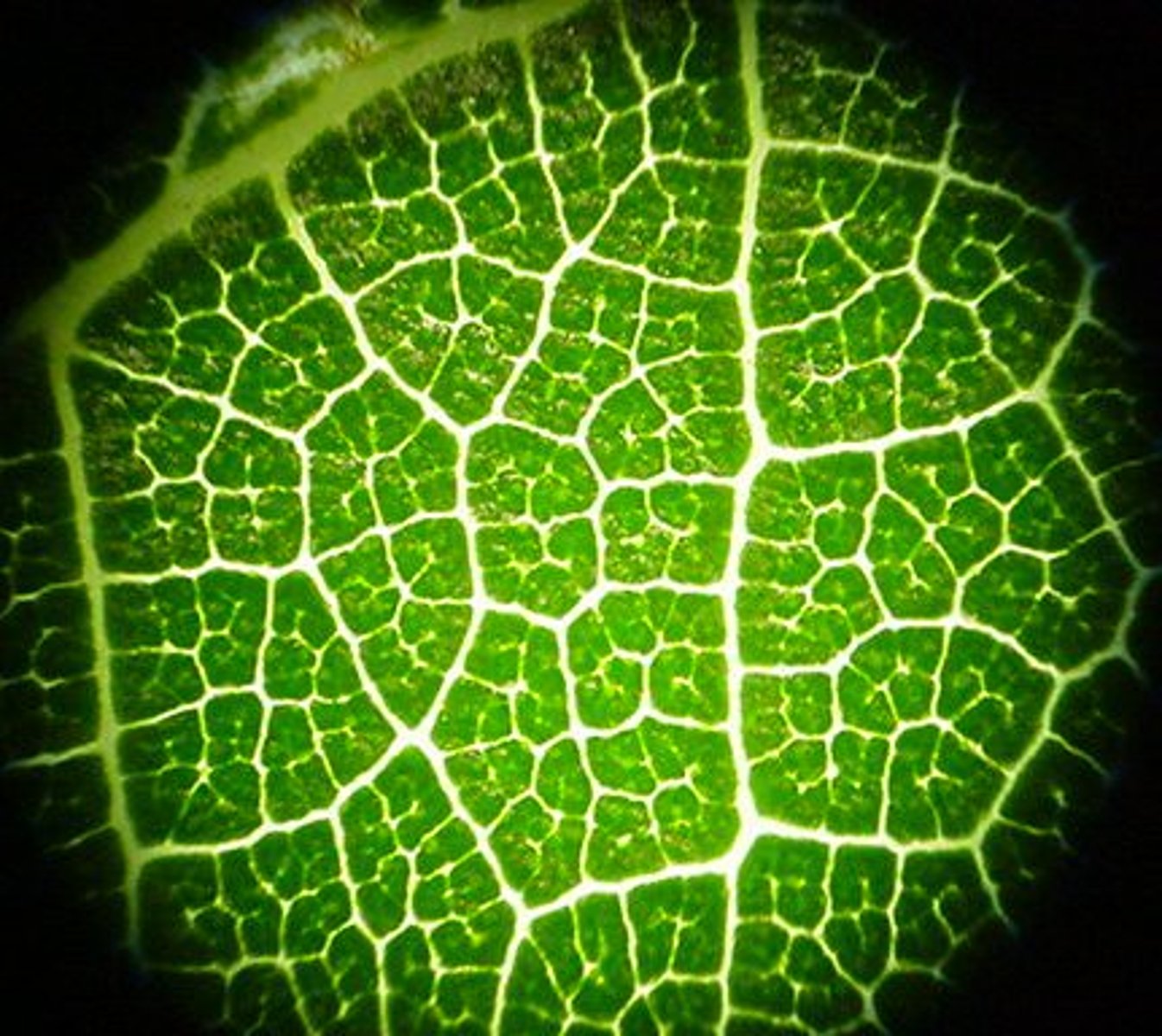
<p>German botanist who studied plant cells, he and Schwann contributed to cell theory by demonstrating that all living things are made of cells AND that cells are the basic structural unit of living things</p>
7
New cards

Theodor Schwann

German zoologist who studied animal cells, he and Schleiden contributed to cell theory by demonstrating that all living things are made of cells AND that cells are the basic structural unit of living things
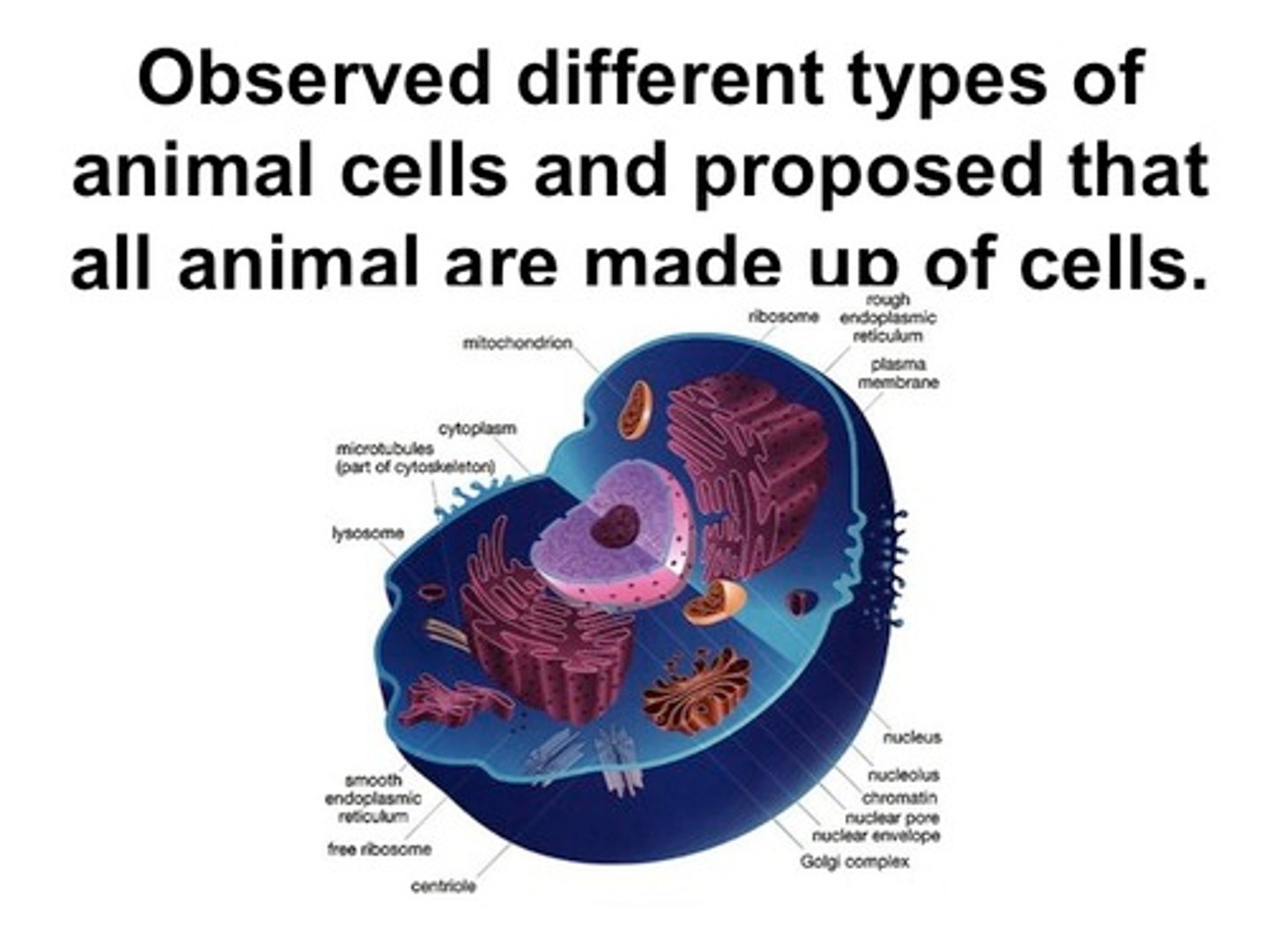
<p>German zoologist who studied animal cells, he and Schleiden contributed to cell theory by demonstrating that all living things are made of cells AND that cells are the basic structural unit of living things</p>
8
New cards

Rudolph Virchow

A German doctor who stated that all living cells come from other living cells (part 3 of the cell theory)
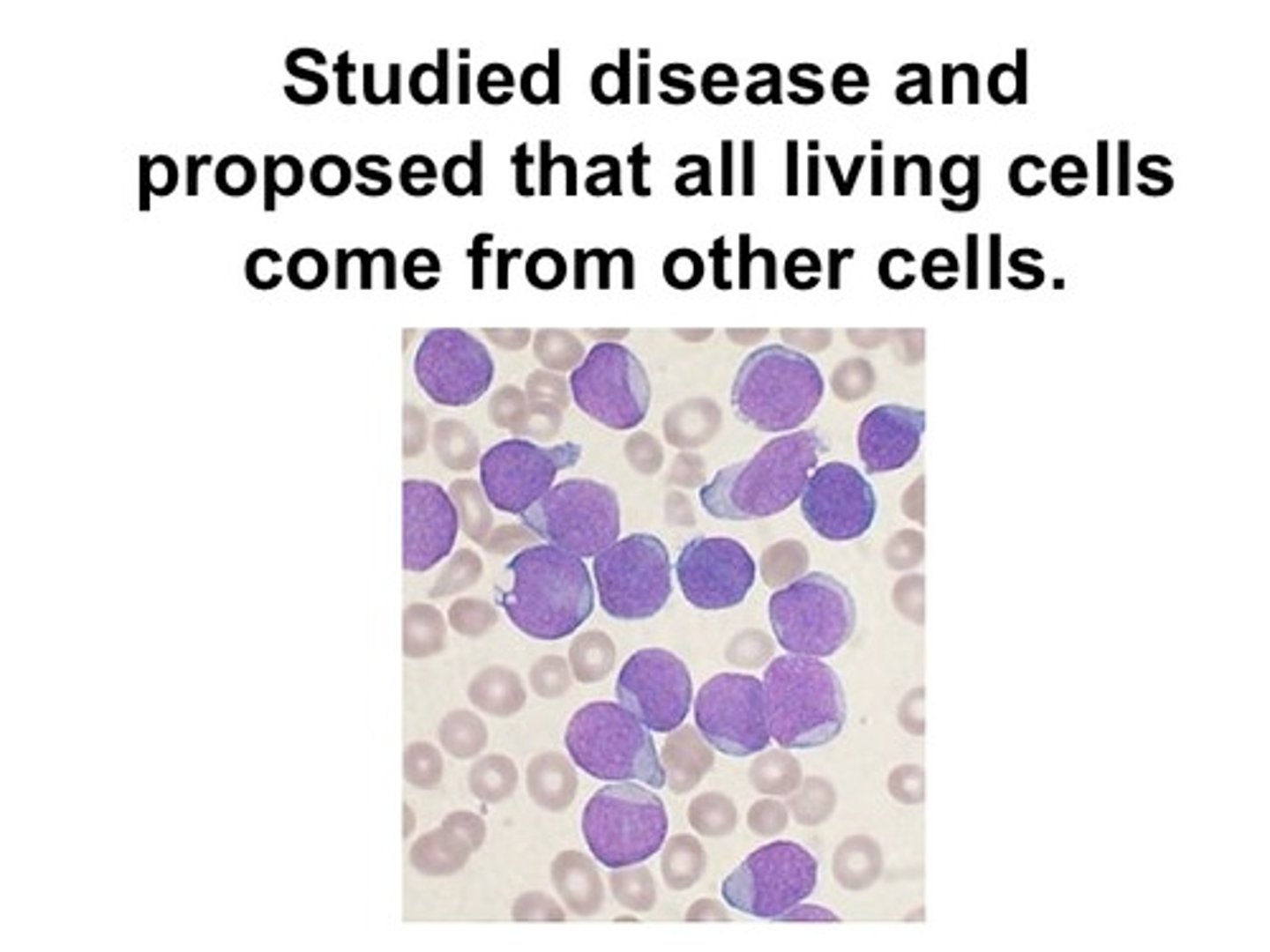
<p>A German doctor who stated that all living cells come from other living cells (part 3 of the cell theory)</p>
9
New cards

compound light microscope

a microscope that shines light through a specimen and has two lenses to magnify an image
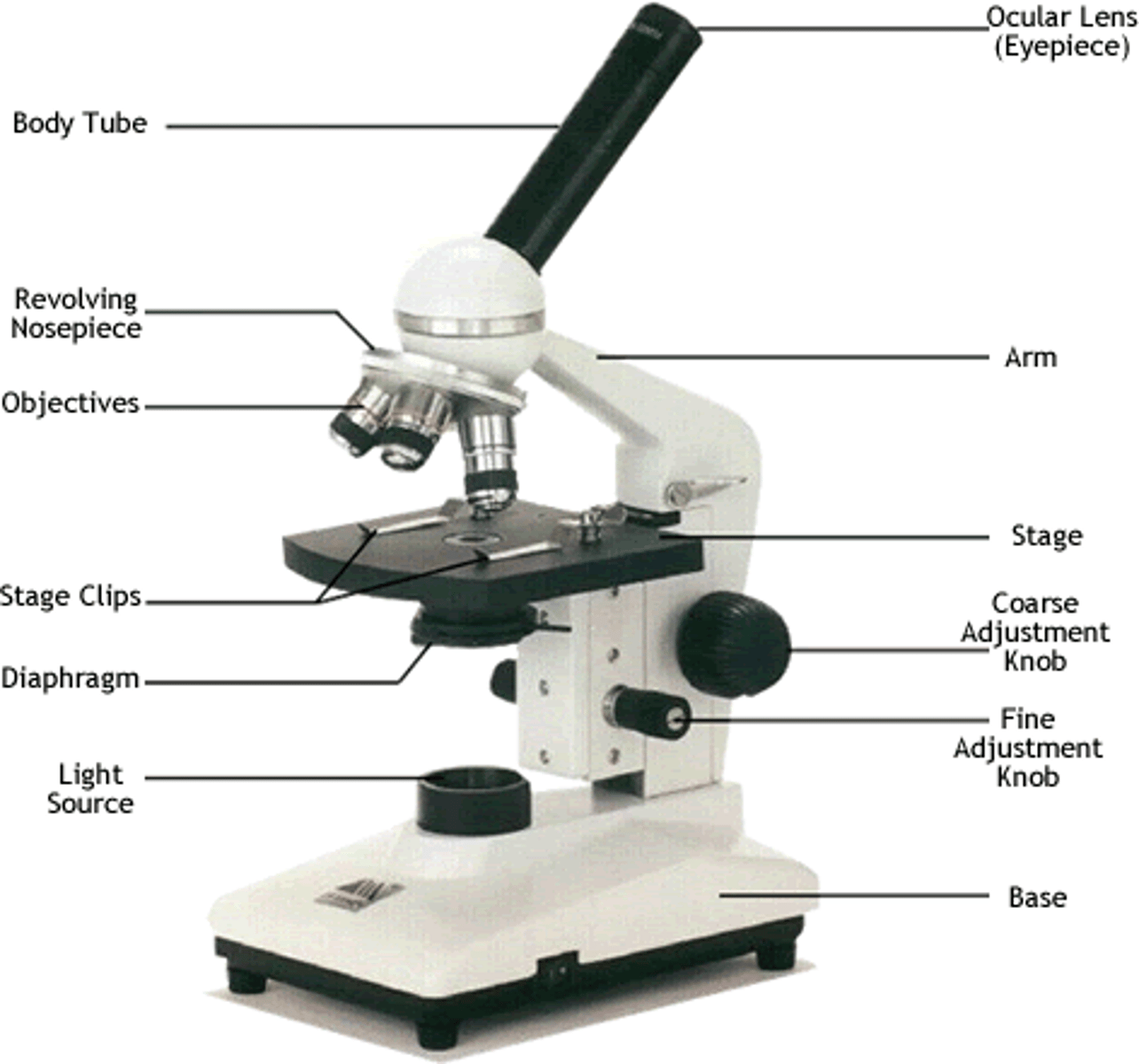
<p>a microscope that shines light through a specimen and has two lenses to magnify an image</p>
10
New cards

Scanning Electron Microscope (SEM)

A microscope that uses an electron beam to study the surface architecture of a cell or other specimen, expensive and requires training to operate
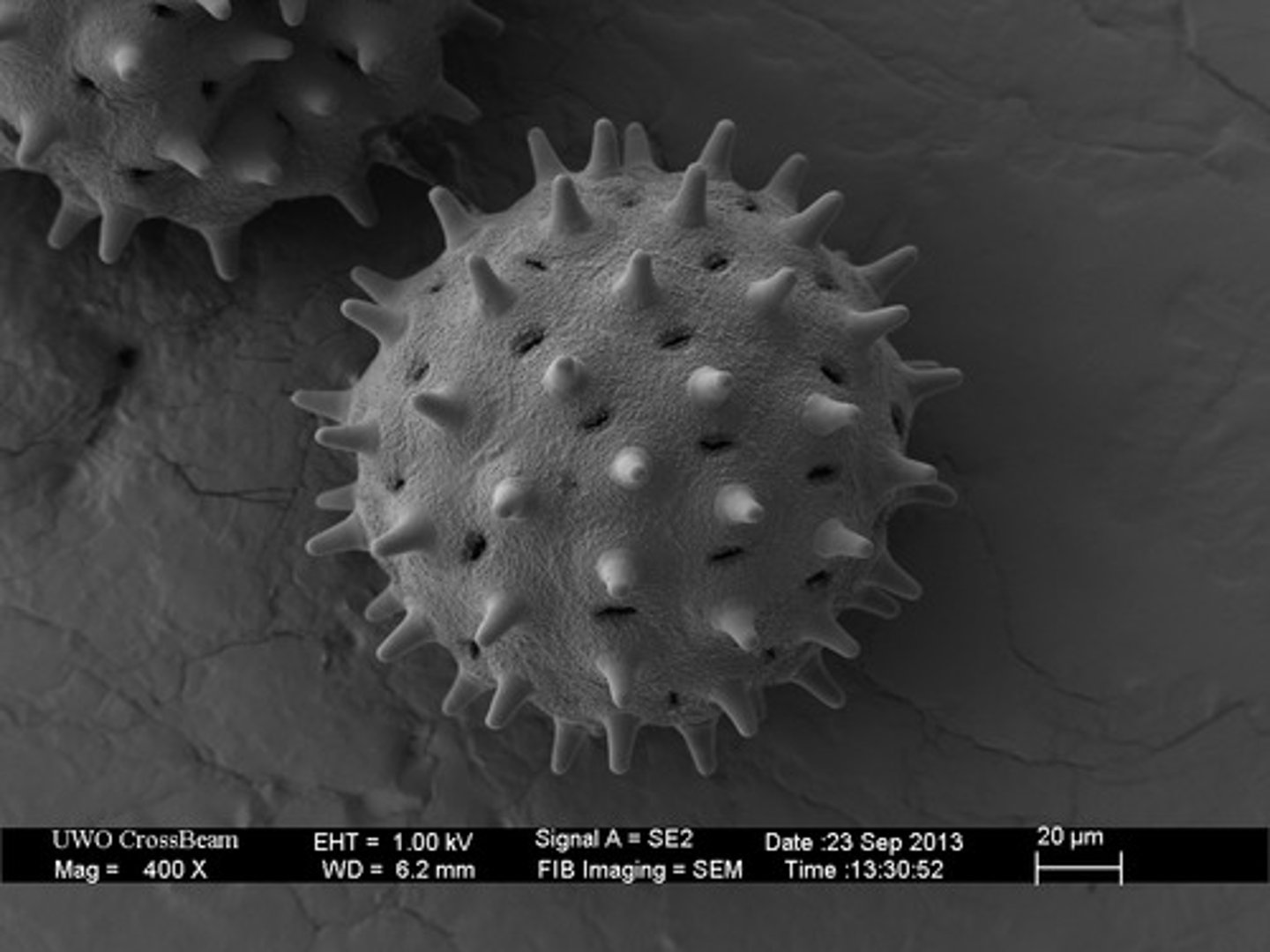
<p>A microscope that uses an electron beam to study the surface architecture of a cell or other specimen, expensive and requires training to operate</p>
11
New cards

Transmission Electron Microscope (TEM)

a microscope that passes an electron beam through very thin sections stained with metal atoms and is primarily used to study the internal structures of cells, expensive and requires training to operate
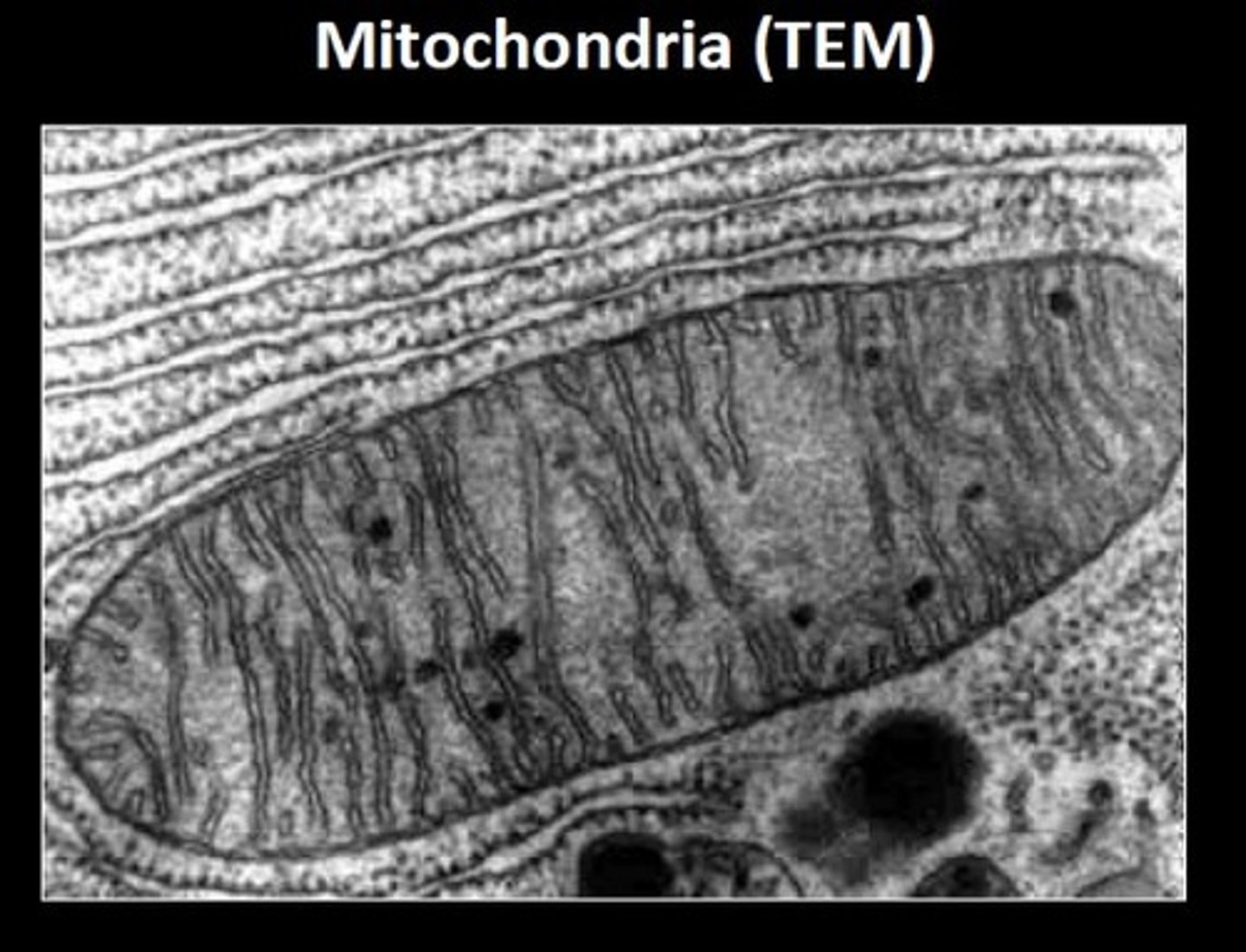
<p>a microscope that passes an electron beam through very thin sections stained with metal atoms and is primarily used to study the internal structures of cells, expensive and requires training to operate</p>
12
New cards

nucleus (of a cell)

A part of the cell containing DNA and RNA and responsible for growth and reproduction, NOT FOUND IN PROKAYOTIC CELLS
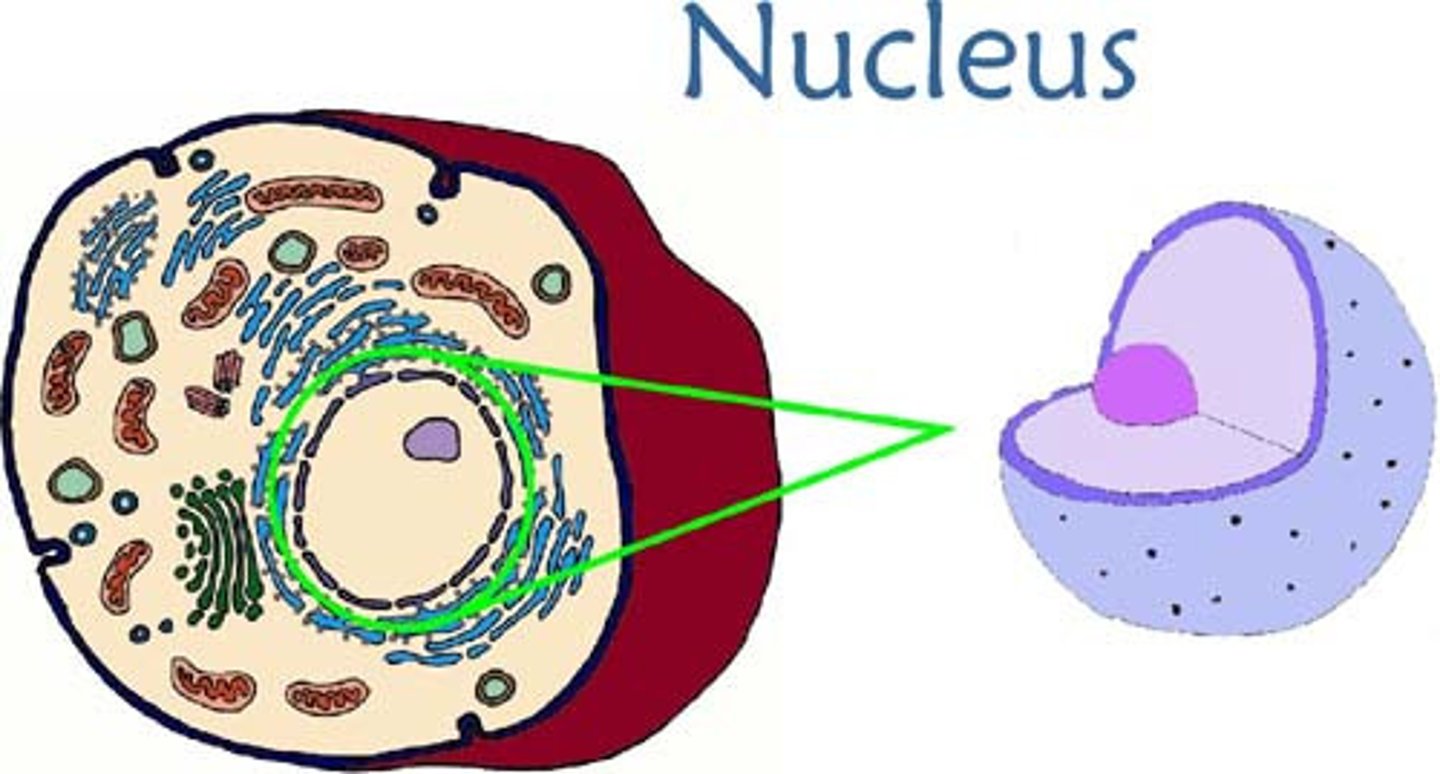
<p>A part of the cell containing DNA and RNA and responsible for growth and reproduction, NOT FOUND IN PROKAYOTIC CELLS</p>
13
New cards

membrane bound organelles

ONLY eukaryotic cells have these, tiny organ like structures surrounded by a membrane
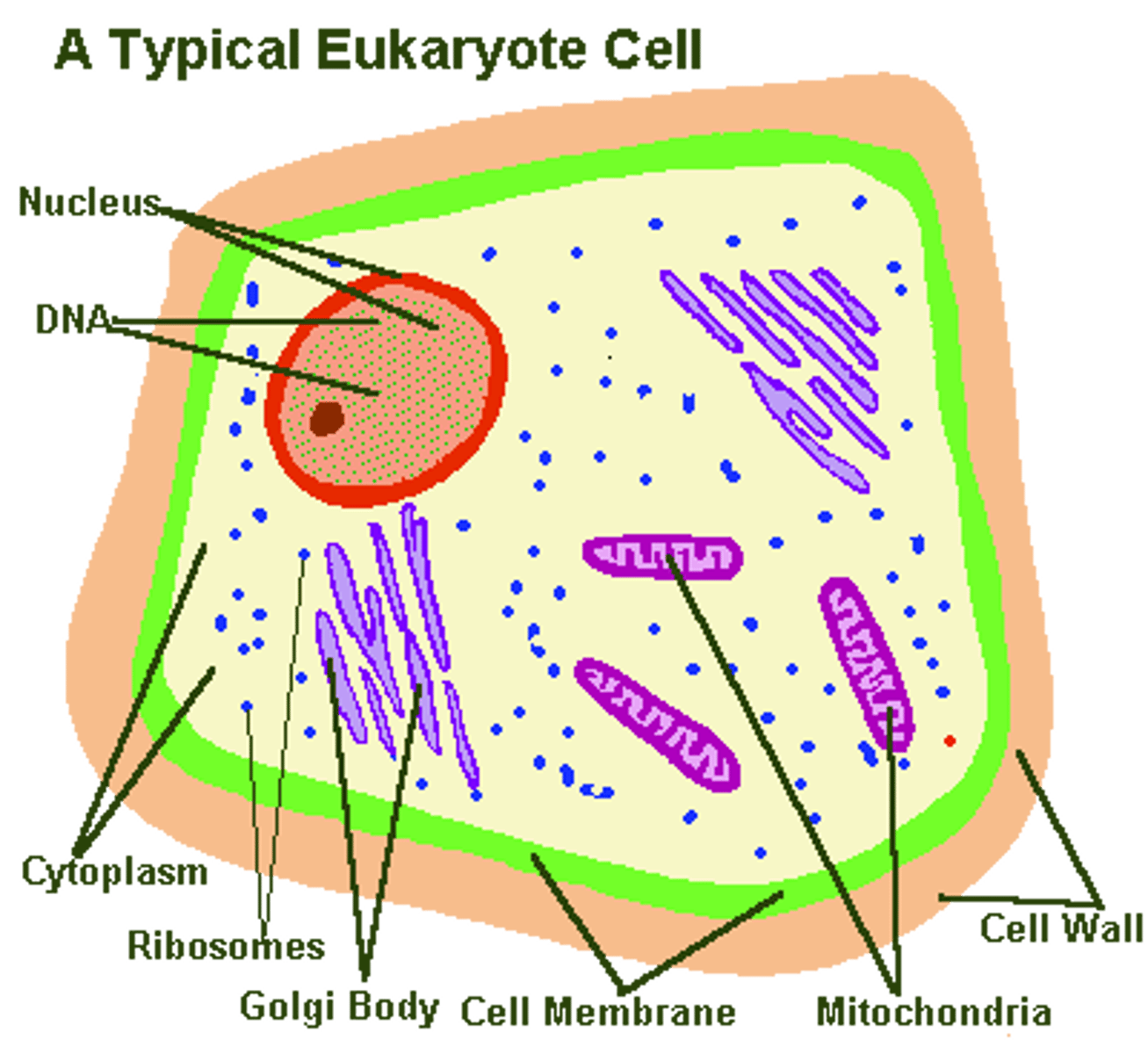
<p>ONLY eukaryotic cells have these, tiny organ like structures surrounded by a membrane</p>
14
New cards

Unicellular

Organism made of a single cell, ALL prokaryotes are unicellular
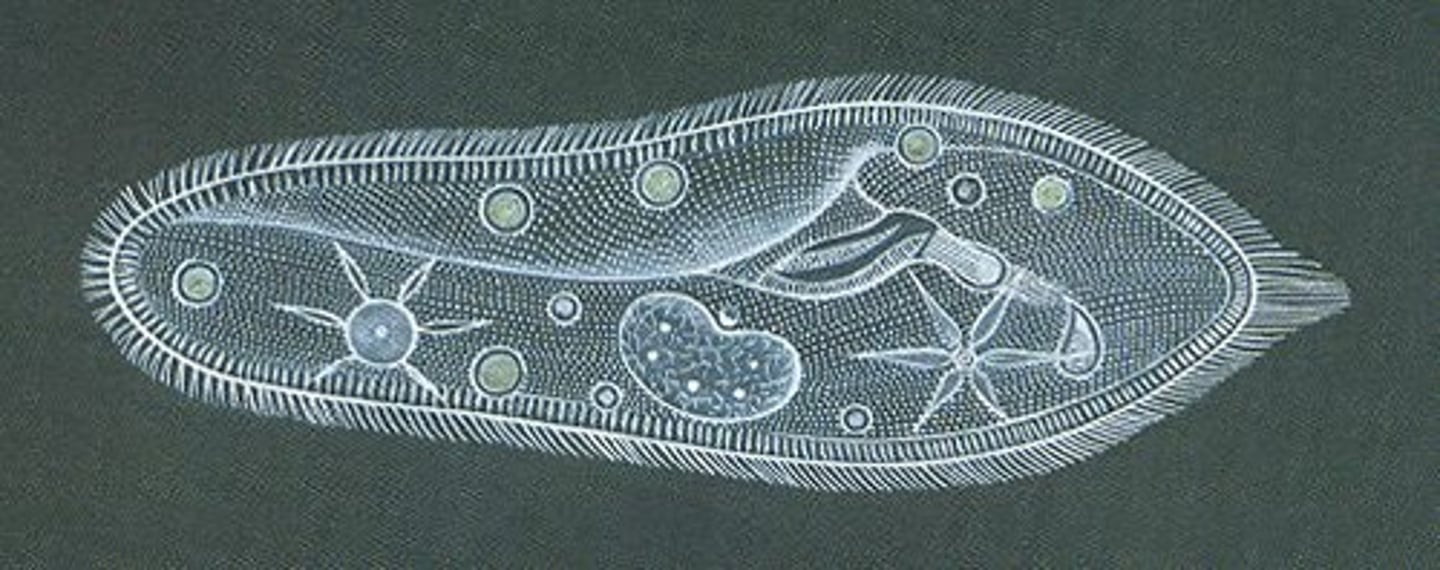
<p>Organism made of a single cell, ALL prokaryotes are unicellular</p>
15
New cards

Multicellular

organisms made of many cells, most eukaryotes are multicellular but many protists are not
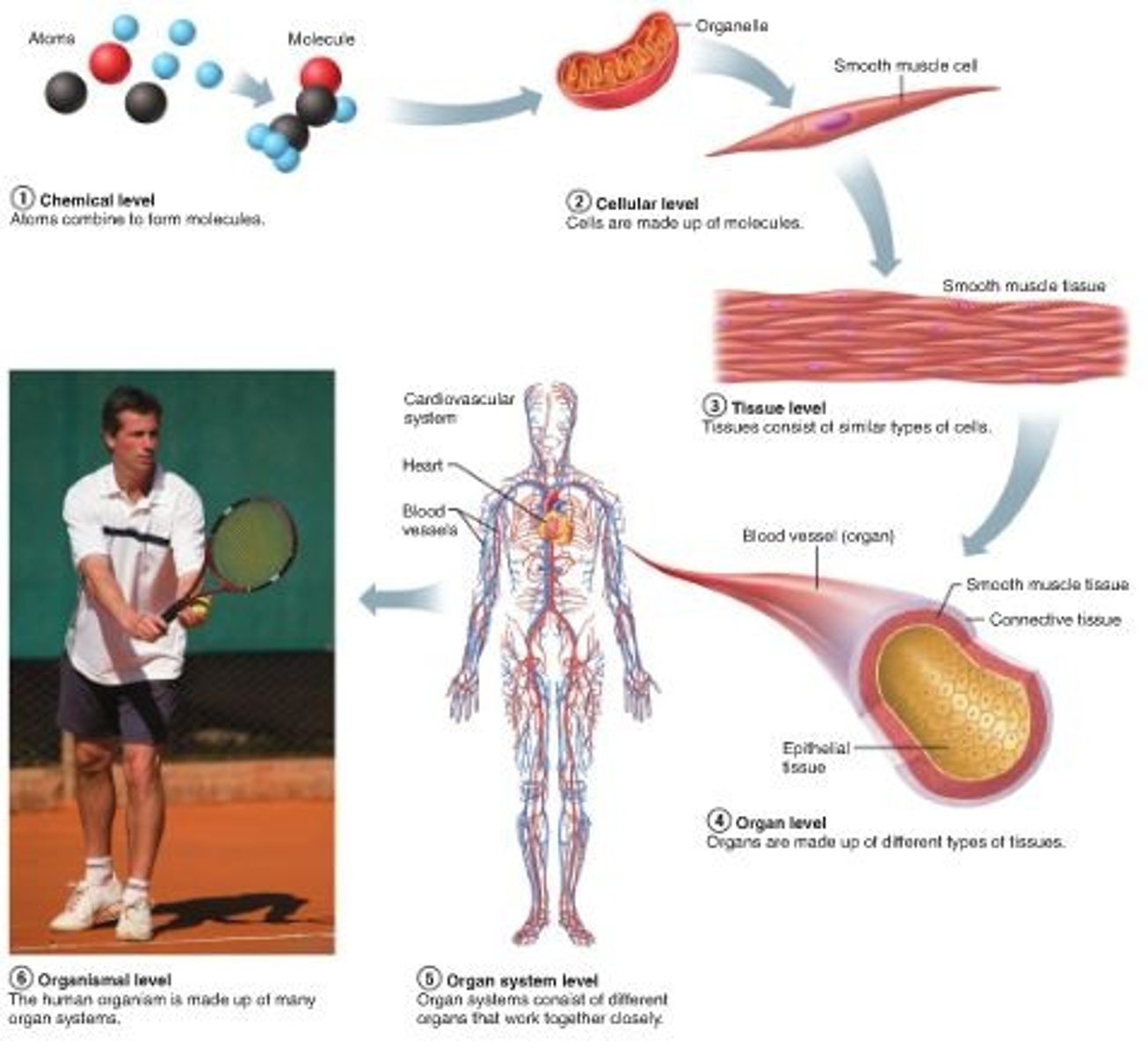
<p>organisms made of many cells, most eukaryotes are multicellular but many protists are not</p>
16
New cards

ALL CELLS

have a cell membrane (plasma membrane), cytoplasm, DNA, and ribosomes
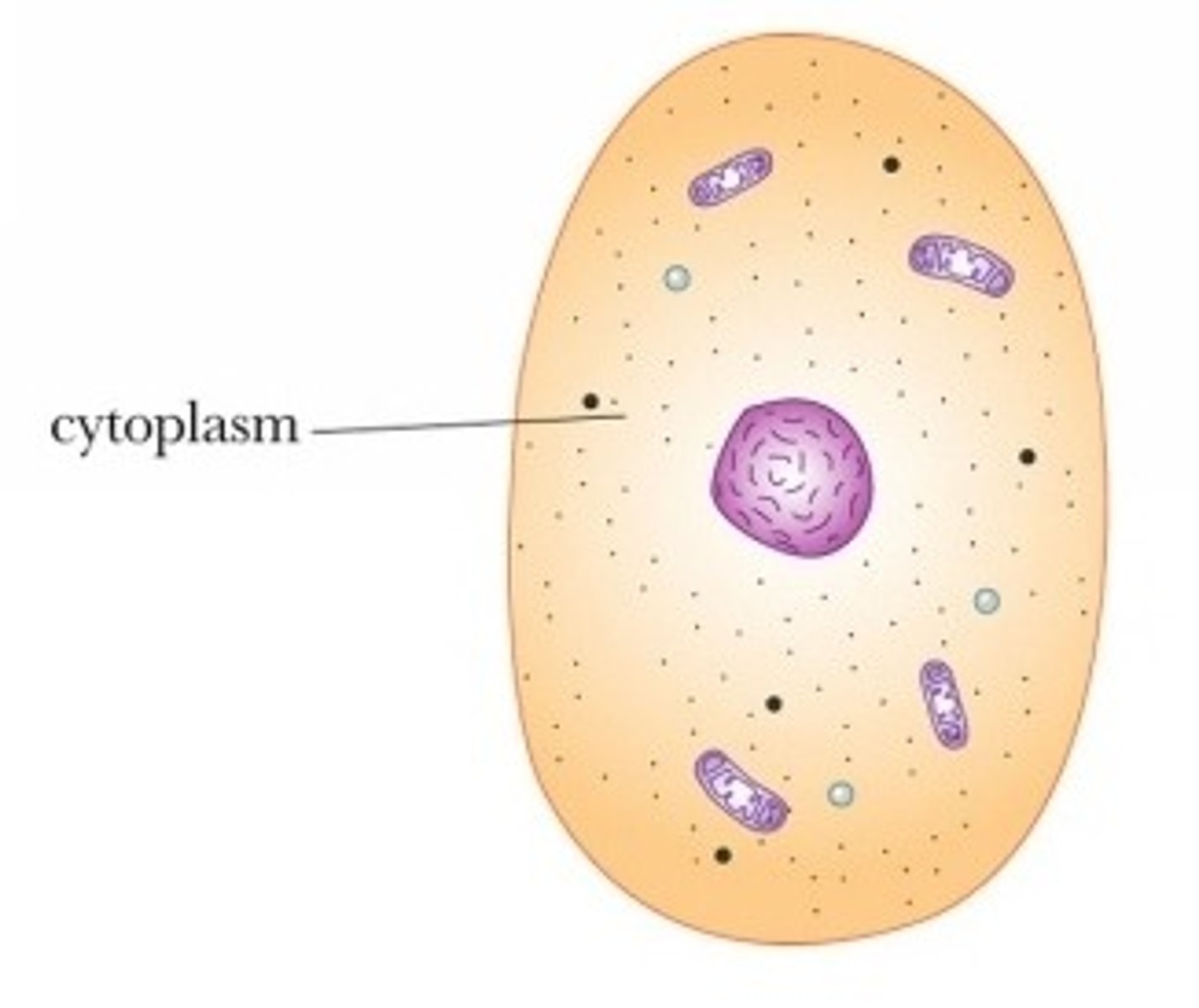
<p>have a cell membrane (plasma membrane), cytoplasm, DNA, and ribosomes</p>
17
New cards

spontaneous generation

the MISTAKEN idea that living things arise from nonliving sources, in direct conflict with 3rd point of Cell Theory ( All cells come from preexisting cells)
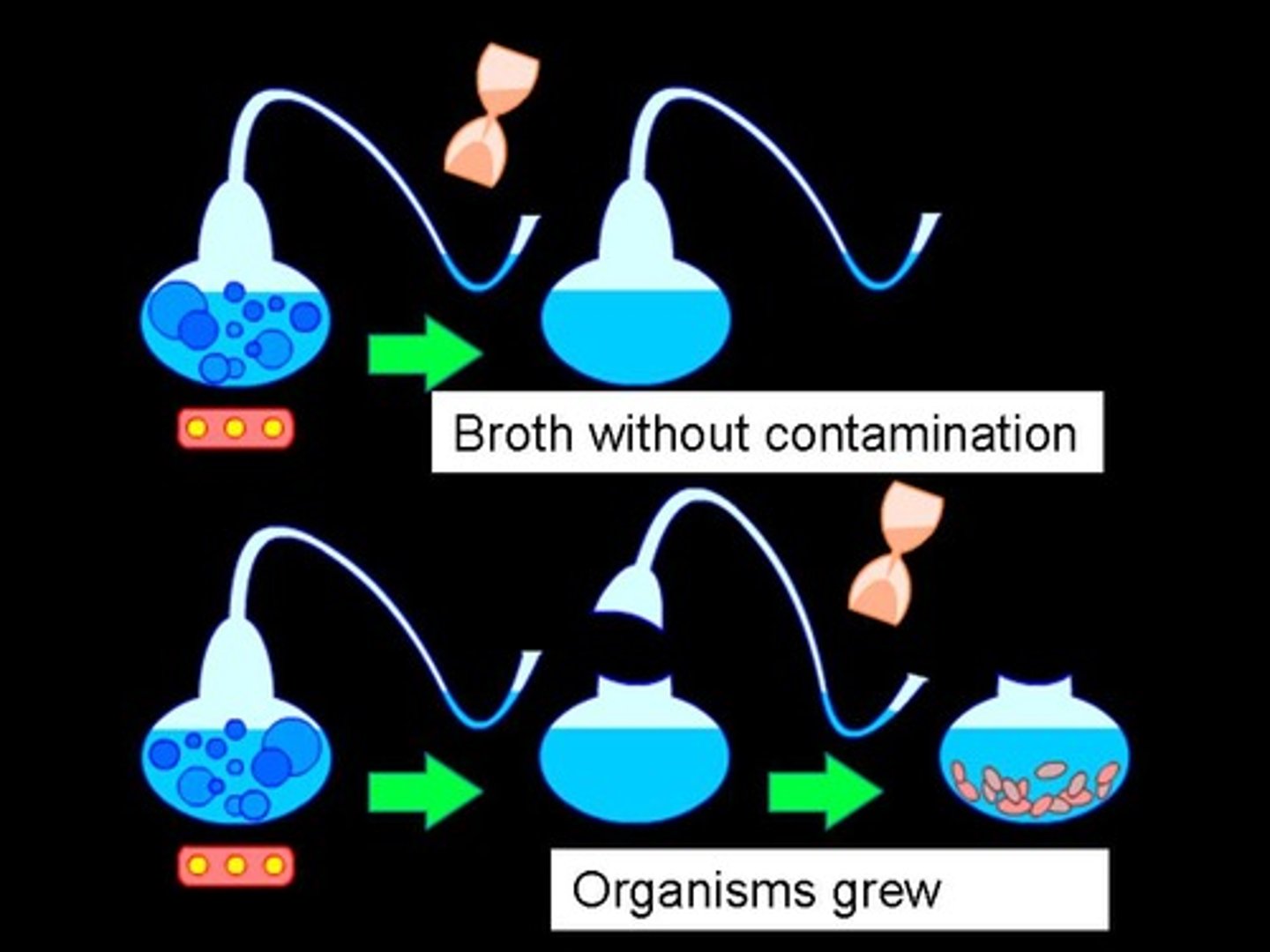
<p>the MISTAKEN idea that living things arise from nonliving sources, in direct conflict with 3rd point of Cell Theory ( All cells come from preexisting cells)</p>
18
New cards

Ribosome

Makes proteins, found in BOTH prokaryotes and eukaryotes
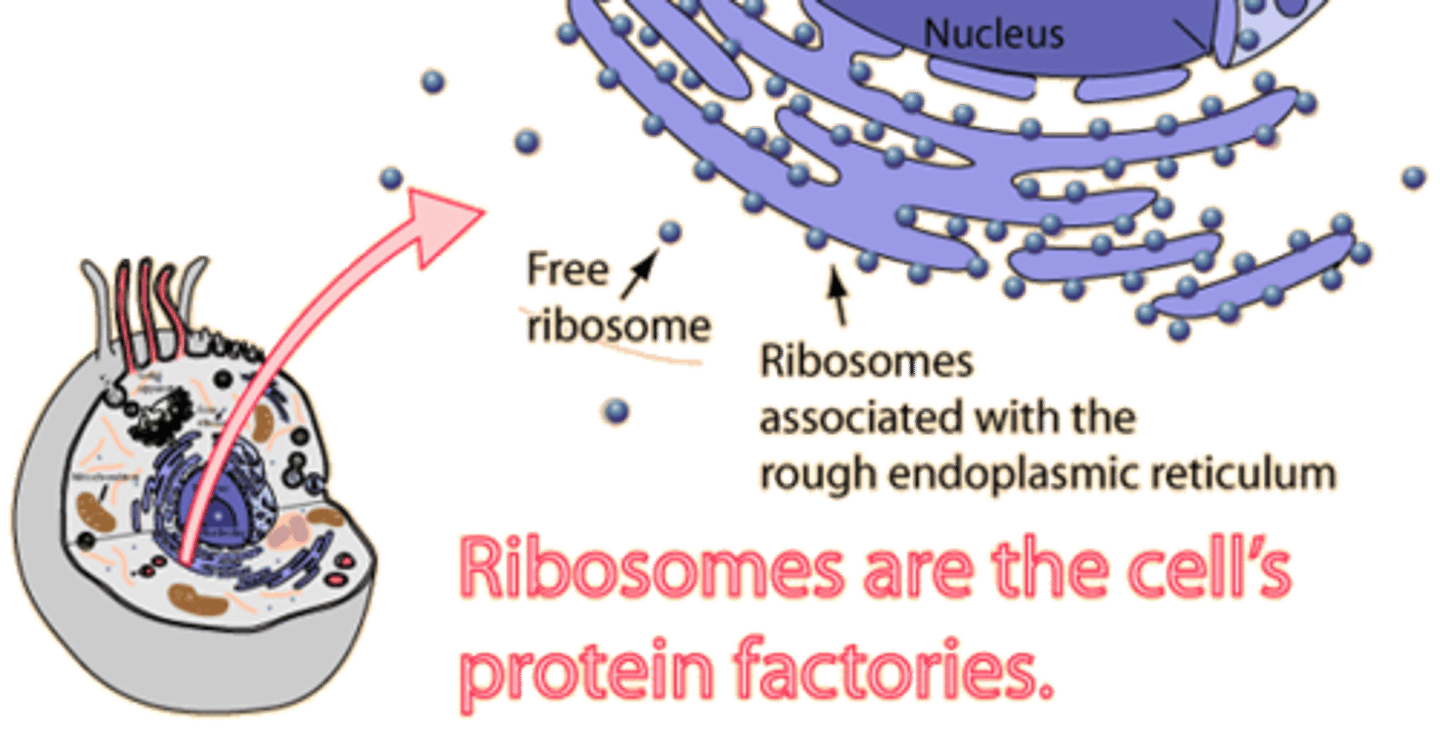
<p>Makes proteins, found in BOTH prokaryotes and eukaryotes</p>
19
New cards

Cell membrane (plasma membrane)

phospholipid bilayer that surrounds ALL cells and regulates what enters and leaves the cell
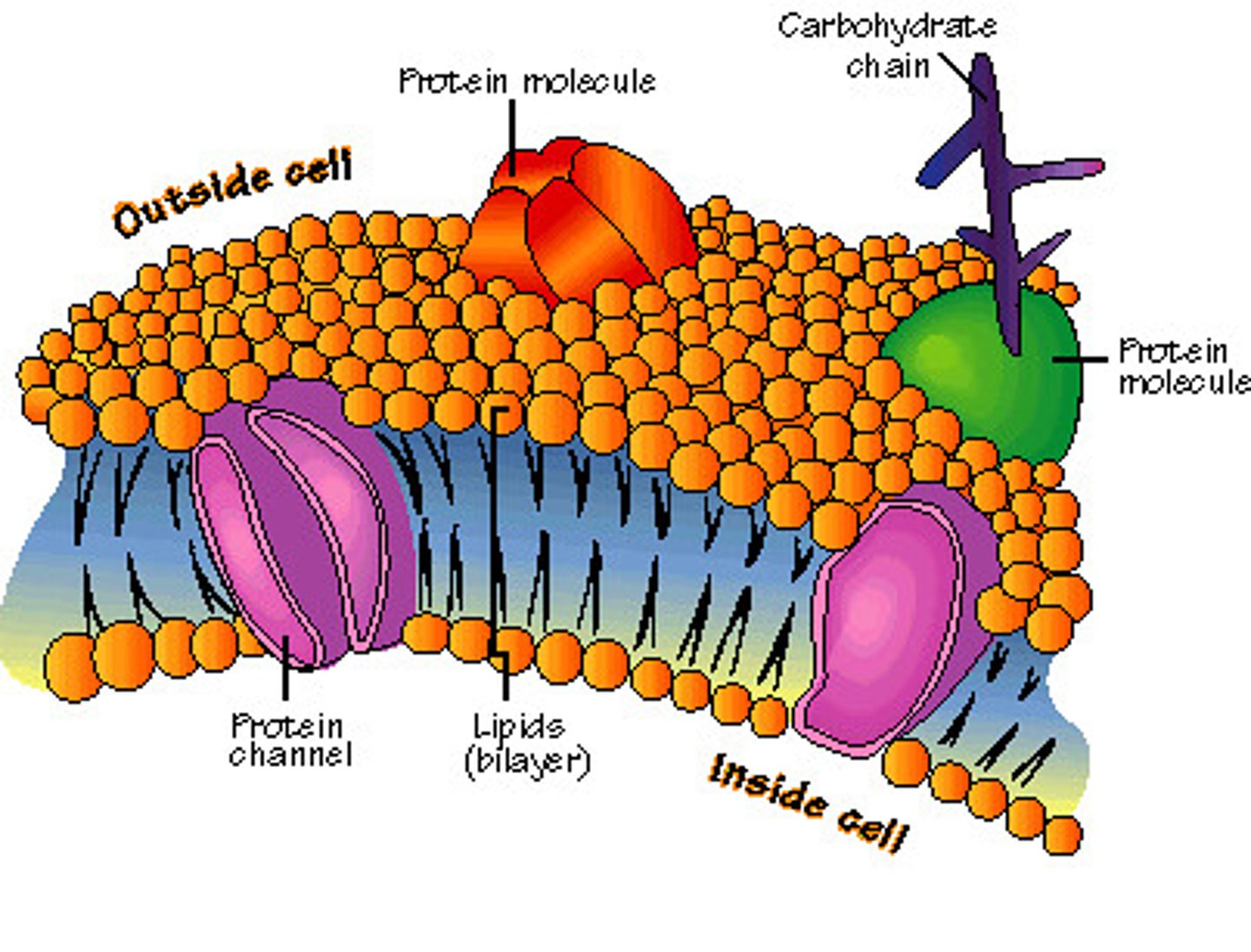
<p>phospholipid bilayer that surrounds ALL cells and regulates what enters and leaves the cell</p>
20
New cards

Pasturization

process in which a liquid is heated to a temperature that kills most bacteria and microorganisms to prevent spoiling of canned goods
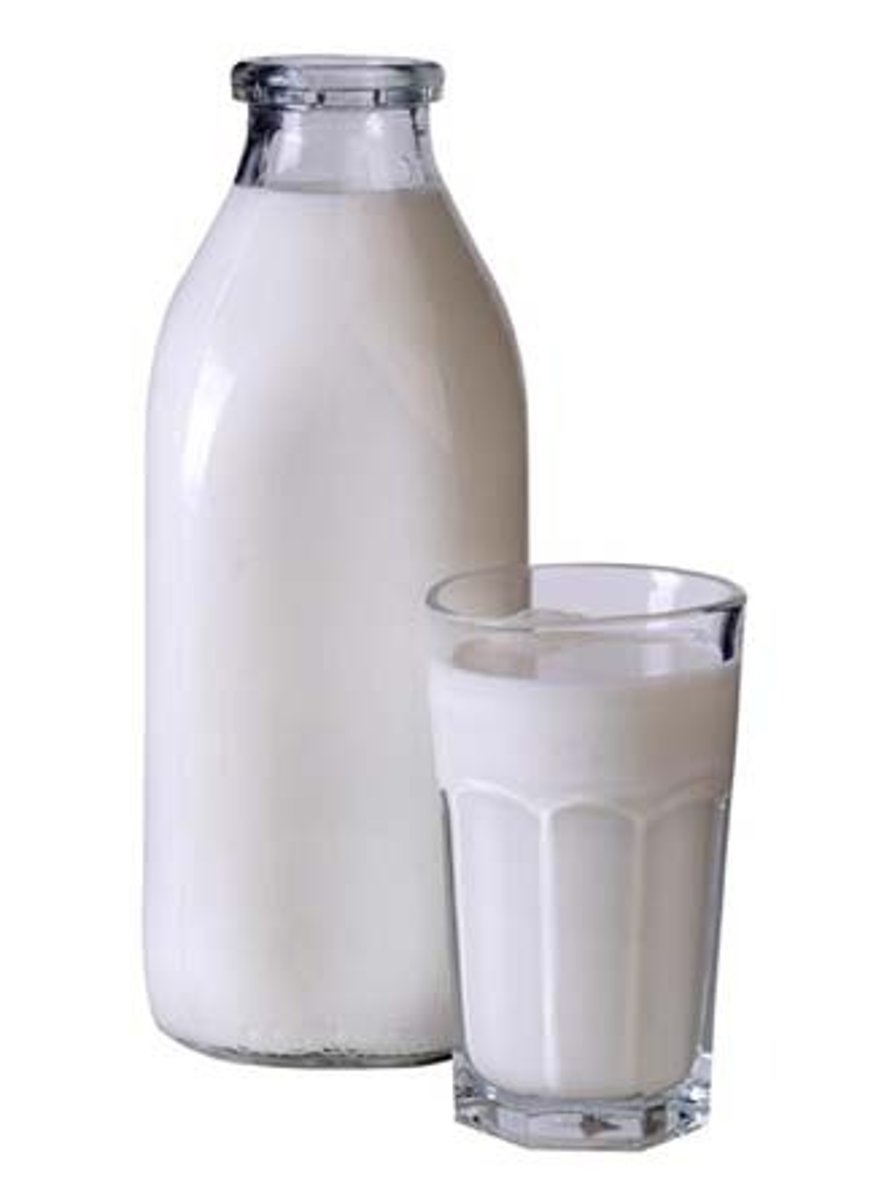
<p>process in which a liquid is heated to a temperature that kills most bacteria and microorganisms to prevent spoiling of canned goods</p>
21
New cards

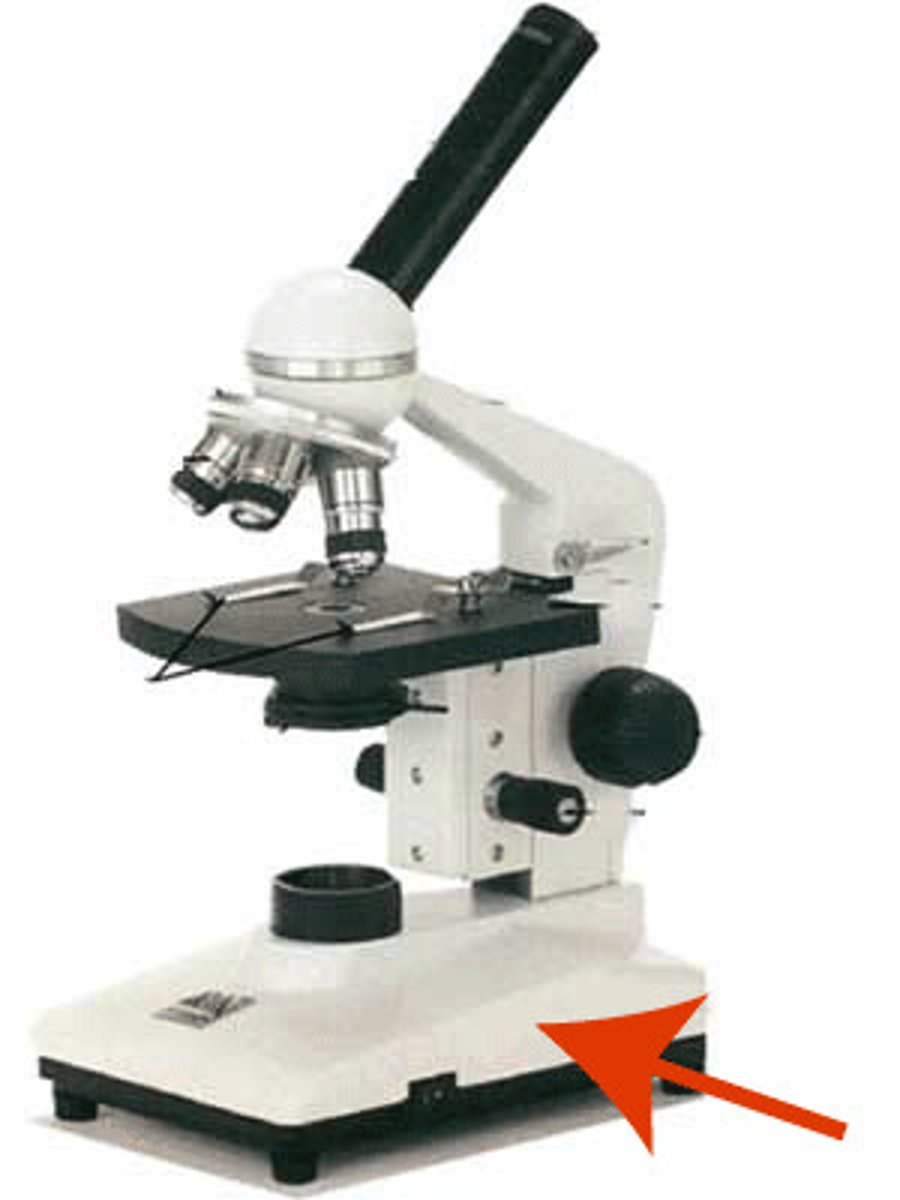
light source of microscope

located in the base

illuminates sample
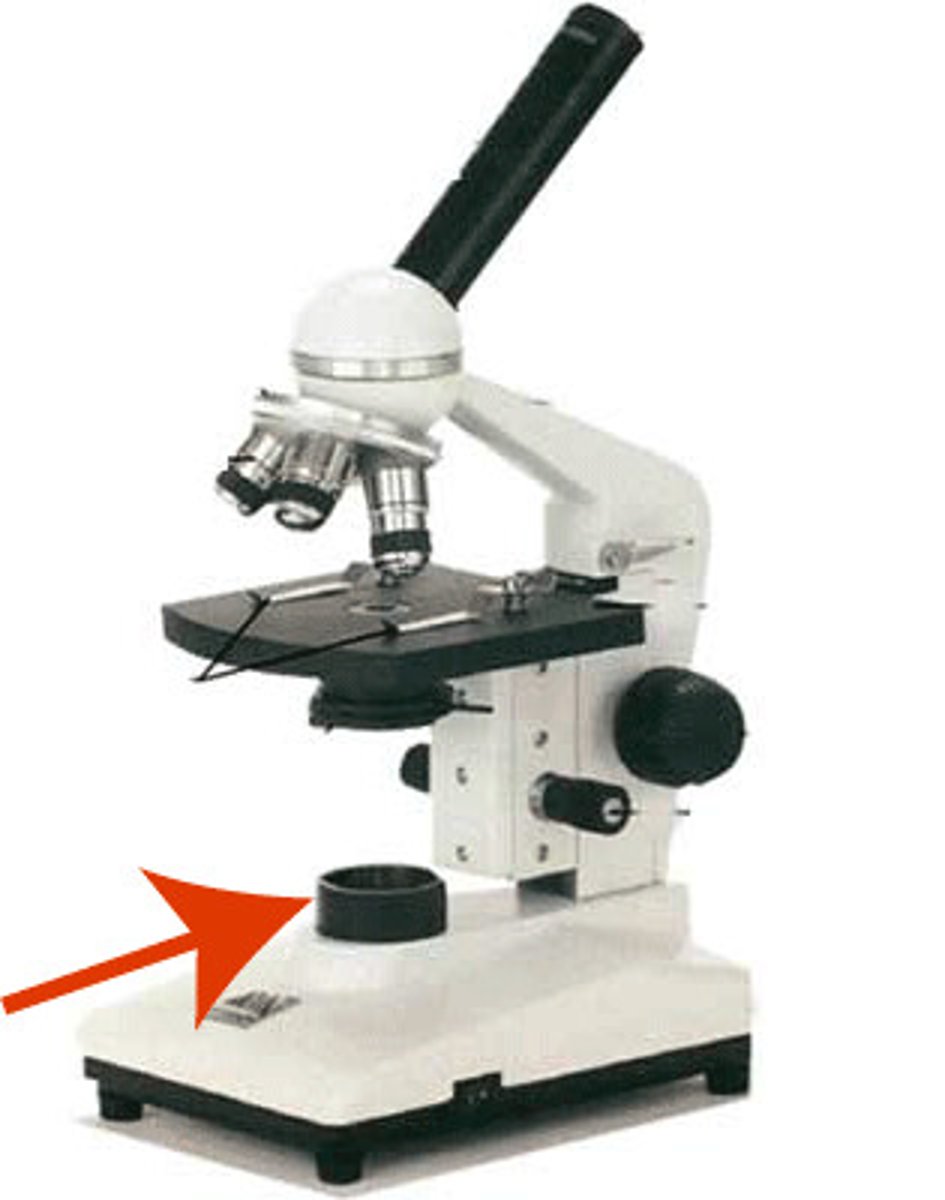
<p>located in the base</p><p>illuminates sample</p>
22
New cards

stage of microscope

Holds the microscope slide in position.
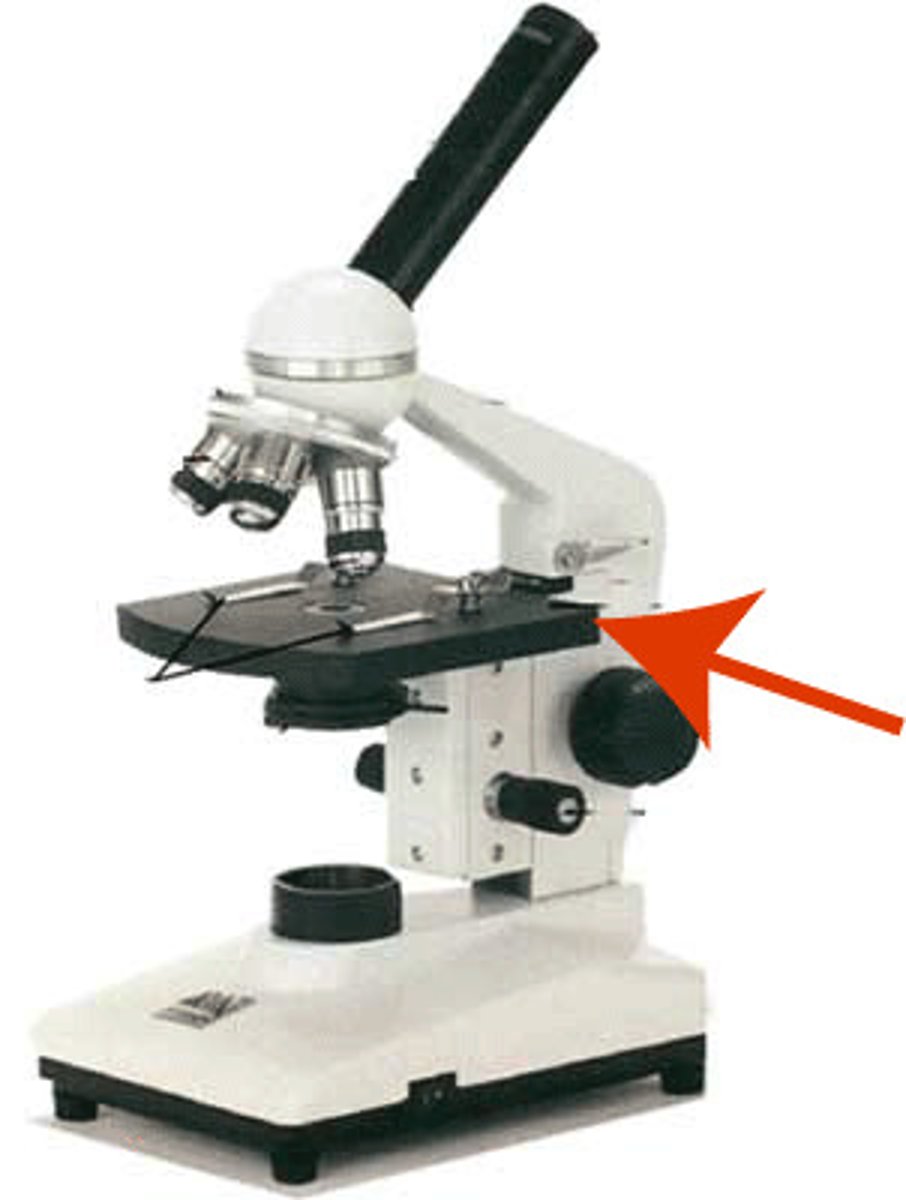
<p>Holds the microscope slide in position.</p>
23
New cards

course adjustment knob

used to focus only on low power
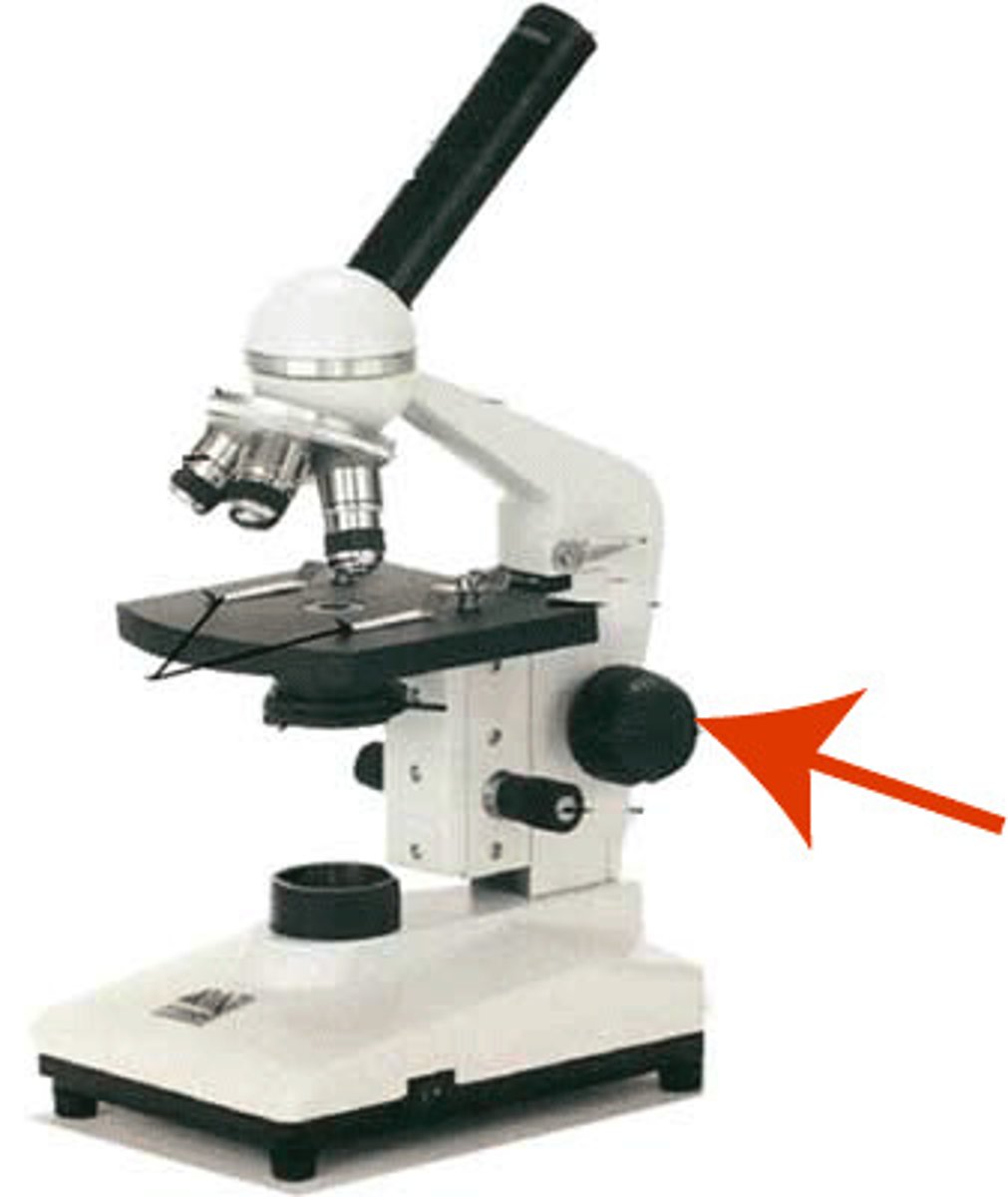
<p>used to focus only on low power</p>
24
New cards

revolving nosepiece

Holds and turns the objectives into viewing position
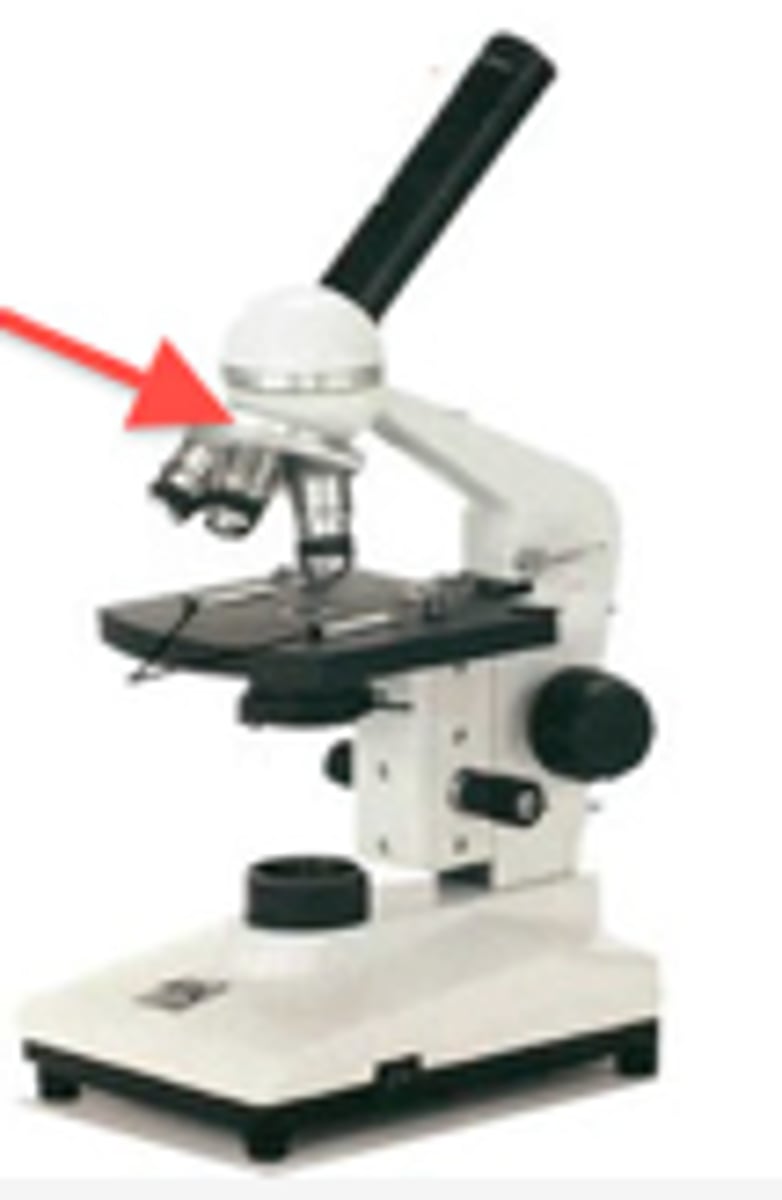
<p>Holds and turns the objectives into viewing position</p>
25
New cards

Diaphragm

Regulates the amount of light on the specimen
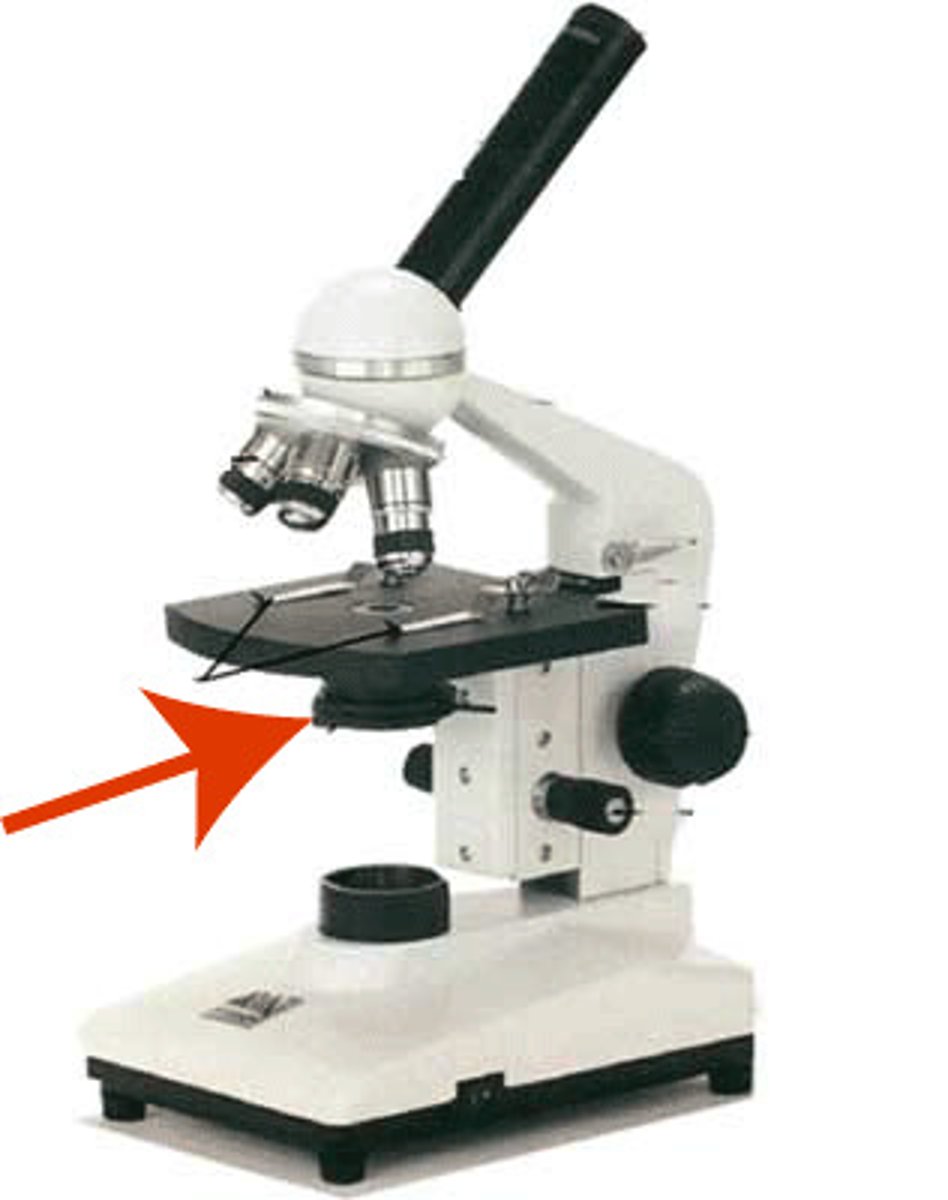
<p>Regulates the amount of light on the specimen</p>
26
New cards

eyepiece lens (ocular lens)

Contains a lens that magnifies about 10x
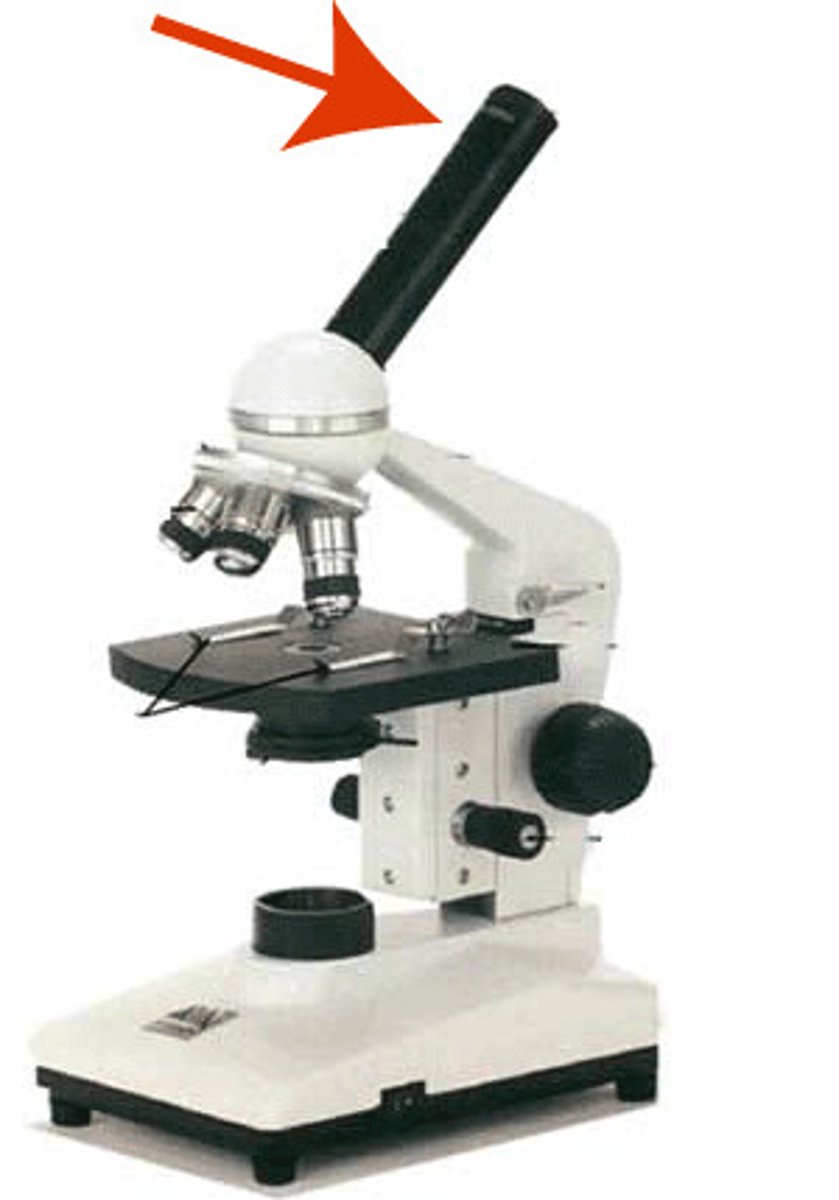
<p>Contains a lens that magnifies about 10x</p>
27
New cards

fine adjustment knob

this part moves the stage slightly to help you sharpen or "fine" tune your view of the specimen
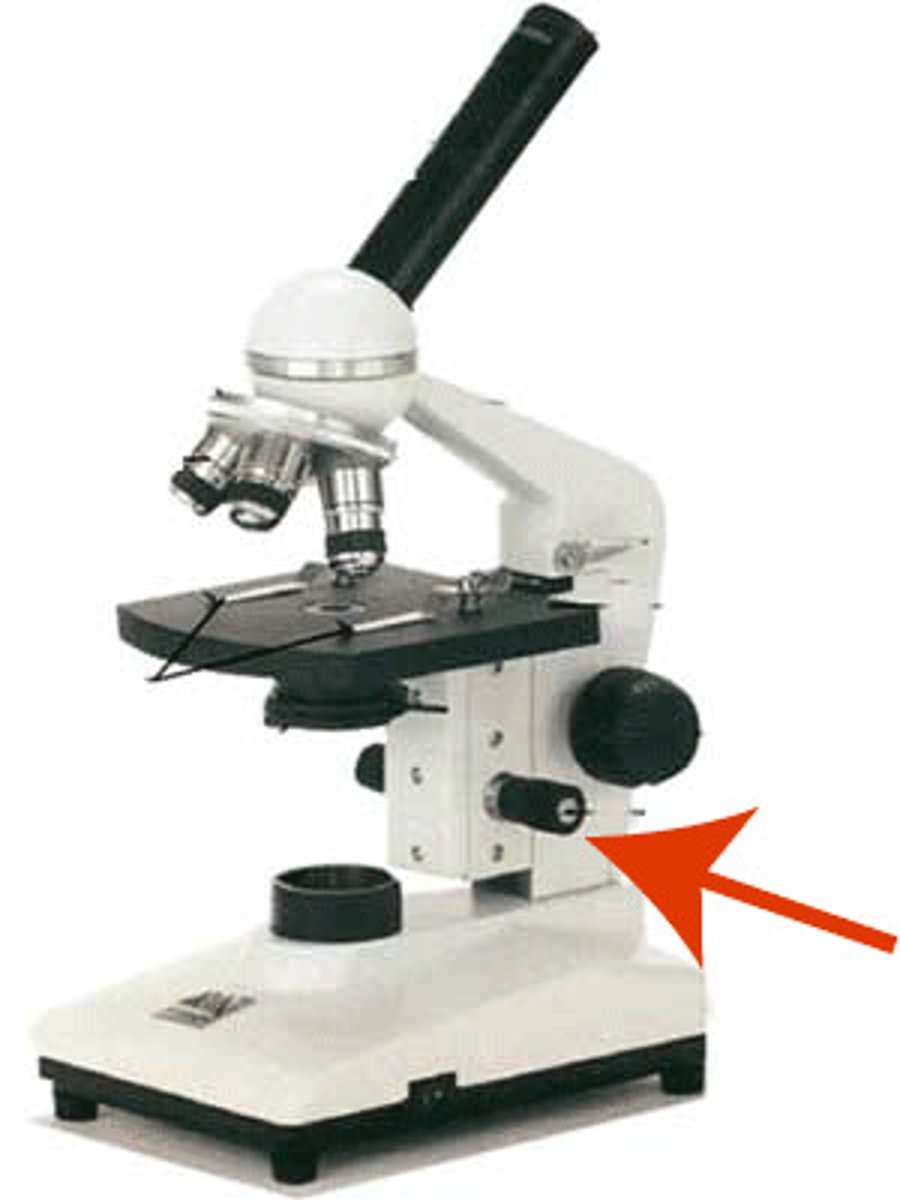
<p>this part moves the stage slightly to help you sharpen or "fine" tune your view of the specimen</p>
28
New cards

low power objective

a small lens with low magnifying power (4x)
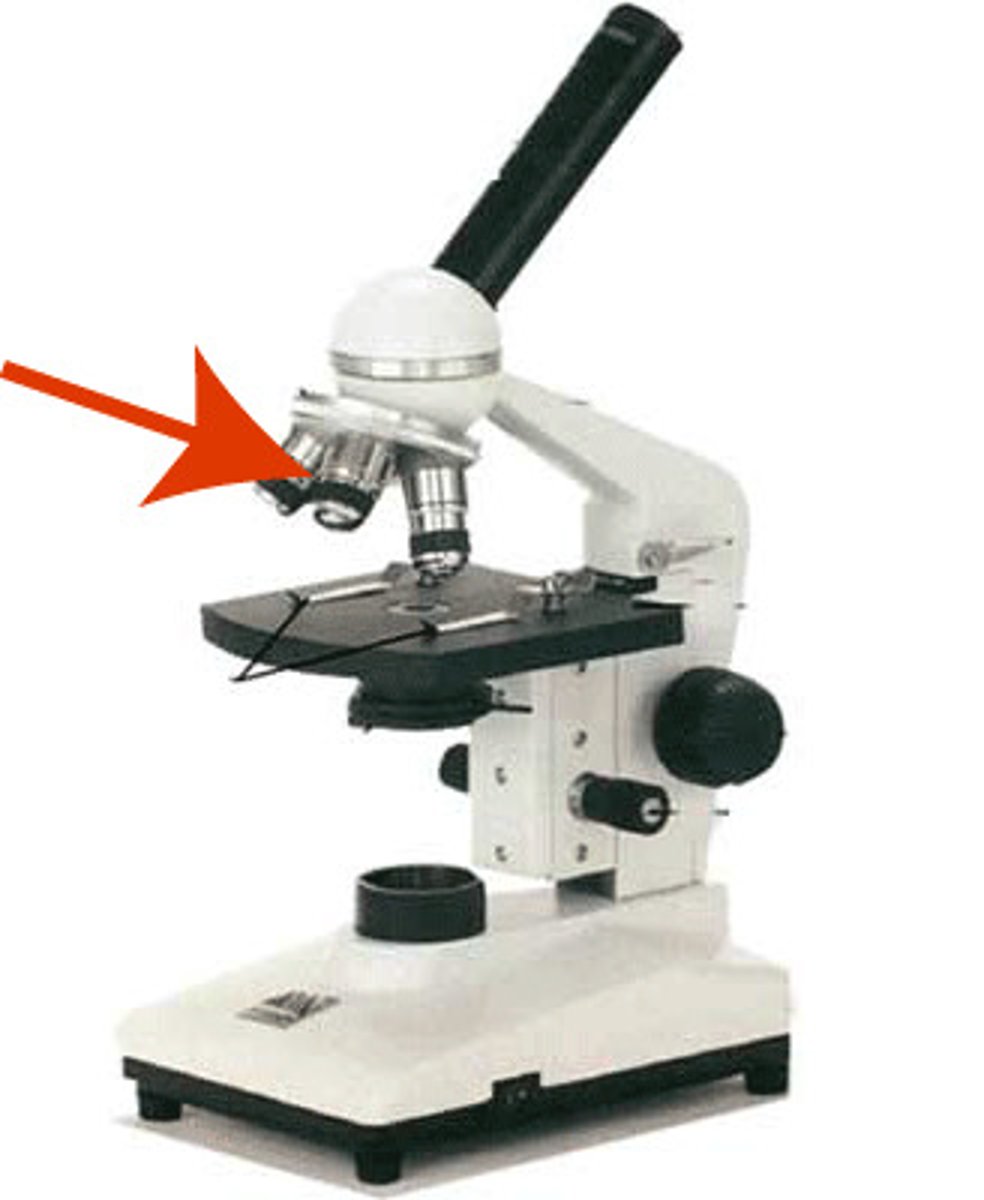
<p>a small lens with low magnifying power (4x)</p>
29
New cards

medium power objective

medium sized objective (10x)
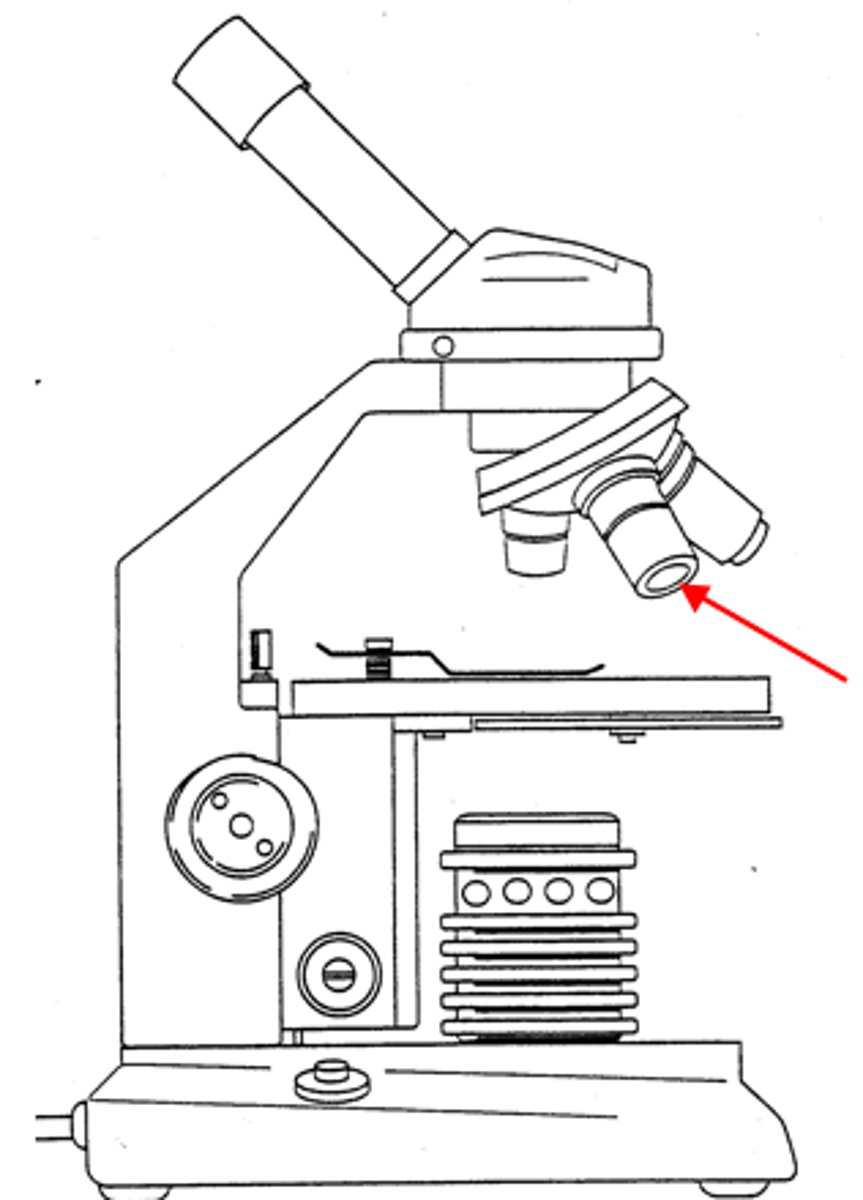
<p>medium sized objective (10x)</p>
30
New cards

high power objective

a large lens with high magnifying power (40 x)
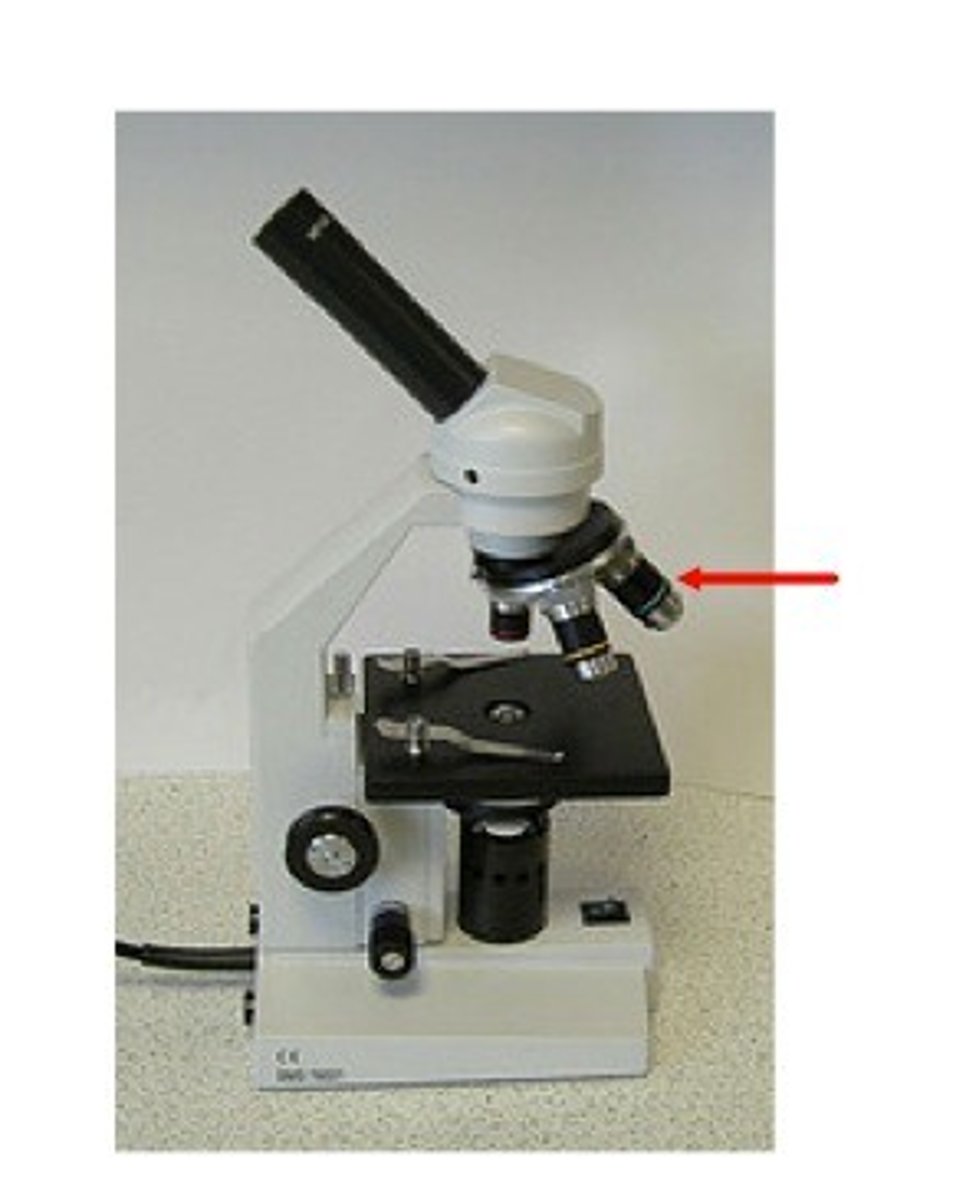
<p>a large lens with high magnifying power (40 x)</p>
31
New cards

arm

Used to support the microscope when carried
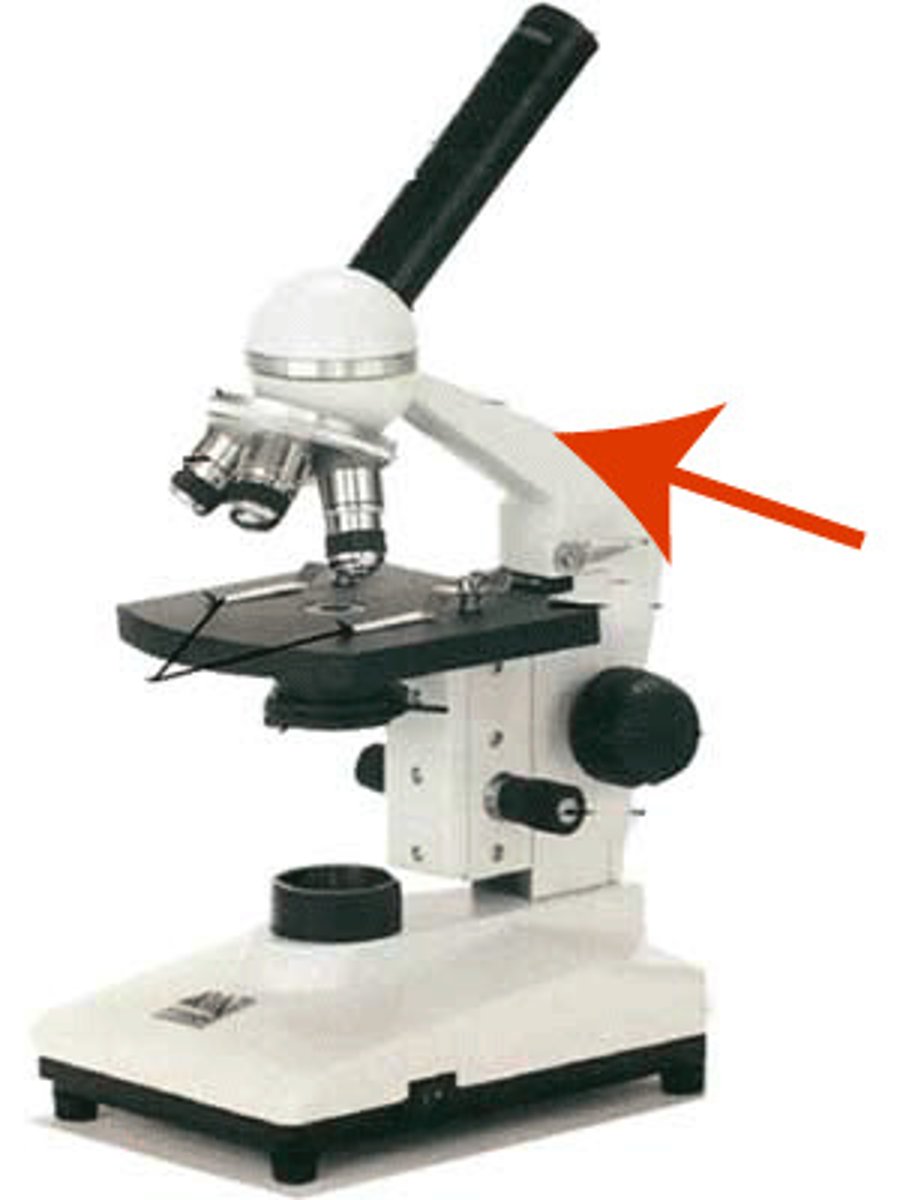
<p>Used to support the microscope when carried</p>
32
New cards

Base

supports the microscope

<p>supports the microscope</p>
33
New cards

body tube

Connects the eyepiece to the revolving nosepiece
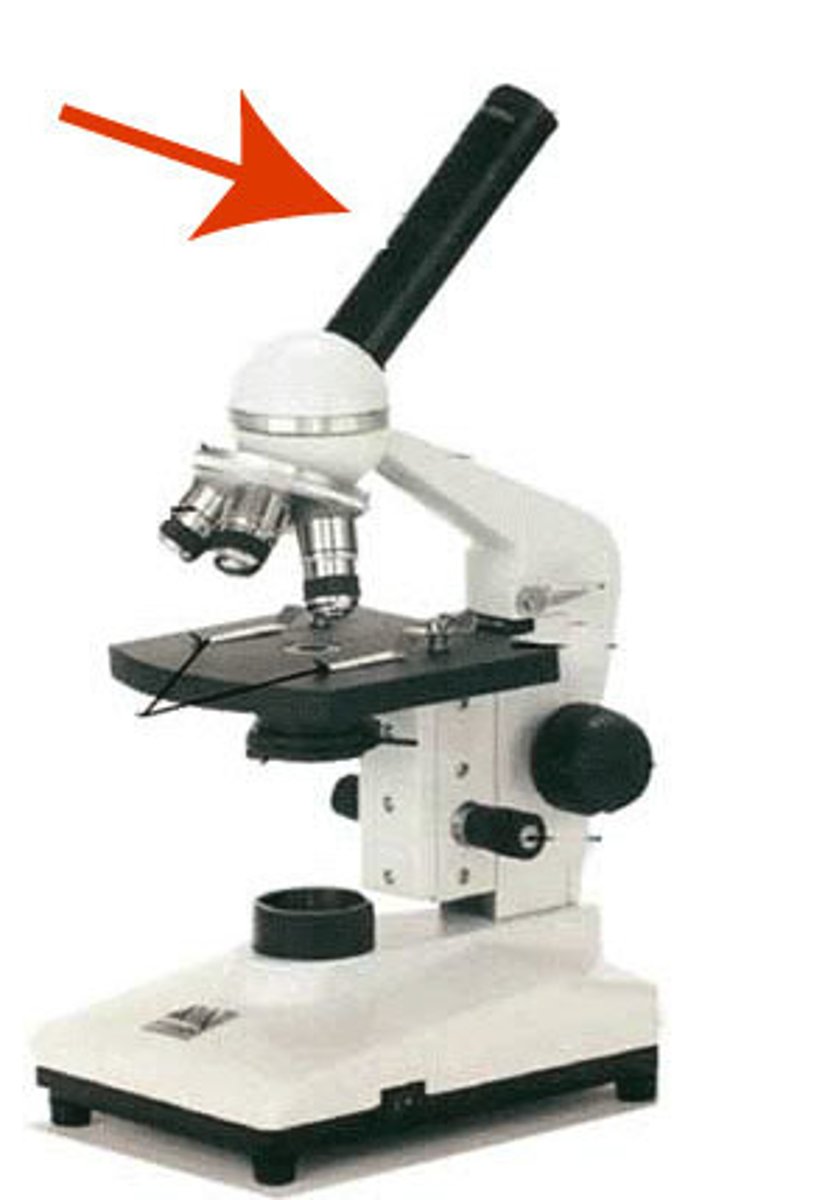
<p>Connects the eyepiece to the revolving nosepiece</p>
34
New cards

stage clips

holds the slide in place on the stage
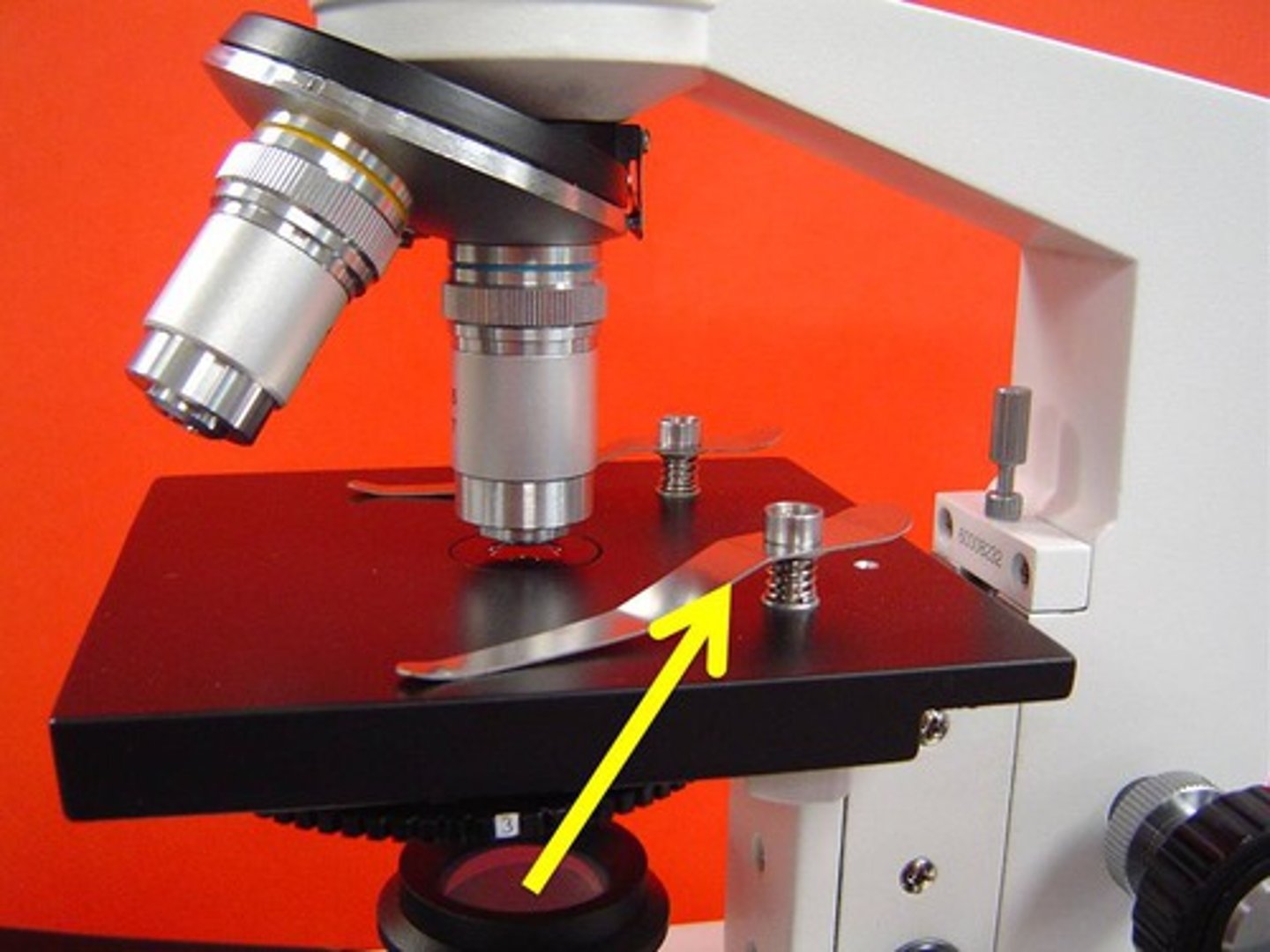
<p>holds the slide in place on the stage</p>
35
New cards

total magnification

objective lens x ocular (eyepiece) lens
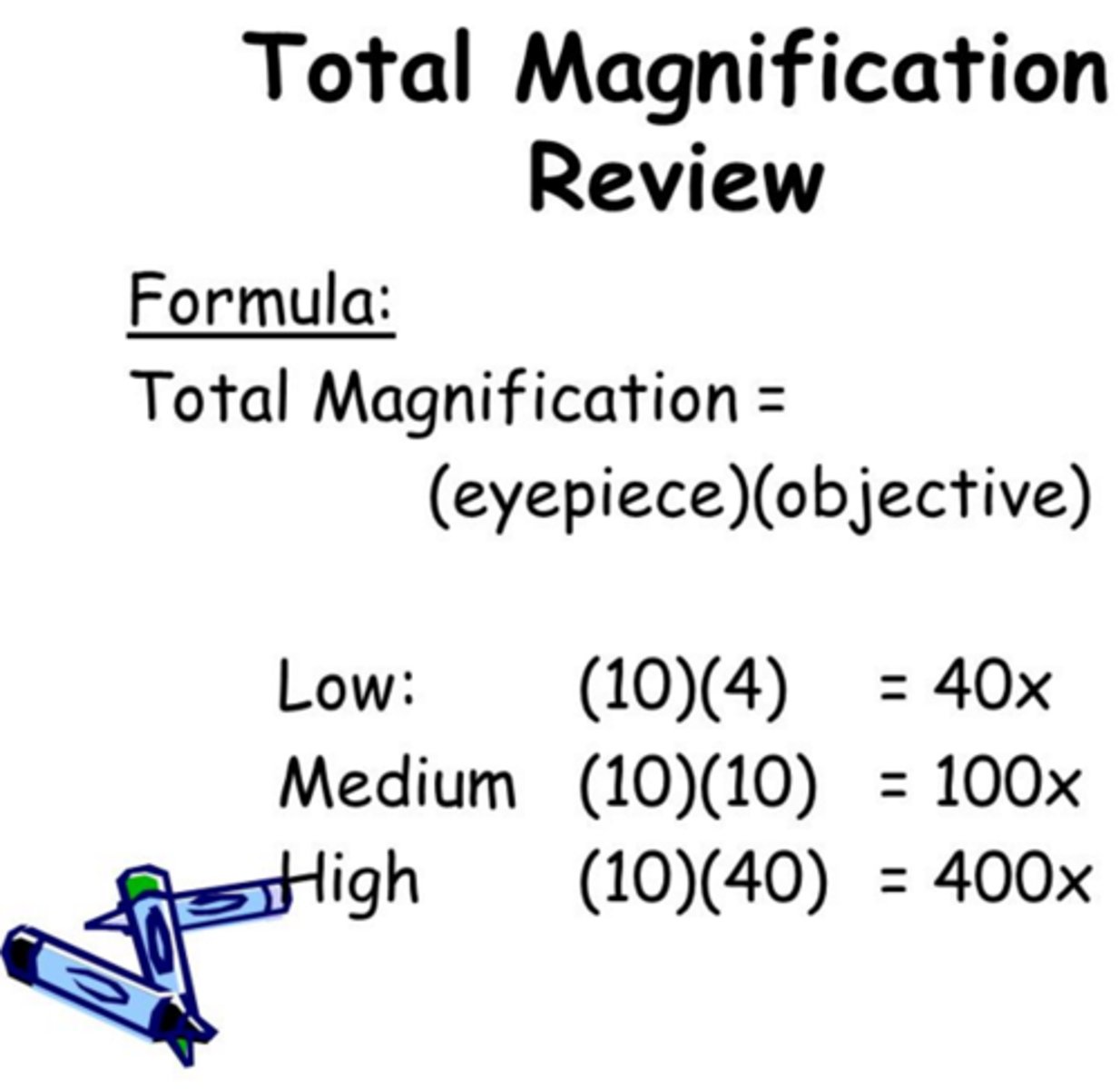
<p>objective lens x ocular (eyepiece) lens</p>
36
New cards

endosymbiotic theory

a theory that states that certain kinds of prokaryotes began living inside of larger cells and evolved into the organelles of modern-day eukaryotes
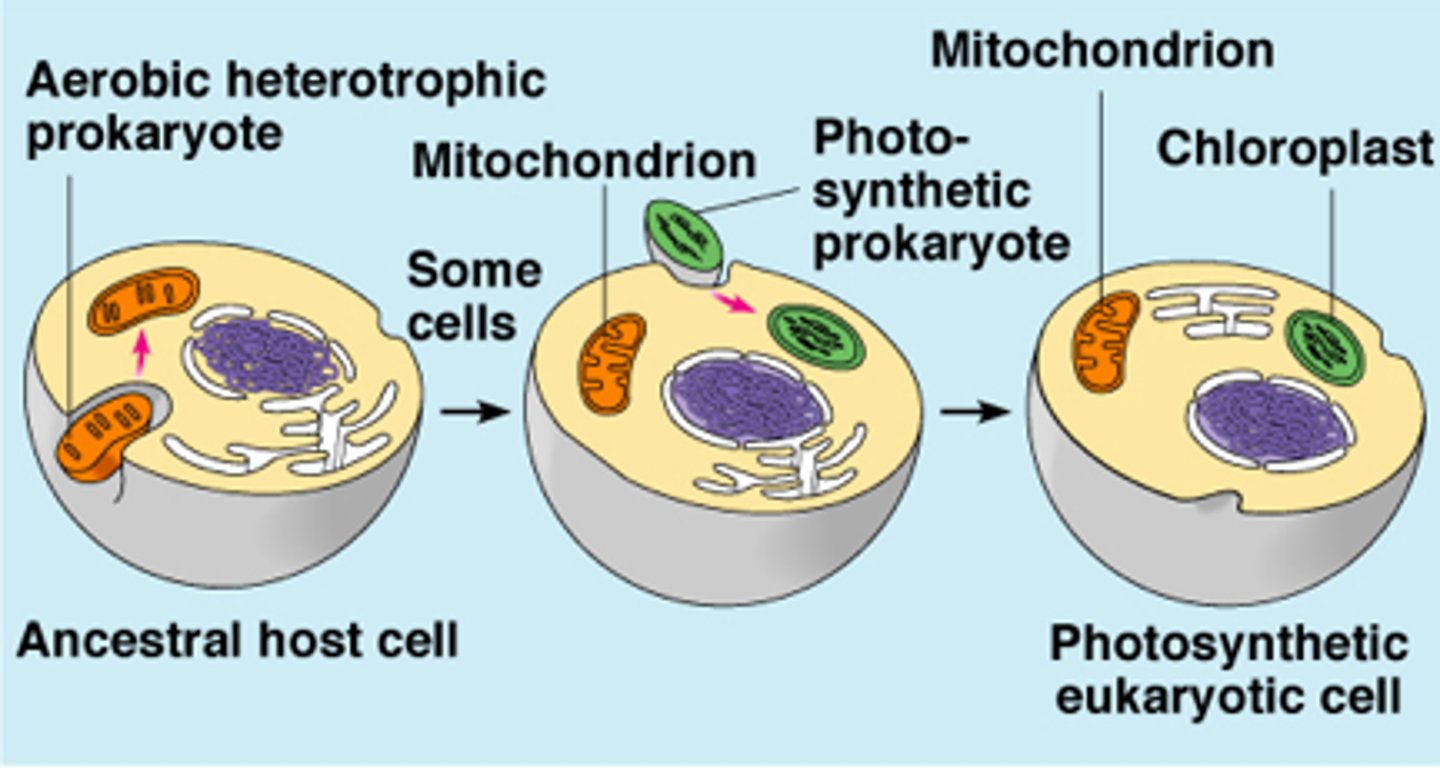
<p>a theory that states that certain kinds of prokaryotes began living inside of larger cells and evolved into the organelles of modern-day eukaryotes</p>
37
New cards

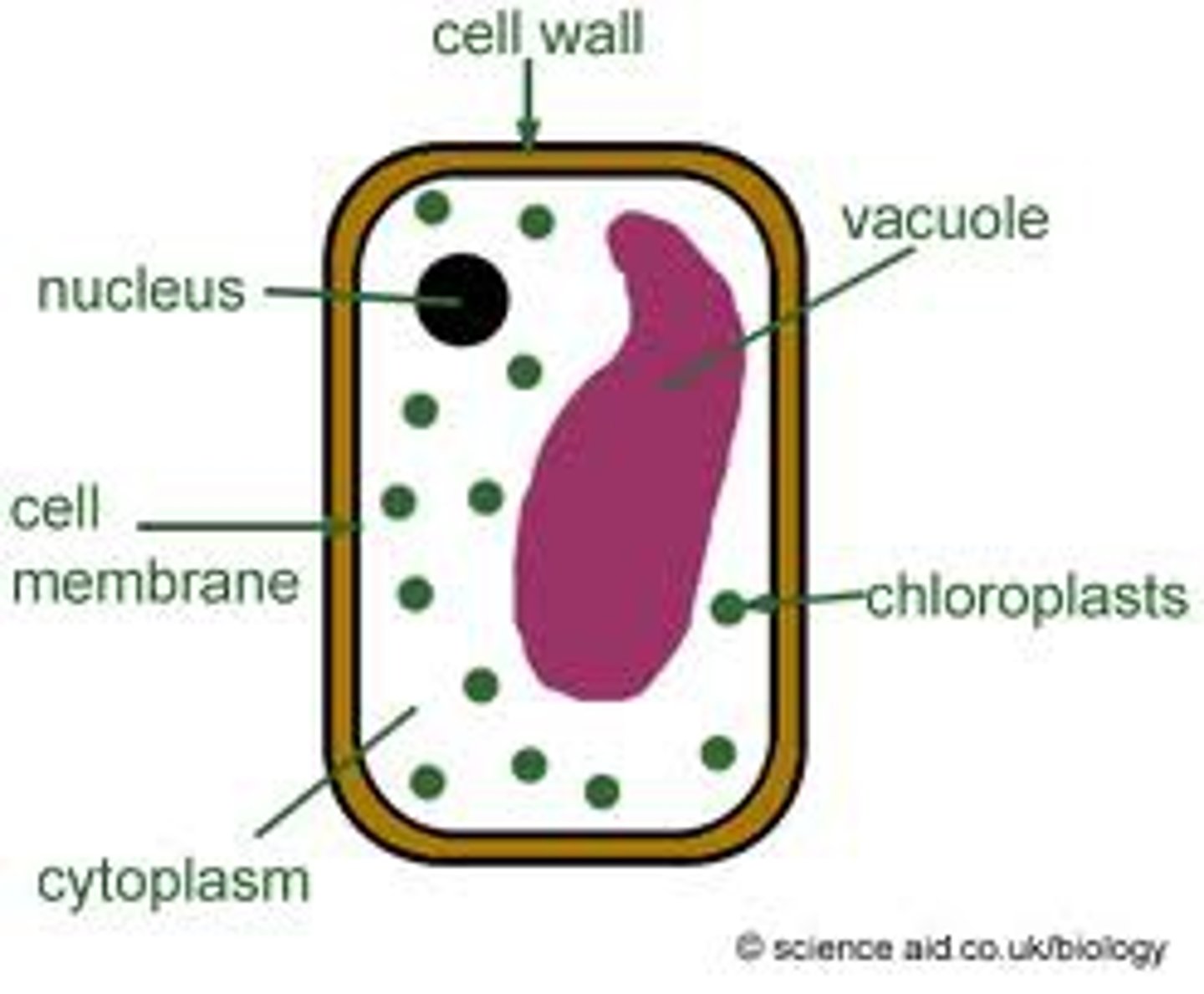
cell wall

strong, supporting layer around the cell membrane in plants, fungi, & prokaryotes, NOT found in animal cells
<p>strong, supporting layer around the cell membrane in plants, fungi, &amp; prokaryotes, NOT found in animal cells</p>