55030 Soldering
 Call Kai
 Learn
 Practice Test
 Spaced Repetition
 Match
 Flashcards
 Knowt Play
1/42

There's no tags or description
Looks like no tags are added yet.
43 Terms

Soldering
A method of bonding two parts together to create an electrical connection using molten solder that cools and forms a solid physical bond.
What can happen if a solder joint is done improperly?
It can become a point of failure in a circuit and cause intermittent problems that are difficult to troubleshoot.
What is the most common injury when soldering?
Burns
What safety equipment should always be worn when soldering?
Eye protection
Why should you wash your hands after handling solder?
Solder often contains lead, which can cause lead poisoning.
What temperature is a solder pot heated to?
500*F
What metals typically make up solder?
Tin and Lead
What are the four common forms of solder?
Wire, ribbon, paste, and bar.
What is solder wire generally used for?
General soldering.
What is solder paste used for?
Wrapping around a joint that needs to be heated.
What is solder bar used for?
Refilling solder pots.
Rosin-core solder
Solder wire containing rosin, which acts as a flux to clean and protect metal surfaces.
Why is lead-free solder harder to work with?
It has a higher melting point, requires more heat, and does not flow as well
Eutectic alloy
An alloy with the lowest possible melting point for its mixture. 62/35 tin/lead.
Flux
A slightly acidic material used to remove oxidation and protect metal surfaces from contamination during soldering.
Can acid flux be used for electrical soldering?
No. Acid flux is used for plumbing and sheet metal work
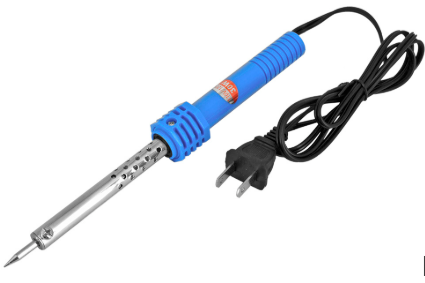
Pencil-type soldering ironencil-type soldering iron
An inexpensive soldering iron that plugs directly into an outlet and has no adjustable temperature control.

Adjustable soldering station
A soldering iron station that allows the user to adjust the temperature but does not have feedback to maintain the exact temperature.
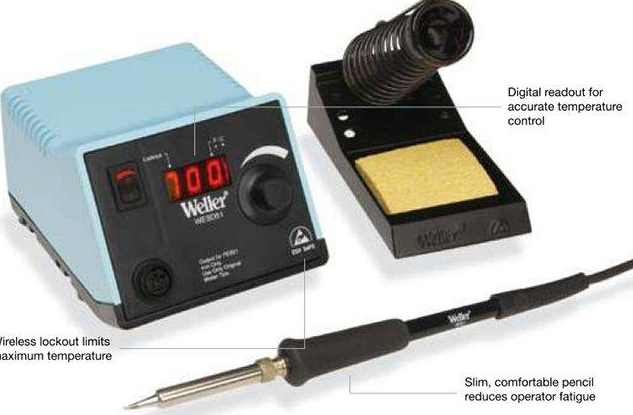
Regulated Soldering station
A station that monitors tip temperature and automatically adjusts power to maintain the desired temperature.
What is the main advantage of a regulated soldering station?
It compensates for heat loss when soldering objects that draw heat away from the tip.
Why are soldering iron tips removable?
They wear out, corrode, or break, and different projects require different tip shapes and sizes.

A _____________ tip is best for heavier work
Chisel-shaped

A ____-______ tip is best for small electronic components
Cone-Shaped
Why should you use a larger soldering tip for heavier gauge wire?
It stores more heat and transfers enough heat to the thicker wire.
Wire stripping
Removing insulation from the end of a wire to expose the metal conductor.
Multigauge wire strippers?
Wire strippers with multiple notches for different wire gauges.
Coaxial cable stripper
Removing the outer insulation and exposing the conductor of coaxial cable.
How do thermal wire strippers work?
They heat jaws that penetrate the insulation, allowing it to be pulled off the conductor.

Tinning
Applying a coating of solder to the strands of stranded wire to bond them together. It makes wires easier to solder and helps prevent loose connections at screw terminals.
Why should wire strands be twisted neatly before tinning?
To keep all strands together and prevent stray strands from sticking out.
Why should you inspect stranded wire before tinning?
Tinning makes any existing flaws permanent.

Wicking
The capillary action that pulls liquid solder between the strands of wire.
Why should excessive solder wicking under the insulation be avoided?
It makes the wire less flexible and can cause the insulation to become brittle from flux exposure.
How far should solder ideally wick under the insulation?
Ideally, it should not wick under the insulation. At most, limit it to one wire diameter.

What is dross in a solder pot?
The residual oxide layer that forms when molten solder reacts with oxygen in the air.
What should be done to wire before dipping it into a solder pot?
Strip it, twist the strands into a tight spiral, and dip it about 1/8 inch into liquid flux.

Whetting
The attraction of solder to bond to a metal surface.
Soft soldering
Soldering performed BELOW 800°F.
Hard soldering
Soldering performed ABOVE 800°F
Why should solder be fed away from the soldering iron tip?
It ensures the metal surfaces are hot enough before the solder melts into the joint.
What shape should a proper solder joint have
A concave fillet shape.

What are the three characteristics of a good solder joint
Bright and shiny appearance, concave fillet shape, and good whetting.
Solder wick (solder braid)
A ribbon of fine woven copper strands used to absorb and remove molten solder.