Pharmaceutical Chemistry 1
 Call Kai
 Learn
 Practice Test
 Spaced Repetition
 Match
 Flashcards
 Knowt Play
1/21

Earn XP
Description and Tags
UV visible spectroscopy, Chromatography, Mass Spectrometry.
22 Terms
Plancks Law
wavelength=frequencyvelocity
UV Bands
3 bands:
UVC (200-280nm),
UVB (280-320nm),
UVA (320-395nm).
Visible Range
395nm -750nm
chromospheres
Organic compounds w/ unsaturated bonds, conjugated/delocalised electrons
coloured compounds reflect v.l. that arent absorbed. Colourless compounds reflect all v.l. and absorb uv wavelengths.
which solvents are too short for uv?
ethanonitrile
water
quartz
which solvents are in UV range?
chloroform, cyclohexane, 95% ethanol, hexane, methanol, glass
V I B G Y O R
violet= shortest wavelength, highest energy
Red= longest wavelength, lowest energy
Beer’s Lambert Law equation
A = εlc
Beer's Law definition
explains the relationship between absorbance, at a given wavelength and concentration

Single Wavelength Colorimeter

double beam UV- visible spectrophotometer
Rf
distance travelled by compound/ distance travelled by eluent front
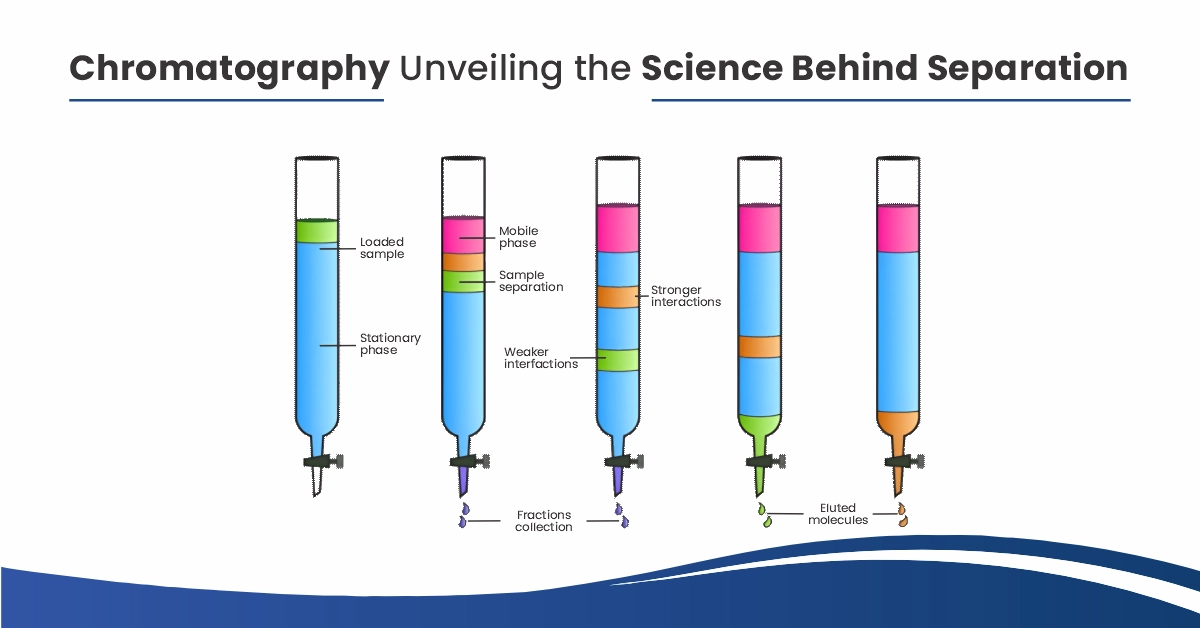
column chromatography
what type of data is: The area under the peak is directly proportional to each emerging component
Quantitative data
what type of data is: retention time indicates the type of compound?
Qualitative data
what is an internal standard?
a known substance that can be added to the analyte to allow for comparisons to find unkown compounds.
HPLC info
reverse phase columns
non-polar stationary phase
w/ chemically modified silica
Mobile phase for HPLC most polar to least.
water
methanol
acetonitrile
HPLC components
solvent (mobile phase)
Injection valve
detector
mass spectrometry basics
fragmentation
magnetic field


Single focusing electron impact
Quadruple Mass spectrometer
