HART 2302 Exam 2 Review (Fall 2026)
 Call Kai
 Learn
 Practice Test
 Spaced Repetition
 Match
 Flashcards
 Knowt Play
1/50

There's no tags or description
Looks like no tags are added yet.
51 Terms
Triptych
An artwork (usually an altarpiece) made of three hinged panels; side wings could be added to a ready-made center panel, e.g. with donor portraits (Campin, Mérode Triptych; Gerard David, Nativity Triptych)
Polyptych
An artwork (usually an altarpiece) made of more than three panels joined together
Iconography
The study and identification of subject matter, symbols and their meanings in a work of art
Tenebrism / tenebroso
Painting style with dramatic contrast of deep darkness and sharp spotlight; associated with Caravaggio (The Calling of St. Matthew) and his followers
Vanitas
Imagery reminding the viewer of the transience of life and earthly pleasures (e.g. decaying fruit in Caravaggio's Bacchus)
Allegorical portrait
A portrait of a real person in the guise of an allegorical figure or idea (e.g. Caravaggio's Bacchus; Artemisia Gentileschi, Self Portrait as a Lute Player and Self Portrait as the Allegory of Painting)
Allegorical genre
A scene of everyday life that also carries an allegorical meaning (e.g. Caravaggio, The Musicians)
Historiated portrait
A portrait of a real person in the guise of a religious or historical figure (e.g. Artemisia Gentileschi, Self Portrait as St. Catherine)
Society of 1496 (Società / Bottega del 1496)
Cooperative of five local painters in Perugia formed in 1496 to pool talents, resources and connections and accept joint commissions; intersections with Perugino and Raphael; works ca. 1500-1510

Madonna and Child Enthroned with Saints and Angels. Society of 1496, ca. 1500-1510; local Perugian altarpiece by the painters' cooperative

The Tezi Altarpiece: The Madonna and Child with Saints. Society of 1496, ca. 1500-1510; local Perugian altarpiece

The Madonna degli Alberelli (Madonna of the Little Trees). Society of 1496, ca. 1500-1510; local Perugian altarpiece

The Madonna and Child Enthroned with Four Saints and Angels. Society of 1496, ca. 1500-1510; local Perugian altarpiece
Isabella d'Este
Marchesa of Mantua; refined, discriminating patron; created a studiolo (small private study) at the Ducal Court, Mantua
Studiolo
A small, private study room; Isabella d'Este's first studiolo was in the Castello (castle) tower of the Ducal Court, Mantua

Portrait drawing of Isabella d'Este. Leonardo da Vinci, 1500; made when he visited the Ducal Court at Mantua
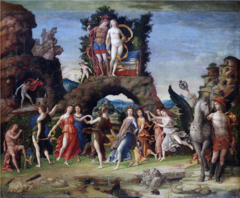
Mount Parnassus. Andrea Mantegna, 1500; painting for Isabella d'Este's first studiolo, Ducal Court, Mantua

Triumph of the Virtues. Andrea Mantegna, 1500; painting for Isabella d'Este's first studiolo, Ducal Court, Mantua
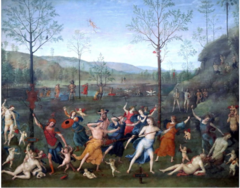
The Combat between Love and Chastity. Pietro Perugino, 1500; painting for Isabella d'Este's first studiolo, Ducal Court, Mantua
Cardinal Francesco del Monte
Caravaggio's key patron in his early Roman years (ca. 1590-1600)
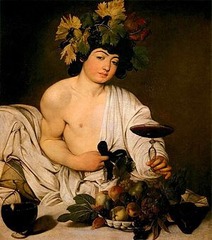
The Bacchus. Caravaggio, early Roman years ca. 1590-1600; Vanitas; "allegorical portrait"

The Musicians. Caravaggio, early Roman years ca. 1590-1600; "allegorical genre"

The Lute Player. Caravaggio, early Roman years ca. 1590-1600; studied with its replications and variations

The Fortune Teller. Caravaggio, early Roman years ca. 1590-1600; studied with its replications and variations

The Cardsharps. Caravaggio, early Roman years ca. 1590-1600; studied with its replications and variations

The Calling of St. Matthew. Caravaggio, monumental Roman church commission ca. 1600-1610; tenebrism / tenebroso

The Entombment of Christ. Caravaggio, monumental Roman church commission ca. 1600-1610
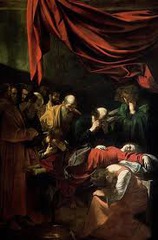
The Death of the Virgin Mary. Caravaggio, monumental Roman church commission ca. 1600-1610; rejected by the Church

Portrait of Maffeo Barberini. Caravaggio, ca. 1600-1610; sitter later became Pope Urban VIII; purchased by the Italian State in March 2026 for 30 million Euro
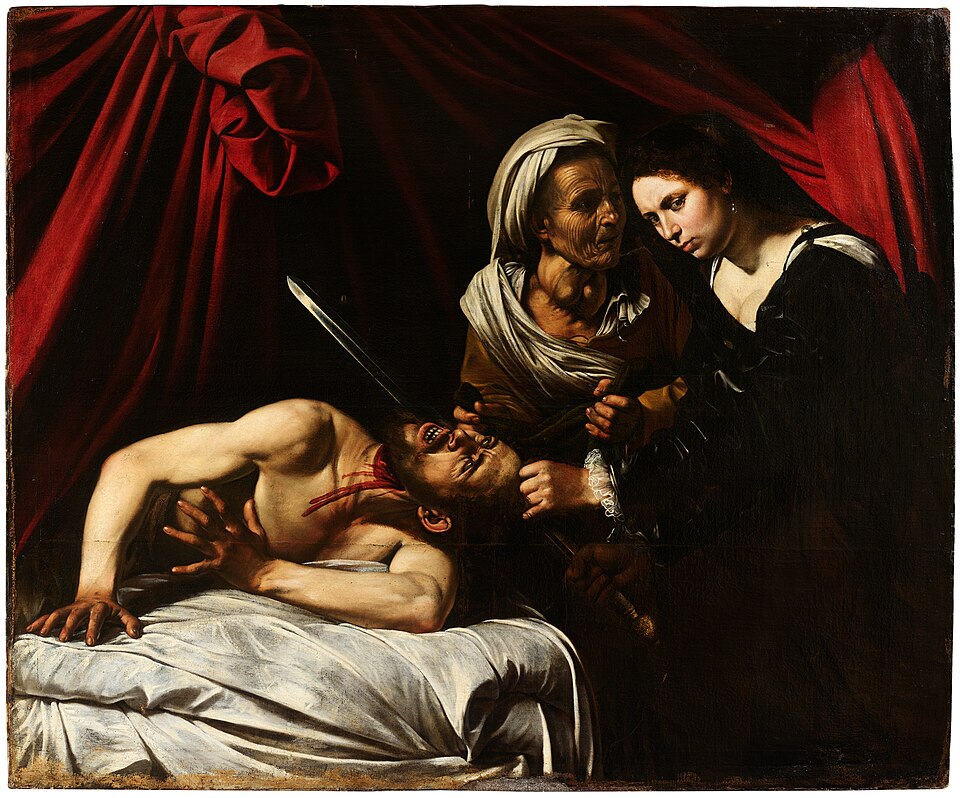
Judith Slaying Holofernes (sold as a Caravaggio). ca. 1600-1610; bought by J. Tomilson Hill in 2019 for an undisclosed sum over 30 million Euro; often thought to be by Caravaggio copyist Louis Finson
Orazio and Artemisia Gentileschi
Father and daughter, followers of Caravaggio

The Lute Player. Orazio Gentileschi, 1610-1620
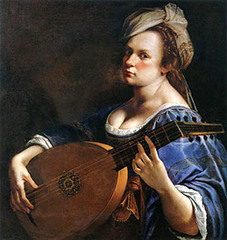
Self Portrait as a Lute Player. Artemisia Gentileschi, 1610-1620; "allegorical portrait"; self-referential, self-promoting
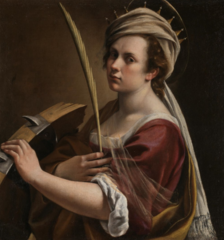
Self Portrait as St. Catherine. Artemisia Gentileschi, 1615-17; "historiated portrait"; self-referential, self-promoting

Judith Slaying Holofernes. Artemisia Gentileschi, 1610-1620; from the Book of Judith; painted for Grand Duke of Tuscany Cosimo II de' Medici

The Penitent Mary Magdalene (Conversion of the Magdalene). Artemisia Gentileschi, 1610-1620; painted for Cosimo II de' Medici, whose wife was Maria Maddalena; signed "Artemisia Lomi," her Tuscan name

Moses Saved from the Waters. Orazio Gentileschi, 1630; painted for King Charles I of England, given as a gift to King Philip IV of Spain

Self Portrait as the Allegory of Painting. Artemisia Gentileschi, 1630; "allegorical portrait"

The Mérode Triptych (center panel: The Annunciation to the Virgin). Robert Campin and workshop, ca. 1420; patron husband and wife in left panel; workshop produced center panels that could be customized with donor wings; economic power of the new bourgeoisie in Northern Europe

The Brussels Annunciation to the Virgin. Robert Campin, ca. 1420; compare with the Mérode Triptych center panel
Bruges art market
Dedicated art market in Bruges' city center by 1482, running several weeks twice a year until ca. 1530; sold paintings, sculptures and ready-made luxury goods to international merchants and locals; modeled on Antwerp; marked shift from patron-commissioned to open, market-driven production
Gerard David
Painter active in Bruges by 1480 (1482 precisely); his workshop made many customizable works and variations for sale at market; works ca. 1510-1520

The Nativity Triptych with Saints and Donors. Gerard David, ca. 1510-1520; the two foreground patrons (husband and wife) were likely later modified into saints

The Rest on the Flight into Egypt. Gerard David, ca. 1510-1520; Washington, DC original version; two more vertical panels are modifications, including a lighter-colored workshop version in the Prado

The Madonna of the Milk Soup. Gerard David, ca. 1510-1520; several versions; NY version with cherries thought most original; variations show the child with a spoon; popular because of a relic of Mary's milk at the Church of St. Donatian, Bruges
Ainsworth, "Hallmarks of Bruges and the Beginning of Mass Production"
Reading on Gerard David and market production in Bruges; focus on pp. 295-98, 303, 308
Dutch Republic art market (17th century)
Unique cultural, historical and economic situation that produced a flourishing art market and wide affordability, availability and display of paintings

Self-Portrait (Leiden). Rembrandt van Rijn, Leiden Period, 1630

Portrait of Nicolaes Ruts. Rembrandt van Rijn, Early Amsterdam Period, 1630-40

Old Man with a Gold Chain. Rembrandt van Rijn, Early Amsterdam Period, 1630-40

Self Portrait at the Age of 34 (Leaning on a Stone Sill). Rembrandt van Rijn, Early Amsterdam Period, 1630-40