472 2-endocrine regulationof pregnancy and 2- physiology changes
 Call Kai
 Learn
 Practice Test
 Spaced Repetition
 Match
 Flashcards
 Knowt Play
1/38

There's no tags or description
Looks like no tags are added yet.
39 Terms
prolactin is a
protein hormone
FSH,LH,hCG are
glycoproteins (glucose and protein tgt)
oxytocin is a
polypeptide
estrogens, progestins, testosterone (3 primary reprod hormones) are
steroids
prostaglandins and thromboxanes (regulate vascular helath) are
fatty acids
endocrine regulation during pregnancy is primarily by the
hypothalamic-pituitary-ovarian system
which hormones act on gonads (gonadotropins)
fsh and LH- gonadotropins
hypothalamus secretes ___ which stimulates anterior pituitary to release ____ as they stimulate ovaries
hypothalamus secretes gonadotropin releasing hormone which stimulates anterior pituitary to release FSH and LH as they stimulate ovaries
all hormones secreted by anterior pituitary except oxytocin and anti diuretic hormone which is secreted by posterior pituitary
how does hpo axis work
pregnancy as a stress state
pregnancy increases hpa axis acitivity which increases cortisol

what does progesterone do
prepares wall of the uterus so that the lining is able to accpet a fertilized egg. so egg can be implanted and develop
a fert egg that becomes implanted in uterus will form placenta
the ___ is a major source of progesterone during the first 10 weeks gestation
what is the luteal placental shift
the corpus luteam is a major source of progesterone during the first 10 weeks gestation
then placenta produces progesterone during full period of pregnancy.
LPS= when placenta takes over corpus luteum job in mkaing progestrone around 6-10 weeks of gestation
a delayed shift or insufficient progesterone production from either source can inc risk of pregnancy lossand progesterone supplementation is often used in IVF to bridge this gap

what does the placenta use primarily for progesterone production
maternal cholesterol and LDL
what does progesterone do during pregnancy
stimulates development of mammary glands in breasts that are responsible for milk production
increases sensitivity of maternal respiratory center for CO2 (inc CO2 levles kills fetus)
suppresses maternal immunological responses to fetal antigens, preventing rejectino of fetus
relaxes smooth muscle in GI and urinary systems
inc basal body temp and sodium and chloride excretion
the primary function of progesterone is to
serve as a substrate pool for fetal adrenal gland productin of glucocorticoids, which plays key roles in fetal growth and development as well as regulation of macronutrient metabolism
aka
progesterone provides a starting material that the fetal adrenal glands can use to make glucocorticoids, which help the fetus grow and develop.
3 major estrogens? and which is most potent form for non pregnant
estrone (e1) estradial (e2) estriol (e3)
estradiol is most potent form
all estrogens inc but estriol increases rapdily in pregnancy (secreted by placneta)
estrogens promote myometrial vasodilation
the primary source of estriol precursors (dheas) is the
fetal adrenal gland, under stimulation by the fetus’ acth
dheas is hydroxylated in the fetal liver and further metabilized by placenta to form estriol
hCG funtions
hCG maintains corpus luteum in early pregnancy to ensure progesterone secretion until placenta can take over.
conc of hcg in maternal serum foubles every 2-3 days until 60-90days after conception and starts to plateau by 100-130 days
also stimulates adrenal glands to secrete testosterone and cortisol
hPL functions
promotes fetal growth by alterign maternal protien, carb, fat metabolism
primary role is to regulate glucose availabiltiy to fetus (its an insulin antagonist)
reduces glucose uptake and use by maternal cells by increases use of fat as an energy substrate
what gets transferred from mother to fetus and back vice versa
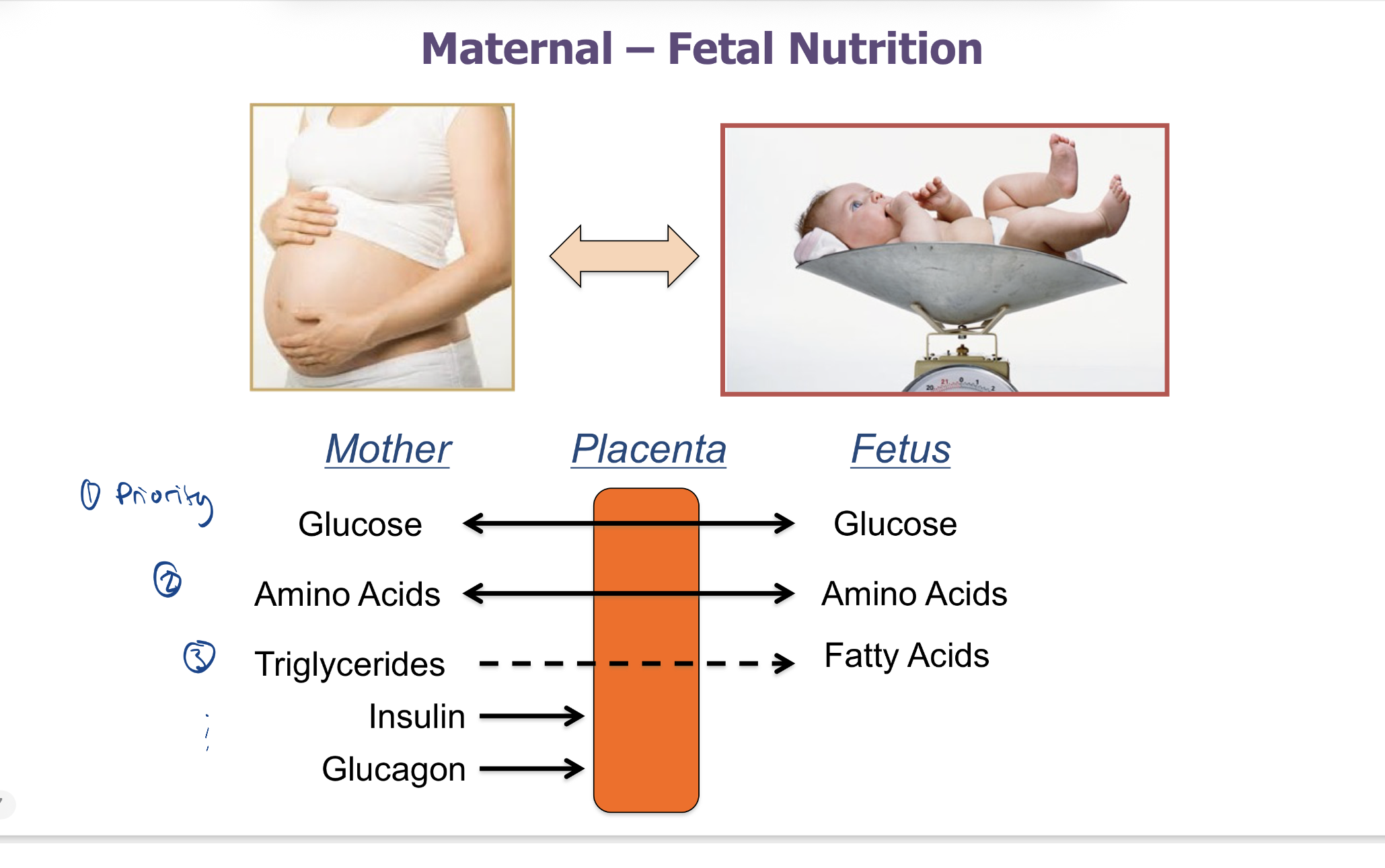
cardiovascular system chancges in mother in pregnancy
whats meant by physiologic anemia
cardiovasculat changes:
mediated by estrogen, progesterone, prostaglandins
cardiac output increased, heart rate increases then stabilizes
heart rate inc from 15-20 bpm compared to nonpreg state
increase in blood volume:
rise in blood volume correlates directly with fetal weight
by. 32 weeks it is almost 50% increase
increase in RBC corresponds to increase in RBC volume
intravascular expansion is due to inc in plasma volume, leading to hemodilution
this “physiologic anemia” (cuz plasma volume inc more than RBC does) of pregnancy is reflected in lower hematocrit and gemoglobin
inc in RBCs not sufficient, not proportional to total blood volume which leads to hemodilution.
mother struggles to balance sodium leading to
intravasculr expansion die to inc in plasma volume =, leading to hemodilution
mechanism of hypervolemia (inc of volume of blood)
(due to estrogen)
estrogen increases
renin increases (enzyme, mainly in kidney )
angiotensin2 and aldosterone ( secreted by adrenal glands) inc
inc in extracellular fluid volume.
human chorionic somatomammotropin inc and prolactin inc
both of these result in inc blood volume
why is hyoervolemia essential
helps to meet demands of enlarged uterus and vascular system while maingtaining normal bp
protects mother from imparied venous return and hypotension with position changes
increase cutaneous blood flow which assists with heat dissipation
allow mother to tolerate blood loss postpartum
respiratory system chagnes
inc in volume of air and gas exchange. enhances oxygen availability to and co2 removal from fetus
progesterone is a respiratory stimulant and inc sensitivity to co2. how?
Progesterone is a respiratory stimulant, and increases sensitivity to carbon dioxide by
decreasing the threshold of the respiratory center.
For example:
In non pregnant women an increase of 1mM Hg in PaCO2 results in a 1.5L/min increase in ventilation
But during pregnancy, the same 1mMHg increase in PaCO2 leads to a 6L/min increase in ventilation
This increased sensitivity in CO2 occurs mostly before 20 weeks gestation and leads todyspnea (shortness of breath) as well as hyperventilation
whats PaCO2 and PaO2
PaCO2: partial pressure of CO2 in blood. critiacal in regulating breathing levels oand maintianing body pH
PaO2: partial pressure of oxyegn in blod
hypercapnia, hypoxia, hypoxemia
Respiratory negative impacts:
l Hypercapnia: excessive carbon dioxide in blood
l Hypoxia: decreased oxygen in tissue
l Hypoxemia: decreased oxygen content in blood
hypoxemia not dangerous for getus but can turn into hypoxia which is dangerous for fetus
renal system changes
increased renal blood flow, corresponds to increase in renal size, wieght and volume
dilation of urinary tract occurs in 50% of women
increase in glomular filtration rate due to increased renal blood flow, and decreased colloid osmotic pressure, due to decrease in plasma proteins (albumin)
increase in gfr is necessary for successful pregnancy
GFR influences nutrtional status. what is proteinuria is it a concern and what associated with it?
renal excretion of aas, PROTEIN, glucose, water soluble vitamins and calcium increses
but excretion of serum urea, creatine, blood urea nitrogen and uric acid levels decreases
protein excretion (proteinuria) increases and is fairly common in preg and not a concern unless values inc more than 300mg/day
proteinuria associated with hypertension and high risk of pre eclampsia
glycosuria is also common
sodium balance is between two opposing mechanisms
factors promoting retention (estrogen) and factors promoting excretion (progesterone)
what is atrial natriuretic factor
atrial natriuretic factor is a powerful vasodilator secreted by heart muscle in response to high blood volume to promote sodium loss.
angiotensinogen is stimulated by
angiotensinogen is stimulated by inc estrogen levels
system is inc in first trimester
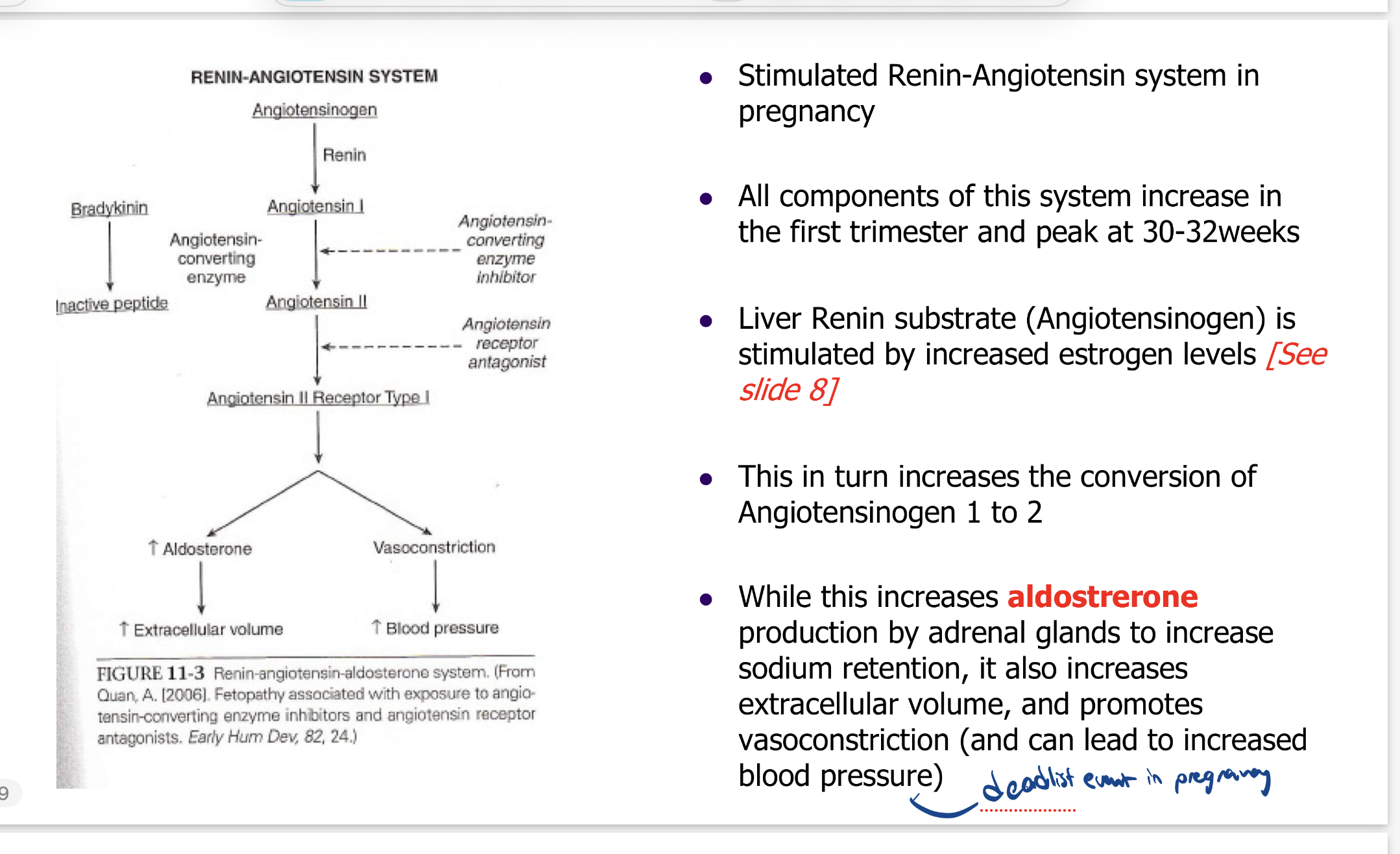
accumulation of sodium in preg is accompanied by water accumulation. both extra and intra component inc but larger increase in
extracellular water.
in total , 5-6 L of water is accumulated towards end of pregnancy
GI system chagnes
what hrmone supresses appette wjat hormone stimulates appetite
pica
hormonally, estrogen tends to suppress appetite while progesterone stimulates appetite. both hormoens inc in pregnancy which is why may be hungry at 2am
progesterone acts on smooth muscles to decrease GI tone, leads to prolonged transit time inc absorptive capacity
height of duodenal villi increases
progesterone also inc brush border enzyme activity, incraeseing absorption
theory of lying on right side in later pregnancy
compresses the inferior vena cava and aorta and may decrease blood return to the heart