Archaic & Classical: Exam 2
 Call Kai
 Learn
 Practice Test
 Spaced Repetition
 Match
 Flashcards
 Knowt Play
1/70

There's no tags or description
Looks like no tags are added yet.
71 Terms
6th century BCE (600-500)
archaic period; athens becomes more powerful and wealthy as shown by artwork like pottery (black figure)
corinthia, lokonia, attika
regions of archaic
corinth, sparta, athens
poleis of archaic
Black-figure Amphora, Amasis painter, mid-archaic, Athens, Dionysos and Maenads/Poseidon and Athena, wine container
Title, artist, time-period, location, depiction (who is in it?) (left→right), use (look at shape!)
“____ made me” - signature!
minimization of geometric filler, moving on to other decoration

Black-figure neck amphora, Exekias, mid-archaic, Athens, Ajax and Achilles/Kastor and Polydeuces (dioskouroi), wine container
Title, artist, time-period, location, depiction (who is in it?)(left→right), use (look at shape!)
one side: playing a dice game, quiet moment of leisure (possibly before war), anticipatory moment
horses, men, children, warrior departure
____ made it

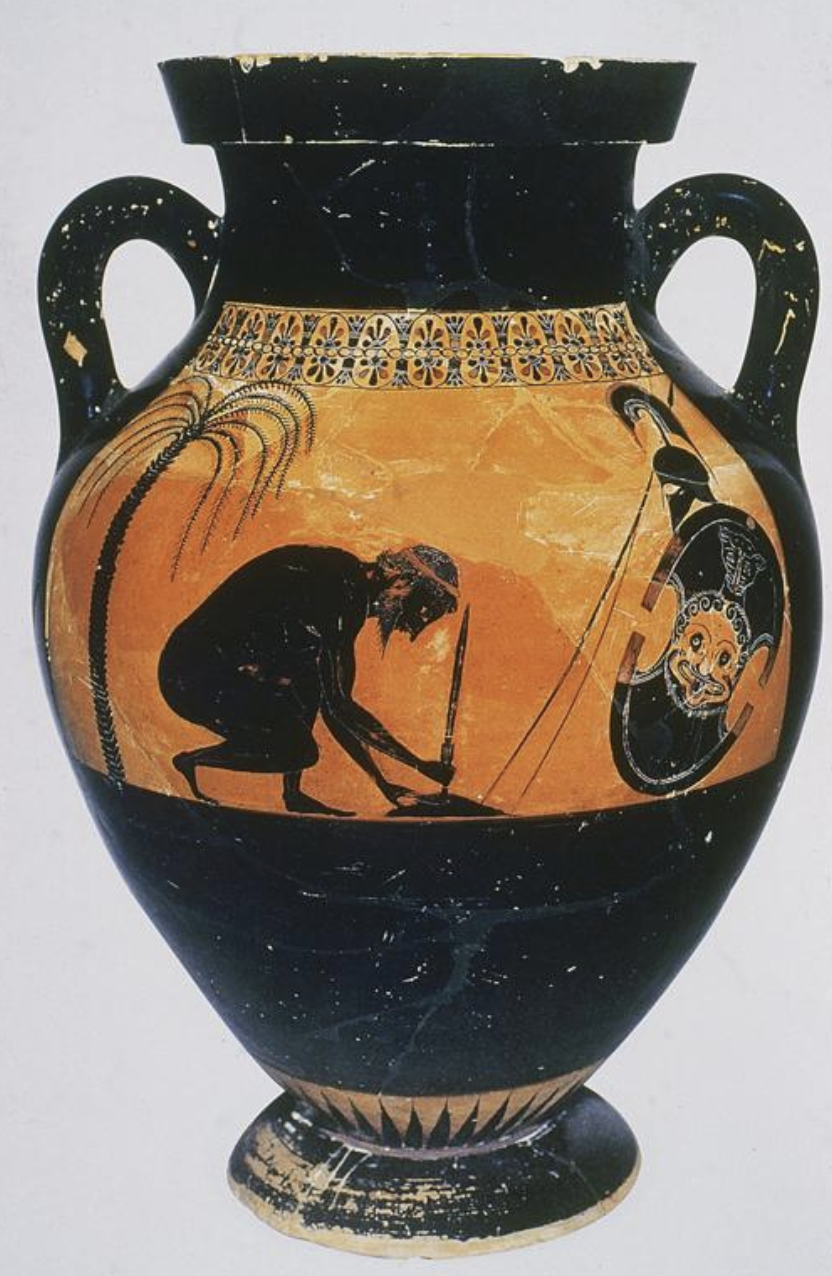
Black-figure neck amphora, Exekias, mid-archaic, Athens, Suicide of Ajax, wine container
Title, artist, time-period, location, depiction (who is in it?)(left→right), use (look at shape!)
After achilles is killed, two warriors step up to claim armor (also odysseus)
Odysseus good a debating, so he won, made the depiction a thing
single figure, objects create the story: sword, palm tree = Troy
Because sword is in the soil, it is like the land of Troy is killing him.
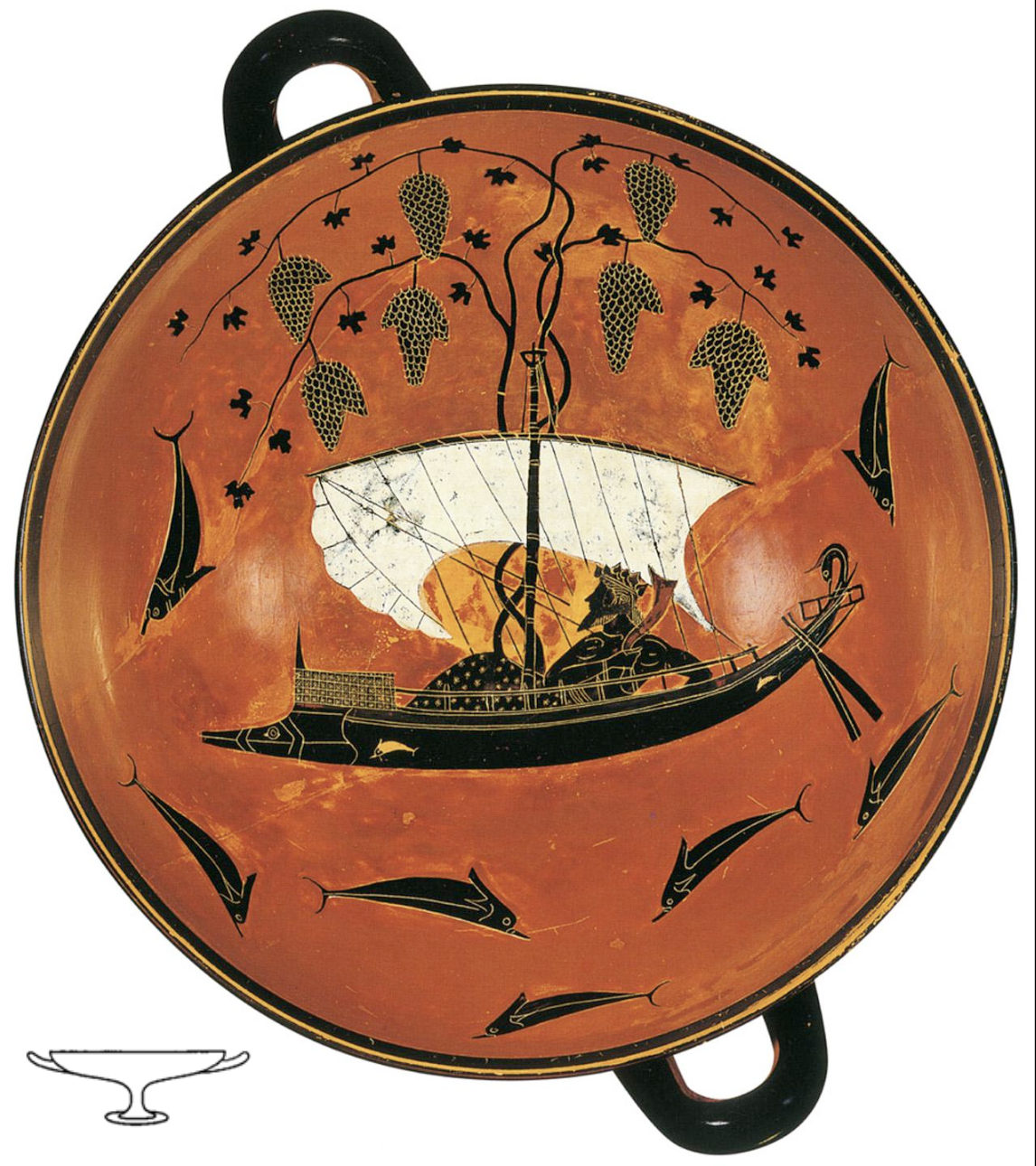
kylix (pl. kylikes)
upgraded skyphos, high stem, two handles

Black figure kylix, Exekias, mid-archaic, Athens, Dionysos sailing, symposium drinking vessel
Title, artist, time-period, location, depiction (who is in it?)(left→right), use (look at shape!)
used like skyphos, (elite male drinking party!), this one particularly big, obviously meant as symbol
story: turned a bunch of sailors into dolphins, and boat into a grapevine
outside looks like face
Vix krater, Lakonian manufacturer, mid archaic, france colony, funeral procession w/ gorgon, grave marker, bronze
Title, artist, time-period, location, depiction (who is in it?)(left→right), use (look at shape!), material
if you have one of these, you have made it
euergetism

Running girl, Lakonian manufacturer, mid-archaic, found in Dodona, anathemata,
Title, artist, time-period, location, use (look at shape!)
short dress, long hair, legs apart indicating running
Girls are educated in spartan citizen class
muscular legs, braids, very frontal and rigid

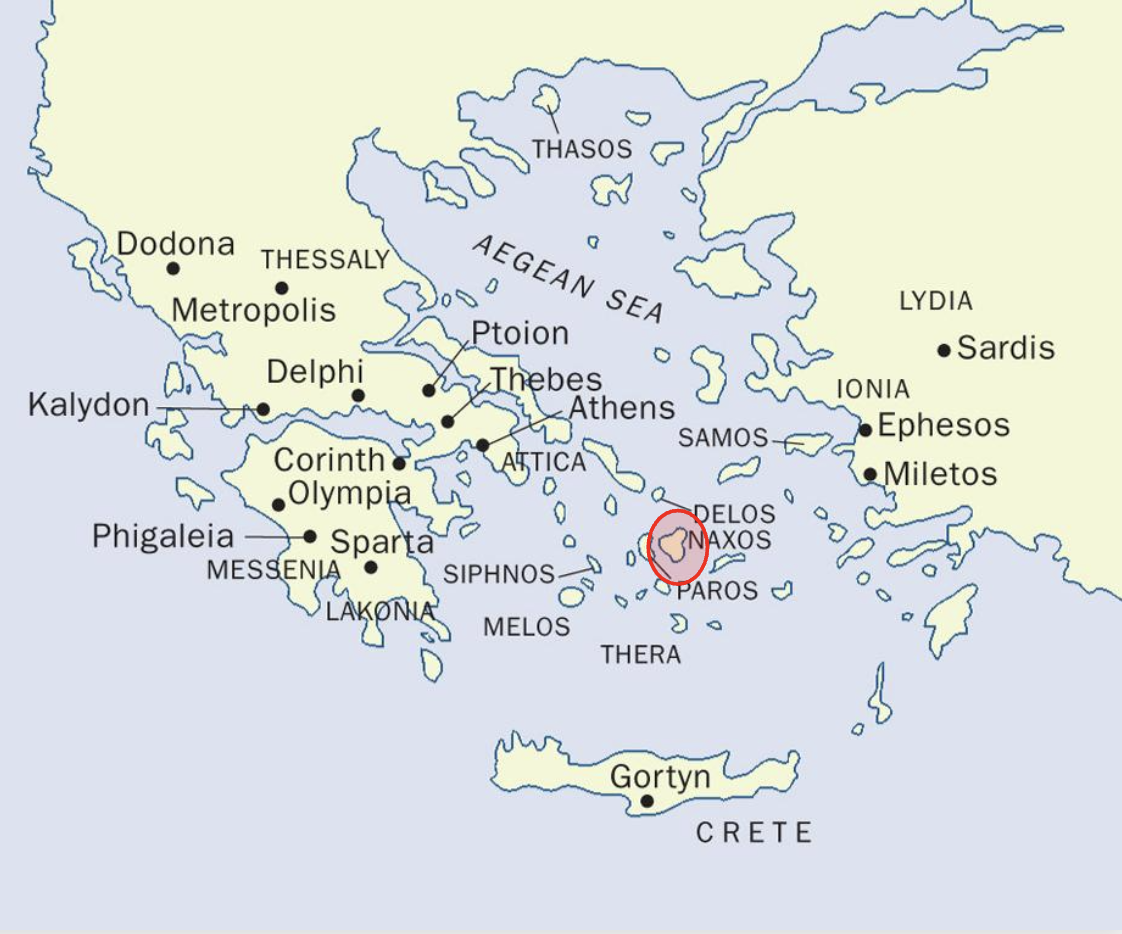
Dodona
refer to with Running girl

New York kouros, early-archaic, from Attika, young boy, funerary anathemata, Naxian marble
Title, time-period, location, depiction (who is in it?)(left→right), use (look at shape!), material
over lifesize, idealized, picture of male perfection

Naxos
refer to with New York kouros
Dipylon Head, early-archaic, Keramekos (Athens), kouros
Title, time-period, location, depiction (who is in it?)(left→right)
similar to NY kouros
over exaggerated eyes, sharply cut, prominent chin
likely took inspiration from ancient egypt

Sounion kouros, early-archaic, from Attika, young man, anathema, Naxian marble
Title, time-period, location, depiction (who is in it?)(left→right), use (look at shape!), material
found in sanctuary of poseidon
huge, 10 ft tall!
archaic for sure, rigid, big eyes, disproportionate, fists clenched
polychromy!
abstract musculature

Anavyssos kroisos, mid-archaic, from Phoinika (Attika), kouros, grave marker, parian marble
Title, time-period, location, depiction (who is in it?)(left→right), use (look at shape!), material
cycladic marble (be specific in answer)
exported material
ARCHAIC SMILE!!!, shares emotion! looks more free— is disconnected in some areas like the arms are not connected to the sides of his torso

Apollonas Colossus, 6th ce, Naxos, mountain
Title, time-period, location, material
bearded, wearing clothes, using kouros forms, one hand is up
unfinished, as it broke off of a mountain
35 ft. tall!!!

Moschophoros, Rhonbos, mid-archaic, Athenian Acropolis, calf-bearer, anathema, hymettian marble
Title, dedicator, time-period, location, depiction (who is in it?)(left→right), use (look at shape!), material
to Athena
attic marble
bearded, kouros-like, not fully nude, wearing cloak/robe
man and animal composition, unified
calf’s face right next to figure

Rampin Rider, mid-archaic, Athenian akropolis, guy riding horse, anathema, marble
Title, time-period, location, depiction (who is in it?)(left→right), use (look at shape!), material
lil guy (3’6)
riding a horse, hair is complex (the top, mostly), bearded
head turned a little to the side: more detail forming
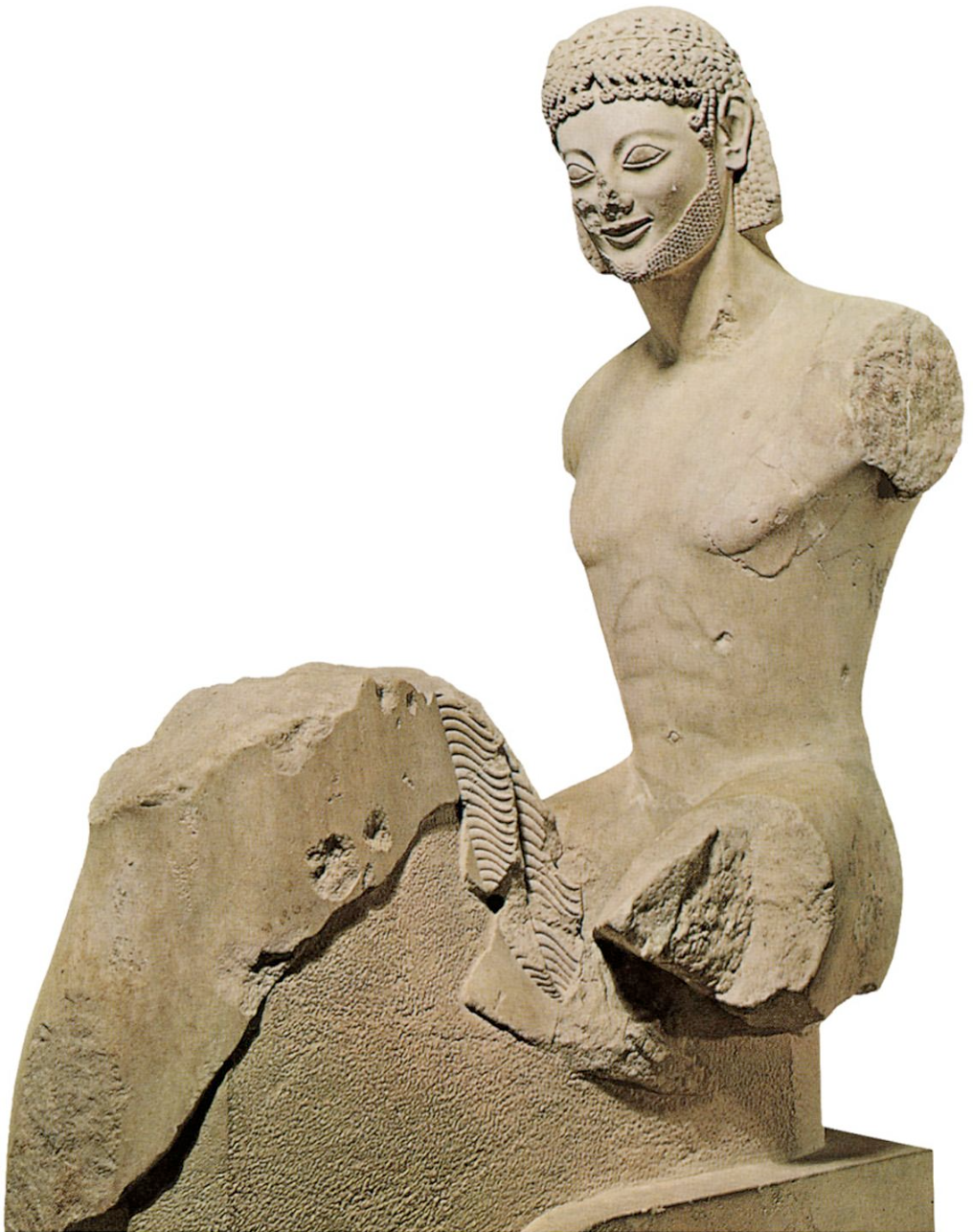
Nikandre kore (Artemis?), mid-7th, Delos, young woman, anathema, Naxian marble
Title, time-period, location, depiction (who is in it?)(left→right), use (look at shape!), material
inscription says nikandre, could be for artemis
over life-size
refer to with Auxerre kore, differences?
Cyclades

Pomegranate kore, mid-archaic, akropolis, athena, anathema, pentelic marble
Title, time-period, location, depiction (who is in it?)(left→right), use (look at shape!), material
protector of young girls, a lot of kore of the akropolis
holding a pomegranate=fertility, life death, (persephone)
polychromy still visible

Peplos kore, mid-archaic, akropolis, maybe artemis, anathema, Parian marble
Title, time-period, location, depiction (who is in it?)(left→right), use (look at shape!), material
eyes are a little smaller, hair draping around breast, more realistic
wearing a peplos
polychromy, jewelry, peplos had a busy pattern

Phrasikleia, Ariston of Paros, mid-archaic, Myrrhinous, fancy youthful woman, funerary marker, Parian marble
Title, artist, time-period, location, depiction (who is in it?)(left→right), use (look at shape!), material
youthful ideal of perfection
flower bud, pomegranates: representation of youth
shoes are seen! very elaborate
not quite a kore, but very kore-like

Pireaus Apollo, late archaic, Delos, apollo, temple, bronze
Title, time-period, location, depiction (who is in it?)(left→right), use (look at shape!), material
looking down: taking account of presence, worship
arms outstretched, reaching out
opposite foot, sense of weight (right foot forward instead of left)
emphasis on volume, curve on lower back

Temple of Apollo, 630, Thermon, worship, doric
Name, time-period, location, use, order
description: hexastyle peripteral in antis with a pronaos, naos, and opisthotomos
hekatompedon: huge building
temple dedicated to apollo

peripteral (adj.)
when columns are around entirety of outside
prostyle
columns only of front of temple
amphiprostyle
columns on front and back of building
in antis
when columns are aligned with projecting wall (distyle)
distyle
two columns (_____ in antis)
adyton
extra back room in temple architecture
doric order
less stylized, curvature,
note metopes and triglyphs
metopes sometimes relief sculpture or ‘in the round’

ionic order
swirling volutes, frieze continuous
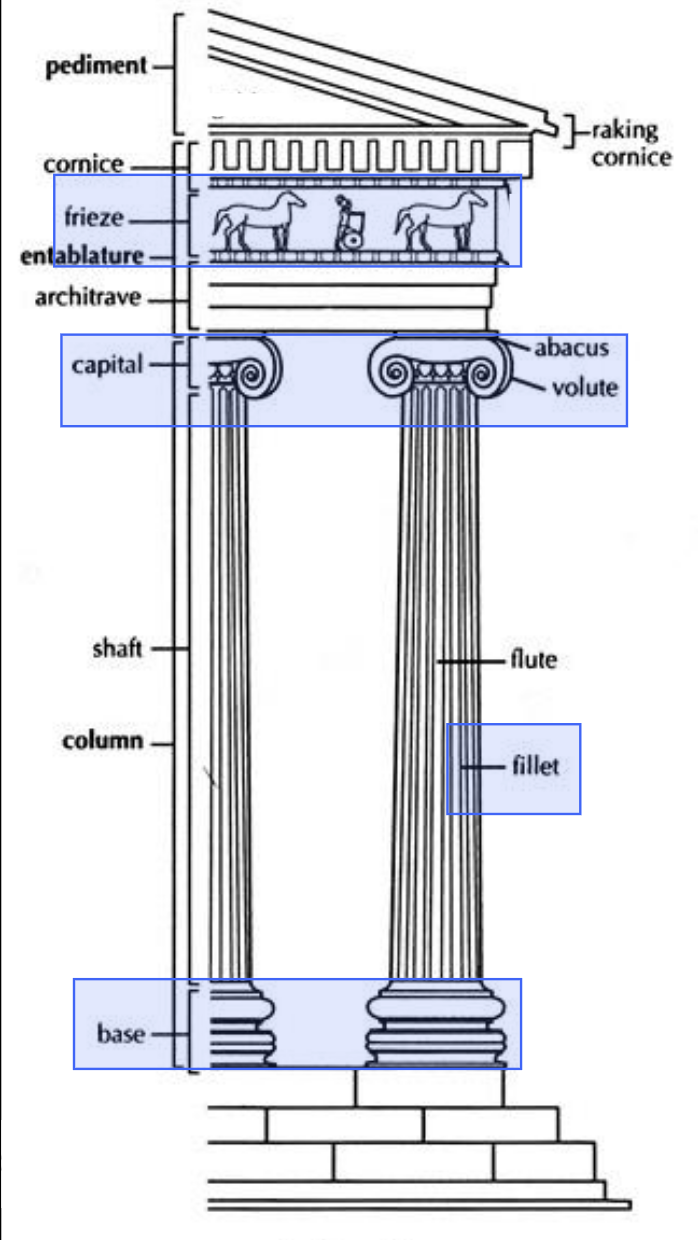
stylobate
last step to get to temple, columns rest on it
Temple of Artemis, early-archaic, Corcyra, worship, doric
Name, time-period, location, use, order
octostyle peripteral temple with a pronaos and opisthotomos distyle in antis and naos with a double internal collonade
pediment sculpture: Running gorgon medusa turns away evil as you walk into the temple

Naxian Sphinx, mid-archaic, Delphi, around temple w/ column
Title, time-period, location, use (look at shape!)
please note this sculpture was placed on top of a very tall column

Heraion, Rhoikos and Theodoros, mid-archaic, Samos, worship, ionic
Name, architects (2), time-period, location, use, order
octastyle deripteral ionic temple with a pronaos and cella (naos) witha. double internal collonade

13
if a temple is hexastyle, how many columns are on the long side (most of the time)
Temple of Artemis, Theodoros, Kersiphron, Metagenes, Ephesos, mid-archaic worship, ionic
Name, architects (3), time-period, location, use, order
humongous, size of football field
octastyle deripteral with a deep pronaos w double internal collonade
highly deocarted, tall, vibrantly painted, put on ancient coinnage

5th ce. (500-400)
classical period
Man consulting the Pythia, Codrus Painter, high-classical, Delphi, pythia, kylix tondo
Title, artist, time-period, location, depiction (who is in it?)(left→right), use (look at shape!)
_____= priestess who hears apollo and answers questions for him
_____= inside of kylix
seated on tripod cauldron, laurel, dish, individual asking her something

amphictiony
poli that are in charge, set rules, outside council looking over
Mt. Parnassos
small polis in Delphi; held panhellenic sanctuary to apollo (god of poetry and music)
held ‘pythian games’ - like olympic, but for music and poetry etc.
also had sanctuary of athena
a lot of hiking to get to the top, on the way there were several other dedications
temenos wall+ tells us when we are in sacred space

4 Siphnian Treasury, 525, Mt. Parnassos (Delphi), caryatid columns, ionic
Title, year, location, depiction (who is in it?)(left→right), use (look at shape!), order
100% marble, gold and silver - RICHHHH
Siphnos is in the cyclades

Temple of Apollo, 6th ce, Delphi, worship
Title, time-period, location, use (look at shape!)
3 phases, earthquakes destroyed it
hexastyle deripteral temple w distyle in anti s pronaos and opisthotomos, a naos, and an adyton

Fragments of chryselephantine cult statues, 6th ce before 548, Delphi
Title, time period, location
fire debris: threw it into a big trash pit
skin of statue made of ivory, gold throughout decoration
still giving kore, following same patterns to depict humans
use of ivory as skin, from african elephant tusk

Kritios Boy, Kritios, early-classical (480-460), akropolis, anathema
Title, possible artist, time-period, location, use (look at shape!)
represents change, new hair (fillet), less frontal, right leg forward
contrapposto→balance of parts of the body, weight bearing leg
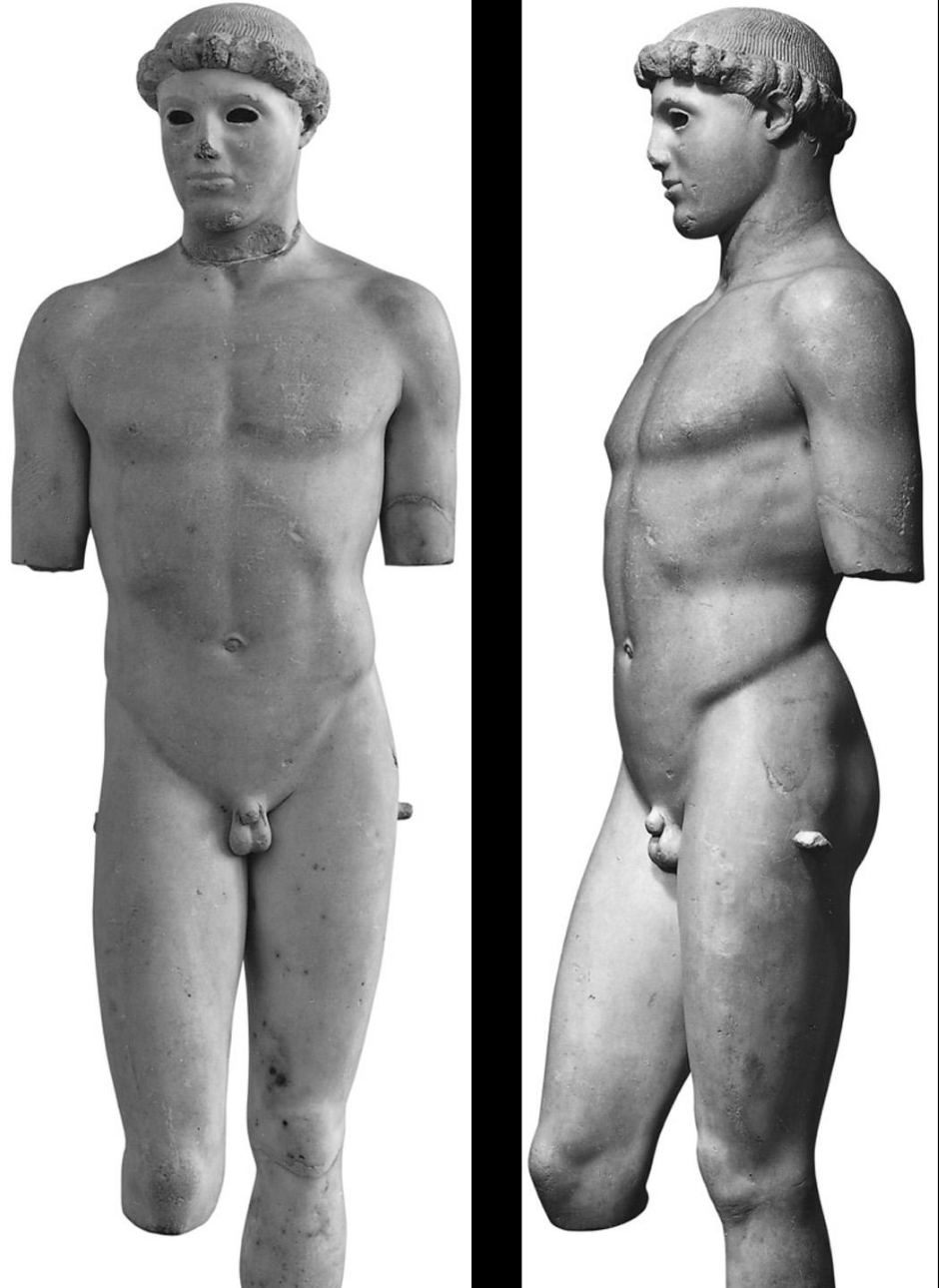
Euthydikos Kore, Euthydikos, early classical, akropolis, dedication, marble
Title, dedicator, time-period, location, use (look at shape!), material
movement shown in work
drapery, fabric texture
late archaic style—> SEVERE STYLE

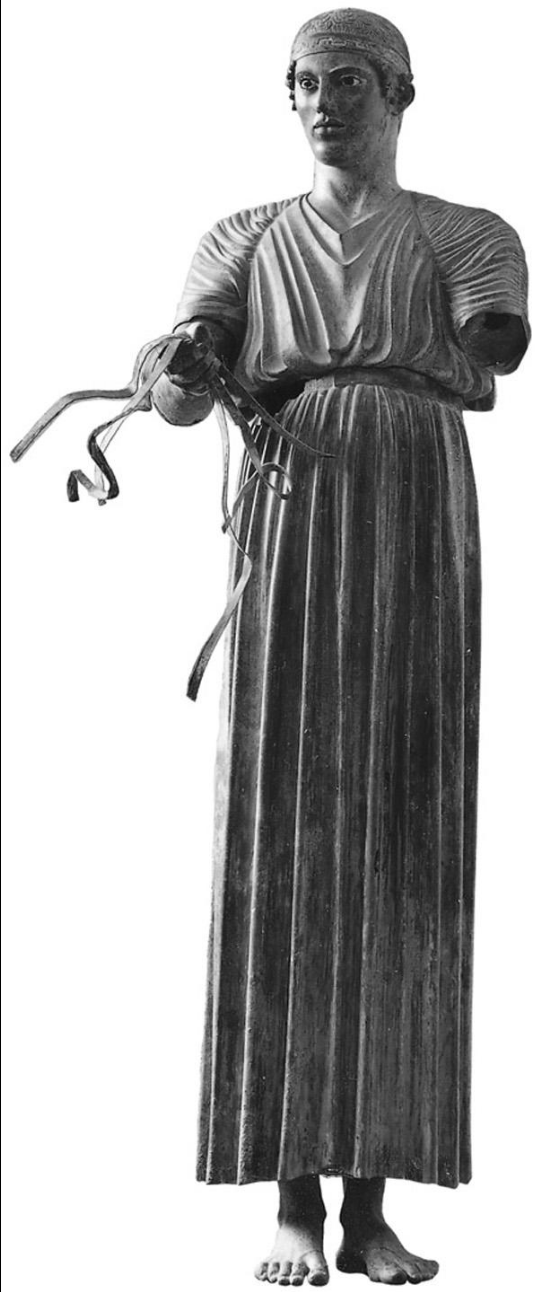
Delphi charioteer, 475 (classical), Delphi, charioteer, dedication piece, bronze
Title, time-period, location, depiction (who is in it?)(left→right), use (look at shape!), material
it isn’t in it’s chariot anymore, dedication piece for pythian games
wearing clothing with long vertical flutes which draw your attention up (drapery), clothing physics
actual winner is the guy who owns the horses
Bilingual amphora, Andokides and Lysippides, late-archaic, symposium, liquid container bilingual figure
Title, artist, time-period, depiction (who is in it?)(left→right), use (look at shape!), art style
man on couch in symposium, athena to the side, red figure
red figure lets you add more detail
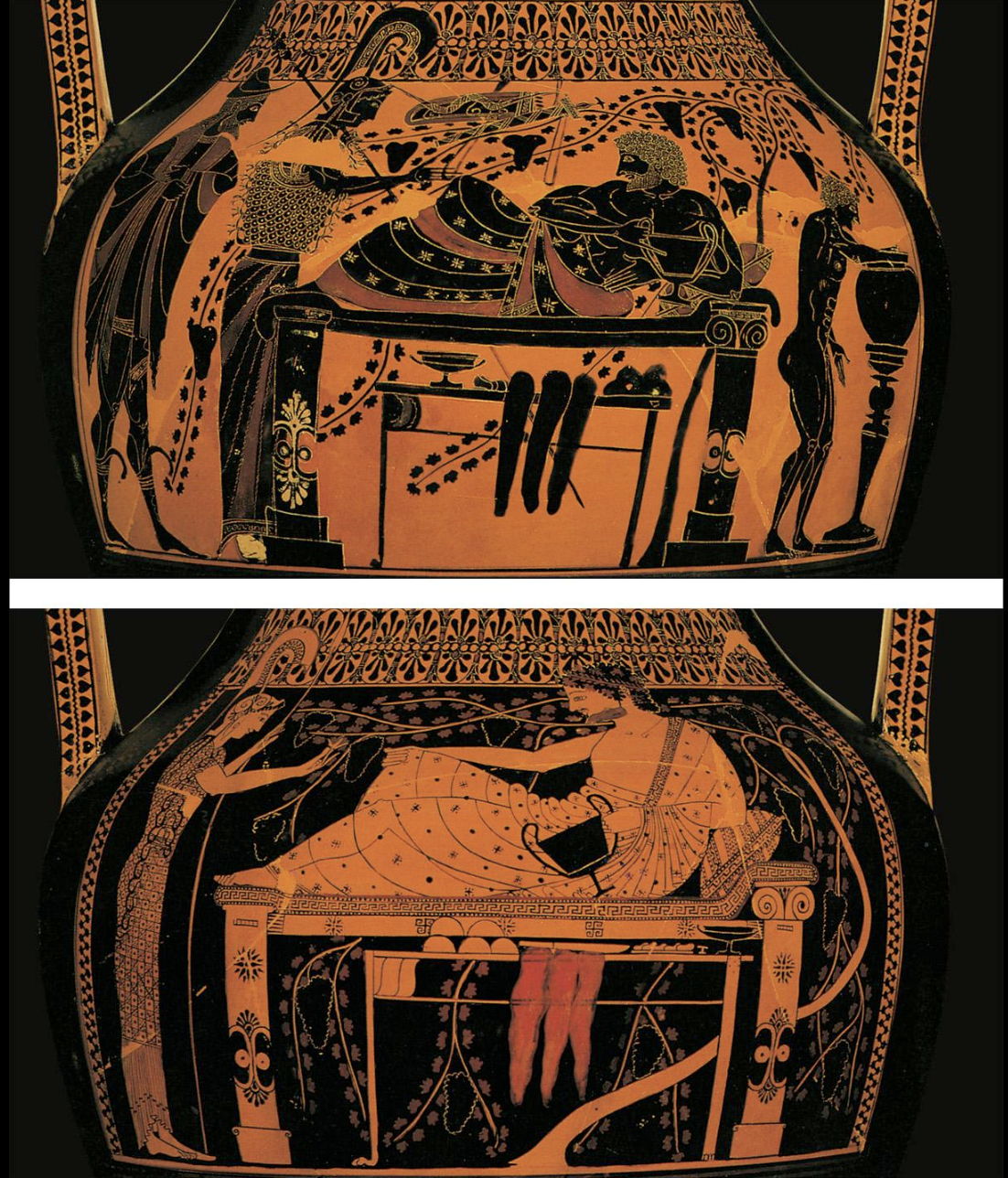
Euphronios Sarpedon krater, pioneer group, found in etruria, late-archaic, zeus and sarpedon, symposium mixing bowl, red figure
Title, artist, location, time-period, depiction (who is in it?)(left→right), use (look at shape!), art style
sarpedon is injured, zeus sends messengers sleep and death to bring back to mother at home, guided by hermes and two soldiers
V shape in vase leads eyes to sarpedon
added paint adds more detail (red for blood)
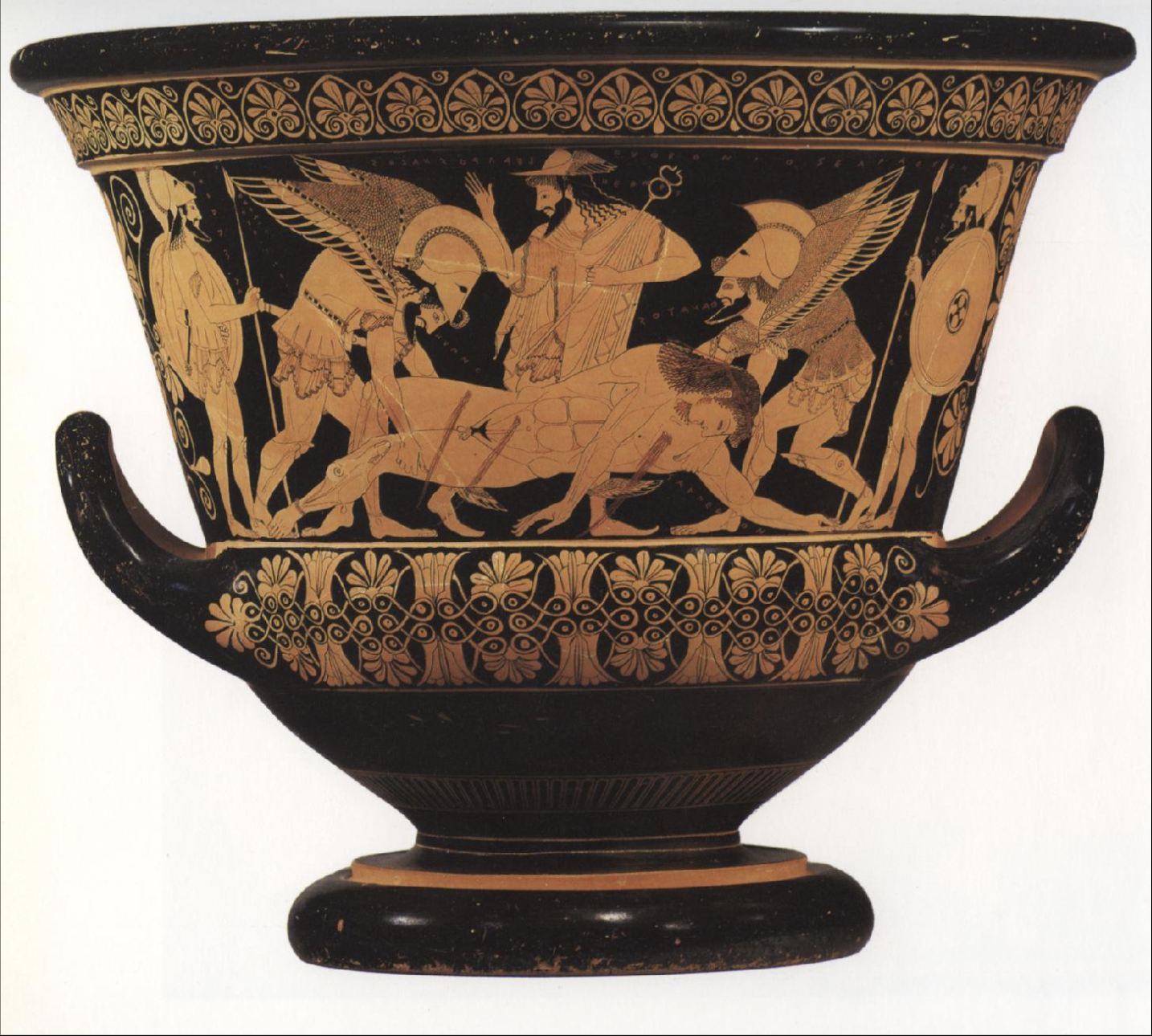
paestum
founded by sybaris, second tier greek colony (apoikia)
Tomb of the Diver, Poseidonia, early classical, diver, cyst grave
Title, location, time-period, depiction (who is in it?)(left→right), use (look at shape!)
greek characteristics, unusualness comes from lid
diver in a big open space
one figure, jumps into unknown—depth
brings us into next plane
symposium inside the tombs: kylikes, krater
playing a drinking game, flicking dregs (kottabos)

Temple of Hera I (The Basilica), Poseidonia, mid-archaic, Hera, worship, doric
Title, location, time-period, dedication to, use (look at shape!), order
unusual plan, Hera II is more standard

Motya youth, motya, early classical, charioteer or dancer, Parian marble
Title, location, time-period, depiction (who is in it?)(left→right), material
found in 2nd tier colony on the edge of sicily
athlete maybe
drapery accentuates movement of body
looking at hair, something was previously on his head
contrapposto
early classical=severe style

Persian war
Athens won a lot, after these wars there was much greek unity
Berlin painter amphora, early classical, lyre player and coach, wine container, red figure
Title (w/ artist), time-period, depiction (who is in it?)(left→right), use (look at shape!), art style
famous painter
solid black background, average person playing an instrument and singing!

Berlin Painter amphora, early-classical, hermes and satyr, wine container, red figure
Title (w/ artist), time-period, depiction (who is in it?)(left→right), use (look at shape!), art style
more complex, but still singular, different figures (deer!)
standing ‘on top’ of each other, showing pictorial depth
caught up in own world

Calyx krater, Niobid painter, high classical, deities in battle, symposium mixing bowl, red figure
Title, artist, time-period, depiction (who is in it?)(left→right), use (look at shape!), art style
at this point, everyone is doing this specific style
some figures seem to be floating→meant to be standing on different ground lines
Athen and Herakles in the middle= can tell because of the lion skin and club
historical event depiction rather than mythological

Kylix with white ground tondo, early classical, maenad, drinking vessel, white ground
Title, time-period, depiction (who is in it?)(left→right), use (look at shape!), art style
this art style is slipped before fired, no incision
figures have special relation with wile animals
more time to add different colors and slips
rare for this style to be in this type of pottery
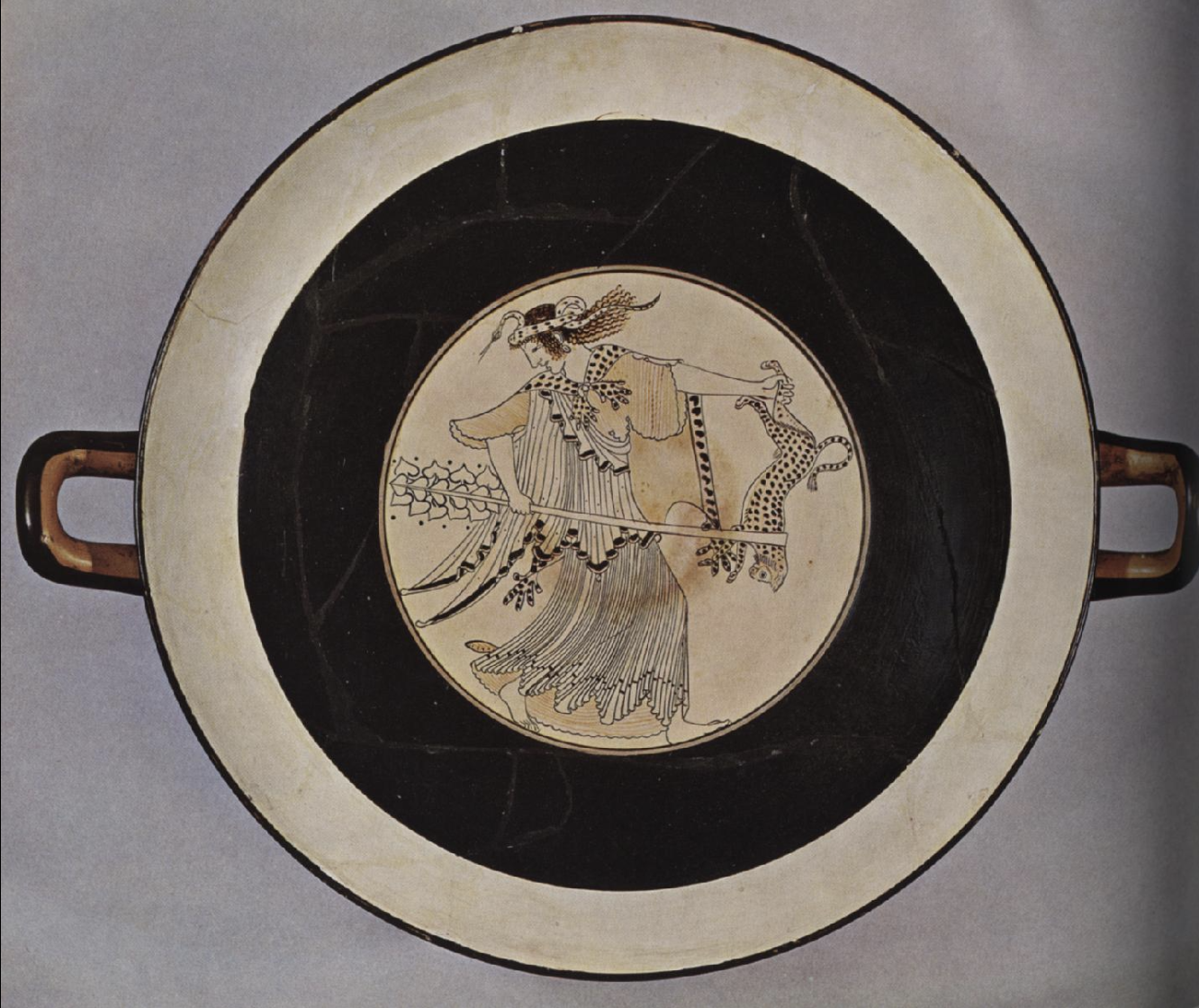
Lekythos, Achilles painter, 440, indoor warrior departure, oil container, white ground
Title, artist, time-period, depiction (who is in it?)(left→right), use (look at shape!), art style
libations of oil containers are found in graves, cemeteries→being found in the ground helps preservation
inside scene, objects are found hanging on wall, also ordinary people
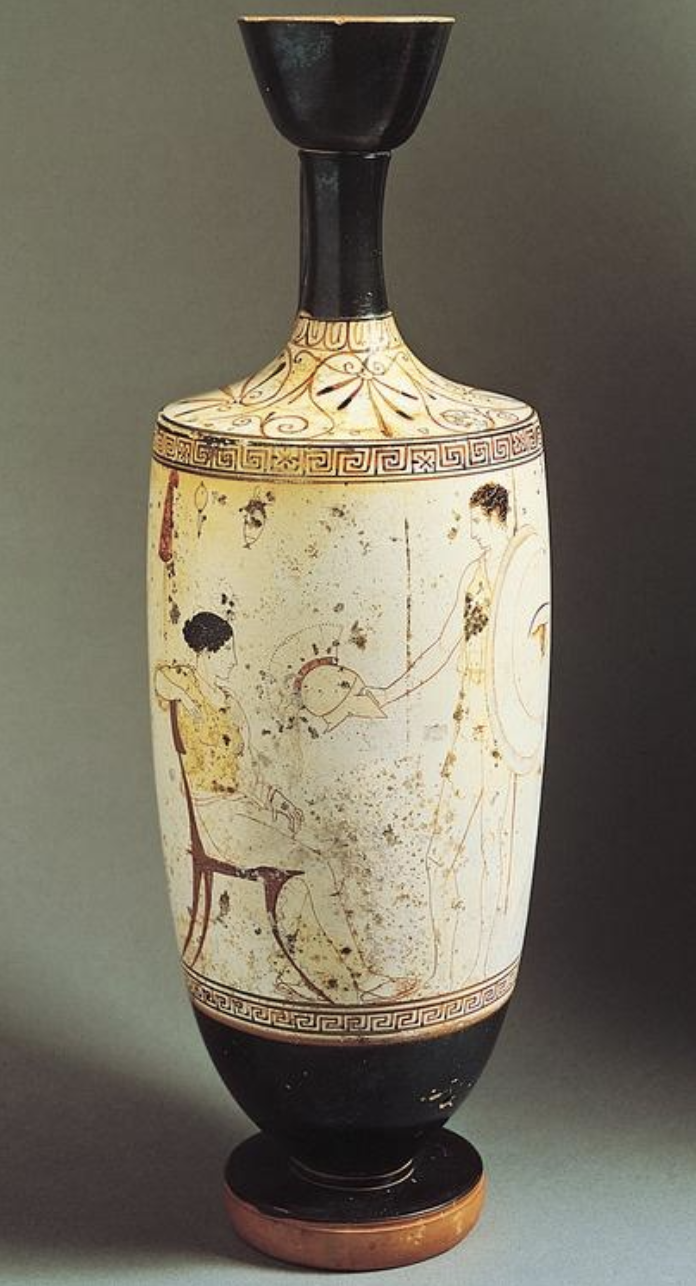
Lekythos, Achilles painter, 440, woman with lyre and one standing, grave marker/oil container, white ground
Title, artist, time-period, depiction (who is in it?)(left→right), use (look at shape!), art style
added color and drapery
quiet and introspective scene - severe style
the object is more of a symbol

Temple of Aphaia, early classical, Aegina, worship, doric
Title, time-period, location, use (look at shape!), order
hexastyle peripteral temple w/ distyle in antis pronaos, opisthotomos, and cella, with a double internal collonade
ramp=accessibility
Pediment is a battle scene from trojan war
archaic with the smile, but breaking frontality, polychromy

Artemision Zeus, early classical, Zeus, bronze
Title, time-period, depiction (who is in it?)(left→right), material
bronze makes it easier to add more detail and not need any extra support
showcases actions, movement, torsion
was found in shipwreck
adult male, long hair, braided; was most likely holding a lightning bolt

The Riace Warriors: Riace A, 460, for etrurians, bronze
Title, time-period, use, material
diver saw a hand and thought it was a body lol
detailed face, curly bear, eyes, different metals used for different polychromy, inlays.. added patina for hair to be different color

The Riace Warriors: Riace B, high-classical, for etrurians, bronze
Title, time-period, use, material
shows different characteristics from Riace A, individuality

Doryphoros, high classical. Polykleitos, spear-bearer
Title, artist, time-period, depiction (who is in it?)(left→right)
famous figure to sculpt, but no greek examples exist today— what you see now are roman copies
this image is a reconstruction.
chiasmus (X), included in new canon of proportions (7:1)

Temple of Zeus, Libon of Elis, early classical, Olympia, worship, doric, local limestone
Name, architect, time-period, location, use, order, material
_____ counterpart to Delphi
temple kept falling due to earthquakes etc. but the kept reconstructing it in the same place: connection to altar
largest temple on greek mainland
wasn’t typical material, used stucco to make it more even and look like marble
pediment story of how olympia came to be
metopes include labors of herakles

Seer
note torsion and age

centuaromachy
humans vs. centaurs
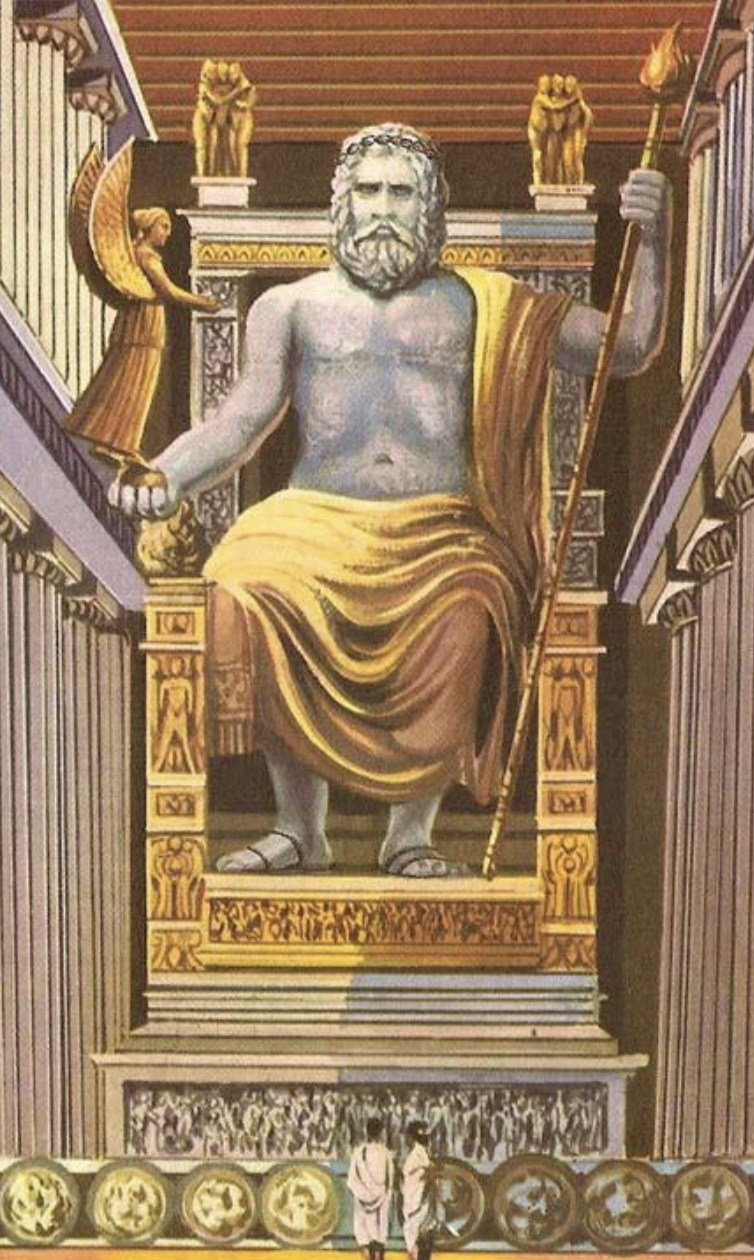
Cult Statue of Zeus, Pheidias, mid 5th, olympia, zeus and nike, chryselephantine
Title, artist, time-period, location, depiction (who is in it?)(left→right), method
1 of 7 wonders of ancient world