China: Notable Artists and Architects (and their Works, Contributions, and Notable Biographical Information) and Notable Art and Architecture Terms, Concepts, etc.
 Call Kai
 Learn
 Practice Test
 Spaced Repetition
 Match
 Flashcards
 Knowt Play
1/22

There's no tags or description
Looks like no tags are added yet.
23 Terms
344 - 406 - Gu Kaizhi (All Facts)
Chinese Painter during the Jin Dynasty
He was admired at the court of Nanking for his
Figure painting
Landscape art
Certainty of brushstrokes and his “fine wire line”
344 - 406 - Gu Kaizhi: The Lessons of the Instructress to the Ladies of the Court (All Facts)
Depicts a woman giving instructions on how to appear beautiful
Released alongside a poem accompanying it that laments that, while many ladies know how to adorn their physical beauty, few know how to beautify their souls
Ink Wash Painting (All Facts)
Type of Chinese brush painting which uses washes of black ink, such as that used in East Asian calligraphy, in different concentrations
It emerged during the Tang Dynasty
It overturned earlier, more realistic techniques
600 - 673 - Yan Liben (All Facts)
Chinese Painter during the Tang Dynasty
He presided over the public works committee entrusted with the task of constructing the imperial palaces of the capital
600 - 673 - Yan Liben: Thirteen Emperors Scroll (All Facts)
Chinese Buddhist Sculpture (All Facts)
Combined the traditional linear delicacy with the Indian sense of form, resulting un such superb statues such as the Seated Stone Buddha
711 - Seated Stone Buddha (All Facts)
685 - 759 - Wu Daozi (All Facts)
Chinese Painter during the Tang Dynasty
772 - 846 - Po Chu-i (All Facts)
Wrote didactic verse
900 - 960 - Ching Hao (All Facts)
Wrote an essay on landscape painting that stressed the metaphysical implications of such art
Imperial Academy of Painting (All Facts)
Founded in western China during the Ten Kingdoms period
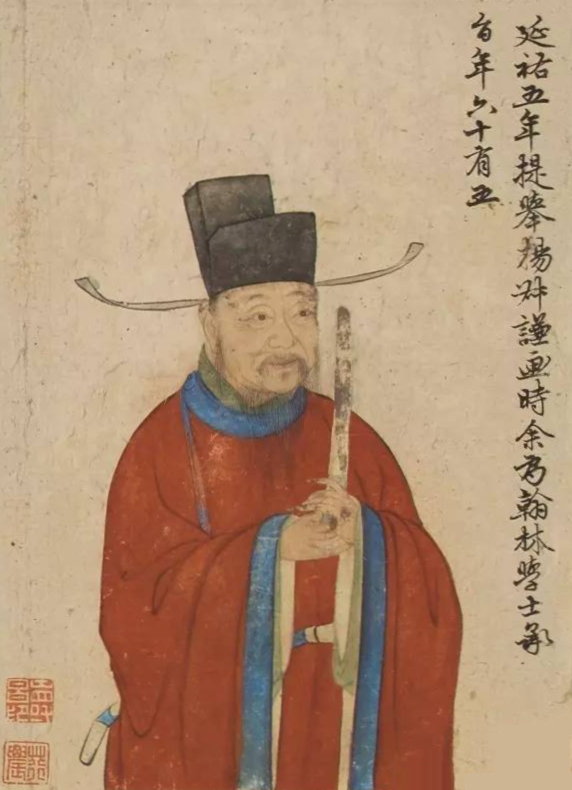
1254 - 1322 - Zhao Mengfu (All Facts)
Chinese Calligrapher and Painter during the Yuan Dynasty
He was a descendant of the founder of the Song Dynasty
He was the best calligrapher in China in his day
He was a prominent public figure and artist
He held a government position under Kublai Khan
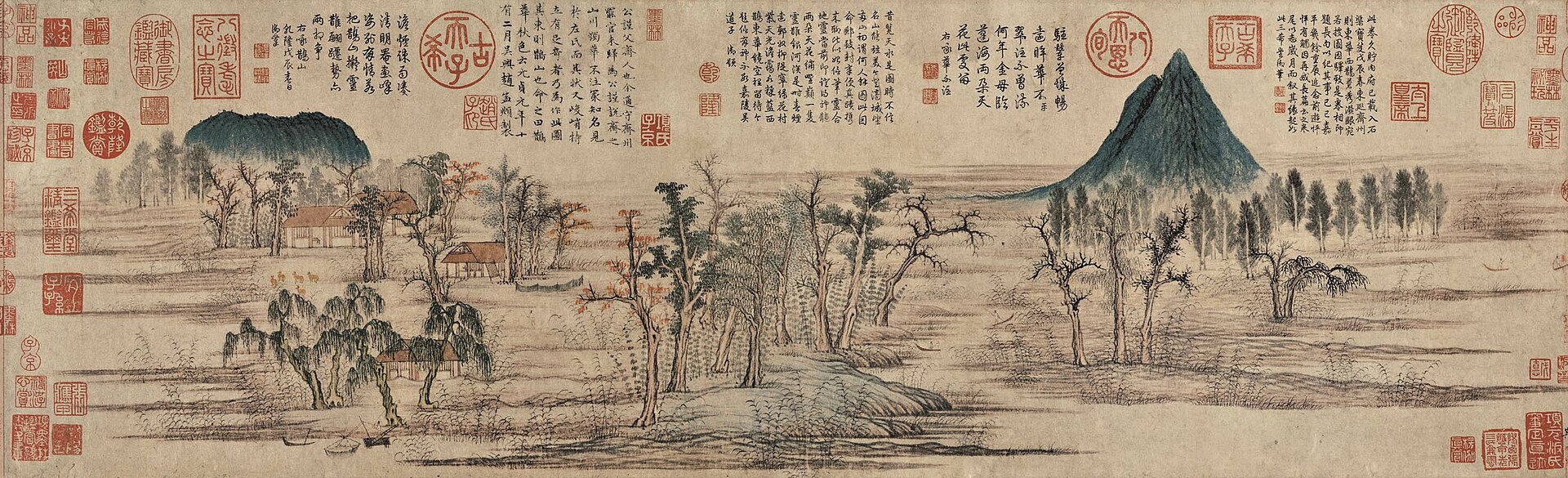
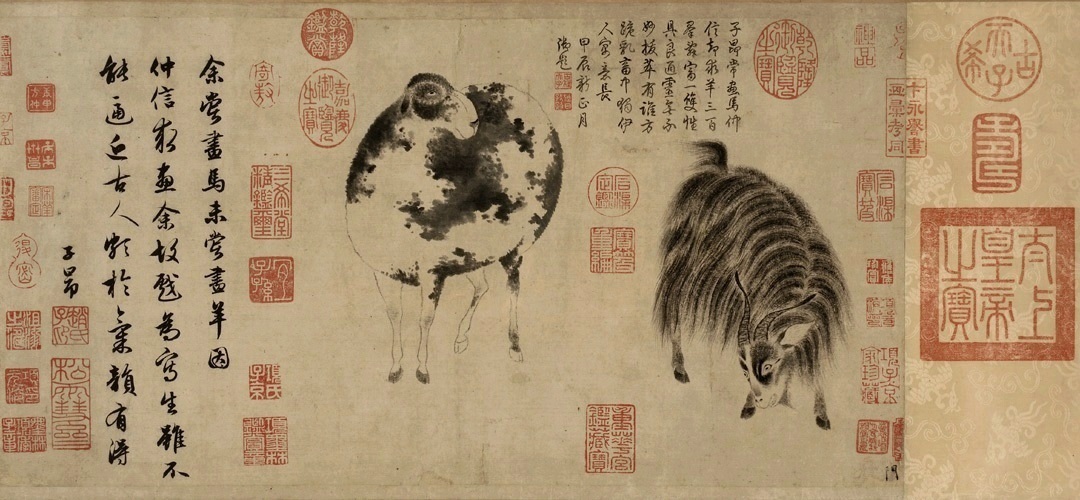
His work covers an extraordinary range of styles and subjects, as if in an effort to sum up all the traditional themes of Chinese painting, although his originality means his paintings are rarely merely archaic
His use of color and space is particularly effective in landscape painting, where he preferred clear brush strokes to washes, giving a realistic effect to scenery
1296 - Zhao Mengfu: Autumn Colors at the Qiao and Hua Mountains (All Facts)
1300 - Zhao Mengfu: Sheep and Goat (All Facts)
1302 - Zhao Mengfu: Water Village (All Facts)

Four Great Masters of the Yuan Dynasty (All Facts)
They were part of the Ink Wash Painting tradition
Spurred experimentation with novel brushstroke techniques, with a new attention to the vocabulary of brush manipulation
Their influence on landscape painting brought a greater robustness and broader color spectrum to the art form
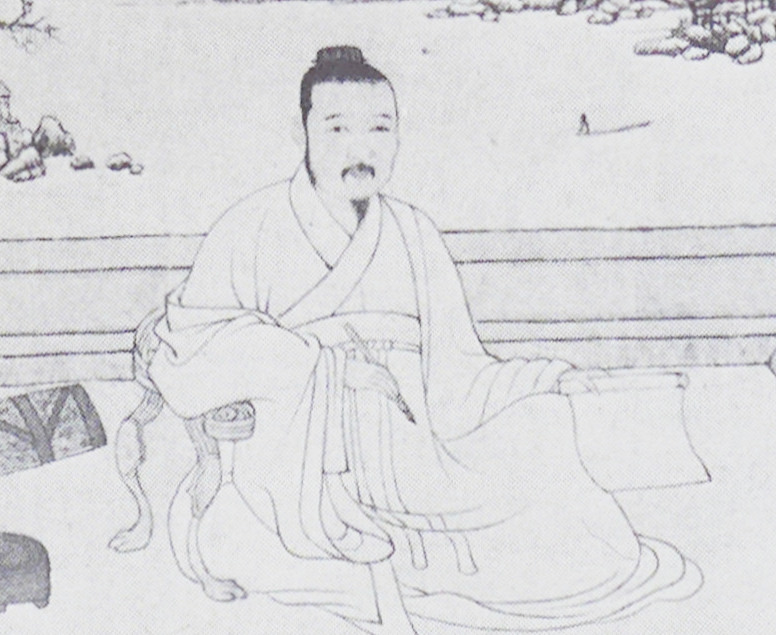
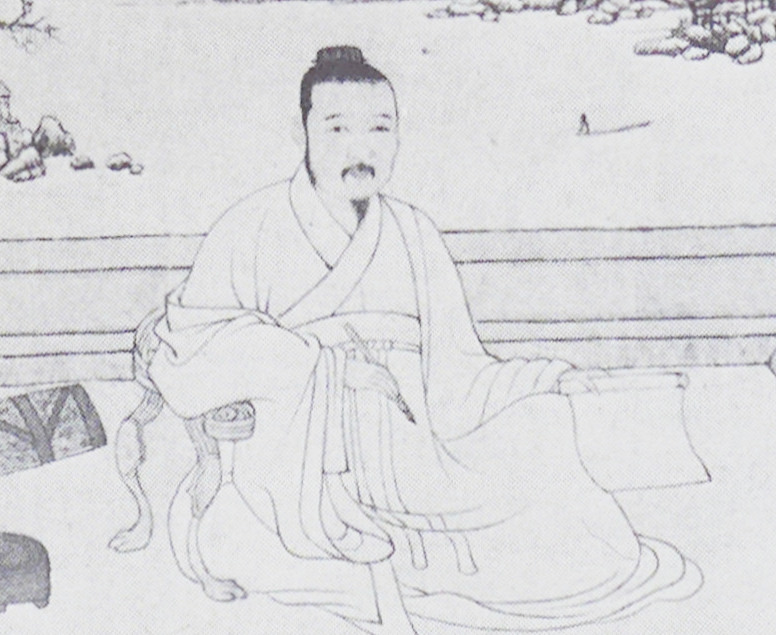
1301 - 1374 - Ni Zan (All Facts)
Chinese Painter during the Yuan Dynasty and Ming Dynasty, he was one of the Four Great Masters of the Yuan Dynasty
He was one of the most revered Chinese artists in his lifetime
He was born near Suzhou and his early life was prosperous and comfortable
He knew many artists and scholars
He gained a reputation for being precious and faintly eccentric, having washed himself constantly
He eventually gave this lifestyle up and left his home to live a simple life on a house-boat with his wife
He returned to his old home in old age after his wife’s death
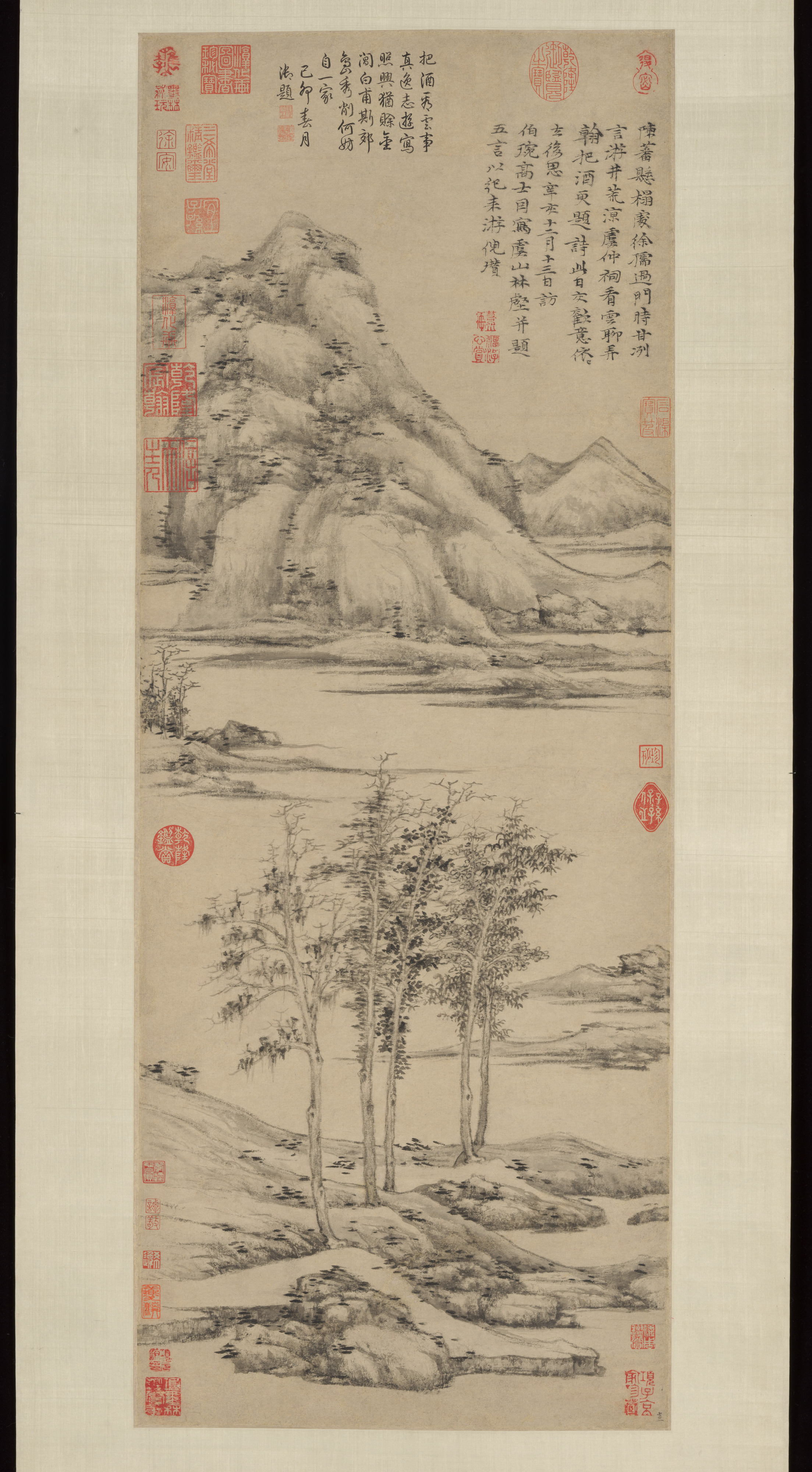
Nearly all his works
are
small
delicately-toned
intimate
bare of people
have
just a few thin trees
a lake
low barren hills
give off an effect of an understated and austere beauty
1372 - Ni Zan: Woods and Valleys of Mount Yu (All Facts)
1400s - Ming Pottery / Craftsmanship (All Facts)
Known for its porcelain works with its blue and white wars that developed under the namesake dynasty
In addition to porcelain, Chinese workers also carved objects of extraordinary delicacy and beauty, having shown a marvellous sensitivity to the texture of ivory, jade, turquoise, and other material
The namesake potters discovered underglaze painting using imported Persian cobalt, in which their harmonious blue designs on white ground balanced their favorite opulent shapes and sinuous line

1555 - 1636 - Dong Qichang (All Facts)
Chinese Painter during the Ming Dynasty
He was (is) considered and became renowned as China’s greatest painter and calligrapher since Zhao Mengfu of the Yuan Dynasty
He also became a writer on aesthetics, introducing the distinction between the “northern” and “southern” schools in Chinese painting
He died at his home in the city of Huating
1698 - Lugou Bridge / Marco Polo Bridge (All Facts)
Reconstructed during the reign of Emperor Kangxi of Qing


1642 - 1707 - Shitao (All Facts)
Chinese Buddhist Monk, Calligrapher, Painter, and Art Theoretician during the Ming and Qing Dynasties
He was known for having revived Chinese landscape painting
His atmospheric paintings show mountain peaks glimpsed through drifting clouds or lashing sheets of rain, rendered in pale washes with accents of dark ink brush-strokes which were allowed to spread and run
He rebelled against the dogma that painters must imitate the style of the old masters and insisted that he would be true to the spirit of his age and his own personality
He once said that “Nowadays learned men are like withered bones and dead ashes. When I am asked if I paint in the style of the southern or the northern school, I say I do not know. I paint in my own style”