Chymotrypsin Mechanism/Plots/Common Carbohydrates
 Call Kai
 Learn
Learn Practice Test
 Spaced Repetition
 Match
Match Flashcards
 Knowt Play
1/17

There's no tags or description
Looks like no tags are added yet.
Name | Mastery | Learn | Test | Matching | Spaced | Call with Kai | Chat |
|---|
No analytics yet
Send a link to your students to track their progress
18 Terms
What happens in step 1?
Step 1: Substrate binding - The substrate fits into the enzyme’s active site, positioning the peptide bond next to the catalytic serine
What happens in Step 2?
Step 2: Nucleophilic attack — The serine’s O⁻ attacks the carbonyl carbon of the peptide bond, forming a tetrahedral intermediate.
What happens in Step 3?
Step 3: Substrate cleavage — The peptide bond breaks, releasing the first product (the amine group), while the acyl-enzyme intermediate remains attached.
What happens in Step 4?
Step 4: Water comes in — A water molecule enters the active site to replace the first product.
What happens in Step 5?
Step 5: Water attacks — Water, activated by histidine, attacks the carbonyl carbon of the acyl-enzyme intermediate, forming another tetrahedral intermediate.
What happens in Step 6?
Step 6: Break-off from the enzyme — The bond between the enzyme and the substrate breaks, regenerating the serine side chain.
What happens in Step 7?
Step 7: Product dissociates — The second product (carboxylic acid) is released, and the enzyme returns to its original state.
What is the full chymotrypsin mechanism?
Step 1: Substrate binding - The substrate fits into the enzyme’s active site, positioning the peptide bond next to the catalytic serine
Step 2: Nucleophilic attack — The serine’s O⁻ attacks the carbonyl carbon of the peptide bond, forming a tetrahedral intermediate.
Step 3: Substrate cleavage — The peptide bond breaks, releasing the first product (the amine group), while the acyl-enzyme intermediate remains attached.
Step 4: Water comes in — A water molecule enters the active site to replace the first product.
Step 5: Water attacks — Water, activated by histidine, attacks the carbonyl carbon of the acyl-enzyme intermediate, forming another tetrahedral intermediate.
Step 6: Break-off from the enzyme — The bond between the enzyme and the substrate breaks, regenerating the serine side chain.
Step 7: Product dissociates — The second product (carboxylic acid) is released, and the enzyme returns to its original state.
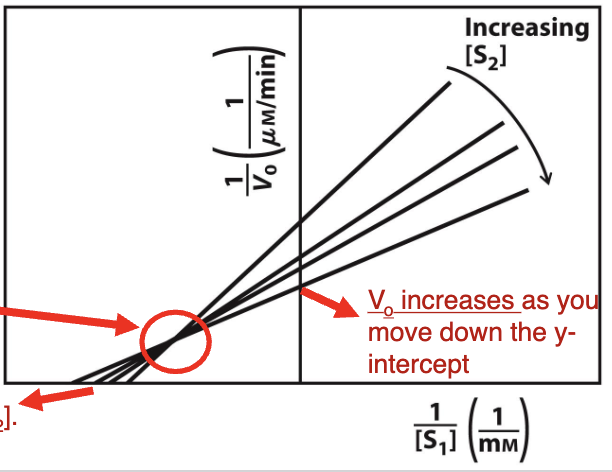
What plot is this?
a. Ping-Pong Kinetic Mechanism
b.Competitive Inhibition
c. Sequential Kinetic Mechanism
d. Mixed Inhibition
e. Uncompetitive Inhibition
c. Sequential Kinetic Mechanism
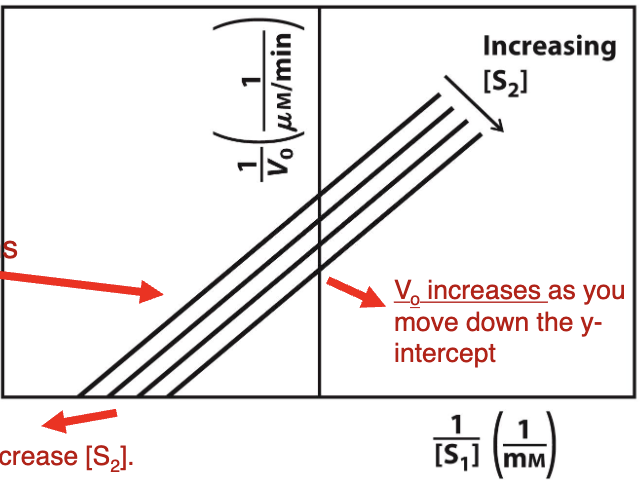
What plot is this?
a. Ping-Pong Kinetic Mechanism
b.Competitive Inhibition
c. Sequential Kinetic Mechanism
d. Mixed Inhibition
e. Uncompetitive Inhibition
a. Ping-Pong Kinetic Mechanism
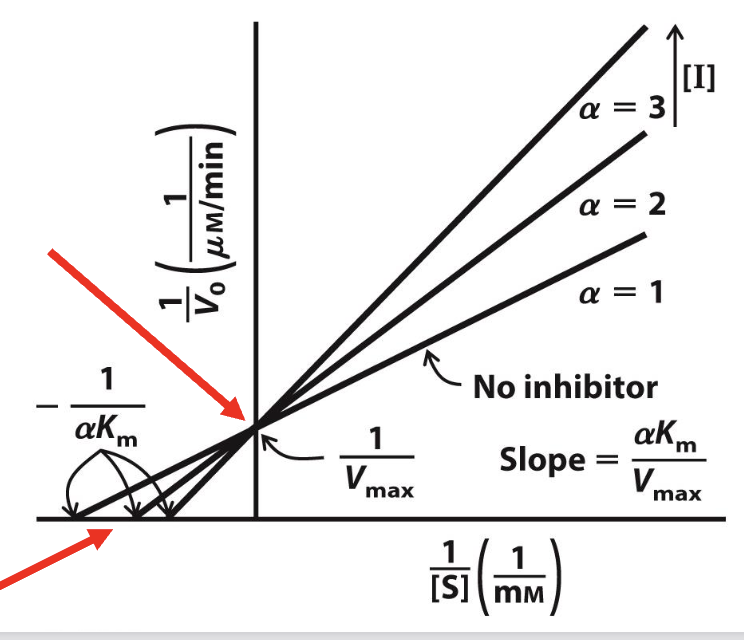
What plot is this?
a. Ping-Pong Kinetic Mechanism
b.Competitive Inhibition
c. Sequential Kinetic Mechanism
d. Mixed Inhibition
e. Uncompetitive Inhibition
b.Competitive Inhibition
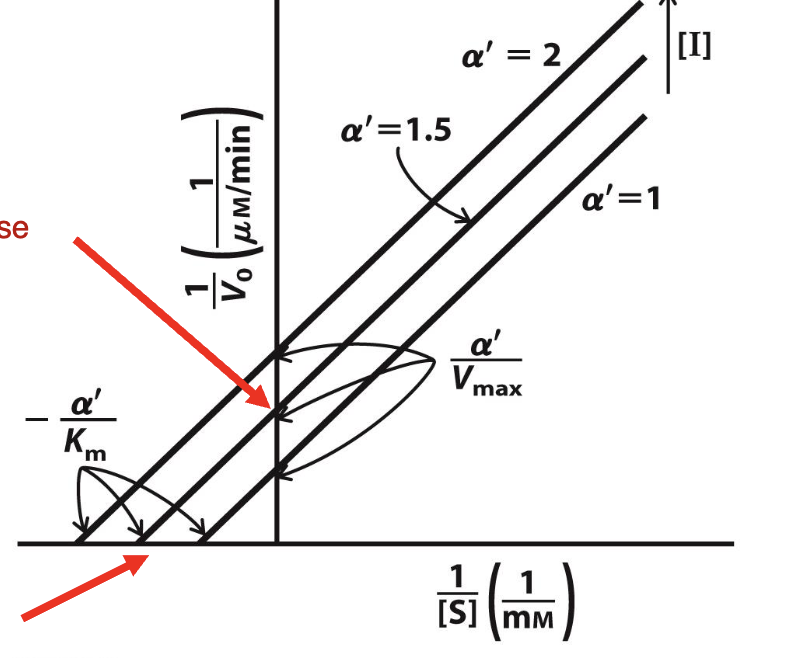
What plot is this?
a. Ping-Pong Kinetic Mechanism
b.Competitive Inhibition
c. Sequential Kinetic Mechanism
d. Mixed Inhibition
e. Uncompetitive Inhibition
e. Uncompetitive Inhibition
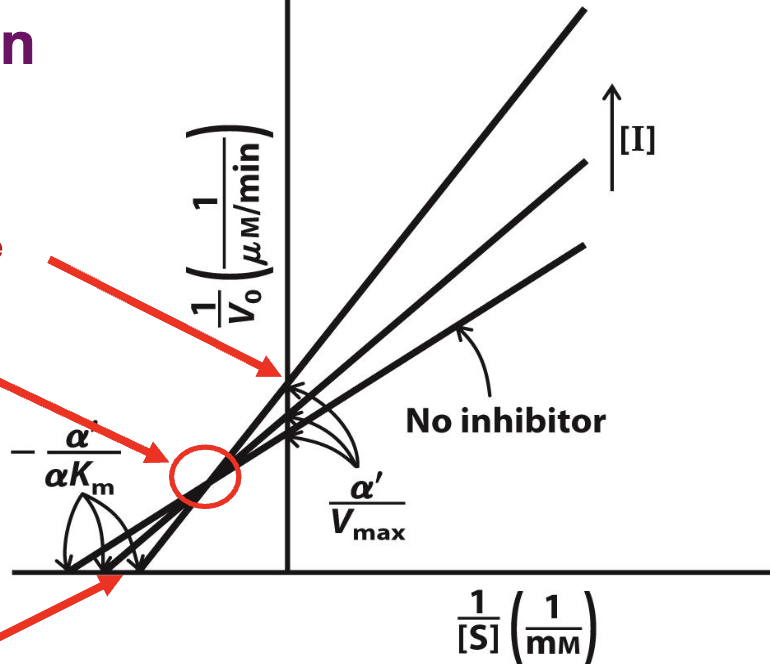
What plot is this?
a. Ping-Pong Kinetic Mechanism
b.Competitive Inhibition
c. Sequential Kinetic Mechanism
d. Mixed Inhibition
e. Uncompetitive Inhibition
d. Mixed Inhibition
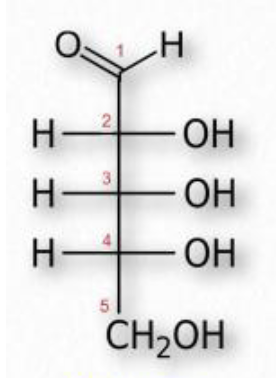
Is this:
a. Ribose
b. Glucose
c. Fructose
d. Galactose
e. Mannose
Ribose
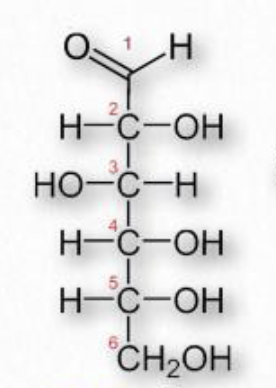
Is this:
a. Ribose
b. Glucose
c. Fructose
d. Galactose
e. Mannose
Glucose
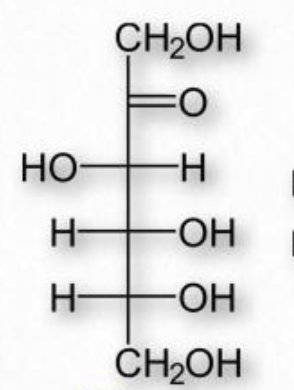
Is this:
a. Ribose
b. Glucose
c. Fructose
d. Galactose
e. Mannose
Fructose
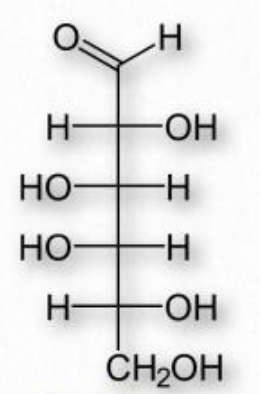
Is this:
a. Ribose
b. Glucose
c. Fructose
d. Galactose
e. Mannose
Galactose
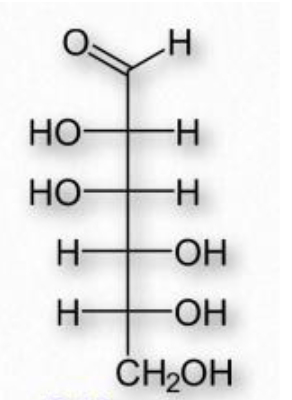
Is this:
a. Ribose
b. Glucose
c. Fructose
d. Galactose
e. Mannose
Mannose