Lung Volumes and ABGs
 Call Kai
 Learn
 Practice Test
 Spaced Repetition
 Match
 Flashcards
 Knowt Play
1/53

There's no tags or description
Looks like no tags are added yet.
54 Terms
When does resting end expiratory pressure (REEP) occur
At the end of tidal expiration

What is A
Maximum inspiration

What is B
Maximum expiration

What is C and the volume
Inspiratory reserve volume
3000 mL

What is D and the volume
Tidal volume
500 mL

What is E and the volume
Expiratory reserve volume
1100 mL

What is F and the volume
Residual volume
1200 mL

What is G and the volume
Functional residual capacity
2300 mL

What is H and the volume
Inspiratory capacity
3500 mL
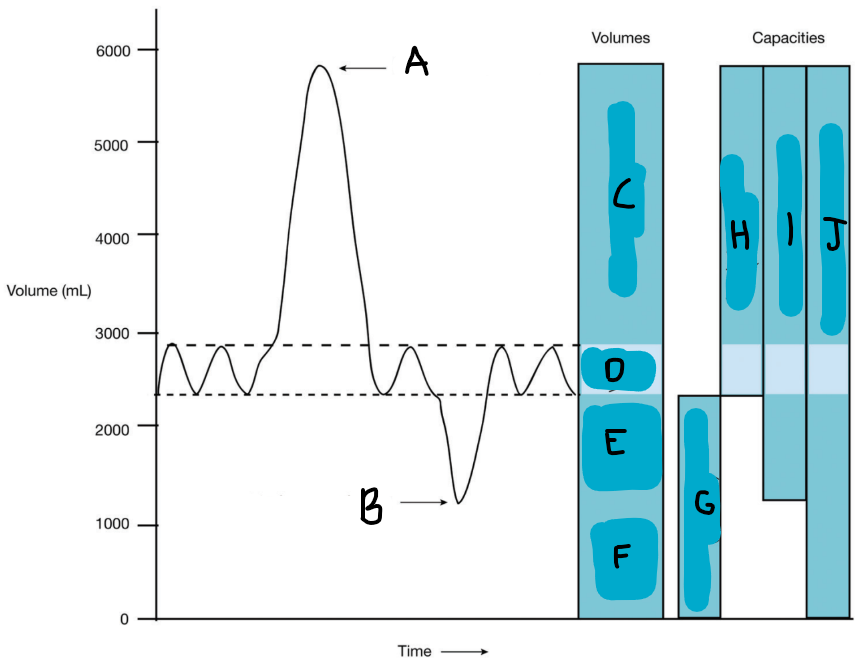
What is I and the volume
Vital capacity
4600 mL

What is J and the volume
Total lung capacity
5800 mL
What is FEV1
Forced expiratory volume in 1 second
What is the FEV1 for the healthy population
>70% of FVC exhaled within the first second
(FEV1/FVC) x 100
What is FEF
Forced expiratory flow rate
25-75%
What is external respiration
Exchange of O2 and CO2 between the lungs and the environment
What is internal respiration
Exchange of O2 and CO2 between circulating blood and body tissues
What is PaO2 related to
Oxygen saturation (SpO2) through the pulse oxyhemoglobin curve
What does a PaO2 of 55 correlated to in terms of SpO2
88%
What PaO2 level is considered hypoxemia
<80
Hypoxemia
Low level of O2 in arterial blood
Hypoxia
Low level of O2 in tissue
What does pH measure and what does it look at
Acid-base balance in the blood
Alveolar ventilation
What does it mean if the pH is normal
Compensated
What is normal pH
7.35-7.45
What is normal PaCO2
35-45
What does it mean if PaCO2 is normal
Metabolic compensated
What type of relationship does PaCO2 and pH have
Indirect relationship
What is normal HCO3-
22-26
What does it mean if HCO3- is normal
Respiratory compensated
What type of relationship does HCO3- and pH have
Direct relationship
What if all 3 (pH, PaCO2, and HCO3-) are abnormal
Partially compensated

What type is A
Respiratory acidosis

What type is B
Respiratory alkalosis

What is C
Metabolic acidosis

What is D
Metabolic alkalosis

Describe the condition for A
pH: decrease
PaCO2: increase
HCO3-: normal

Describe the condition for B
pH: increase
PaCO2: decrease
HCO3-: normal

Describe the condition for C
pH: decrease
PaCO2: normal
HCO3-: decrease

Describe the condition in D
pH: increase
PaCO2: normal
HCO3-: increase
What are the clinical manifestations for respiratory acidosis
Hypercapnia
Restlessness
Disorientation
Confusion
Sleepiness
Visual disturbances
Headache
Flushing
Dyspnea
Cyanosis
Decreased DTR
Hyperkalemia
Palpitations
What is recommended treatment for respiratory acidosis
Treat the underlying cause
Support ventilation
Correct electrolyte imbalance
What are the clinical manifestations for respiratory alkalosis
Tachypnea
Hypocapnia
Dizziness
Difficulty concentrating
N/T
Blurred vision
Diaphoresis
Dry mouth
Muscle cramps
Carpopedal spasms
Muscle twitching and weakness
Hyper reflexia
Arrhythmias
Hypokalemia
Hypocalcemia
What is the recommended treatment for respiratory alkalosis
Treat the underlying cause
Increase carbon dioxide retention (rebreathing, sedation)
What is the clinical manifestation for metabolic acidosis
Hyperventilation (compensatory)
Muscular twitching
Weakness
Malaise
Nausea
Vomiting
Diarrhea
Headache
Hyperkalemia (cardiac arrhythmias)
Coma (death)
What is the recommended treatment for metabolic acidosis
Treat underlying cause
Correct electrolyte imbalance (use NaCO3 for severe acidosis [pH < 7.2])
What is the clinical manifestation for metabolic alkalosis
Hypoventilation (compensatory)
Dysrhythmias
Nausea
Prolonged vomiting
Diarrhea
Confusion
Irritability
Agitation
Restlessness
Muscle twitching
Cramping
Hypotonia
Weakness
Trousseau sign
Paresthesias
Seizures
Coma
Hypokalemia
Hypochloremia
What is the recommended treatment for metabolic alkalosis
Treat underlying causes
Administer potassium chloride
Conditions for optimal respiration
Ventilation and perfusion are matched
Dead space condition
Well ventilated but no gas exchange occurs
Anatomical dead space
Blood and O2 are present, but vessel walls are too thick to allow for exchange
Physiological dead space
Volume of air in the respiratory zone that does participate in gas exchange
What conditions are shunts typically used for
Pneumonia
Pulmonary edema
Alveolar collapse
What receptors control ventilation
Baroreceptors
Chemoreceptors
Irritant receptors
Stretch receptors
What are the central control centers to control ventilation
Cortex
Pons
Medulla
ANS