kin272 lab practical exam
 Call Kai
 Learn
 Practice Test
 Spaced Repetition
 Match
 Flashcards
 Knowt Play
1/166

There's no tags or description
Looks like no tags are added yet.
167 Terms
anterior

posterior

medial

lateral

transverse plane

frontal plane

sagittal plane

erythrocyte
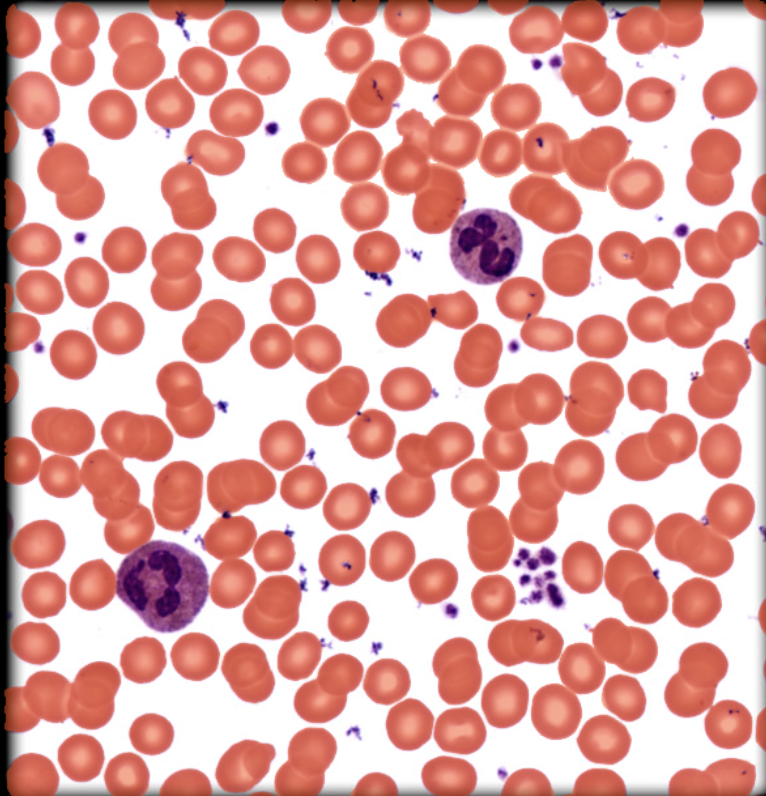
neutrophil

eosinophil

basophil
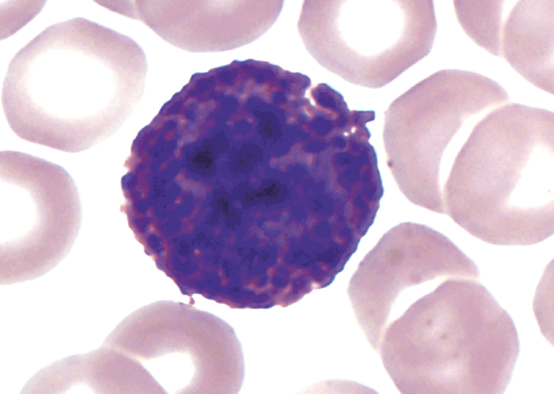
lymphocyte

monocyte
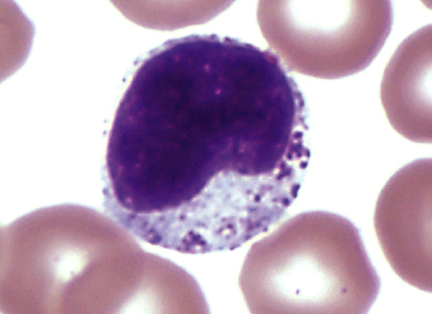
neutrophils, eosinophils, basophils
which leukocytes are classified as granulocytes?
lymphocytes, monocytes
which leukocytes are classified as agranulocytes?
neutrophil
most abundant leukocyte
basophil
least abundant leoukocyte
anterior cerebral a.

anterior cerebral a. and branches

basilar a.

vertebral a.

posterior cerebral a. and branches

vein
which vessel type has thicker tunica externa
artery
which vessel type has thicker tunica media
tunica media
which vessel layer contains smooth muscle
mediastinal lymph nodes

axillary lymph nodes
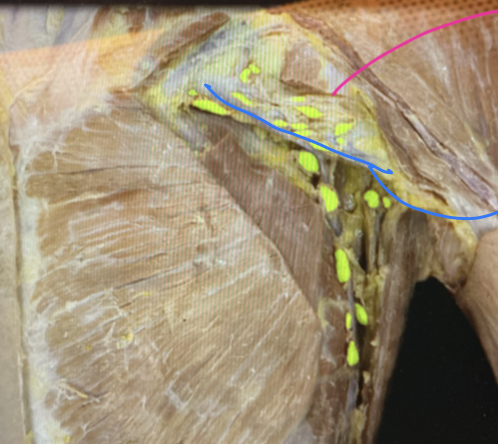
(pink)
peyer’s patch of ileum

involuntary control of vessel diameter through constriction/dilation
what purpose does smooth muscle serve in tunica media
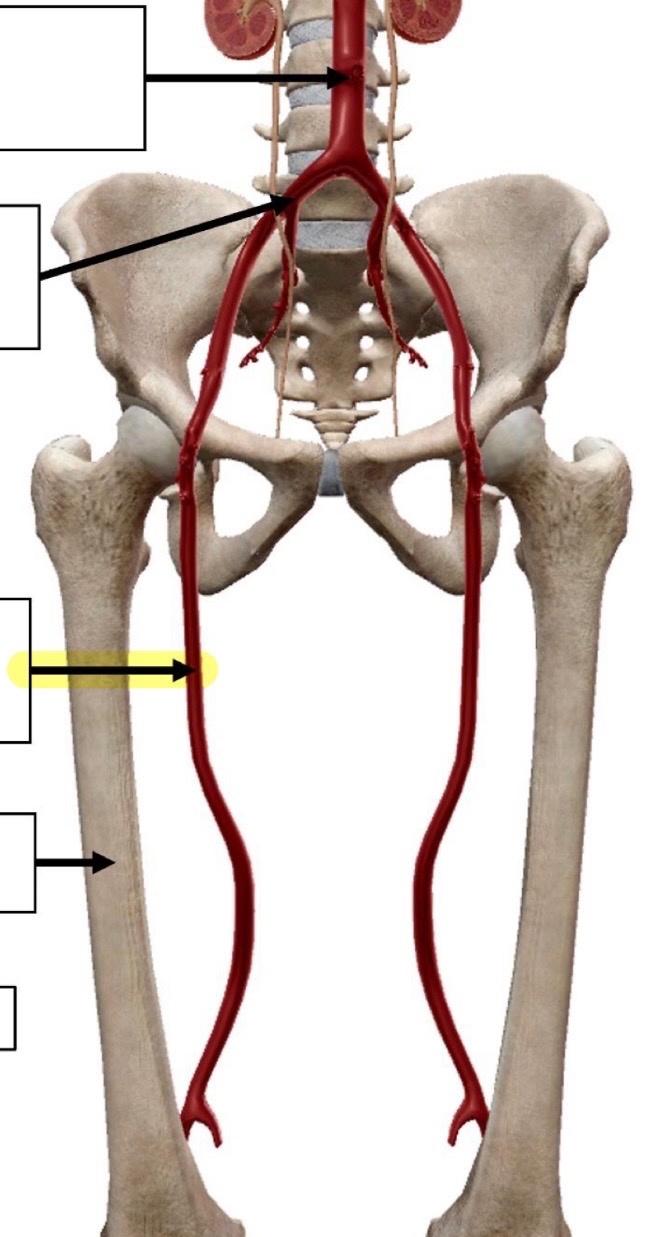
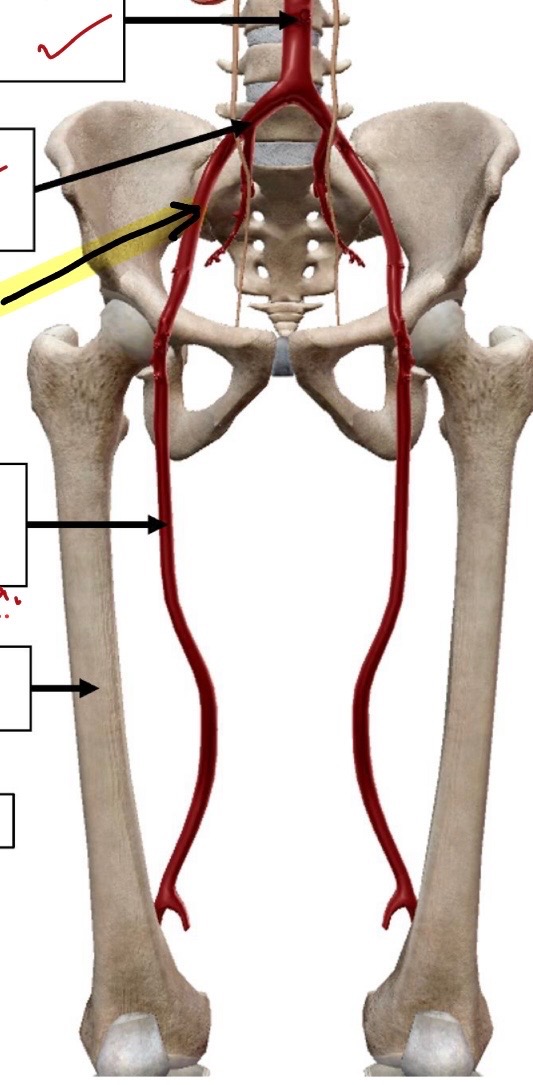
abdominal aorta

R common iliac a.

R femoral a.
inferior vena cava
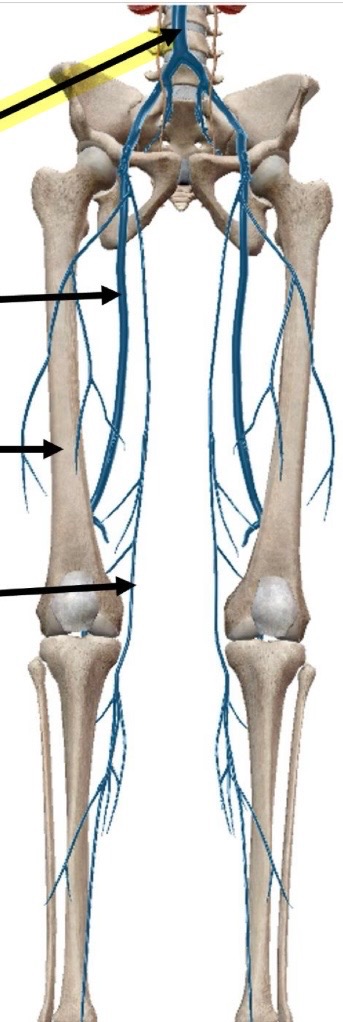
R femoral v.

R great saphenous v.

R common iliac v.

R external iliac v.

R external iliac a.
A, B, Rh
3 antigens that determine blood type
extracellular surface
where are antigens located
anti-A and anti-B
name the 2 antibodies
they circulate freely in blood plasma
where are antibodies located
A

name blood type
B
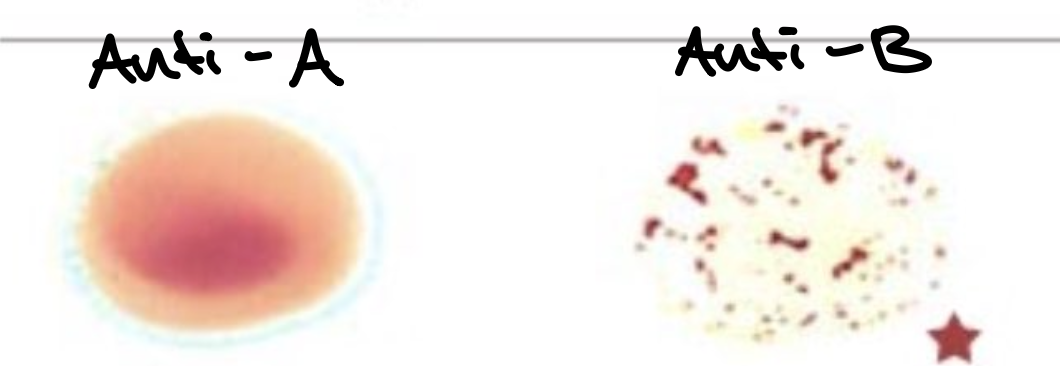
name blood type
AB

name blood type
O

name blood type
O-
universal donor
AB+
universal recipient
simple squamous epithelium; passive diffusion/filtration/secretion
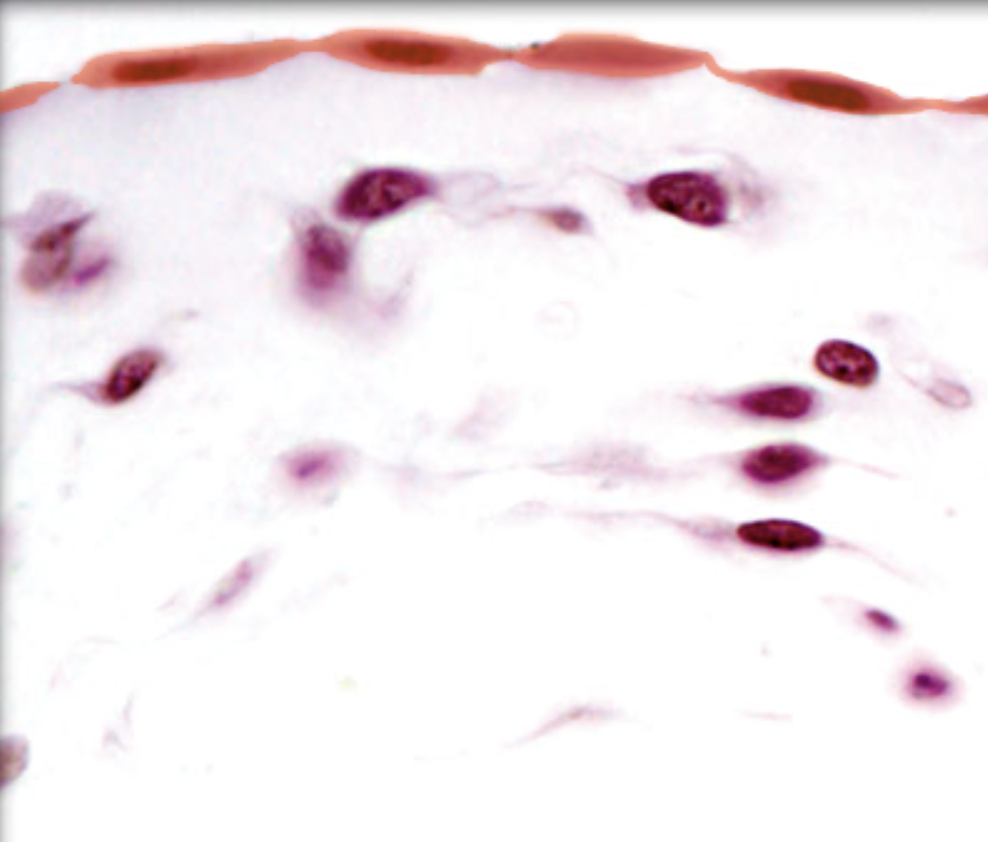
identify and purpose
stratified squamous epithelium; protection from abrasion/friction
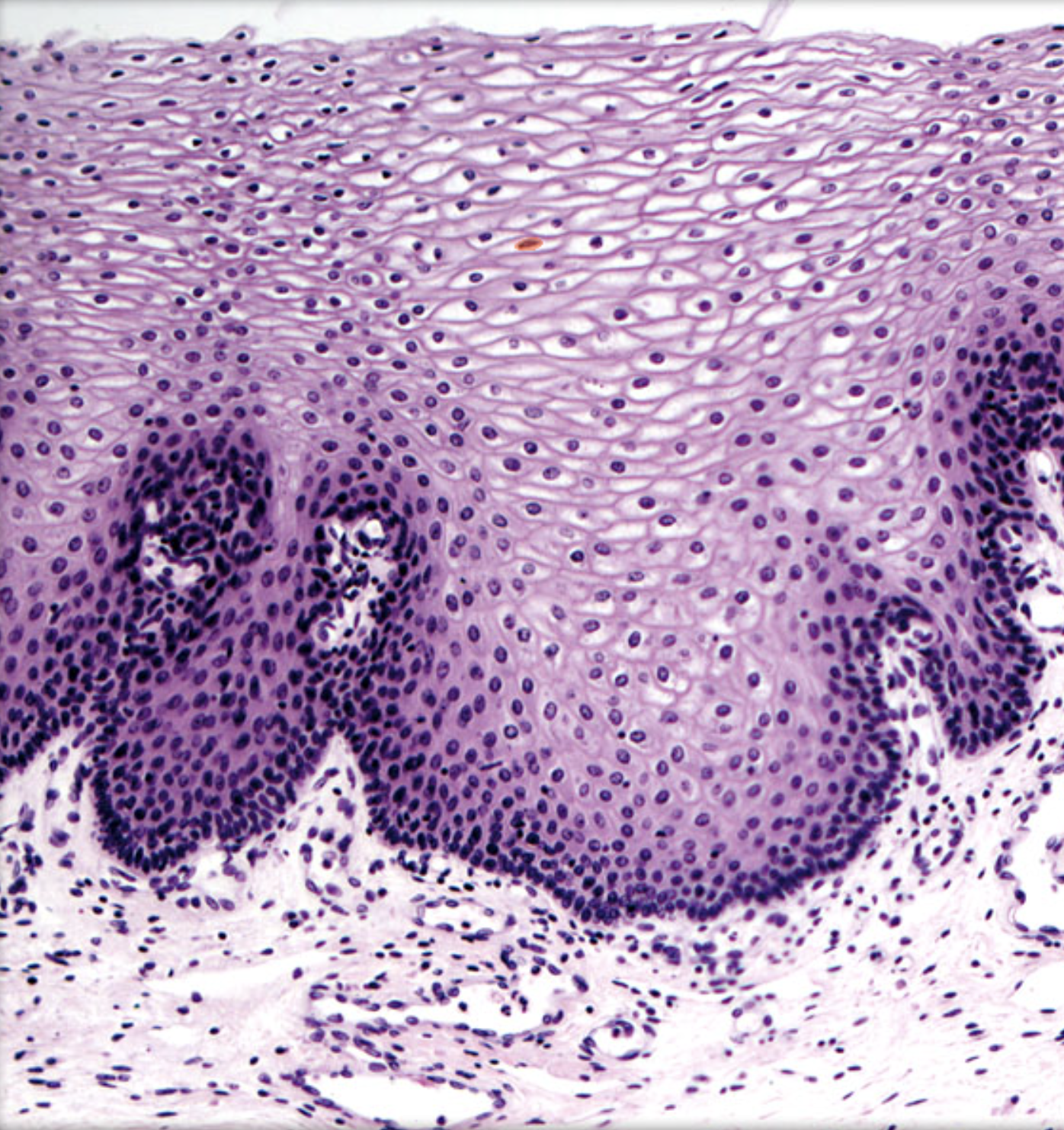
identify and purpose
simple cuboidal epithelium; absorption/secretion/protection
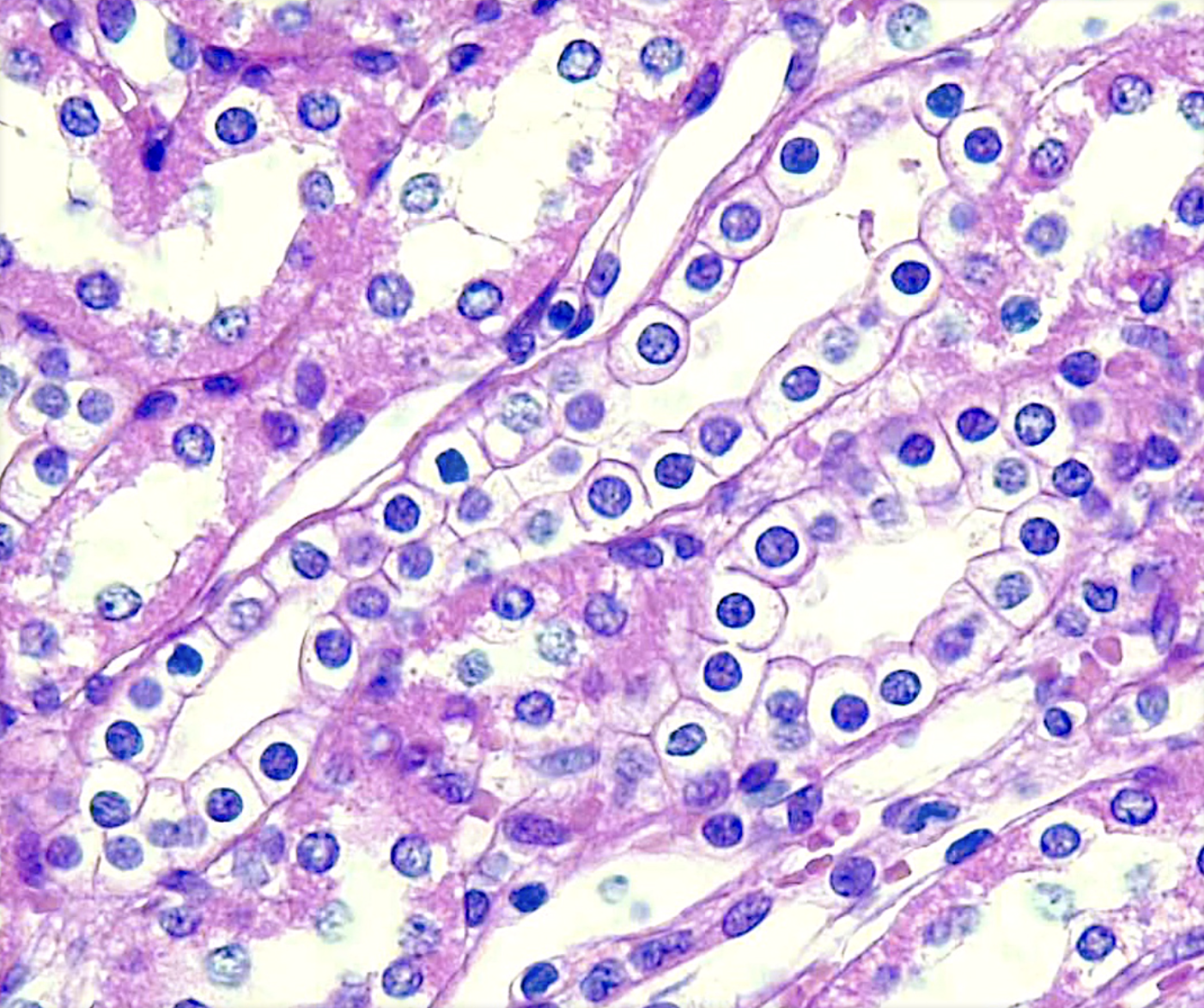
identify and purpose
nonciliated simple columnar epithelium; absorption/secretion/protection

identify and purpose
microvilli brush border; increase SA and facilitate transport and absorption across membrane

purpose?
ciliated pseudostratified columnar epithelium; absorption/secretion/protection/transport

identify and purpose
transitional epithelium; stretch/contract

identify and purpose
hyaline cartilage; reduce friction, absorb shock, allows for smooth joint movement

identify and purpose
articular surfaces (joints), costal cartilage, tracheal rings
where can hyaline cartilage be found
fibrocartilage; shock absorber, structural support

identify and purpose
pubis symphysis, intervertebral discs
where can fibrocartilage be found
cardiac muscle

skeletal muscle

smooth muscle
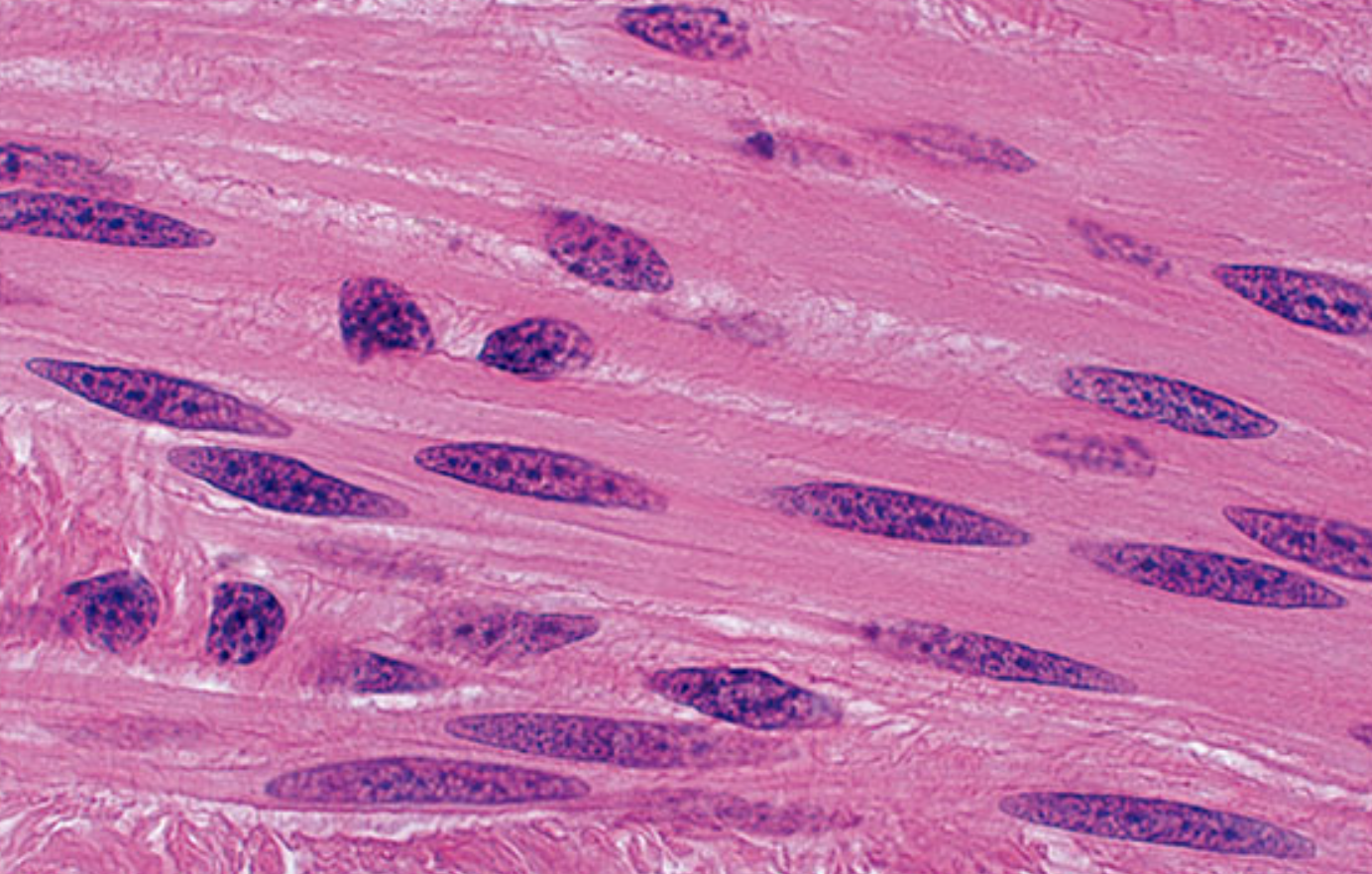
alveoli of lungs, blood vessels
where can simple squamous epithelium be found
tongue, skin (keratinized), esophagus
where can stratified squamous epithelium be found
instestinal lining
where can nonciliated simple columnar epithelium be found
trachea, bronchi
where can ciliated pseudostratified columnar epithelium be found
trachea

left primary bronchus

secondary bronchus
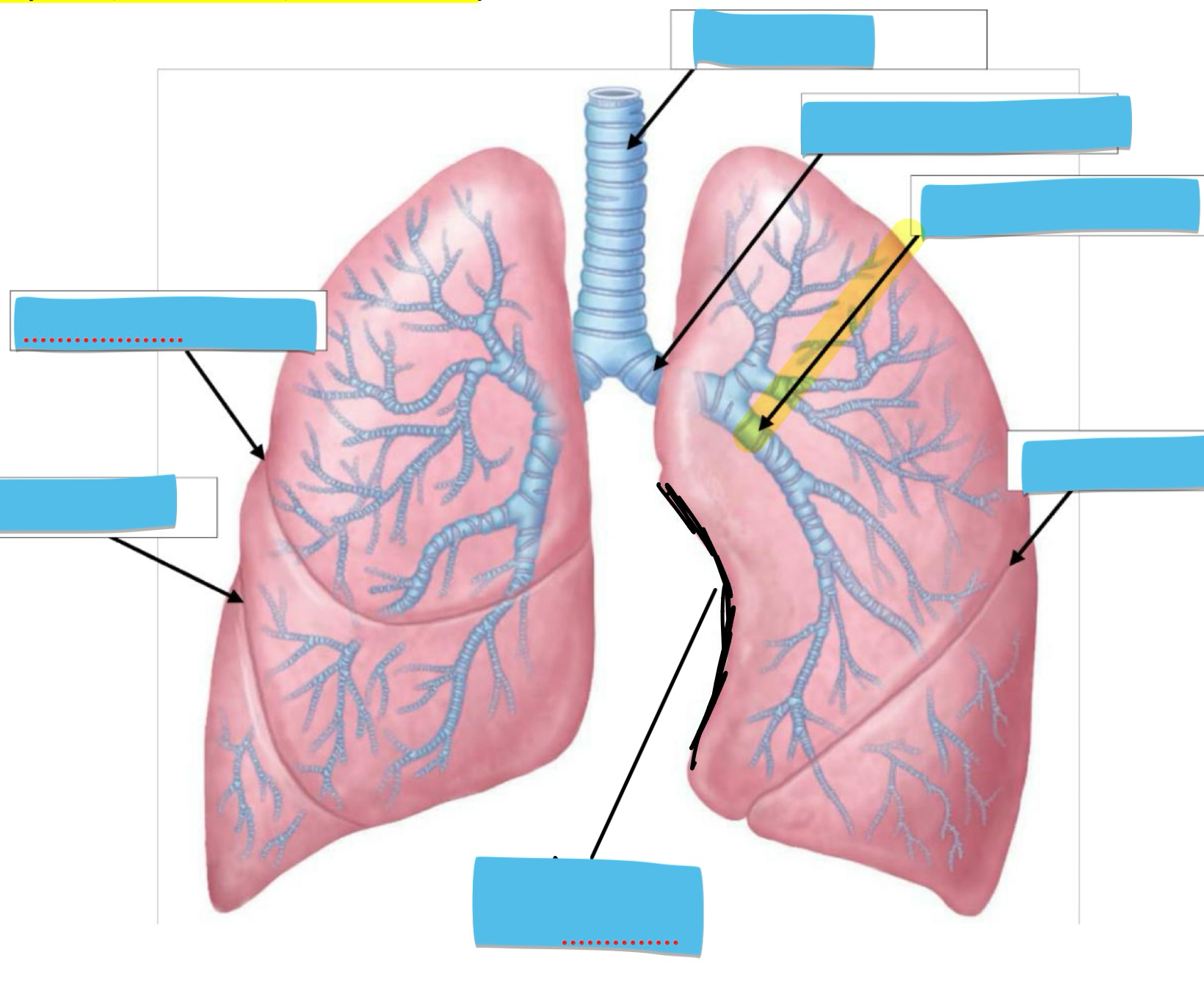
oblique fissure
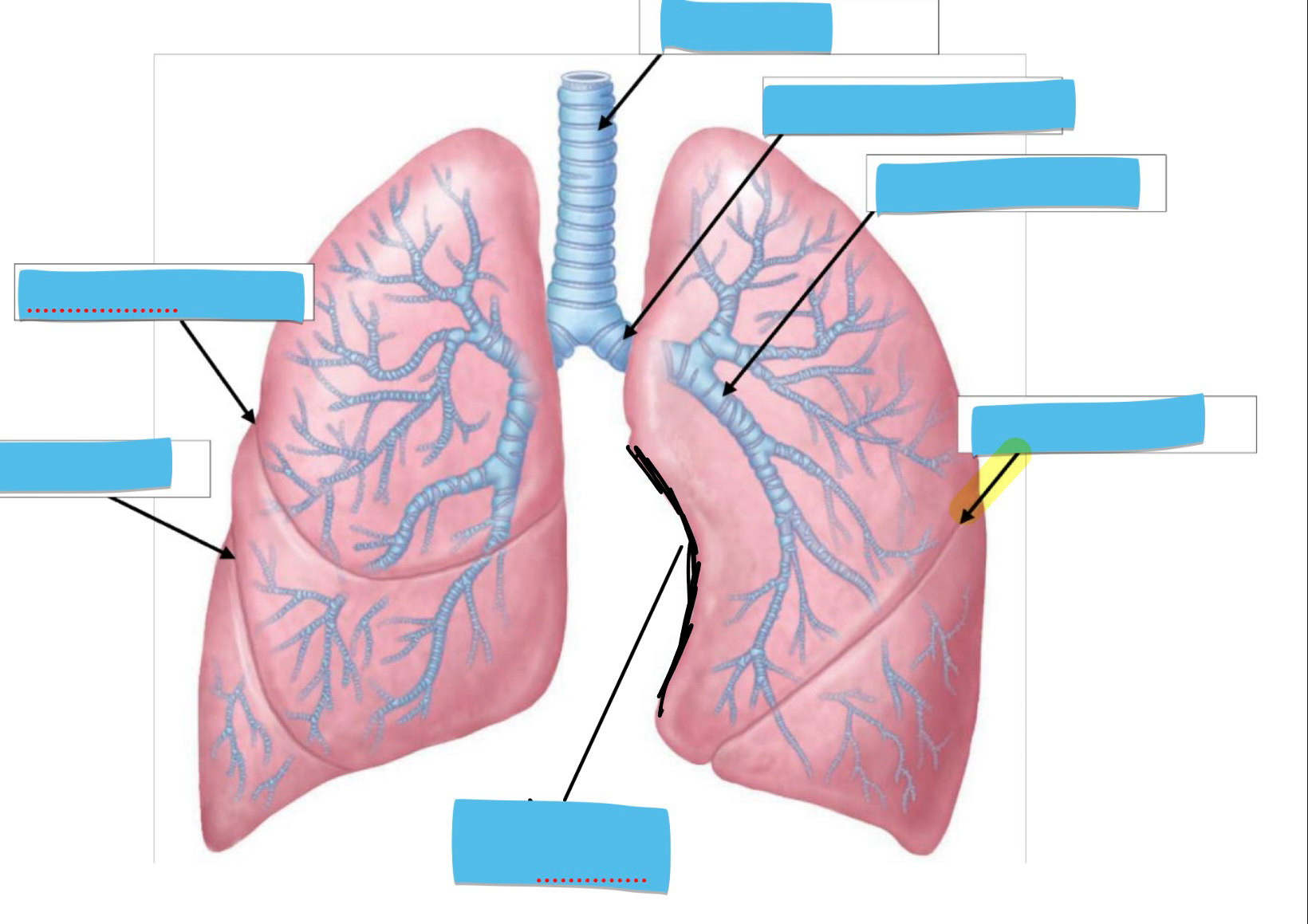
horizontal fissure
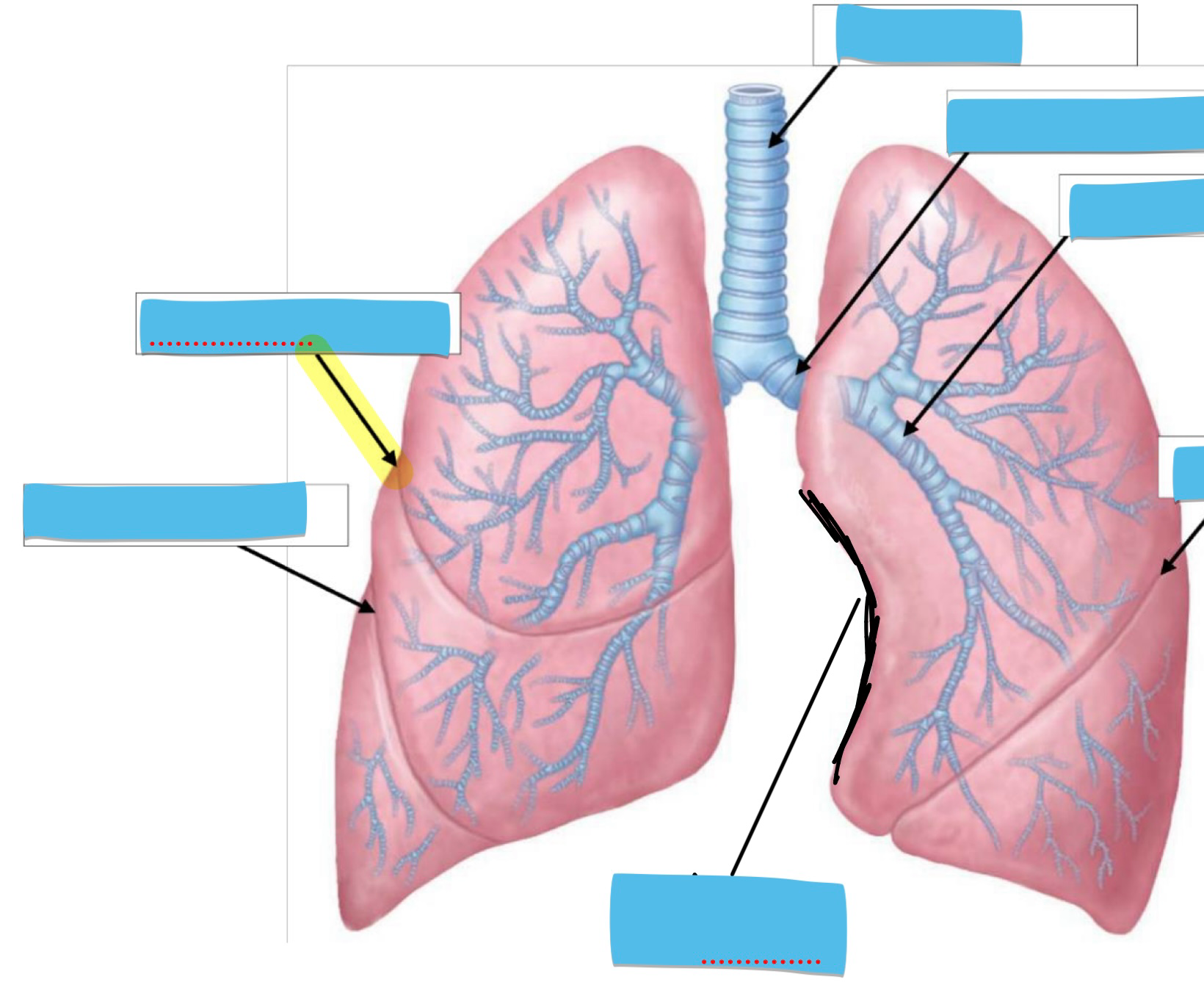
oblique fissure

cardiac notch

trachea

left primary bronchus

right primary bronchus

right secondary bronchi
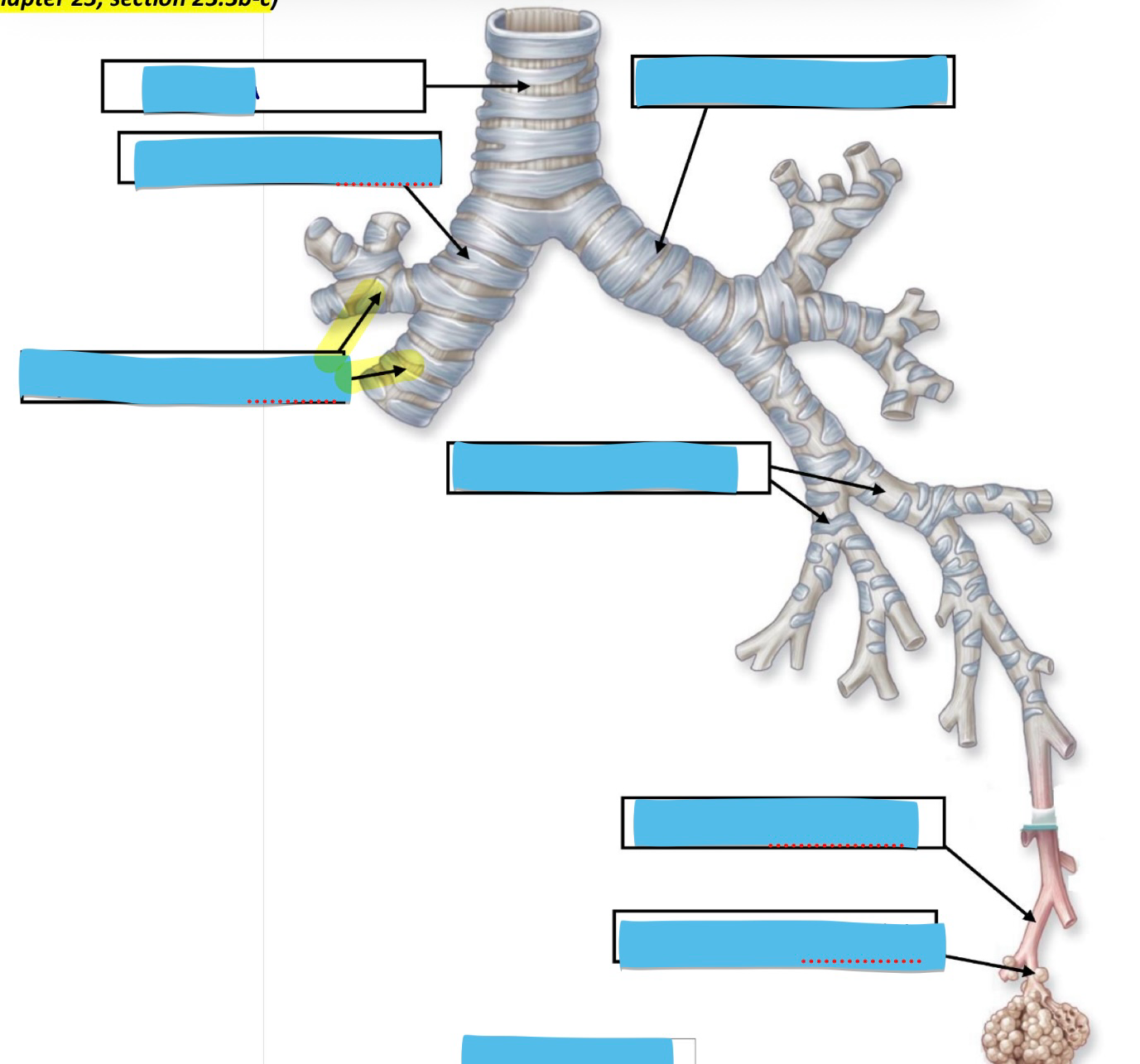
left tertiary bronchi
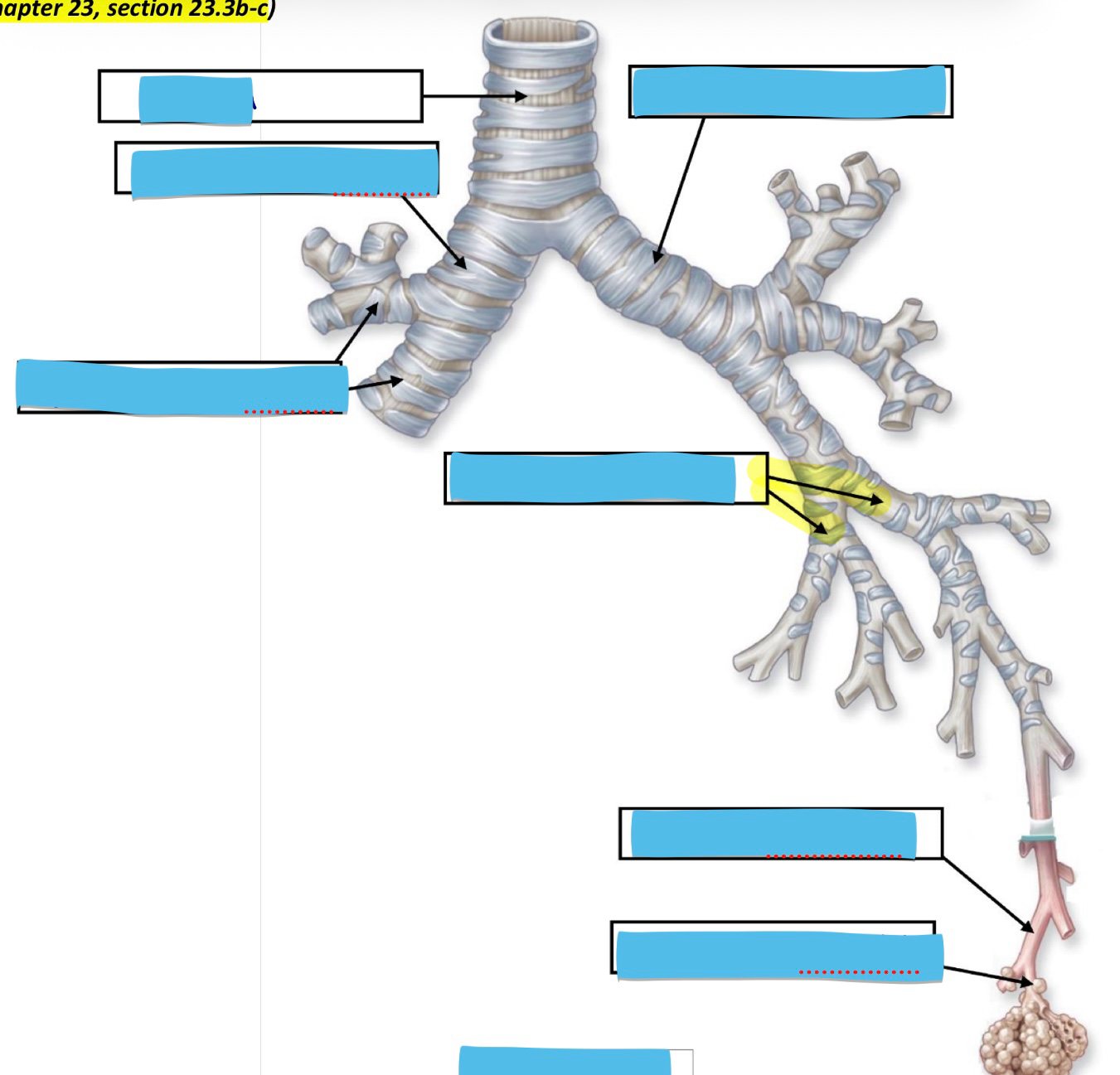
terminal bronchiole

respiratory bronchiole
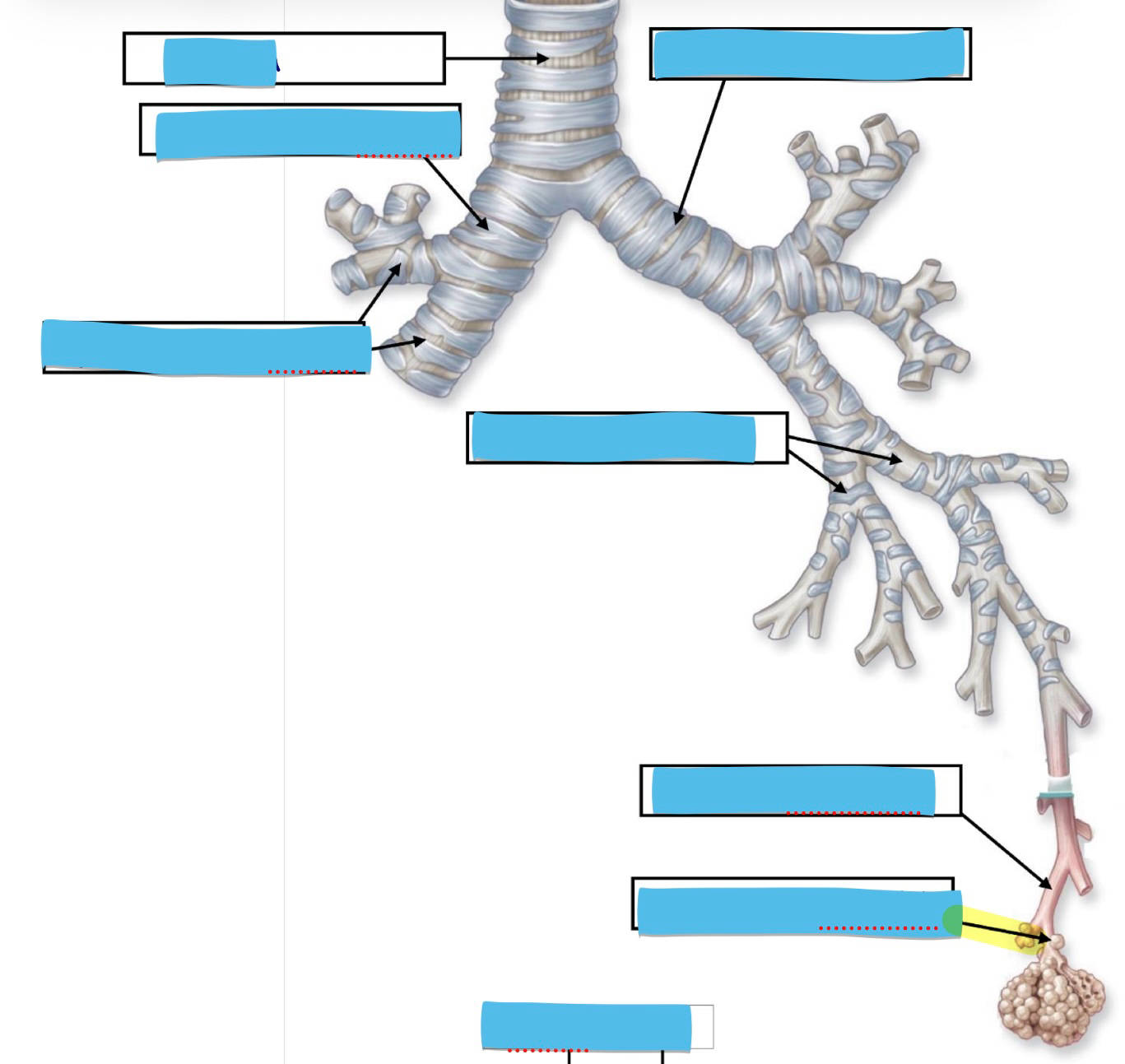
terminal bronchiole

respiratory bronchiole

alveoli

nasopharynx

oropharynx
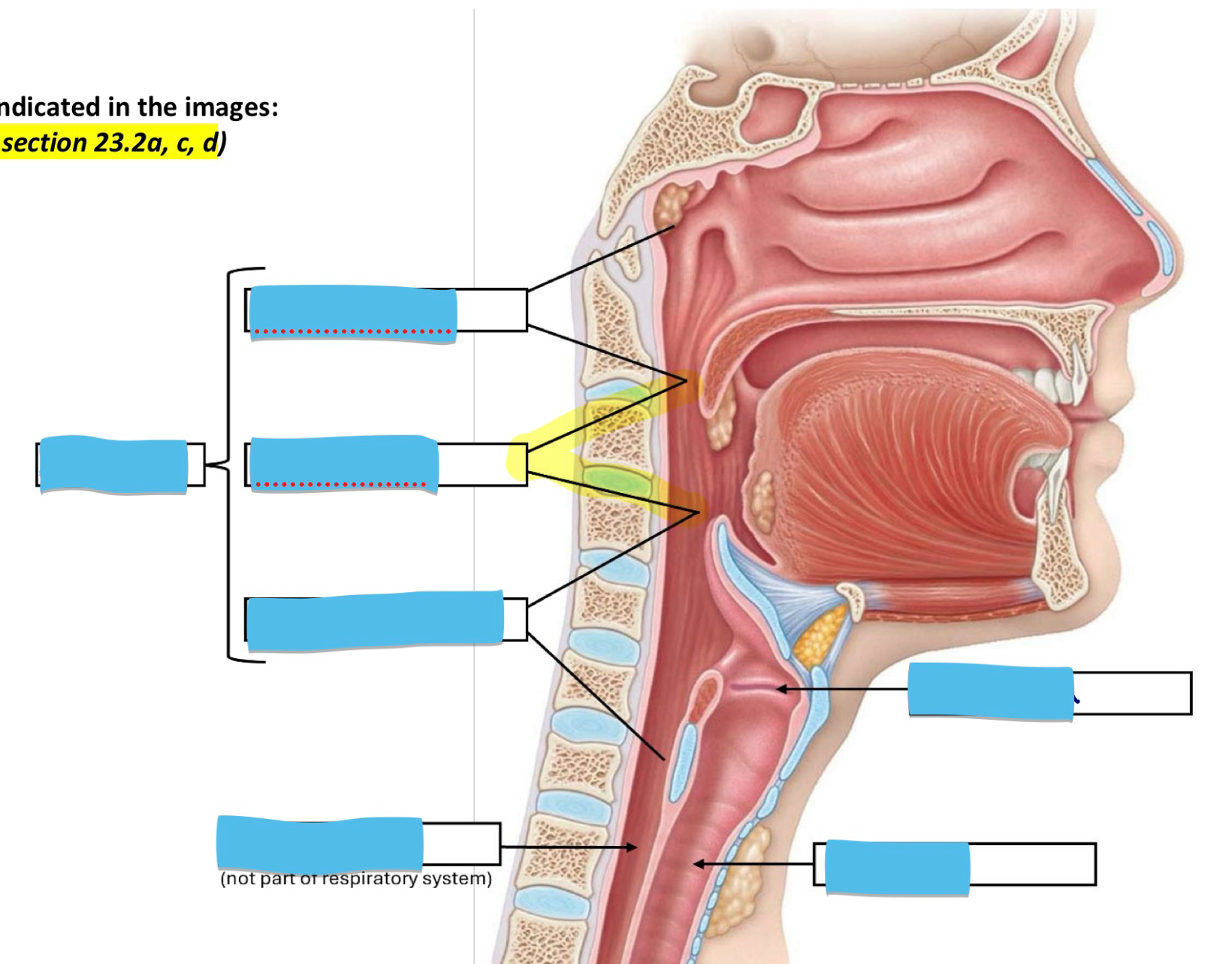
laryngopharynx
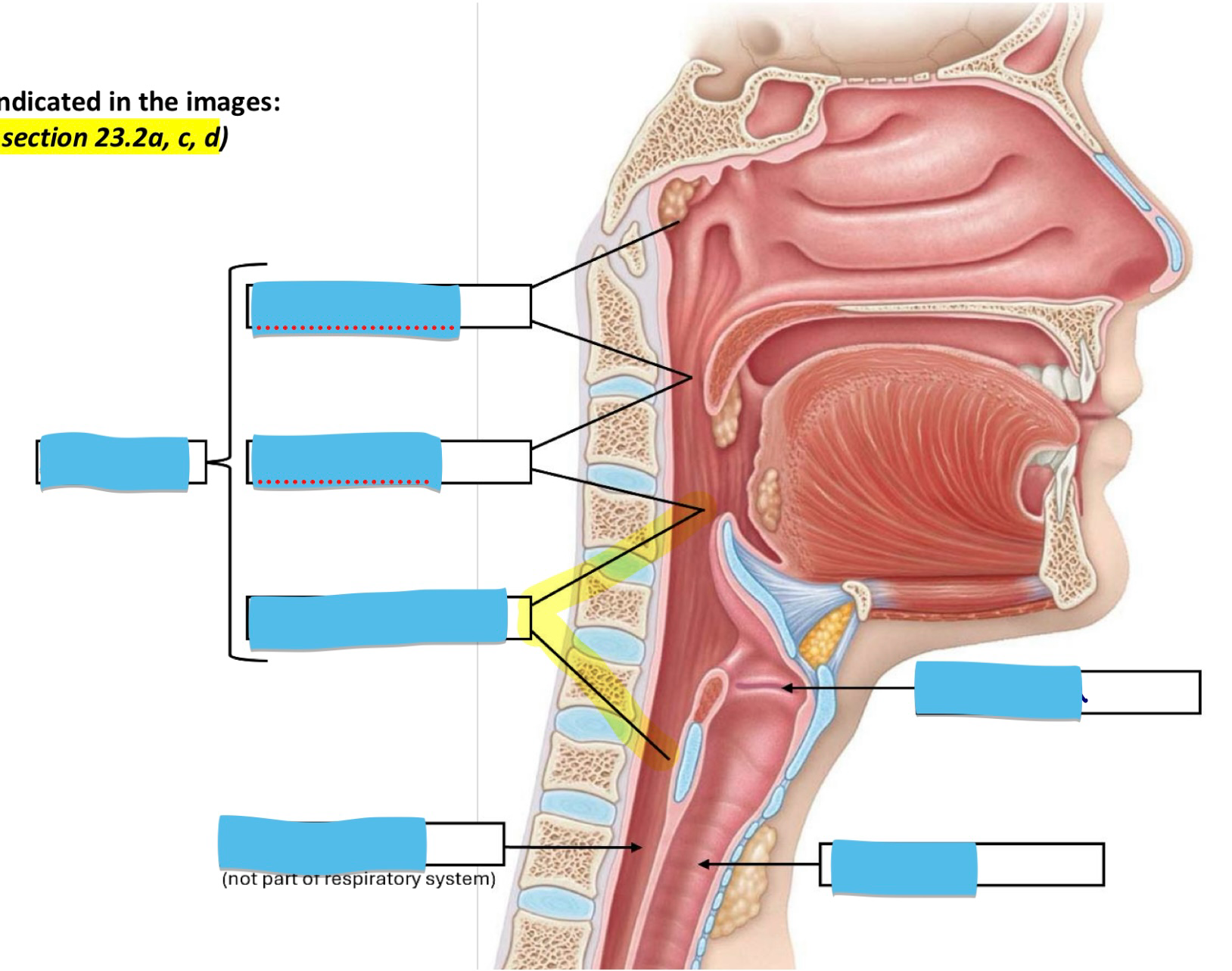
vocal folds
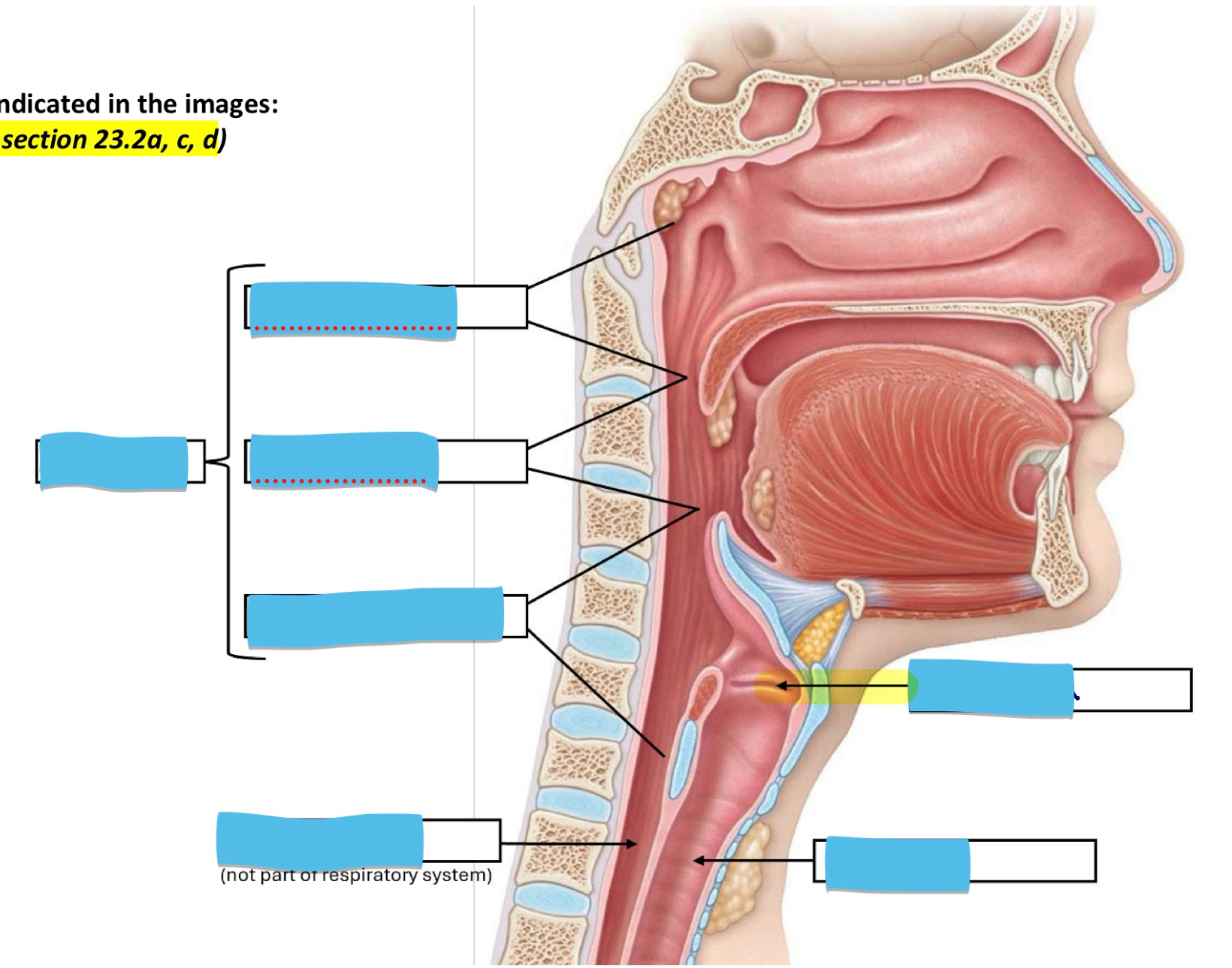
trachea

esophagus

pharynx

superior nasal meatus

middle nasal meatus
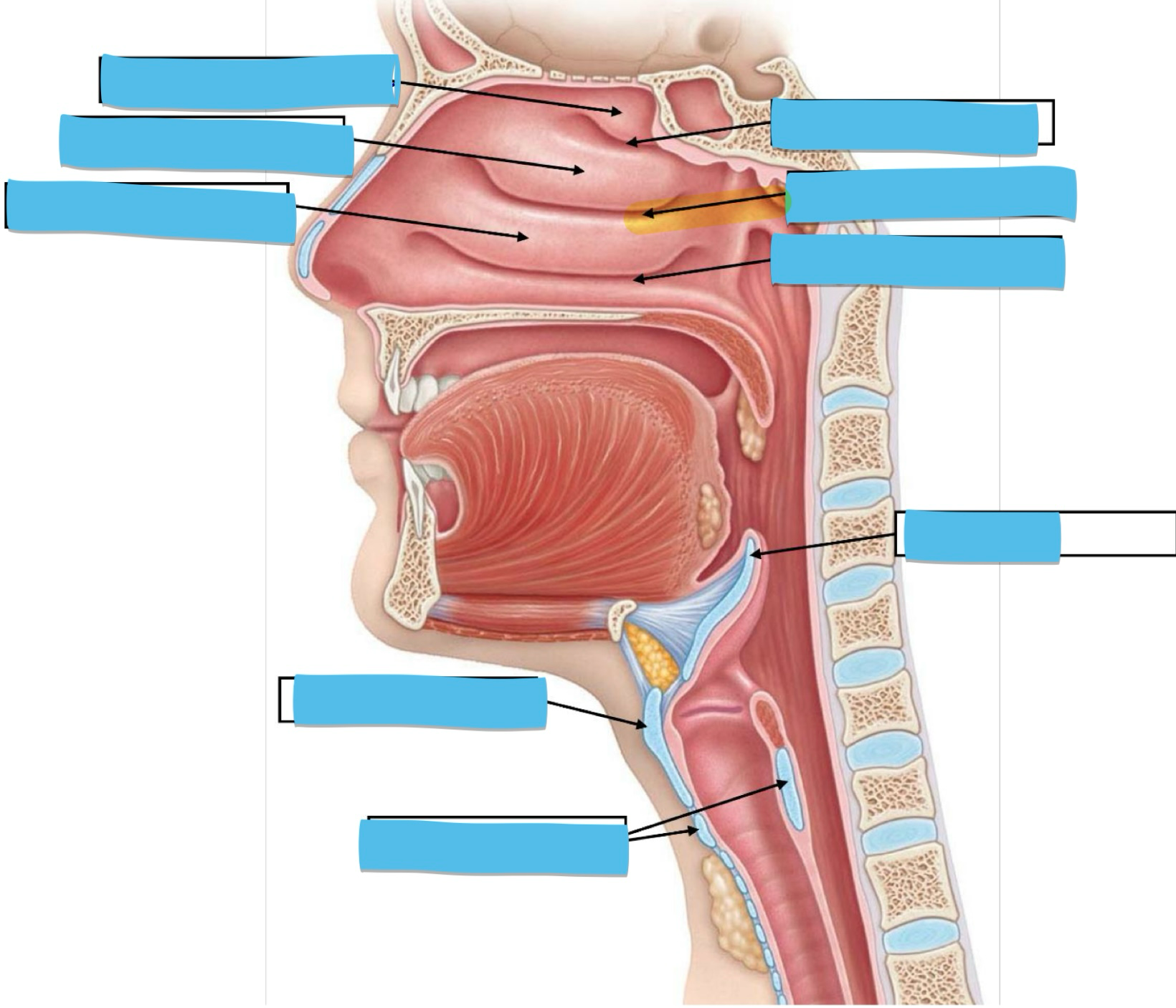
inferior nasal meatus
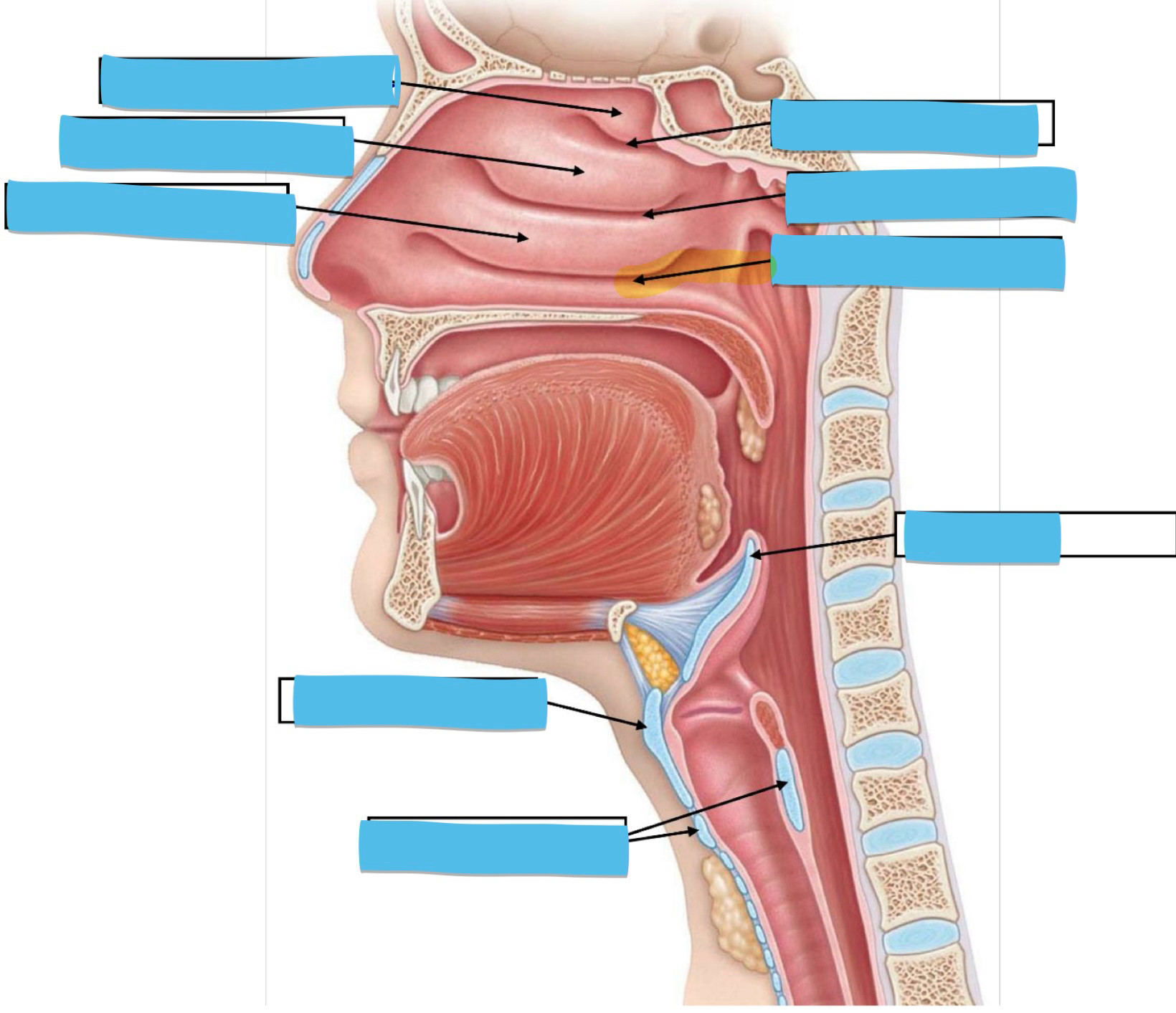
superior nasal conchae

middle nasal conchae

inferior nasal conchae

epiglottis

thyroid cartilage
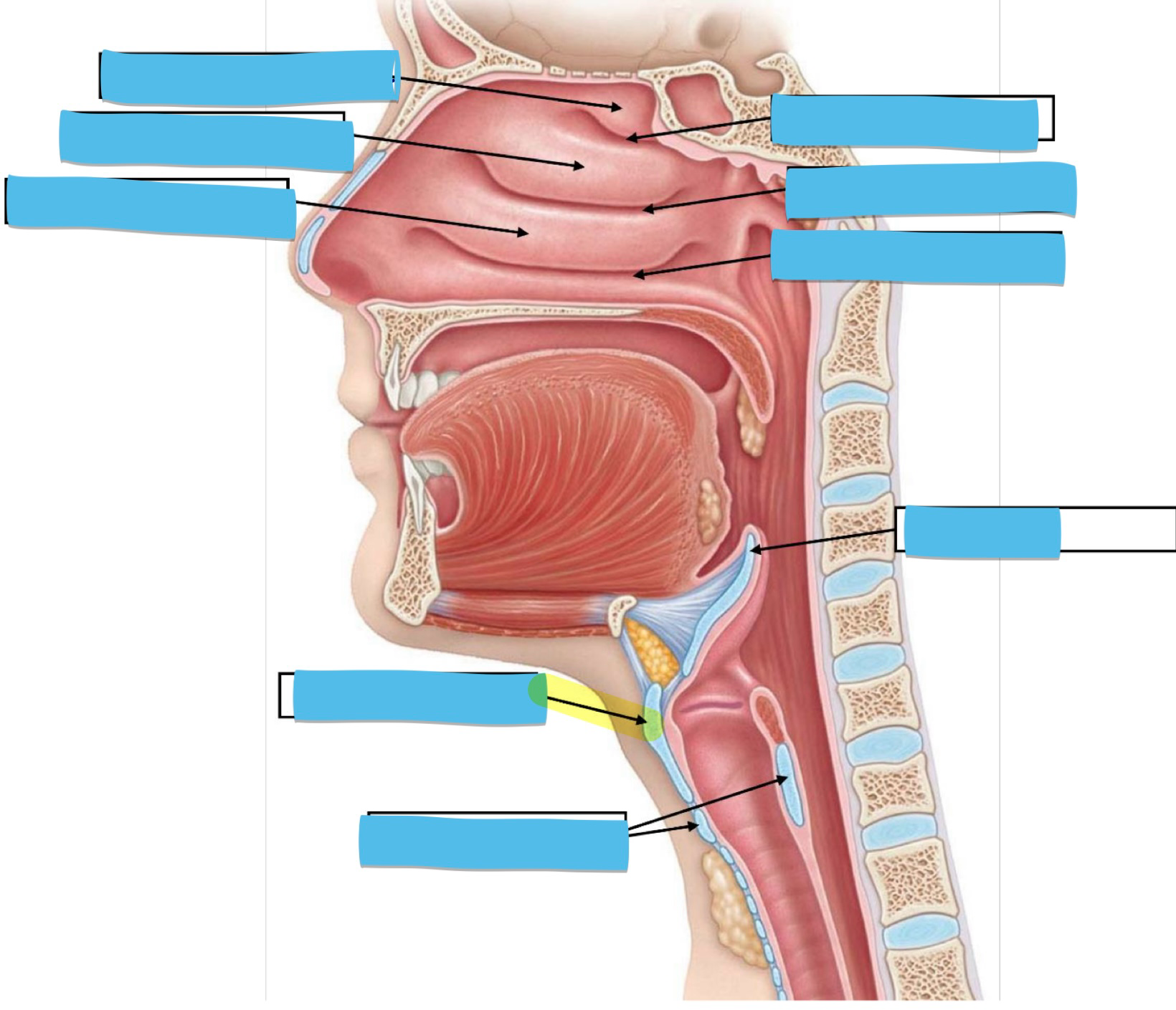
cricoid cartilage

simple squamous epithelium, alveoli of lungs
what tissue is this and where it can be found
