CH 18: Haemophilus and other fastidious Gram negative bacilli
 Call Kai
 Learn
Learn Practice Test
 Spaced Repetition
 Match
Match Flashcards
 Knowt Play
1/15

There's no tags or description
Looks like no tags are added yet.
Name | Mastery | Learn | Test | Matching | Spaced | Call with Kai | Chat |
|---|
No analytics yet
Send a link to your students to track their progress
16 Terms
Quad Plate - X and V testing
special plate to identify members of Haemophilus genus
distinguishes organisms based on whether they require X, V factor, both, and whether or not they hemolyze blood

Haemophilus - general characteristics
GN, pleomorphic, coccobacilli or rods
most are non-pathogenic or produce opportunistic infections
most require some combo or X and V factor
dont grow on SBA, but will grow on CHOC
colony morphology
growth ONLY on CHOC
wet, tan-colored, convex
distinct “moussy” or “bleachy” odor
catalase and oxidase (+)

Haemophilus influenzae
major pathogen of its genus
six antigenically distinct types
types a-f
type b, AKA Hib, most virulent
most known for causing:
upper and lower resp. infections
pneumonia, otitis media, sinusitis, and conjunctivitis
meningitis much less common w/ vaccinations
Haemophilus influenzae - Testing
Quad plate:
requires X and V factors
NO hemolysis
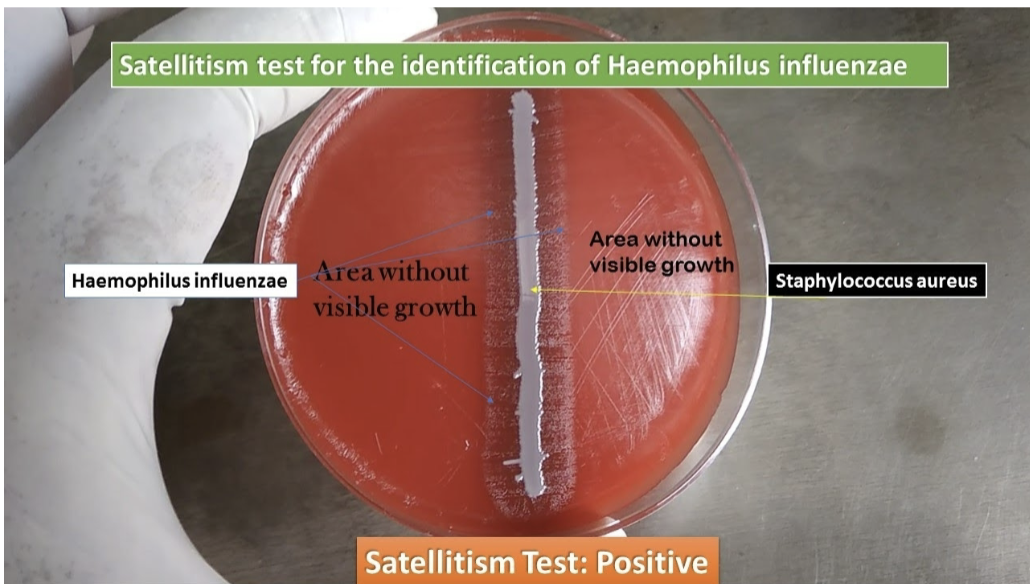
satellitism
special characteristic
colonies will grow on SBA if a beta hemolytic S. aureus also present
S. aureus releases X and V factors
Haemophilus aegyptius
subgroup of H. influenzae
biochemically very similar
known for causing
pediatric conjunctivitis
Brazilian Purpuric fever
small outbreaks in South America
conjunctivitis followed by high fever, septicemia, shock, death
mortality rate approaching 70%
Haemophilus decreyi
causative agent of chancroid
highly contagious STI
genital ulcer disease
causes chancres - open lesions on penis or labia
facilitates spread of other STIs
uncommon in US, but significant in South America, Asia, and Africa
testing
requires X, but not V
HACEK Bacilli
acronym used to describe group of fastidious GNBs
oral/respiratory normal flora
most known and high risk for
endocarditis and septicemia after dental procedures
pts w/ previous heart conditions/sx most susceptible
HACEK Bacilli Species
Haemophilus aphrophilus - now called Aggregatibacter aphrophilus
most prevalent species in this group
lives in oral cavity
Aggregatibacter actinomycetemcomitans
major contributor in periodontitis (severe gum disease)
Cardiobacterium hominis
Eikenella corrodens
infection after human bites or trauma from human teeth
colonies ‘pit’ or ‘corrode’ the agar
Kingella spp.
important pathogen in pediatric population
infects heart, joints, and bones
Capnocytophaga
normal microbiota in oral cavity of mammals
significant cause of
zoonotic infections
soft tissue infections and septicemia after cat/dog bites
morphology: long, banana-shaped, fusiform GNB
Pasteurella multocida
normal microbiota in oral cavity of birds and mammals
most known for causing soft tissue infection after cat bites
morphology: small, ovoid, GN coccobacilli
bi-polar staining, ‘safety-pin’ staining
Bioterrorism Agents
category A
highly contagious
aerosolized
high mortality
category B
moderately contagious
moderate damage (morbidity)
Brucella spp.
GNB zoonotic ifx passed thru pigs, cattle, goats, and sheep
ingestion of undercooked/unpasteurized animal products
category B bioterrorism agent
highly contagious (NOT aerosolized)
high morbidity, low mortality
brucellosis
recurrent, chronic, undulating fevers
chronic fatigue syndrome, arthritis, depression
testing
growth on BAP (no X or V factor)
quickly urease (+) (<2 hrs)
Francisella tularensis
zoonotic infx passed thru rabbits
rabbit fever = tularemia
ingestion of infected meat, inhalation during meat processing, or tick bites
category A bioterrorism
GS looks very similar to Haemophilus
tularemia
severe respiratory infx that affects lymph nodes
septecemia common and mortality rate near 30%
morphology/testing
requires L-cysteine to grow
CHOC, MTM, or Buffered Charcoal Yeast Extract (BCYE) agars
oxidase, satellite, and X/V test negative
Legionella pneumophila
legionnaire’s disease
community acquired atypical pneumonia
most often contracted thru inhaled water sources
AC, humidifers, misters
lead to bacteremia and organ failure
mortality near 30%
morphology
requires L-cysteine to grow
light growth on CHOC, but grow best on BCYE agar
gray to white center w/ blue, green, or pink outer bands
ground glass appearance
Legionella pneumophila Testing
lightly staining GNB
requires L-cysteine for growth
direct fluorescent antibody (DFA) test
urine antigen
Bordetella pertussis
causative agent of whooping cough
highly communicable childhood illness
fever and severe cough w/ ‘whoop’ sound
mortality rates around 2%, but can cause permanent lung damage
DTaP vaccine
culture and testing
doesnt grow well outside of host
specialized media
Bordet-Gengou media
Regan-Lowe agar
more testing is done thru PCR and molecular methods