BIOLOGY CHEAT SHEETS
 Call Kai
 Learn
 Practice Test
 Spaced Repetition
 Match
 Flashcards
 Knowt Play
1/443

Earn XP
Description and Tags
444 Terms
ionic bond
transfer of e- from one atom to another atom of very different electronegativity
covalent bond
sharing of e- between atoms of similar electronegatives
nonpolar covalent bonds
equal e- sharing
polar covalent bonds
unequal e- sharing, forms dipole
dehydration reaction
links monomers to form polymers, forming H2O in the process
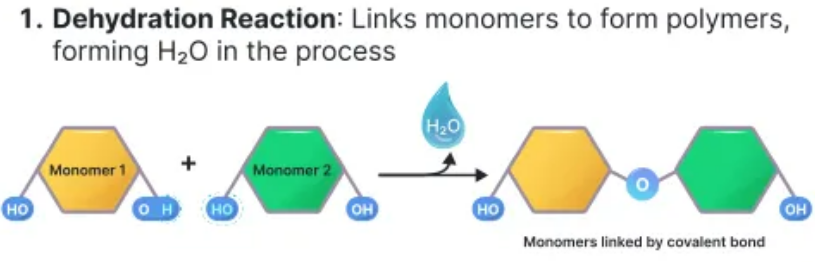
hydrolysis
uses H2O to break polymers into monomers

protein: linkage type
peptide bonds
protein primary structure
linear chain sequence of amino acids
determined by nucleotide sequence
protein secondary structure
alpha-helices/beta sheets
H-bonding between amino and carboxyl groups of adjacent amino acids
protein tertiary structure
3D shape
noncovalent interactions between R groups (disulfide bonds are covalent exceptions)
protein quaternary structure
3D shape consisting of 2+ separate polypeptide chains
carbohydrate linkage type
glycosidic

monosaccharide
glucose

fructose

sucrose
glucose + fructose
sucrose
polysaccharides
starch (alpha-glucose), glycogen (alpha-glucose), cellulose (beta-glucose), chitin (beta-glucose)
lipid linkage type
covalent carbon-carbon
3 types of lipids
triglycerides, phospholipids, steroids
triglyceride
glycerol + 3 fatty acids (saturated and unsaturated)

phospholipid
2 fatty acids + phosphate group attached to glycerol backbone
(polar head, nonpolar tail)

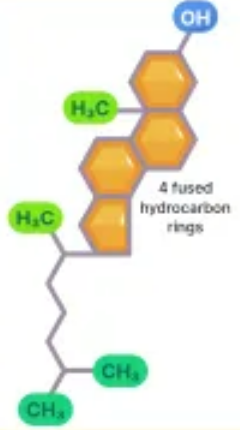
steriod
3 six-membered rings + 1 five-membered ring
porphyrin
4 joined pyrrole rings with a metal center atom
(non-lipid, but commonly associated with lipid membranes)
2 examples of porphyrins
chlorophyll, hemoglobin
nucleic acid linkage type
phosphodiester bond
DNA nucleotide
H attached to 2’ carbon of the sugar
RNA nucleotide
OH attached to sugar

In prokaryotes, the __________ region contains genetic material
nucleoid
___________ is the site of ribosome (rRNA) synthesis
nucleolus
___________ is the site of fatty acid catabolism
mitochondria
lysosome
functions in apoptosis, and break down of nutrients, bacteria, & cell debris
peroxisomes
common in the liver & kidney
breaks down substances and converts H2O2 by-product into H2O
cytoskeleton
maintain cell shape & movement
microtubules are composed of _________
tubulin
microtubule function
supports cell & motility
cilia
short hair-like extensions from cell for movement
flagella
longer thread-like extension from cell for movement
intermediate filaments are composed of _______
actin
microfilaments function
used for cell shape and division
contractile vacuole
expels excess water in hypotonic protists (amoeba, paramecium); absent in human cells
extracelllular matrix
provides mechanical support & helps connect adjacent cells
_______ is the single most abundant protein found in the extracellular matrix and the entire human body
collagen
traits of prokaryotes
no nucleus (nucleiod)
single, circular, naked, double-stranded DNA
ribosomes (50S + 30S = 70S)
bacteria (petidoglycan); archaea (polysaccharides) - many have sticky capsules on the cell wall
flagella are constructed from flagellin, not microtubules
ion channel protein
voltage-, ligand, or mechanically-gated
porins
less specific channel protein; pass iions and polar molecules
channel protein
passage through membrane for hydrophilic, polar, and charged substances
carrier protein
specific molecule can pass through after binding to protein and changing its shape
transport protein
use atp to transport materials across the membrane; includes active transport (Na+/K+ pump) and facilitated diffusion
active transport
uses ATP to transport against gradient
what solutes use active transport?
small ions, amino acids, monosaccharides
3 types of endocytosis
phagocytosis, pinocytosis, receptor-mediated endocytosis
phagocytosis
plasma membrane invaginates around undissolved material (solid), like bacteria
pinocytosis
plasma membrane invaginates around dissolved material (liquid)
receptor-mediated endocytosis
form of pnocytosis in which specific ligands bind to receptors
hypertonic
higher solute concentration
net water flow out of cell → shriveled
hypotonic
lower solute concentration
net water flow into cell → lysed
isotonic
equal solute concentration
no net water flow → normal cell
anchoring junction
includes desmosomes; connects cells together into sheets
tight junction
encircles each cell, producing a seal that prevents the passage of materials between cells; is characteristic of cells lining the digestive tract
gap junction
narrow tunnels between animal cells; allow passage of ions and small molecules
anabolic
small molecules assemble to form a larger molcule (usually decrease entropy)
catabolic
large molecules are broken into smaller molecules (usually increase entropy)
exergonic
free enery is released (spontaneous with -ΔG)
endergonic
free energy is absorbed (nonspontaneous with +ΔG)
enzymes act as catalysts by ________ the activation energy, which ______ the rate of reaction
lowering, increases
competitive inhibition can be overcome by ________ substrate concentration, Km ________, Vmax ________
increasing, increases, stays the same
in noncompetitive inhibition, the substrate can ____, but the inhibitor _________ reaction. Km ______, Vmax _______
stil bind, prevents, stays the same, decreases
Vmax
the maxiumum velocity of the reaction at peak substrate saturation

Michaelis Constant (Km)
the substrate concentration at which the rate of the reaction is half of the maximum velocity

Km ______ represents binding affinity
inversely

small Km = ______ substrate needed to reach Vmax = ________ binding affinity
less, higher

ATP is formed via __________, which creates ______ ____ triphosphate bond
phosphorylation, energy rich

ATP formation is an _______ reaction
endergonic

ATP is broken apart via _________, which releases ________ and _________
hydrolysis, energy, phosphate

ATP hydrolysis is an _________ reaction
exergonic

ATP stores energy generated from the _________ reactions in the electron transport chain, which can then be used to fuel ___________ reactions
exergonic, endergonic
Cellular Respiration Overview: ________ glucose via electron carriers to deposit their electrons in the ETC, fueling chemiosmosis to generate chemical energy for the cell in the form of ATP (__________)
oxidize, exergonic

glycolysis nets __ ATP and produces __ pyruvate
2, 2
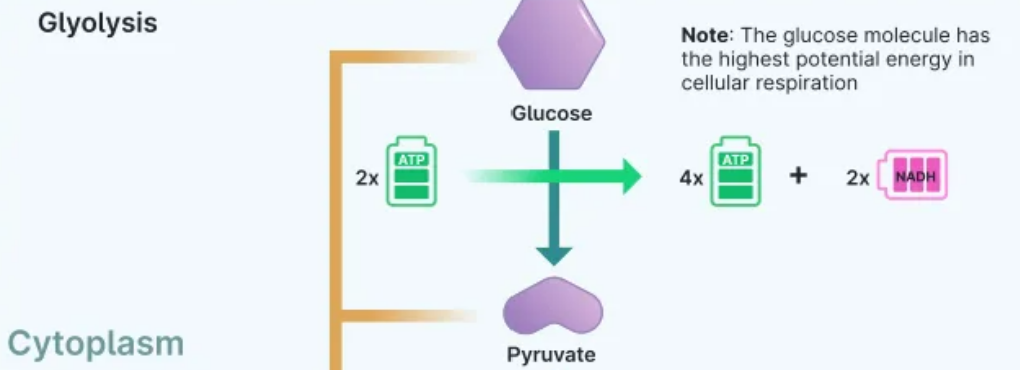
T/F: glycolysis is universal to all organisms
true
Glycolysis is located in the __________
cytoplasm
substrate level phosphorylation glycolysis pathway (glucose → pyruvate)
glucose [hexokinase + ATP] → G6P [PGI] → F6P [phosphofructokinase + ATP] → F1,6Bp →→ pyruvate

2 important enzymes in glycolysis
hexokinase, phosphofructokinase (PFK)
hexokinase
transforms glucose to G6P
consumes 1 ATP
phosphorylating glucose prevents it from leaving the cell

phosphofructokinase (PFK)
adds second phosphate to F6P
this step irreversibly commits the molecule to glycolysis

aerobic process: ______ required as final electron __________
oxygen, acceptor
aerobic respiration overall reaction
C6H12O6 + 6 O2 → 6 CO2 + 6 H20 + (36 to 38) ATP
pyruvate decarboxylation: pyruvate gets shuttled into the _____________ and then the pyruvate dehydrogenase complex (pdc) transforms pyruvate into __________
mitochondrial matrix, acetyl-CoA

acetyl-CoA enters the _____, where it is used to generate ____________
CAC, oxacloacetate
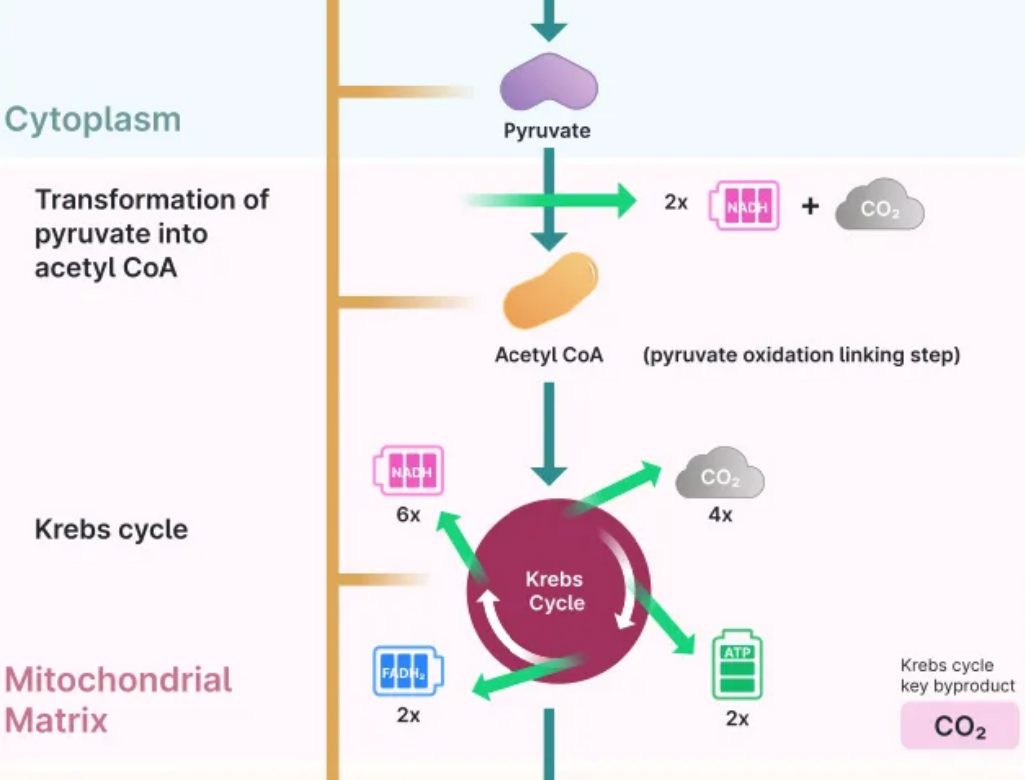
each cycle of CAC produces ____, ___, _____, and ____
CO2, ATP, FADH, NADH
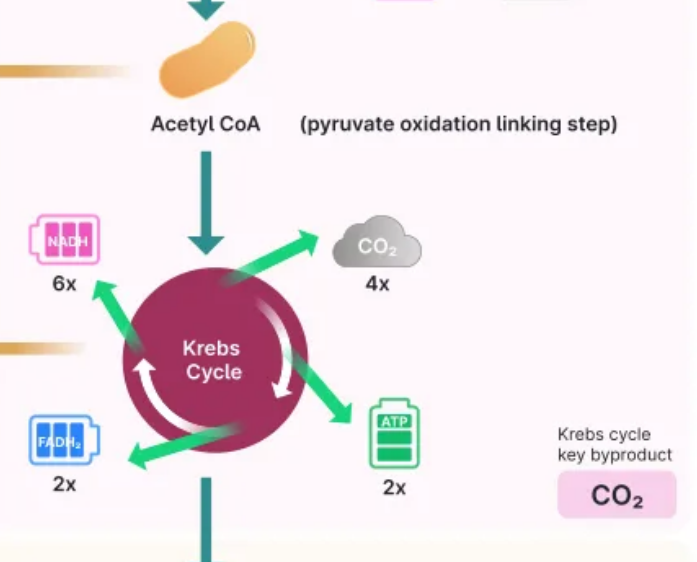
krebs cycle is occurs in the ____________________
mitochondrial matrix

ETC major parts
oxidative phosphorylation, ATP synthase proton motive force and chemiosmosis
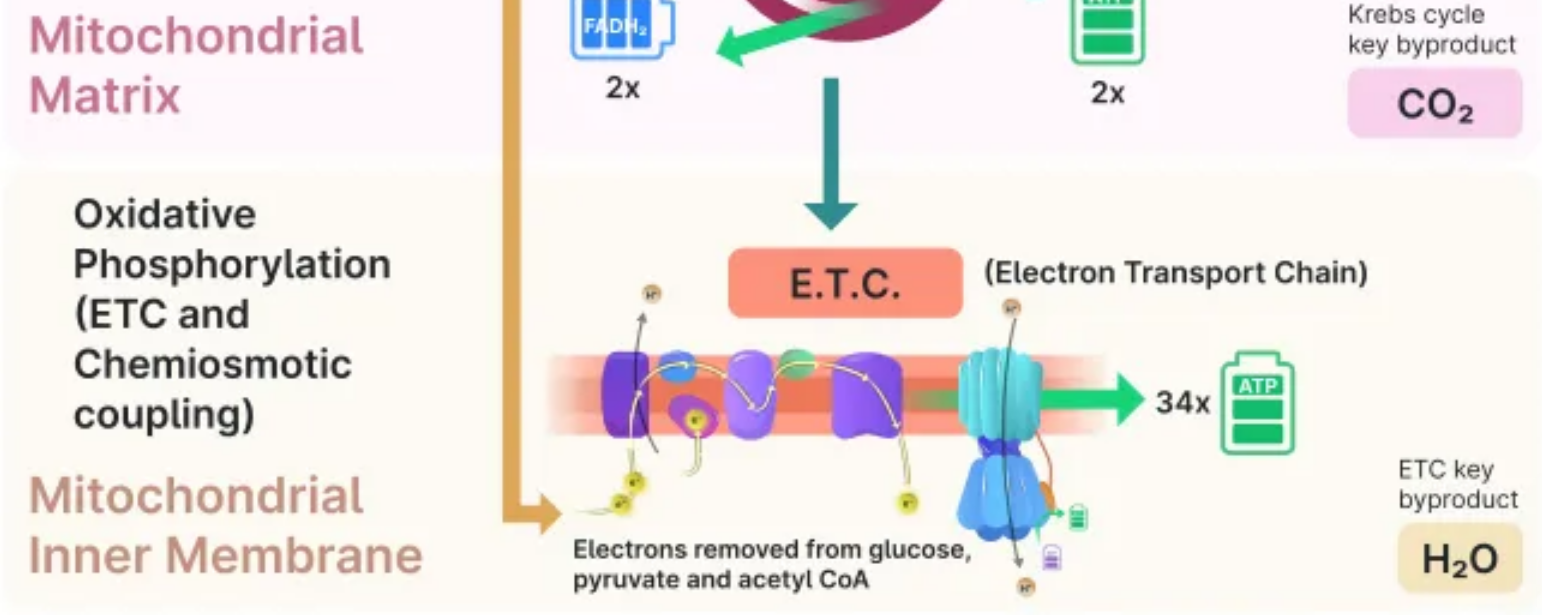
ETC occurs in _____________
inner mitochondrial membrane

oxidative phosphorylation
electrons pass from electron carriers (NADH and FADH2) to other carrier proteins
larger complexes pump H+ out, causing proton gradient to flow back into mitchondria
ATP synthase produces ATP via proton motive force

____________ is the final electron accepter in ETC, which combines with H+ to form ______
oxygen, H2O
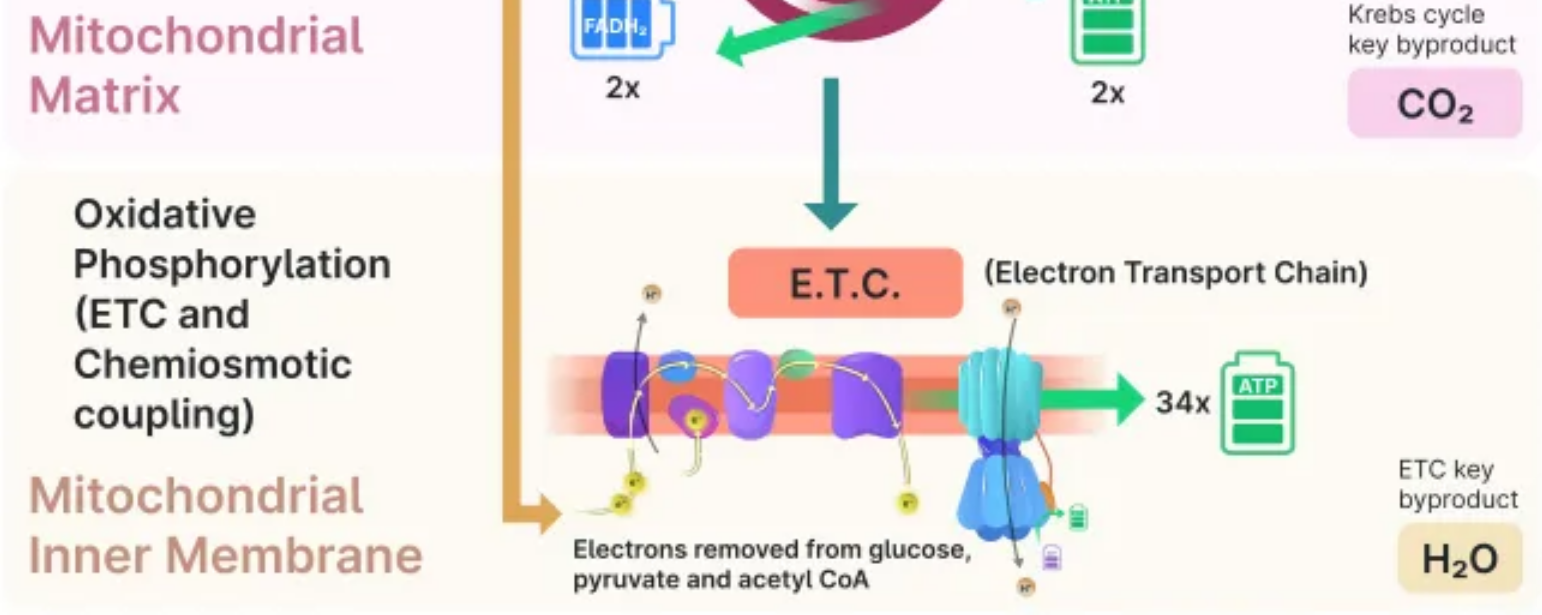
______ and ______ are oxidized by the ETC
NADH, FADH2

ATP synthase usees the H+ gradient for ___________
chemiosmosis

________ poisons the mitochondria, but affects _____________ not ________
cyanide, oxidative phosporylation, glycolysis
4 major steps of cellular respiration
glycolysis, pyruvate decarboxylation, citric acid cycle/krebs, etc
anaerobic respiration regenerates _________ from NADH for glycolysis to continue
oxidized NAD+
glycolysis can run _____________ (the absence of __________)
anaerobically, oxygen