Native American Experience - 8/31/2026
 Call Kai
 Learn
 Practice Test
 Spaced Repetition
 Match
 Flashcards
 Knowt Play
1/91

There's no tags or description
Looks like no tags are added yet.
92 Terms
Types of Native American Identity
Biological, Socio-Cultural, Legal/Political
Biological Identity
Genealogy (DNA); Genotype (genes); Phenotype (looks/physical appearance)
Socio-Cultural Identity
Traditions/language (language, community, spirituality, schooling, etc.)
Legal/Political Identity
State and federally recognized; tribe you’re a part of (federally recognized), descendants
Issue of Identity: Blood Quantum
It’s a hot topic among American Indians for several reasons, but mainly due to tribal citizenship; doesn’t really add up or make sense; a mathematical fraction used by the U.S. federal government and some Native American tribes to measure a person's degree of Indigenous ancestry (derived by tracing family lineages back to original tribal census rolls or base rolls created by the federal government); sometimes a minimum blood quantum is required to get tribal benefits/be federally recognized.
Indigenous Identity
A complex issue of Indigenous identity is specific names; Chippewa and Ojibwa are the same; Sioux or Lakota? American Indian, Indian, Native, Native American, Indigenous, or First Nations? (it all depends on preferences, which can be based on the specific area an individual is from, etc.).
Bad names for Native Americans
Indian = India, feather not dot, savage, etc.
Aboriginal Peoples
a legal political category in Canada and New Zealand
American Indian
legal political category in the U.S.
First Nations
legal political category in Canada
Indigenous
use more in a global context purposefully to emphasize natural, tribal, and traditional characteristics of various peoples.
Indian
legal term still in use and use informal to identify a group
Status Indian
a legal political category in Canada located in the Indian Act
Native American
a member or citizen of a federally recognized tribe
Race
physical differences and social/biological attributes of a particular group
Ethnicity
shared cultural characteristics like language, practices, and beliefs.
Cultural Identity
shared sense of identity within a cultural group (often related to a culture’s values, beliefs, and worldviews of Indigenous peoples)
Tribal Identity/Affiliation
strong cultural/ethnic identity of a particular group from a particular location (legal/political - state/federally recognized tribe… but there are tribal members not belonging to this “label)
Acculturation
assimilation to a different culture, typically a dominant one
Assimilation
the absorption and integration of people, ideas, or culture into a wider society or culture
Enculturation
the process by which an individual learns the traditional content of a culture and assimilates its practices/values
Bicultural Identity
2 cultural identities
Multicultural Identity
>2 cultural identities
Native/Indigenous
descendants of the original inhabitants of North America
7 Grandfather Teachings - also known as…
the Sacred Laws
7 Grandfather Teachings
Truth, respect, wisdom, courage, love, humility, honesty
7 Grandfather Teachings Part 2
turtle, bison, beaver, bear, eagle, wolf, sabe (story of bigfoot)/raven
Turtle
truth
Bison
respect
Beaver
wisdom
Bear
courage
Eagle
love
Wolf
humility
Sabe (story of bigfoot)/Raven
honesty

Peoplehood Matrix: Tom Holm
an academic framework used to explain what defines an Indigenous group's unique, collective identity and sovereignty
Peoplehood Matrix: Tom Holm - Language
colloquial, liturgical, subtleties, context
Peoplehood Matrix: Tom Holm - Sacred History
explains origin, landscape, kinship, internal/external relationships, laws, and behavior
Peoplehood Matrix: Tom Holm - Territory/Place
sacred geography, knowledge based on phenomena from within, ceremonies connected to observations, boundaries delineated by sacred history
Peoplehood Matrix: Tom Holm - Ceremonial Cycle
tied to seasonal floral, faunal, celestial, or meteorological change; healing
_____, _______, and ______ (______) are a huge part of Native American Identity (and they’re/its a way of life for them)
Hunting, fishing, gathering (utilizing the land!)

Medicine Wheel
an ancient stone structure or a sacred circular symbol used by many Indigenous peoples in North America to represent harmony, health, and the interconnectedness of all life
Medicine Wheel - East
Yellow, tobacco, baby, spring, earth
Where does the medicine wheel start, and why? (and what direction does it continue in?)
It starts in the East because that’s where the sun rises, and it goes clockwise (east, south, west, and lastly north)
Medicine Wheel - South
red, cedar, adolescent, summer, fire
Medicine Wheel - West
black, sage, adult, fall, water
Medicine Wheel - North
white, sweetgrass, elder, winter, wind
What’s unique about the medicine wheel?
Its teachings can vary (based on specific tribe, area, etc.)
4 sacred medicines
tobacco (Asema), cedar (Giizhik), sage (Mashkodewashk), sweetgrass (Wiingashk)
Tobacco (Asema)
The Anishinaabek are taught tobacco was the first medicine gifted to the people; commonly used as offerings and gifts, for example, offering an elder woman tobacco when seeking traditional knowledge; tobacco is said to be a direct form of communication to the Creator and spirits, so it’s commonly used in prayer; offerings of tobacco are seen as an act of reciprocity because we are taught to give before we receive or take.
Cedar (Giizhik)
cedar is primarily associated with protection, but can also be used for cleansing; while burning, the crackling noise of cedar is said to attract the spirits; traditionally known as women’s medicine, and can relieve menstrual symptoms through cedar tea; cedar tea can also be utilized to relieve symptoms of illness
Sage (Mashkodewashk)
sage is primarily associated with the act of smudging; provides spiritual cleansing and mental clarity; purifies and cleanses spaces; alleviates stress and insomnia; improves air quality
Sweetgrass (Wiingashk)
Sweetgrass is known for its sweet aroma; traditionally used for smudging to cleanse negative thoughts and spaces; associated with positivity and safe travels; commonly used in talking circles for its healing qualities; the act of braiding sweetgrass is a tradition of love and respect, as sweetgrass is said to be the hair of Mother Earth
Types of Dancers (in a powwow)
Fancy dancing, grass dancers, traditional dancing, etc.
Fancy dancing
shawls on shoulders, men and women both involved
Grass dancers/dancing
just men
Items for women to wear in a powwow
jingle dress, fancy shawl, graceful shawl, butterfly shawl
Traditional dancing
animal fur, leather, softer, men and women both involved
Full thing =
powwow
Lineup of powwow
it starts with a grand entrance/entry (where flags from all tribes are brought in by Veterans, sometimes lead dancers as well), then the elderly come in, followed by the adults, then the teens/youth, and finally the little ones
Reason for powwow and why
any (it’s a gathering, celebration, and coming together, which can happen as a result of anything/for any reason, etc.)
“Rumble” Film People
Link Wray, Mildred Bailey, Jimi Hendrix, Vlali Project, Charley Patton, Jessie Ed Davis, Redbone, Randy Castillo, Robert Trujillo
Link Wray
power chord, rumble
Mildred Bailey
Jazz
Jimi Hendrix
Rock
Vlali Project
choral singing
Charley Patton
blues
Redbone
“Come and Get Your Love” (influenced by the Black Eyed Peas song, “Let’s Get It Started”)
Randy Castillo
drummer for Ozzy
Robert Trujillo
Metallica
Lieutenant Richard Henry Pratt
“kill the Indian, save the man”; Civil War Veteran with an extensive Great Plains military career; he pioneered Native American boarding schools after the “Indian Wars” concluded in the 1920s because he formed the controversial system geared towards the cultural assimilation of Native Americans; this way of thinking resulted in the founding of the Carlisle Indian Boarding School.
Carlisle Indian Boarding School
essentially created as a result of Lieutenant Richard Henry Platt and was the guiding force for Native American Boarding Schools in the U.S.
What happened in Native American Boarding Schools?
kids were taken from their home (sometimes far away too), kids were forced to assimilate to American culture, tribal languages were banished, braids were cut off, clothing was taken, children’s names were replaced (often to something biblical)
How many boarding schools were being operated between 1819 and 1969, and across how many states? How many were in Michigan
408 across 37 states; 5 in Michigan
When were the main years (according to the reading) Native American boarding schools were open?
1819-1969
Where were the Michigan boarding schools located?
Baraga, Schoolcraft County, Mackinac Island, Mount Pleasant, Harbor Springs
Recovery/Healing quote
“Healing begins with truth, truth begins with a story”
What does documenting past stories do?
it preserves the history of forced assimilation, cultural erasure, and abuse of Native Americans
What do historical stories show?
a testament to the resilience of Native people, and they contribute to the broader understanding of the need for reconciliation and intergenerational healing.
U.S Term
Indian Boarding Schools
Canadian Term
Indian Residential Schools
Gichinamebine-ziibing
traditional name for Marquette, Carp River area, “At the Great Sucker Fish River'“
Raven Specifically
Marquette area
Sabe (story of Bigfoot) specifically
Canada
Why is the Medicine Wheel split into 4 sections?
Because there are 4 stages of life, 4 sacred medicines, 4 directions, 4 seasons, 4 elements, etc.
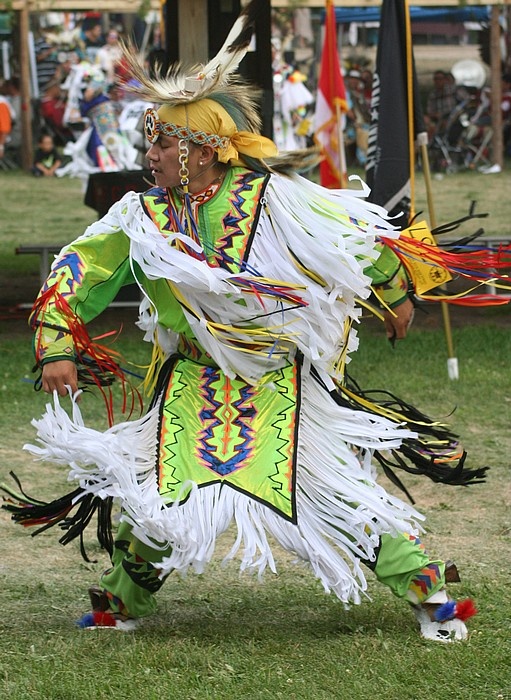
grass dancing regalia

jingle dress
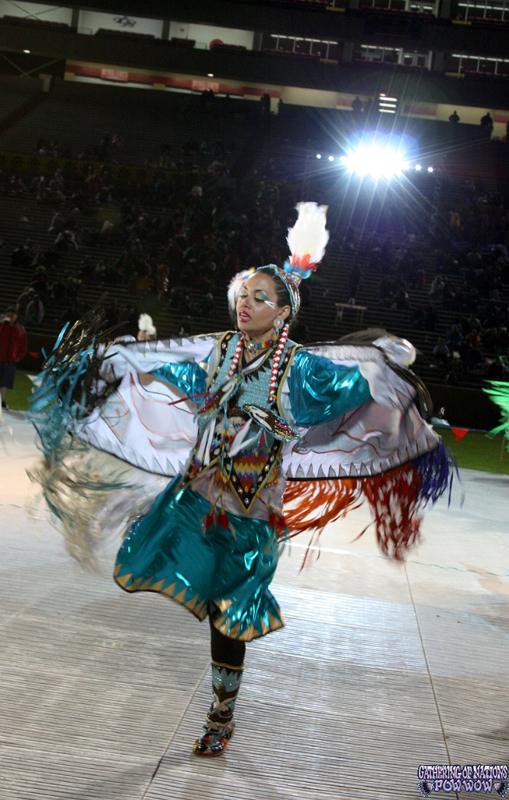
fancy/butterfly shawl

traditional dancing regalia
What did Mildred Bailey do/accomplish?
America’s first woman to have her own radio show
Who was Cherokee?
Jimi Hendrix
What influenced Blues and Gospel?
Native American choral singing
What instrument is an African instrument?
The Banjo