Engineering Midterm study
 Call Kai
 Learn
 Practice Test
 Spaced Repetition
 Match
 Flashcards
 Knowt Play
1/53

There's no tags or description
Looks like no tags are added yet.
54 Terms
Engineering Design Process (EDP)
A systematic, iterative process that helps solve human needs.
EDP and Scientific Knowledge
Scientific knowledge and mathematics are used to solve practical design problems.
Trade-Off
A compromise made between competing design requirements.
Constraints
Identified limitations on the design of a product or system.
Reverse Engineering
Deconstructing a finished product, system, or program to understand how it was designed or operates.
Advantages of Reverse Engineering
Analyze design, gain competitive advantage, and identify weaknesses.
Engineering Design Journal (EDJ)
Documents the engineering design process.
Design Portfolio
A collection of work used to communicate and document designs.
Sketches
Drawings used to communicate design ideas.
Schematics
Diagrams used to communicate how a system is arranged or works.
Design Principles
Principles used to evaluate flexibility, balance, function, and proportion.
Prototype
A physical model used to test a design.
Modeling
Creating a representation of a product or system.
Mathematical Modeling
Simulating how a proposed system might behave using mathematics.
Statistics
The process of collecting, organizing, and analyzing data.
Mean
The average.
Median
The middle value.
Mode
The most frequent value.
Range
The difference between the highest and lowest values.
Input
Resources that flow into a system.
Examples of Inputs
People, time, materials, capital, tools, machines, energy, and information.
Output
The result of a system.
Examples of Outputs
A sent email, lights turning on, or a car stopping when the brakes are pressed.
Feedback
Information returned to a system so it can adjust its function and efficiency.
Examples of Feedback
A download progress bar, a washing machine adjusting water levels, or a phone vibrating.
Subsystem
A smaller, self-contained system within a larger system.
Examples of Subsystems
A joystick within a controller or gears within a bike.
Nine Core Technologies
Technologies that are part of larger technological, social, and environmental systems. They Are:
• Biotechnology
• Electrical technology
• Electronic technology
• Fluid technology
• Materials technology
• Mechanical technology
• Optical technology
• Structural technology
• Thermal technology
Fluid Technology
Uses fluids or liquids to apply force or transport materials.
Examples of Fluid Technology
Hydraulic lifts, brakes, and pneumatic tools.
Optical Technology
Uses light for information, collection, storage, retrieval, processing, and communication.
Examples of Optical Technology
Lasers, telescopes, and fiber optics.
Simple Machines
Devices that reduce the effort needed to move a load or complete work.
Six Simple Machines
Wheel and axle, pulley, lever, inclined plane, wedge, and screw.
Fulcrum
The pivot point that helps a lever move objects.
Direct Current (DC)
Electrons flow in one direction, from negative to positive.
Indirect Current
As described in the review, electrons can flow in either direction.
Insulators
Materials that prevent the flow of electrons.
Examples of Insulators
Rubber, plastic, and glass.
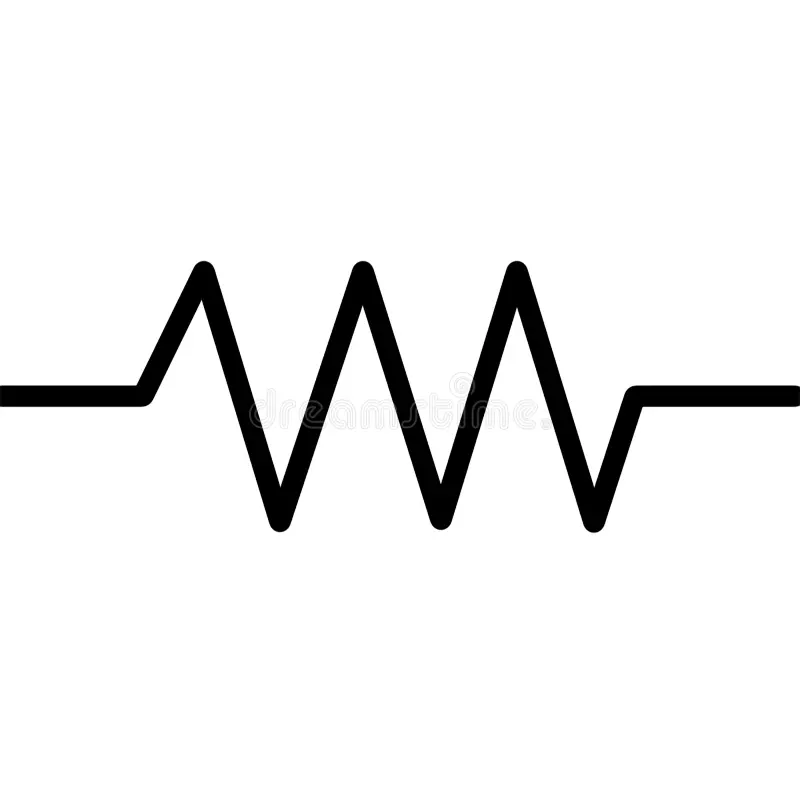
Resistor Symbol
An electrical symbol representing a resistor.
Array
Creates and distributes copies of objects.
Revolve
Creates a 3D solid or surface by spinning a 2D profile around an axis.
Fillet
Rounds corners or connects two intersecting lines.
Extrude
Turns a flat 2D shape into a 3D object by extending it along a path.
Offset
Creates concentric or parallel objects from a selected segment.
Chamfer
Bevels the edges of objects.
Diameter Dimension
Measures circles or holes.
Radius Dimension
Measures arcs.
Horizontal/Vertical Dimensions
Measure straight-line distances parallel to the X or Y axis.
Aligned Dimensions
Measure the true length of an object or distance between two points at any angle.
Angular Dimensions
Measure the interior or exterior angle between lines or three points in degrees.

What does this image represent?
Battery

What does this image represent?
LED
What does this image represent?
Transistor