Practical 1: Anatomical Terms, Planes, Regions, Bone Histology, Cranial & Facial Bones
 Call Kai
 Learn
Learn Practice Test
 Spaced Repetition
 Match
Match Flashcards
 Knowt Play
1/61

Earn XP
Description and Tags
Vocabulary practice flashcards covering directional terms, body planes, regional terminology, abdominopelvic divisions, bone histology structures, and cranial and facial anatomical landmarks.
Name | Mastery | Learn | Test | Matching | Spaced | Call with Kai | Chat |
|---|
No analytics yet
Send a link to your students to track their progress
62 Terms
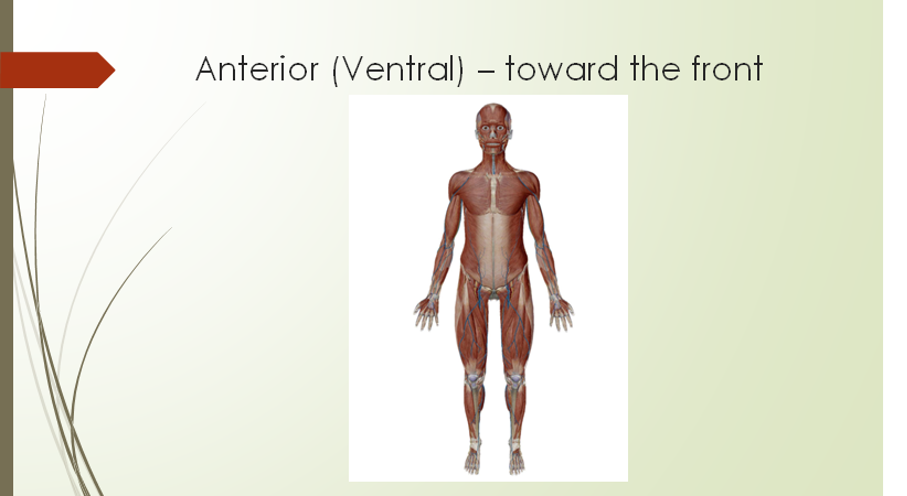
Anterior (Ventral)
Toward the front of the body.
Posterior (Dorsal)
Toward the back of the body.

Superior
Toward the top.

Inferior
Toward the bottom.

Medial
Closer to the midsagittal line (nearer to midline).

Lateral
Away from the midsagittal line (away from midline).

Deep
Toward the inside.
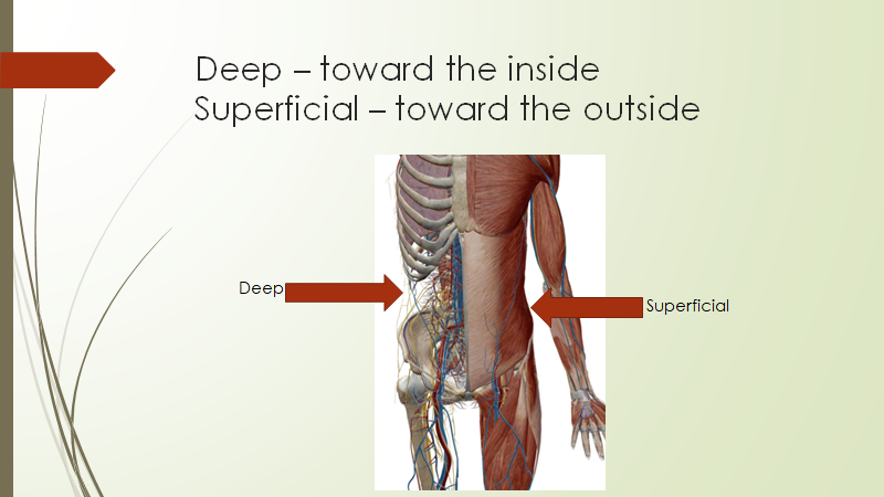
Superficial
Toward the outside.

Proximal
Closer to the body.
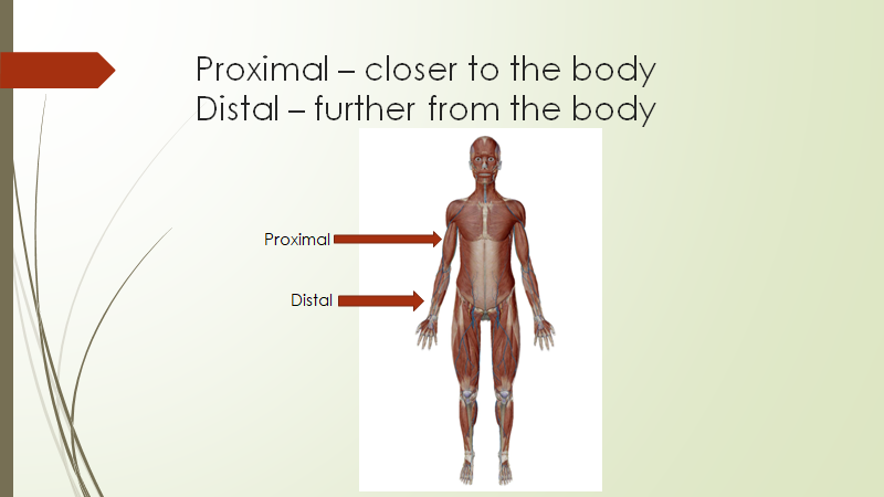
Distal
Further from the body.

Rostral
Toward the forehead.

Caudal
Toward the cauda equina.

Supine
Lying on the back.

Prone
Lying on the front.

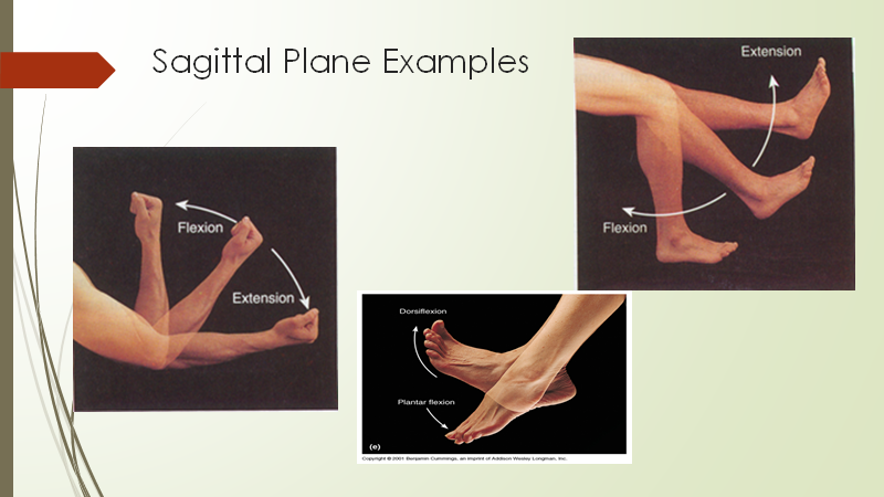
Sagittal Plane Movements
Movements limited to the right or left side of the body, such as flexion, extension, dorsiflexion, and plantar flexion.

Frontal Plane Movements
Movements limited to a lateral direction (side-to-side, up-and-down), such as abduction, adduction, inversion, and eversion.

Transverse Plane Movements
Movements limited to rotation or vertical twisting, such as pronation, supination, medial/lateral rotation, and neck rotation.

Orbital
Pertaining to the eye socket.

Buccal
Pertaining to the cheek.

Oral
Pertaining to the mouth.

Occipital (Regional)
Pertaining to the back of the skull.

Deltoid
Pertaining to the shoulder.

Antecubital
Anterior to the elbow.

Brachial
Pertaining to the arm.

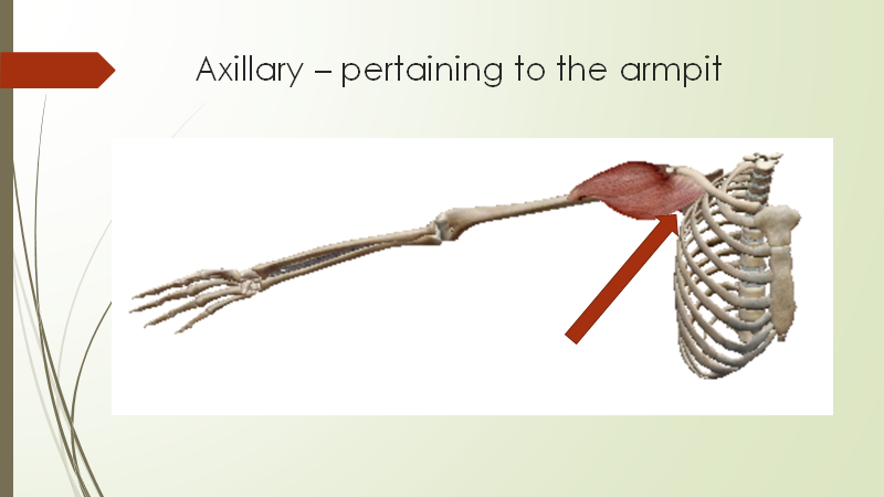
Axillary
Pertaining to the armpit.
Digital
Pertaining to the fingers or toes.
Scapular
Pertaining to the shoulder blade.

Cervical
7 vertebrae closest to the head.

Thoracic
12 vertebrae connected to ribs.

Lumbar
5 vertebrae in the low back.

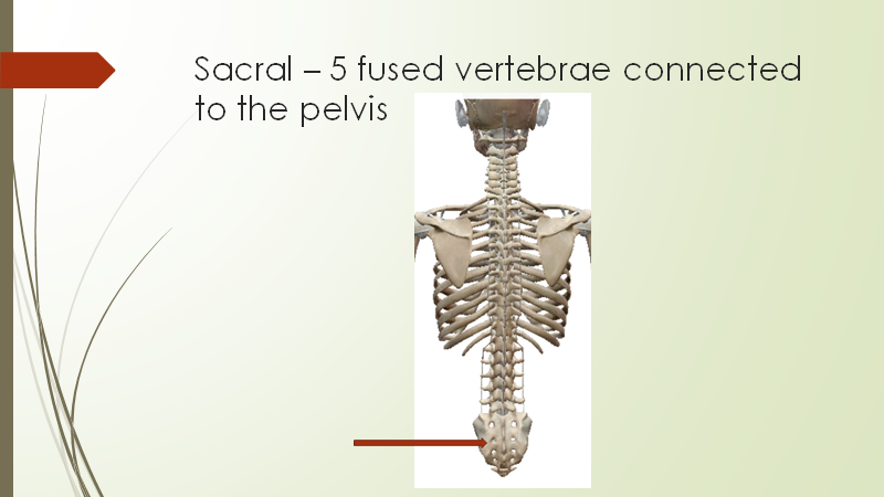
Sacral
5 fused vertebrae connected to the pelvis.
Inguinal
Pertaining to the groin.

Umbilical
Pertaining to the belly button.

Abdominal
Below the chest and above the pelvis.

Pubic
Near the pubic bone.

Sural
Pertaining to the calf.

Popliteal
Pertaining to the posterior knee.

Gluteal
Pertaining to the buttocks.

Calcaneal
Pertaining to the heel of the foot.

Femoral
Pertaining to the thigh.

Patellar
Pertaining to the knee cap.

Abdominopelvic Regions
The nine anatomical divisions: Right hypochondriac, Epigastric, Left hypochondriac, Right lumbar, Umbilical, Left lumbar, Right iliac, Hypogastric, and Left iliac regions.

Abdominopelvic Quadrants
The four clinical divisions: Right upper quadrant (RUQ), Left upper quadrant (LUQ), Right lower quadrant (RLQ), and Left lower quadrant (LLQ).

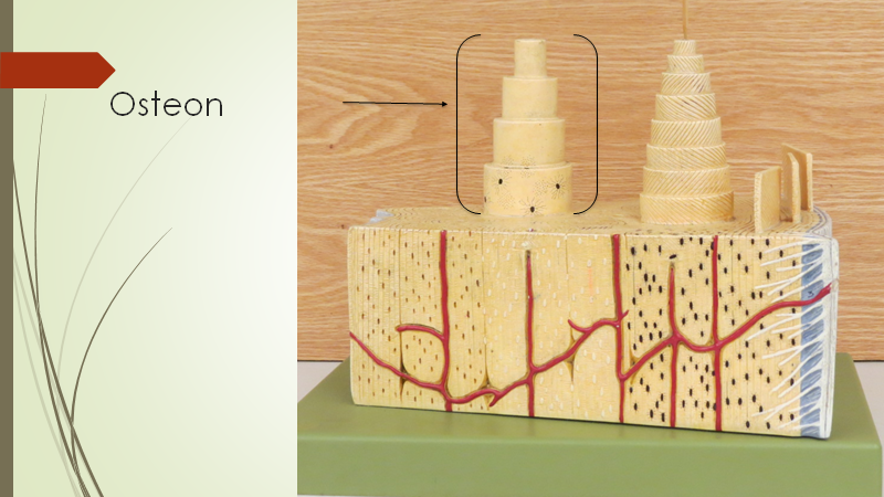
Osteon
The repeating structural unit of compact bone tissue.
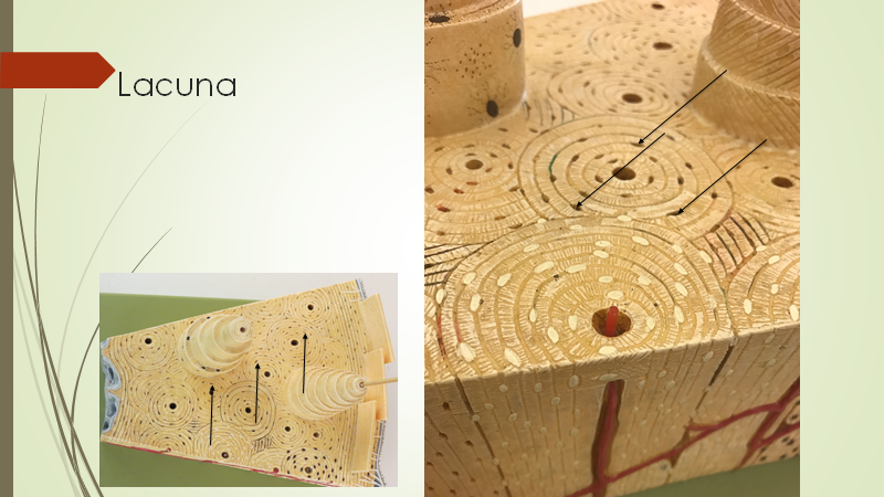
Lacuna
A small cavity or space in bone tissue containing an osteocyte.
Canaliculi
Tiny hair-like canals connecting lacunae to each other and to the central canal in bone tissue.

Periosteum
A tough membrane covering the outer surface of bone.

Sharpey's Fibers
Perforating fibers that secure the periosteum to the underlying bone tissue.

Concentric Lamellae
Rings of calcified matrix surrounding the central canal of an osteon.

Circumferential Lamellae
Lamellae that extend around the entire outer or inner circumference of compact bone.

Interstitial Lamellae
Incomplete lamellae located in the spaces between osteons.

Volkmann's Canal
Transverse or perforating canals running perpendicular to the long axis of bone, carrying blood vessels and nerves.

Haversian Canal (Central Canal)
The longitudinal canal running through the center of an osteon, containing blood vessels and nerves.


Osteocytes
Mature bone cells located inside lacunae.

Endosteum
Membrane lining the inner medullary cavity and internal spaces of bone.

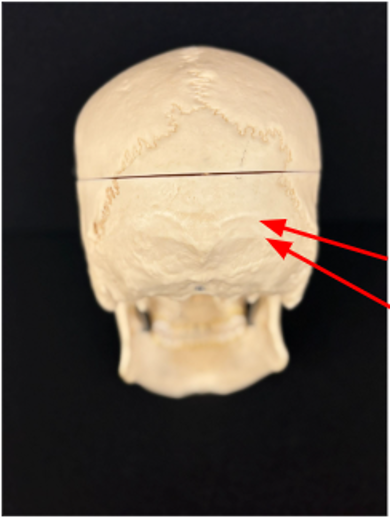
Nuchal Line
A ridge located on the posterior surface of the occipital bone.

What is G?
Zygomatic Process :A projection of the temporal bone that articulates with the zygomatic bone.

What is F?
Mastoid Process: A prominent projection of the temporal bone located posterior to the external auditory meatus.
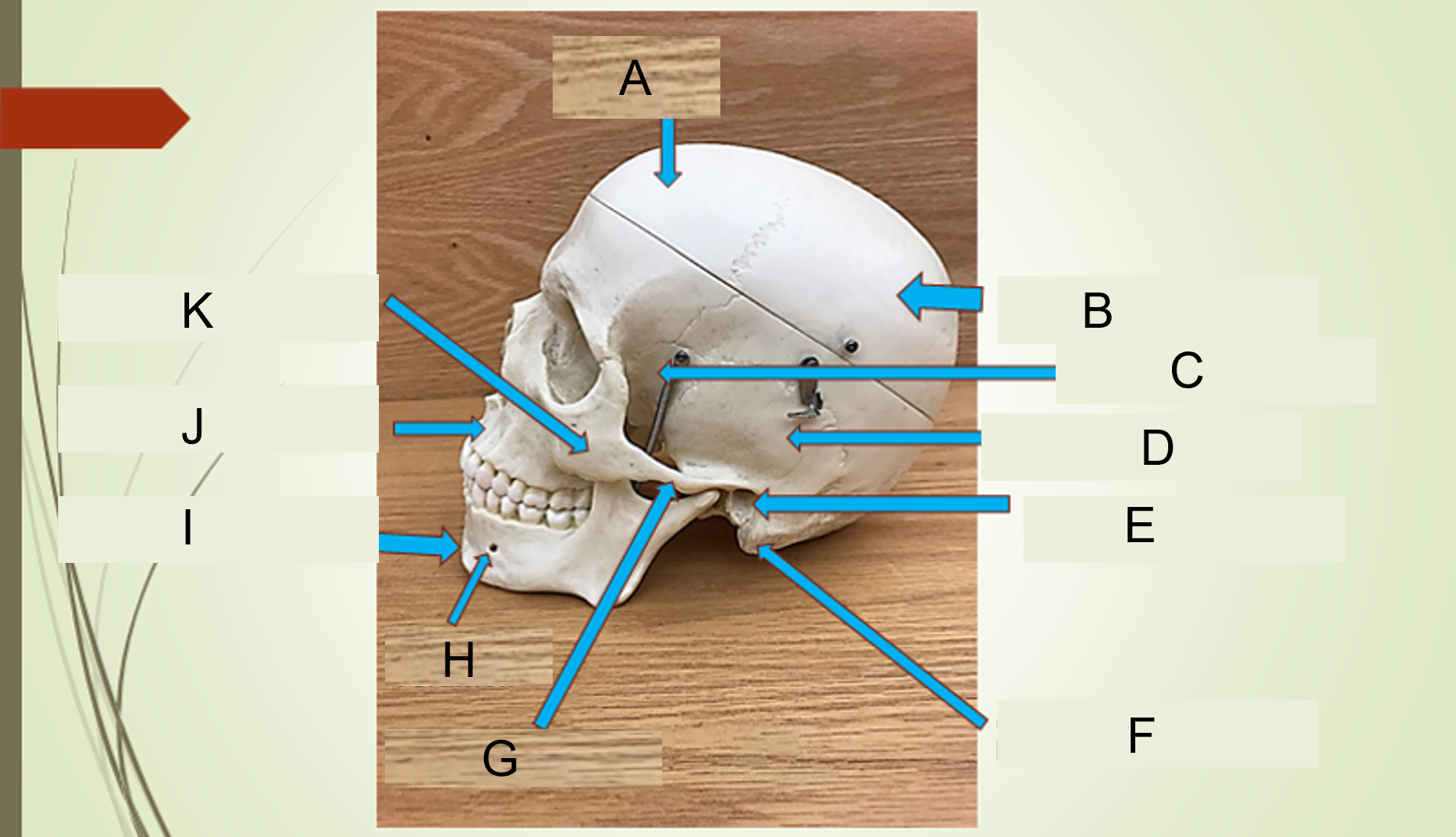
What is A?
frontal bone

What is B?
Parietal Bone

What is C?
Sphenoid Bone

What is D?
Temporal Bone