Gas Behavior + Gas Laws
 Call Kai
 Learn
Learn Practice Test
 Spaced Repetition
 Match
Match Flashcards
 Knowt Play
1/24

Earn XP
Description and Tags
Chemistry
Name | Mastery | Learn | Test | Matching | Spaced | Call with Kai | Chat |
|---|
No analytics yet
Send a link to your students to track their progress
25 Terms
Gas particles have high kinetic energy because
they move rapidly and randomly in straight lines
Spacing between gas particles are
far apart
Units that are used to measure pressure
atm, psi, torr, mmHg, pascal, Kpascal, bar
What instrument is used to measure atmospheric pressure?
Barometer
Whats the formula to convert degrees Celsius to Kelvin?
+273 to C
Whats the formula to convert Kelvin to degrees Celsius?
-273 from K
Absolute Zero Definition
The lowest theoretical temperature possible (Theoretical Value)
What are the degrees Celsius and Kelvin temperatures associated with Absolute Zero?
0Kelvin = -273 Degrees Celsius
If # of particle collisions increased, what happens to gas pressure?
Would Increase due to more collisions and particles
If the force of particle collisions decreased, what happens to gas pressure?
Would decrease due to the particles hitting the container walls less forcefully
If volume and temp are constant, as the # of gas particles decreases, the pressure…
Would decrease due to lower collisions
If pressure and # of gas particles are constant, and the temp decreases, the volume…
Would decrease due because less temp leads to particles moving slower and less kinetic energy
Definition of Boyle’s Law
When volume goes down, pressure goes up. When volume goes up, pressure goes down. Temperature stays the same.
Formula for Boyle’s Law
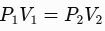
Definition of Charles Law
When temperature goes up, volume goes up. When temperature goes down, volume goes down. Pressure stays the same. Use Kelvin.
Formula for Charles Law

Definition of Gay Lussac’s Law
When temperature goes up, pressure goes up. When temperature goes down, pressure goes down. Volume stays the same. Use Kelvin.
Formula for Gay Lussac’s Law

Definition of Combined Gas Law
Used when pressure, volume, and temperature all change.
Formula for Combined Gas Law

Definition of Ideal Gas Law
Shows the relationship between Pressure, Volume, Temperature, and Moles for a gas.
Formula for Ideal Gas Law
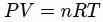
ONLY use Kelvin for…
Gas Law temp calculations
Definition Of Avogrados Law
Volume and the amount of gas (moles) have a direct relationship when temperature and pressure stay constant, meaning more gas = more volume.
Formula for Avogrados Law
