Carnivores + Artiodactyls
 Call Kai
 Learn
 Practice Test
 Spaced Repetition
 Match
 Flashcards
 Knowt Play
1/56

Earn XP
Description and Tags
fragments included
57 Terms

Artiodactyl astragalus (Talus)

artiodactyl astragalus (talus)

artiodactyl atlas vertebra

artiodactyl axis vertebra

artiodactyl axis vertebra

artiodactyl calcaneus
T bone shaped

artiodactyl femur (proximal end fractured)

artiodactyl femur (proximal end fractured)
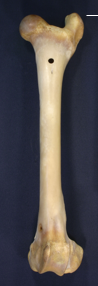
artiodactyl femur

artiodactyl femur distal end

artiodactyl proximal end
note the foramen

artiodactyl fused ulna radius

artiodactyl humerus distal end

artiodactyl humerus distal end

artiodactyl humerus distal end

artiodactyl humerus distal end

artiodactyl humerus proximal end

artiodactyl humerus proximal end

artiodactyl lumbar vertebra
tiny curled arms at the top

artiodactyl mandible
note the long posterior coronoid process

artiodactyl metacarpal
note foramen on the front

artiodactyl metatarsal
note distal midline groove

Identify artiodactyl metatarsal and metacarpal based on proximal ends
“D” shape is metacarpal (top)
“O” shaped is metatarsal (bottom)

artiodactyl metacarpal

artiodactyl molars

artiodactyl pelvis
elongated with reduced ischium

artiodactyl phalange

artiodactyl sacrum
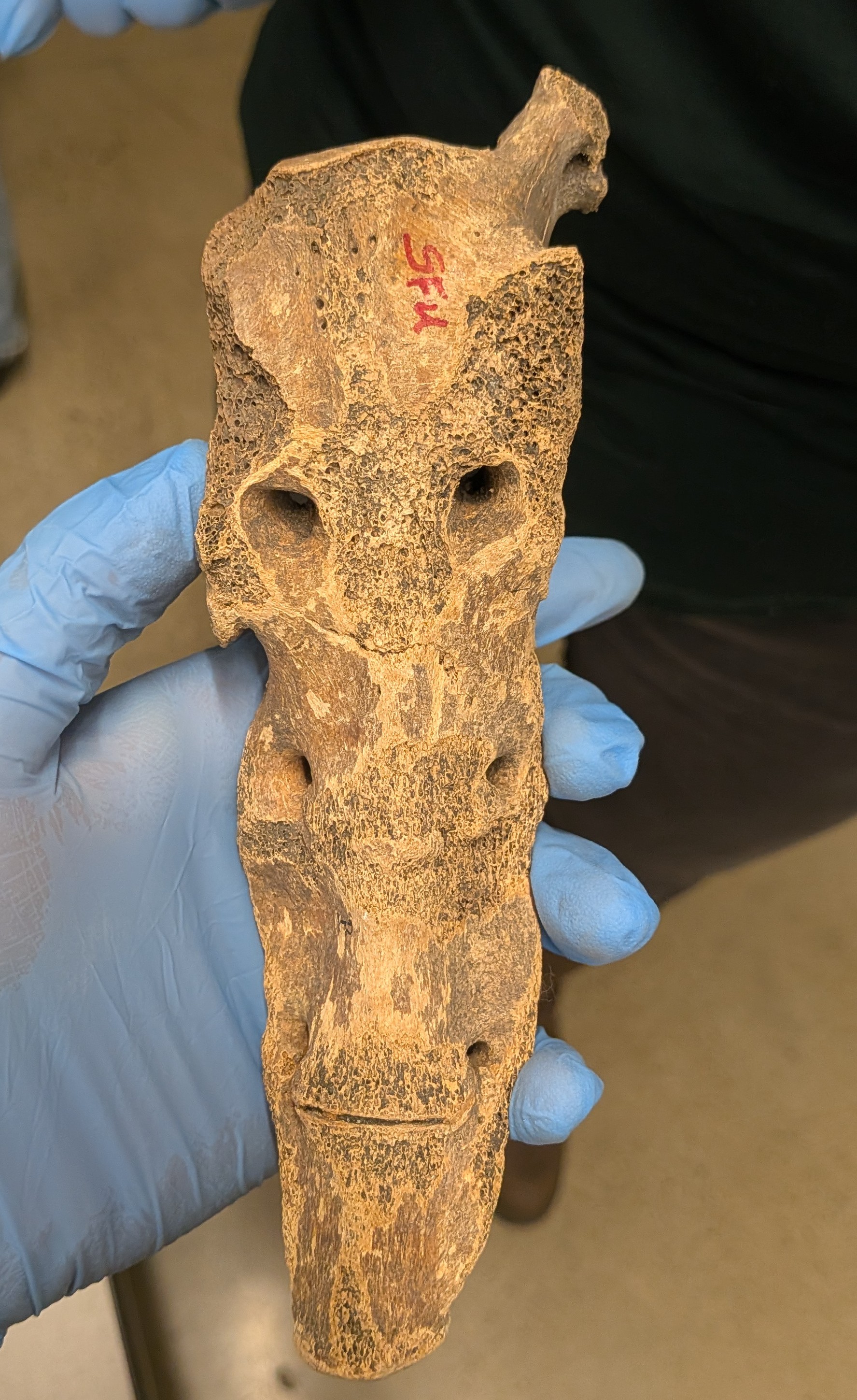
artiodactyl sacrum
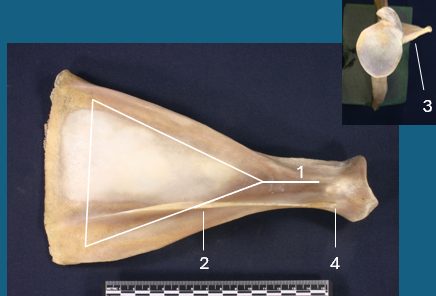
artiodactyl scapula

artiodactyl tibia

artiodactyl tibia dital end

artiodactyl tibia proximal end
Triangular and uneven

artiodactyl unfused humerus (shaft)

carnivore astragalus (talus)

carnivore atlas vertebra
wings

carnivore axis vertebra

carnivore axis vertebra dens

carnivore calcaneus
looks similar to a rabbit calcaneus

carnivore crania
note spaced teeth (large diastema)

carnivore crania with carnassial tooth

carnivore femur

carnivore femur
large indentation next to femoral head

carnivore fibula

carnivore fused metapodials

carnivore humerus

carnivore humerus
large distal foramen
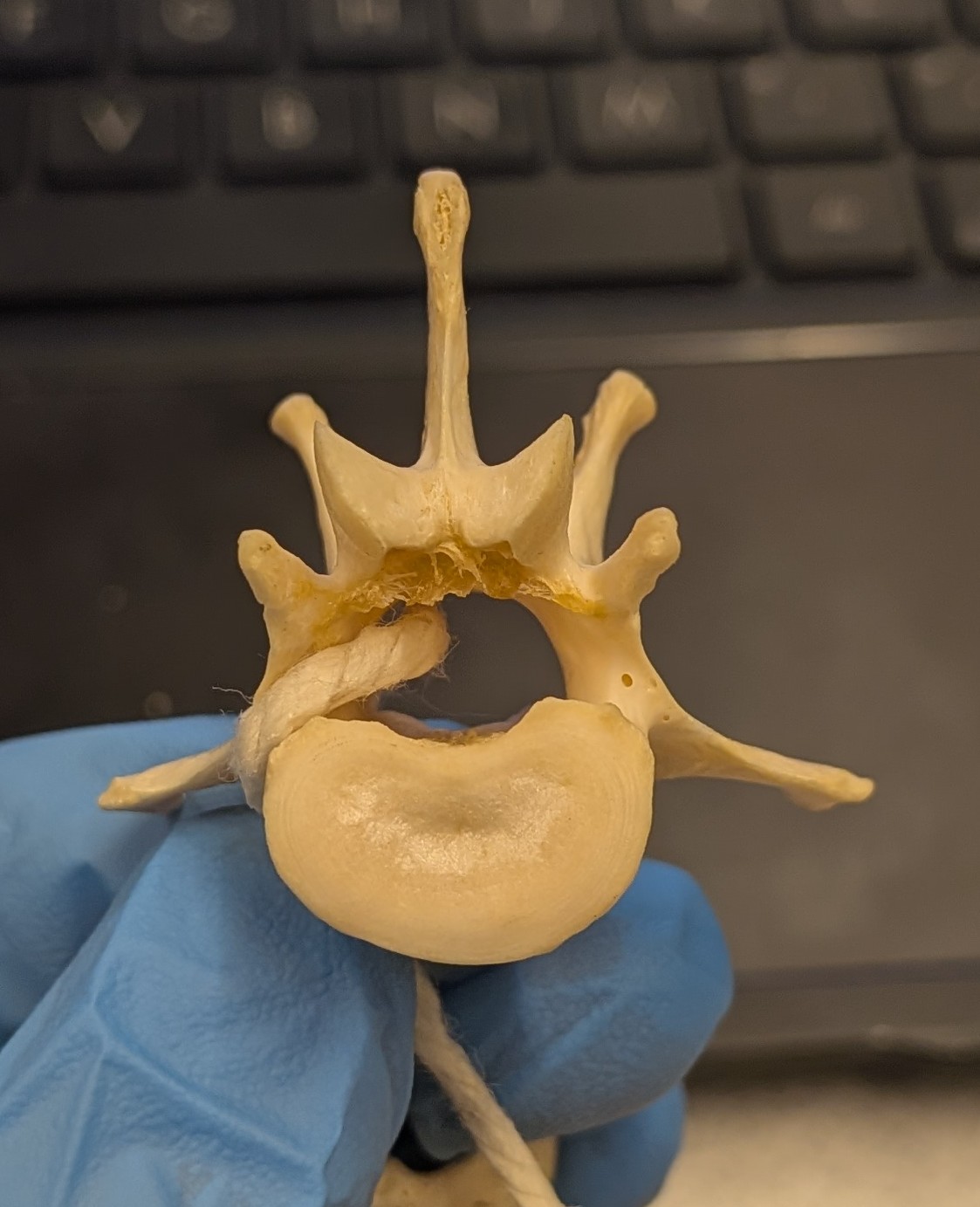
carnivore lumbar vertebra

Where is the carnassial tooth?
large tooth


carnivore mandible

carnivore metapodial

carnivore phalange

carnivore pelvis
flared ischium