Arthropod Orders
 Call Kai
 Learn
 Practice Test
 Spaced Repetition
 Match
 Flashcards
 Knowt Play
1/32

There's no tags or description
Looks like no tags are added yet.
33 Terms
Order Protura
Non-Insect/Entognatha Hexapoda
Proturans
500 species (#24)
minute
Lives in the soil
Sucking mouthparts
Does not have
Eyes
antennae
wings
tracheae
Styli on 1st 3 abdominal segments
anamorphosis
More body segments get added during development

Order Collembola
Non-Insect/Entognatha Hexapoda
Springtails
6,000 species (#10)
Minute, tubular or globose
Chewing mouthparts
Ocelli w/ no compound Eye
Detritivores - fungi-eating
Synapomorphies
Ventral tube
Furcula and retinaculum

Order Diplura
Non-Insect/Entognatha Hexapoda
800 species (#19)
soil-dwelling detritivores
Chewing mouthparts
Cerci resemble forceps
no eyes

Order Archaeognatha
Insecta/ Entognatha
Jumping bristletails
513 species (#23)
more distantly related to pterygota than zygentoma
Large compound eyes, 3 ocelli

Order Zygentoma
Insecta/ Entognatha
Bristletails, silverfish, firebrat
560 Species (#22)
sister to pterygota
small and teardrop-shaped, dorsoventrally flattened
ground dwelling; feed on starches
Chewing mouth parts
compound eyes, ocell
Abdominal styli
aestiger of locomotor appendages

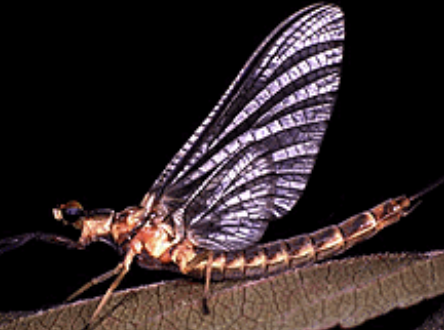
Order Ephemeroptera
Paleoptera
Mayflies
3,240 species (#15)
Small to medium'; fragile, soft bodied
Aquatic, chewing nymphs
Mainly herbivores, algivorous
Abdominal gills
Non-feeding adults
Wings vertical at rest
front triangular
Hind smaller
Abdomen with cerci and caudal filament (Not always there)
Synapomorphy: Subimasc stage
Order Odonata
Paleoptera
Dragonflies and damselflies
5,899 species (#11)
Medium to very large, elongated
Predators
Aquatic nymphs
mask
Aerial hunting adults
Basket legs
Paleopterous, many-veined wings
Stigma - colored wing cells
Large compound eyes
Short bristles - like antennae

Suborder Anisoptera
Paleoptera
Odonate
Dragonflies
Wings held laterally at rest
Strong fliers
Hindwings broader
Unequal wings
Nymphs
stout
Rectal respiration, jet propulsion - Shoots out butt
Attack from below
Land mine attack
High success rate

Zygopters
Paleoptera
Odonate
Wings held dorsally at rest
Weaker flies
Wings equal in size
Nymphs
Slender
3 terminal gills
Attacks Head on

Order Plecoptera
Polyneoptera
3,743 Species (#14)
Small to medium, elongated, flattened
Aquatic Nymphs
Chewing mouthparts
Tracheal gills
Often thorax and abdomen
Well-aerated streams
Stony bottoms
Mostly herbivores
Adults
Usually non feeding
Found near water
Hindwings larger

Order Orthoptera
Polyneoptera
Grasshoppers, crickets, katydids
23,855 species (#6)
Most diverse polyneoptera
Saltatorial legs at 3
Jumping guys
Females usually w/well-developed ovipositor
Many stridulate
Hear w/ tympanic organs of legs 1
Important agricultural pests
Many herbivores

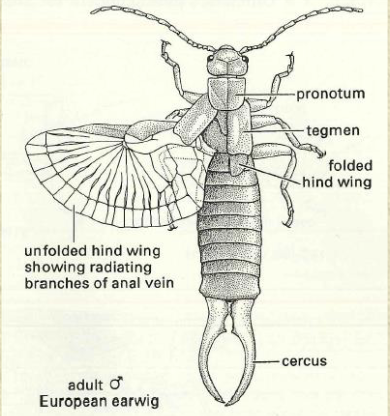
Order Dermaptera
Polyneoptera
Earwigs
>1,978 Species (#19)
Forceps-like cerci
Ear-shaped hindwings
Folded like fan under the tegmina
Omnivores
Often nocturnal
Maternal Care
Roosting
Order Blattodea
Polyneoptera
Cockroaches and termites
Cockroaches
7,314 species (#10)
Small to very large
Generalized orthopteroids
Mainly tropical omicores
Hoodlice pronotum
Fenestrae instead of ocelli - thin spots that make windows
Eggs in chitinous ootheca or live-born
Made of an exoskeleton to be kept w/ them
Termites
2,300 Species
Wings absent or 2 similar pairs
Eusocial - like bees
Eat cellulose (Wood)
Earthworms of deserts
Order Mantodeas
Polyneoptera
Mantids
2,400 species (#17)
Predators
Raptorial, spiny forelegs 1
Elongated Cozae
Elongated prothorax
Highly movable triangular head
Eyes are far apart so they can focus on prey and get a better distance
Eggs in “foam” ootheca
Like cockroaches
Hard but light structure, made of bubbles

Order Phasmatodea
Polyneoptera
(Walking stick/stick insects)
3,014 species (#16)
Elongated, longest insects up to 30cm
Small prothorax
Long meso and meta
Cylindrical or leaf-like
Most wingless
Or, leaf-mimicking wing wings
Most tropical
Sluggish herbivores
Some parthenogenetic
2 eggs in one
Phasmid eggs are often ant-dispersed
Ant think it fruit and take it home w/ them

New Order Mantophasmatodea
Polyneoptera
Gladiators or heel walkers
15 species (Last place)
First new insect order since 1914
Wingless features similar to mantids and phasmids
Possible sister to Ice insects
They make love not sex

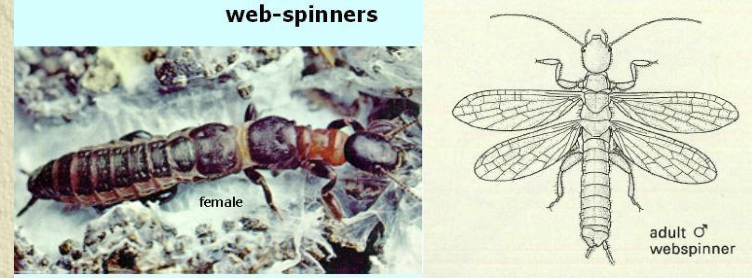
Order Embioptera
Polyneoptera
Webspinners
463 Species (#24)
Silk glands in tarsis 1 (All stages)
Slender, very small w/ filiform antennae
Males winged, not females
Short, stout legs w/ greatly enlarged hind femorn
Live in colonies in silken galleries spun in leaf litters, under stone, in bark
Order Psocodea
Paraneoptera
Lice, booklice, bark lice
Lice
>11,000 species (#8)
Booklice and bark lice’
>3,000 species

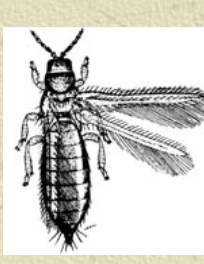
Order Thysanoptera
Paraneoptera
Thrips
5,684 species (#13)
Wings are fringed
Very fucking tiny
Order Hemiptera
Paraneoptera
True Bugs and Kin
103,590 species (#5)
Most diverse Paraneoptera
Very morphologically diverse
Suborder Heteropera
Paraneoptera
True Bug

Homoptera (Suborder Auchenorrhyncha and Sternorrhyncha)

Order Neuroptera
Endopterygota

Order Megaloptera
Endopterygota

Order Raphidioptera
Endopterygota
Snakeflies

Order Coleoptera
Endopterygota
Beetles
#1 baby

Order Mystery Endopterygote
Endopterygota
Strepsiptera
A weird life cycle
Hypermetamorphosis
Triungulin “wandering” larvae are produced viviparously by neotenic, maggot-like endoparasitic females. Males disperse to females and mate by traumatic insemination, rupturing the brood canal opening near head and prothorax

Order Hymenoptera
Endopterygota
Ants, wasps, and bees

Order Trichoptera
Endopterygota
Caddisflies

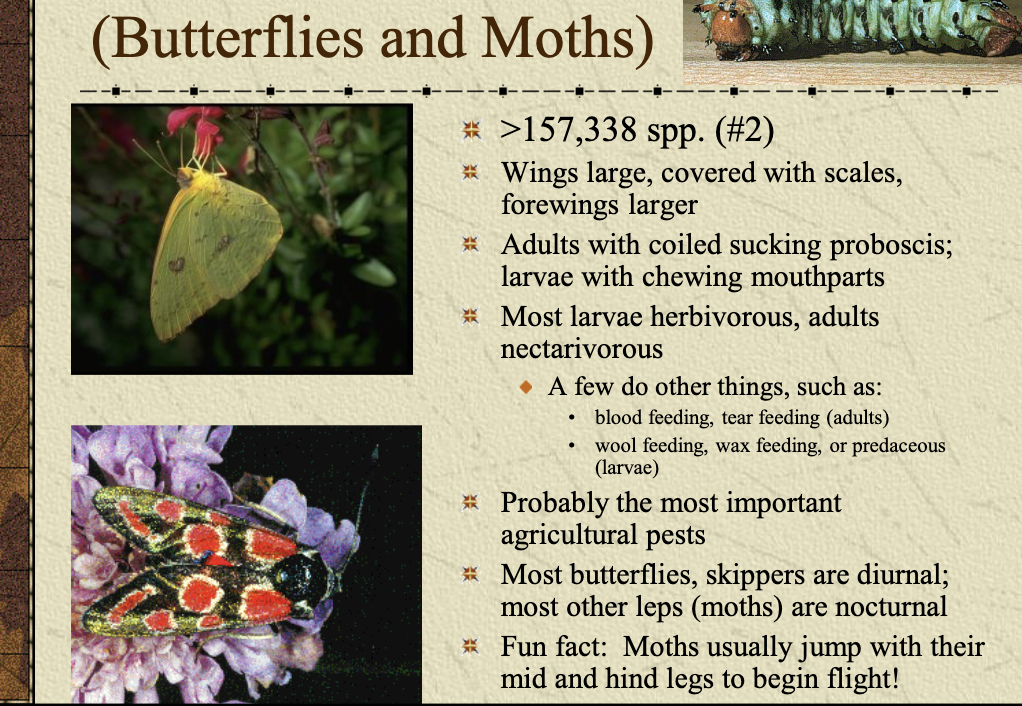
Order Lepidoptera
Order Diptera
Endopterygota
True Flies

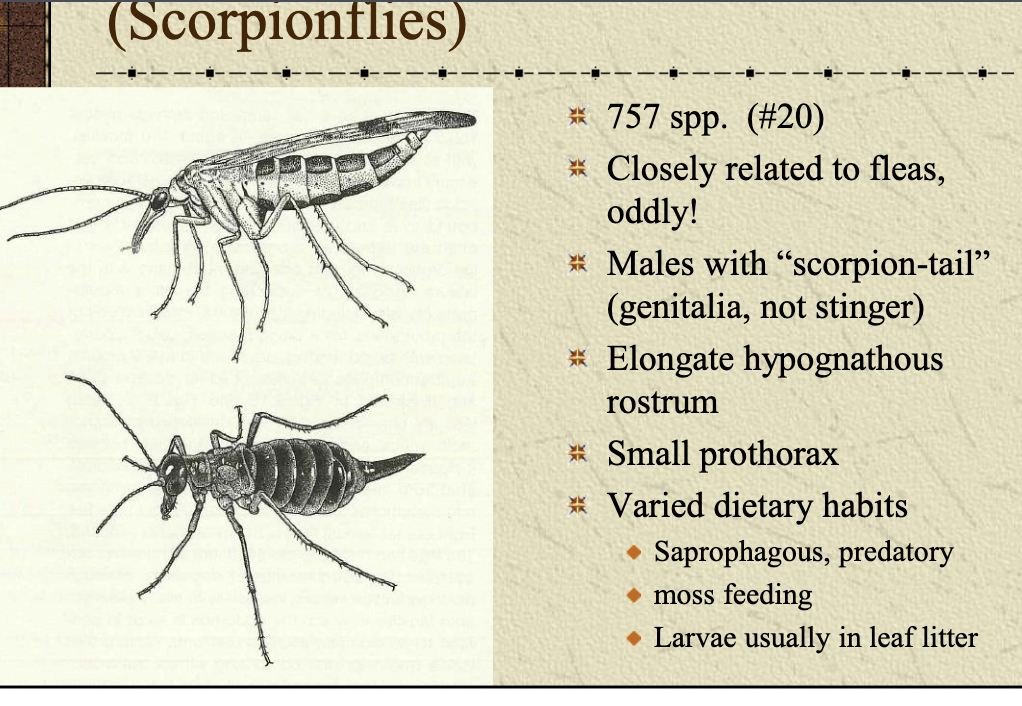
Order Mecoptera
Endopterygota
Order Siphonaptera
Endopterygota
Fleas
