2B.2 enzymes
 Call Kai
 Learn
 Practice Test
 Spaced Repetition
 Match
 Flashcards
 Knowt Play
1/12

There's no tags or description
Looks like no tags are added yet.
13 Terms
syllabus

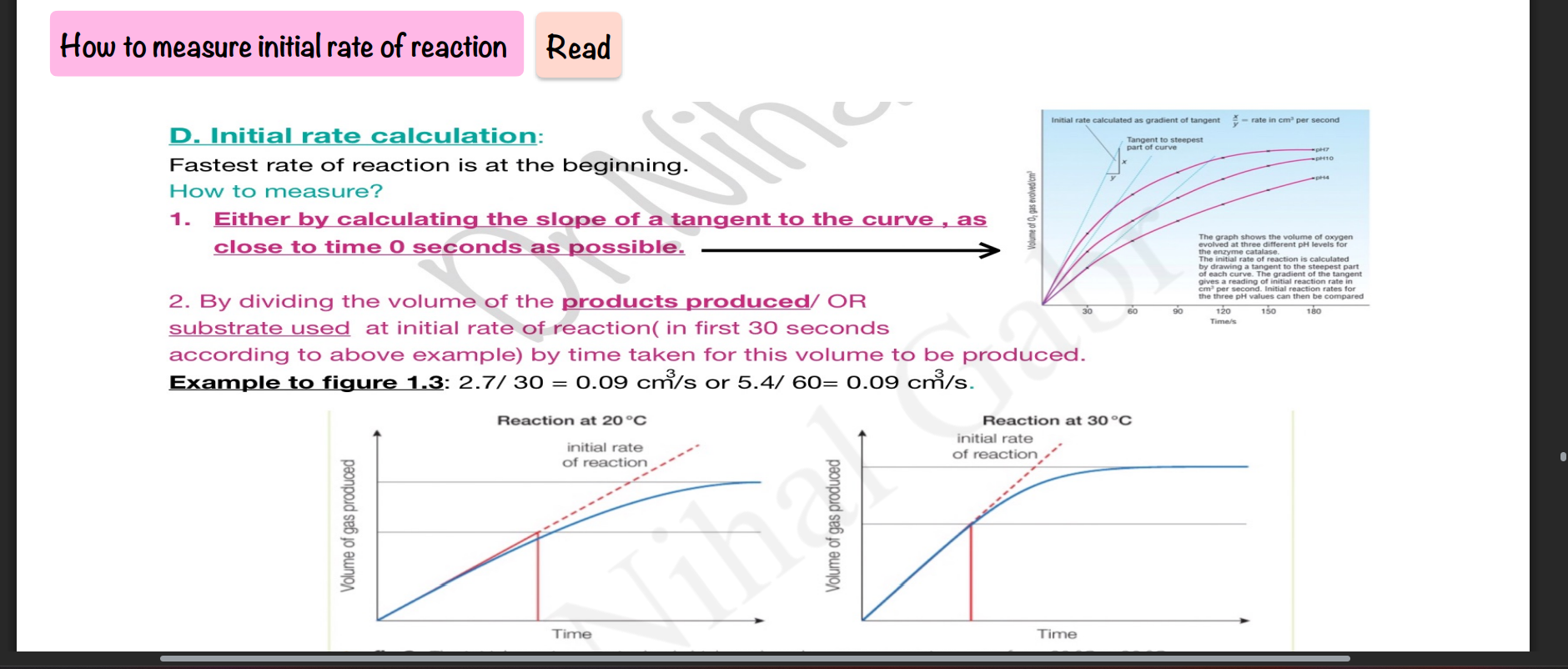
Note how to measure initiial rate of reaction
Define enzyme
Biological catalyst that speed up the rate of reaction by lowering the activation energy
What are the 2 diff types of enzymes
Extracelluar: Catalyse reactions outside the cell
Intracellular: Catalyse reactions inside the cell
Explain why enzymes r specific
Enzymes have specific shape of active site complementary to only 1 substrate
Specific squence of amino acids in the primary structure
Primary structure determines position and type of R in amino acids
This determines type of bonds and position of bonds between R groups
Determines tertiary structure responsible for folding and coiling of the enzyme that determines the 3D shape for the active site
Explain mechanism of enzymes
Specific shape of active site
Substrate is EXACTLY complementary shape to active site
Substrate fits in the active site and binds forms enzyme substrate complex
Product no longer complementary
How do enzymes lower acitvation energy
Provide alternate reaction pathway due to collisions between subtrate and enzymes where active site (puts strain on the bonds in reactants)
makes it easier for them to break
Explain how enzymes work via induced fit mechanism
Substrate is NOT exactly complementary to the shape of the active site, upon entry minor changes induced in the active site so substrate fits in it.

Explain shape of graph
Before the Optimum: Increasing temperature leads to higher KE, so more (higher frequency of) successful collisions, so more Enzyme-Substrate Complexes (ESC), thus a higher rate of reaction.
Hydrogen bonds between the amino acids are broken due to the increase in temperature, leading to permanent loss of the 3D shape of the active site, so the substrate can no longer bind. The enzyme is denatured
At temp. Zero the enzyme is inactive or frozen, and there is no KE for movement, so no reaction occurs until the temp increases. This is a reversible deactivation.
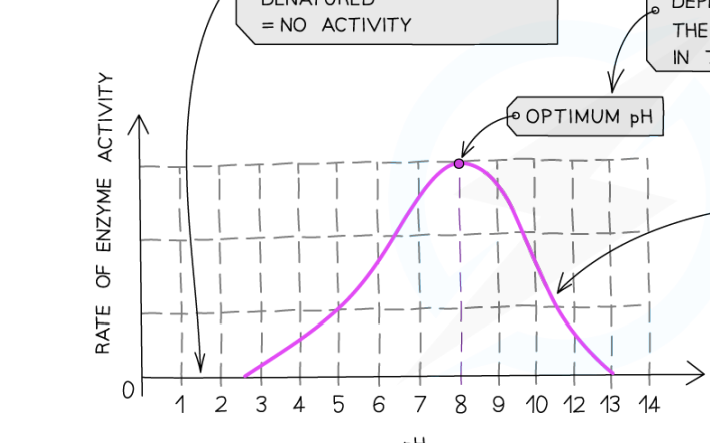
explain shape of graph
Major changes in pH: breaks the hydrogen and ionic bonds between the amino acids forming the active site, so permanent loss of the 3D shape, the substrate cannot bind to the active site any more. The enzyme is denatured.

level pro
Explain ABC
● A: steepest increase as more enzyme concentration means more available active sites. There are plenty of available substrate molecules at the start of the reaction so they have the highest chance for successful frequent collisions.
B: less steep increase , but rate increases regardless. Less substrate molecules available , so less chances of successful frequent collisions.
● C: Graph levels off as no more substrate available , so no chances of successful collisions, and the substrate is the limiting factor.
explain abc ( same graph but for substrate concentration)
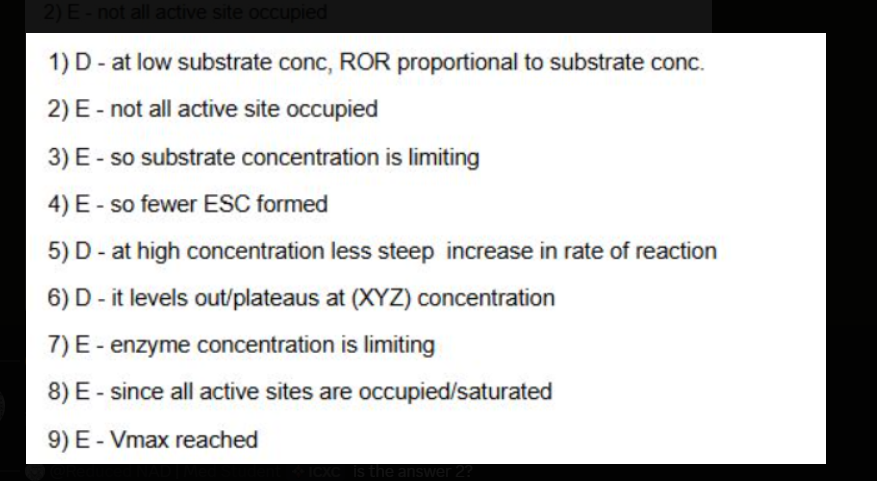
Vmax is the maximum rate of an enzyme catalyzed reaction
why is initial rate of reaction measured
The initial rate of reaction is measured as there are plenty of substrate molecules available, so the maximum chances of successful collisions occur, and the highest possible rate of reaction is achieved.