african art exam 2
 Call Kai
 Learn
 Practice Test
 Spaced Repetition
 Match
 Flashcards
 Knowt Play
1/73

There's no tags or description
Looks like no tags are added yet.
74 Terms
Ibini
Edo
Olokun & divine kingship (oba)
Hierarchical composition
Mudfish, Pythons & the principle of duality
Quatrefoils
The Office of the Queen Mother
The significance of the Warrior Kings Period
The Punitive Expedition
The pre-Islamic social model of the Sahel & its relationship to the arrival and spread of Islam (from reading)
Manding Style (from lecture) and the 4 architectural features in Manding-style mosques
Sahel
Inland Niger Delta (from lecture)
Jenne-Jeno
“Entreaties for Divine Intervention” (from reading / repeated in lecture)
Bogolanfini
“White” bogolanfini
“Red” bogolanfini (specifically, the two types of “red” bogolanfini: Basiae and N’gale)
“Crocodile” motif
“Crocodile Digits” motif
“that which holds up the head of a Moor woman” motif
“The aesthetic of the irregular”
“The wing of the swallow” (from Brett-Smith’s “Speech Made Visible” & discussed– although not named–in lecture)
Nyama
Jayan vs. Dibi and how they are expressed in bogolanfini and hunter’s tunics
“Mother-childness” and “Father-childness”
Akan
Asante/Ashanti
Asantehene
The Verbal/Visual Nexus
Ananse
The Reef Knot motif
The Chain motif
Human Mandibles motif

“Commemorative Head,” Edo artist, Benin Kingdom, Warrior Kings Period, 15th-16th c., Terracotta

“Commemorative (Trophy?) Head,” Edo artist, Benin Kingdom, Warrior King Period, 15th-16th c., Bronze, lost-wax casting

Commemorative Oba Head
Edo (Benin Kingdom), Restoration Period (18th – 19th c)
Bronze (copper alloy), lost-wax casting

Queen Mother Commemorative Head
Edo (Benin Kingdom), Latter part of Warrior King Period (16th c)
Bronze (copper alloy), lost-wax casting
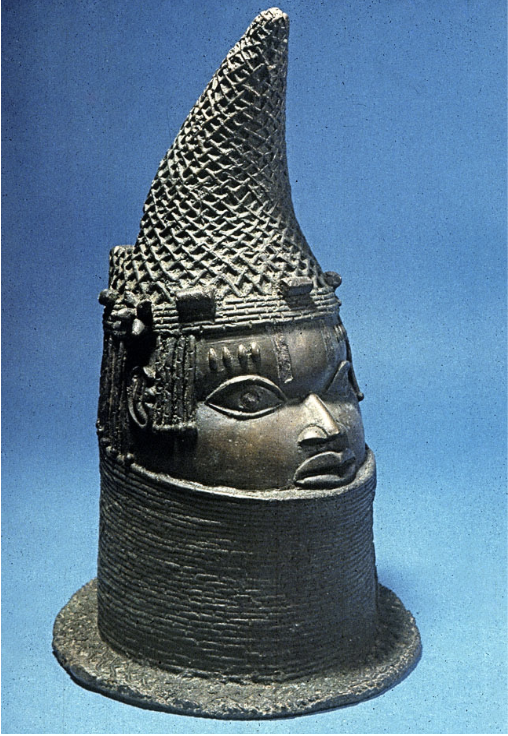
Queen Mother Commemorative Head
Edo (Benin Kingdom), Restoration Period (18th – 19th c)
Bronze (copper alloy), lost-wax casting

Tusk Honoring Oba Osemwende
Edo (Benin Kingdom), c. 1850-1888 (Restoration Period)
Ivory
Art Institute of Chicago

Plaque: Four Figures in Palace Altar Gallery
Edo (Benin Kingdom), 16th-17th c.,
Warrior Kings Period
Bronze (copper alloy), lost-wax casting

Plaque: Warrior (Oba?) & Attendants
Edo (Benin Kingdom), 16th c- 17th c (Warrior Kings Period)
Bronze (copper alloy), lost-wax casting

Leopard Head Trimmed with Python Heads
Hip Ornament
Edo (Benin Kingdom), 16th-19th c.
Bronze (copper alloy), lost-wax casting
Middlebury College Museum of Art

Village Mosque, Kwara, Mali
17th c.

West Entrance to Village Mosque,
San, Mali, late 20th c.

Tomb of Askia Muhammed, Gao, Mali
15th c

Village Mosque, Niono, Mali
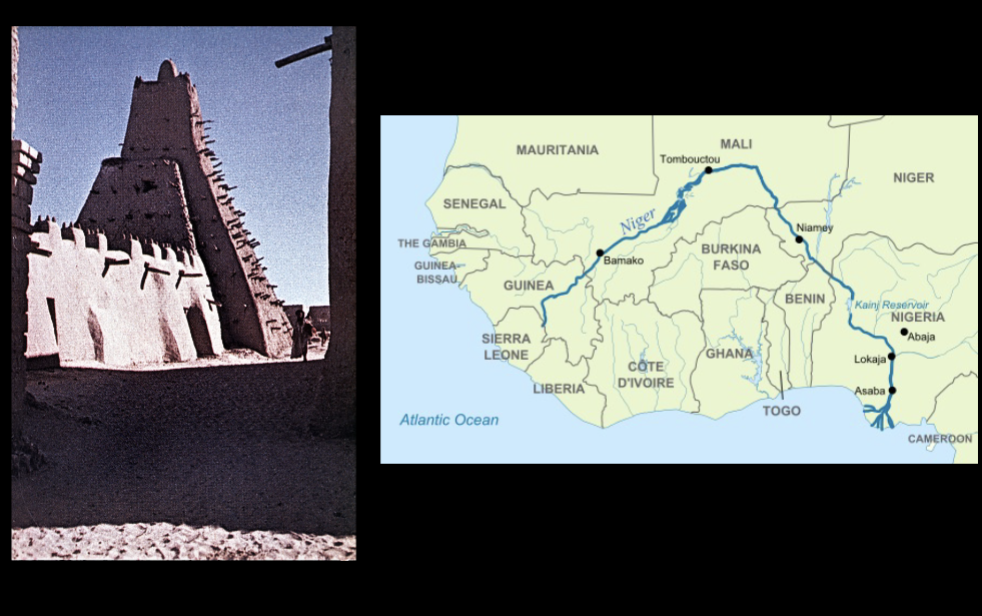
Sankore Mosque, Timbuktu, Mali, c. 1300 CE
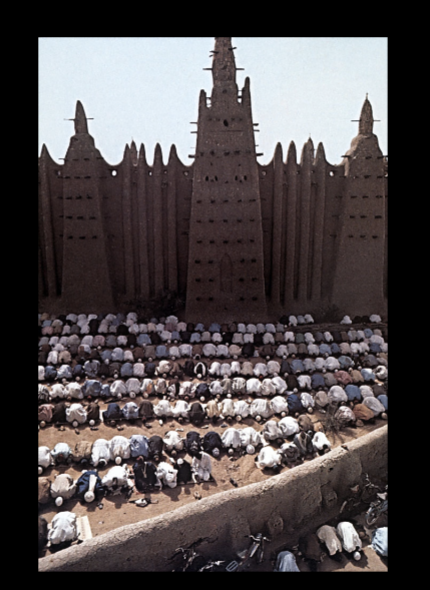
Central Mosque, Mopti, Mali

The Great Mosque at Djenné
1906-7, designed by Ismaila Traoré
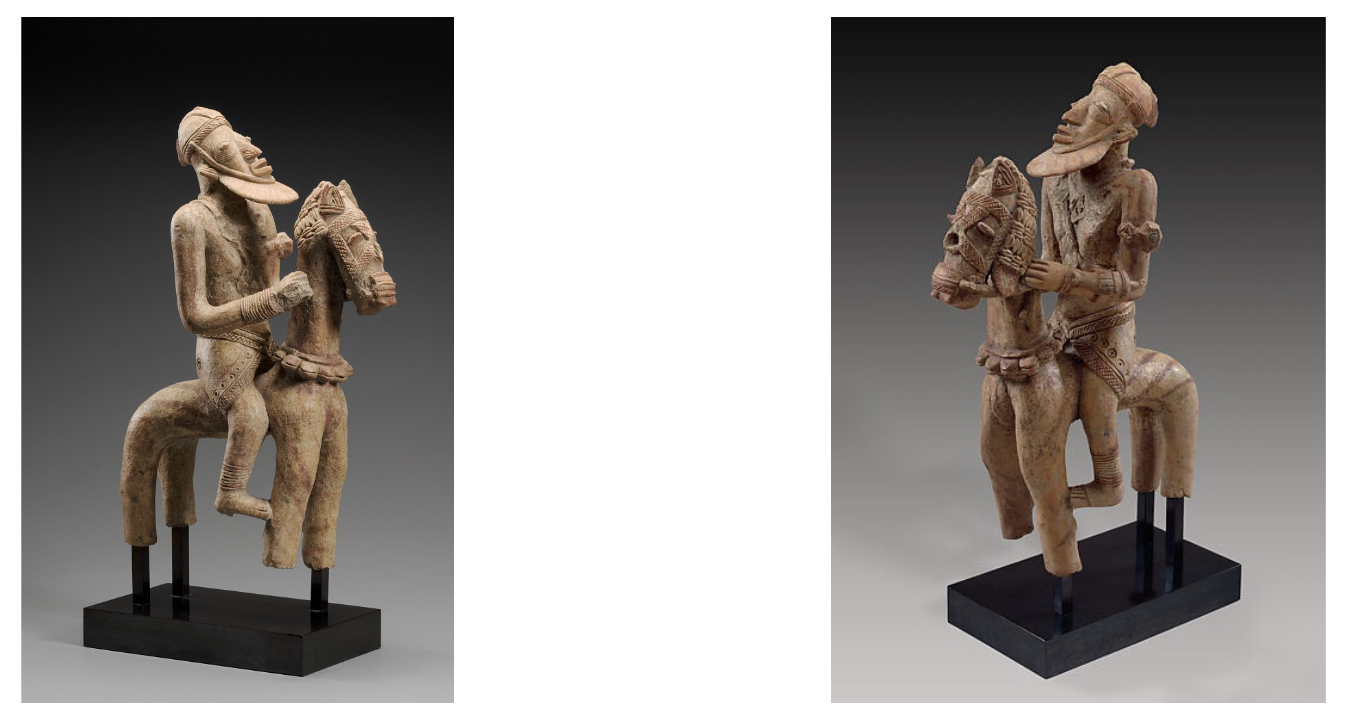
Horse and Rider
Middle Niger Civilization, Mali, 12th-16th c.
Terracotta
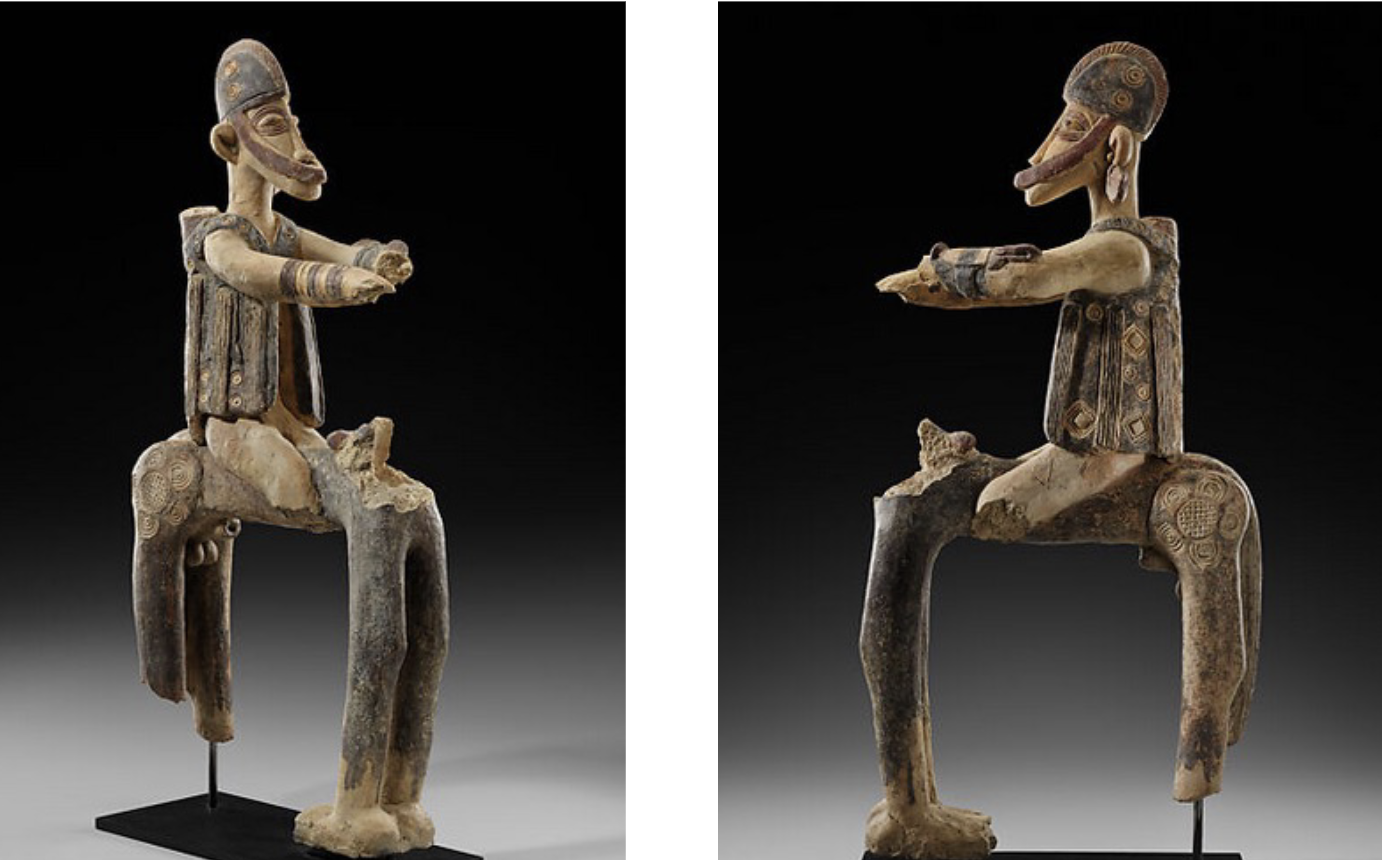
Equestrian
Figure
Middle Niger
Civilization, Mali
12th-15th c.
Terracotta

Statuette
Jenne-Jeno
Once-known
female artist?
c. 1150
Terracotta

Seated Couple
Middle Niger Civilization, Once-known female artist?
(Jenne-Jeno) Mali
12th-14th c.
Terracotta

Kneeling Female Figure
with Crossed Arms
Middle Niger Civilization
Once-known female artist?
(Jenne-Jeno) Mali
12th-14th c.
Terracotta

Kneeling Dignitary
Middle Niger Civilization, Once-known female
artist?
(Jenne-Jeno) Mali
12th-14th c., Terracotta
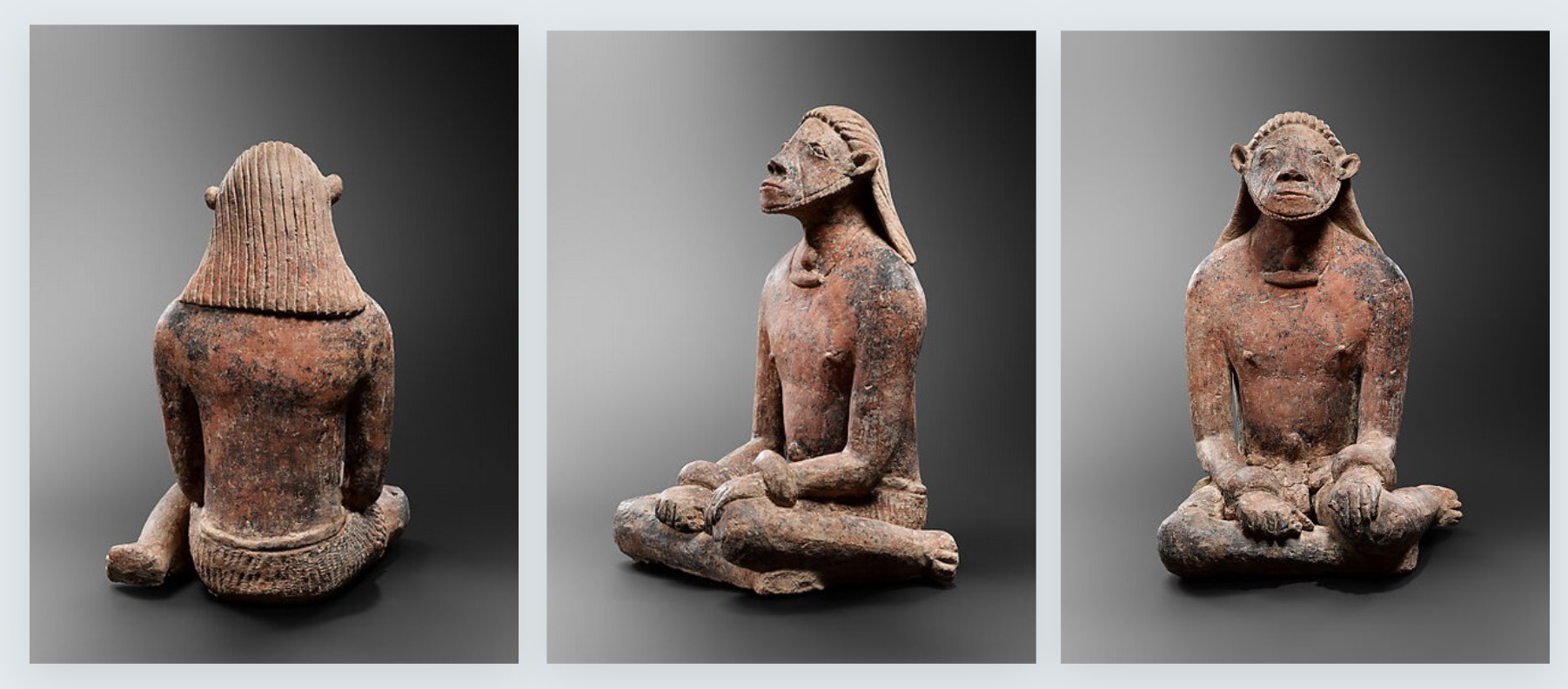
Seated Male Figure with Long Hair
Middle Niger Civilization, Once-known female artist?
(Jenne-Jeno) Mali
12th-14th c., Terracotta

Seated Male Figure with
Large Ears
Middle Niger Civilization
Once-known female artist?
(Jenne-Jeno) Mali
12th-14th c., Terracotta

Kneeling Pyramidal Figure with Hands on
Abdomen
Middle Niger Civilization, Once-known female artist?
Jenne-Jeno, Mali
12th – 14th c.
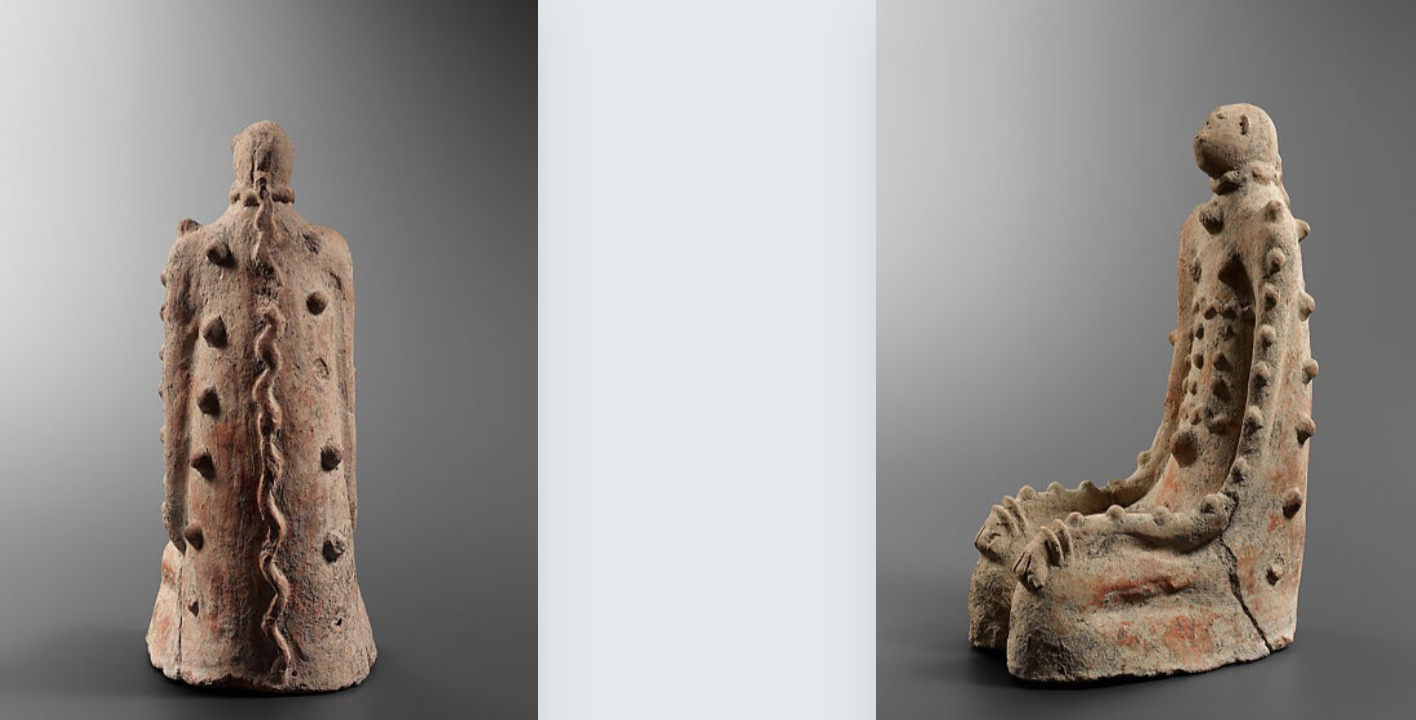
Kneeling Pyramidal Figure with Hands on Knees
Once-known female artist?
Middle Niger Civilization, Jenne-Jeno, Mali
12th – 14th c.

Reclining Androgynous Figure
Middle Niger Civilization, Once-known female artist?
Jenne-Jeno, Mali
12th – 14th c., Terracotta

Ornamental Amulet:
Head with Raised Arms
Middle Niger Civilization, Mali, 9th – 14th c.,
Copper and Brass
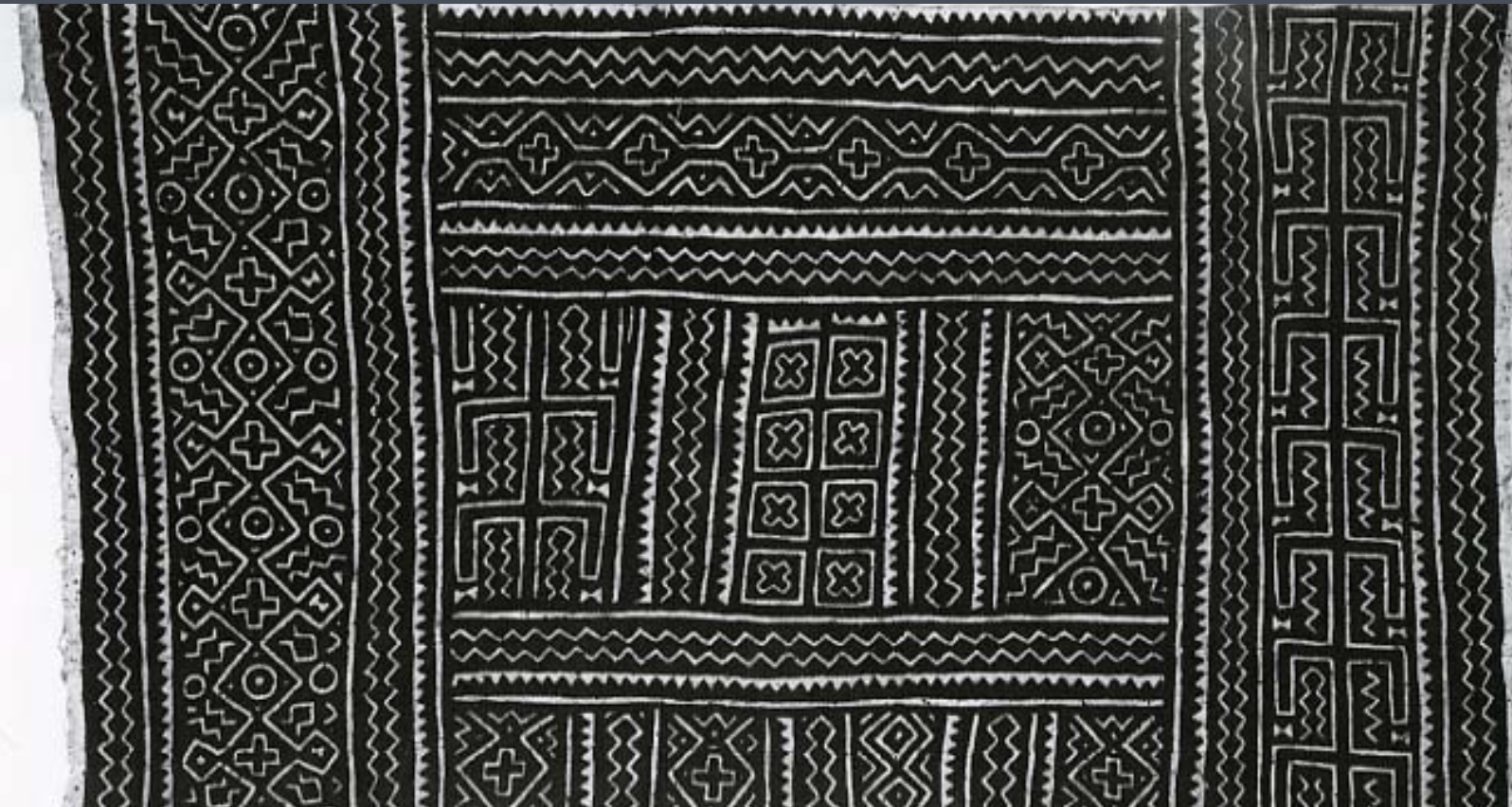
“White” (kanjida) Bogolanfini woman’s wrapper (tafé)
By Gneli Traoré, Beledougou Region, 1969

“Red” (basiae) Bogolanfini with the Basiae Pattern
By an artist in the town of Merkoya
1900-1930

“Red” bogolanfini with the N’gale pattern
Unknown Bamana Artist, late 20th c.
Made on commission

Hunter’s Tunic & Hat
Possibly Bamana, 19th - 20th c.
Cotton, plant fiber, leather, rawhide, teeth, bone, horn, turtle shells, hair or fur,
hooves, quills, mirror, wood, shell, and copper
Princeton University Museum of Art

Hunter’s Tunic & Hat
Mande artist, 20th c., before 1960
MFA, Boston

Personal Stool
Akan, Asante sub-group
20th c., wood

The Golden Stool (ceremonial)
Akan, Asante sub-group
wood and gold, late 17th c / early 20th c.

Ceremonial Stool (of Asantehene Kofi Kakari?), c. 1870
Akan, Asante sub-group
wood and silver

Kente Cloth Wrapper (detail)
Akan, Asante sub-group, 20th c.
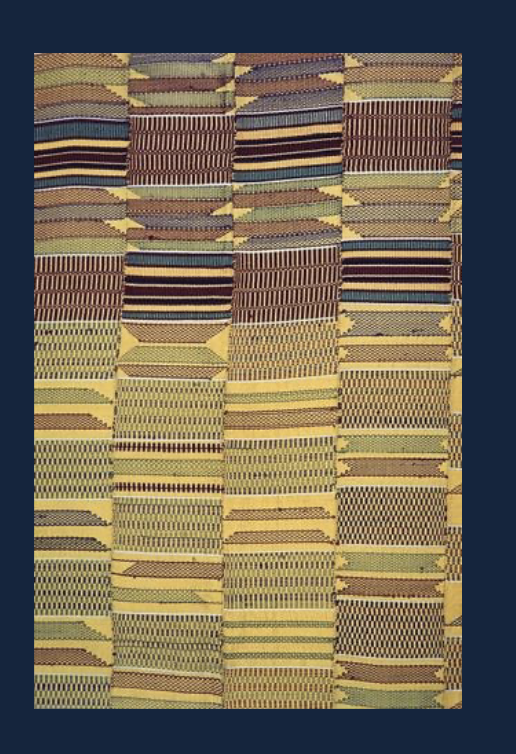
Kente Wrapper (detail), “Gold Dust” Pattern
Akan, Asante sub-group, 20th c.

Linguist Staff with Figures, Ananse, and Spider Web
wood, gold foil
Akan (Asante), 19th - early 20th c.

Linguist Staff with Hen and Eggs
wood, gold foil
Akan, Asante sub-group
late 19th – early 20th c.