Praxis 5114
 Call Kai
 Learn
Learn Practice Test
 Spaced Repetition
 Match
Match Flashcards
 Knowt Play
1/616

Earn XP
Description and Tags
Name | Mastery | Learn | Test | Matching | Spaced | Call with Kai | Chat |
|---|
No analytics yet
Send a link to your students to track their progress
617 Terms
Medieval Time Period
500BC to 1400 AD
Renaissance Time Period
1400AD to 1600AD
Baroque Time Period
1600AD to 1750AD. Birth of Opera to Death of Bach.
Classical Time Period
1750AD to 1820AD. Also known as the Viennese Classical Period. Parallels ancient Greece and Rome in terms of Form, Structure, Simplicity, Objectivity, Proportion, Grace, & Beauty.
Emphasized balance & symmetry in form/phrases heavily
Romantic Time Period
1820AD to 1900AD
Impressionism Time Period
1890AD to 1920AD
Early 20th Century Time Period
1900AD to 1940AD
Mid 20th Century to Present Time Period
1940AD to Present
Jazz Time Period
1900AD (1920AD) to Present
Rock Time Period
1950AD to 2010AD
Folk Time Period
1960AD to 1979AD
Medieval Music Components
Gregorian Chant: Monophonic vocal music with a single melody line, often sung in Latin and used in religious contexts.
Organum: Early form of polyphony where a second voice (or voices) sings parallel to the original chant melody, creating harmony.
Troubadours and Trouvères: Poet-musicians who composed and performed secular songs, often about courtly love or chivalry.
Instruments: Early instruments such as the vielle, harp, lute, and recorder were used, though primarily in secular contexts.
Renaissance Music Components
Polyphony: Elaborate combinations of multiple independent melody lines, often with rich harmonic texture.
Motet: Sacred vocal composition with multiple voices, often based on religious texts and featuring intricate counterpoint.
Madrigal: Secular vocal composition for small groups, often with expressive texts about love or nature.
Word Painting: Technique where the music reflects the meaning of the lyrics through expressive devices.
Instruments: Continued use of viols, lutes, and keyboards, with increasing emphasis on instrumental music.
Baroque Music Components
Basso Continuo: A bass line supported by a keyboard instrument (harpsichord or organ) and a bass instrument (cello or bassoon), providing harmonic support and improvisatory freedom.
Ornamentation: Elaborate embellishments added to melodies, especially in solo instrumental music.
Opera: Dramatic form of musical theater combining music, drama, and staging, often featuring elaborate vocal techniques and emotional expression.
Dance Suites: Collections of stylized dance movements (such as allemande, courante, sarabande, and gigue) often written for solo keyboard or ensemble.
Concerto Grosso: Orchestral composition featuring a small group of soloists (concertino) contrasted with a larger ensemble (ripieno).
Classical Music Components
Symmetry and Balance: Clear structures, balanced phrases, and logical development of musical themes.
Sonata Form: A three-part structure (exposition, development, recapitulation) used in many instrumental compositions, including sonatas, symphonies, and concertos.
Homophony: Texture characterized by a single melody supported by harmonic accompaniment, emphasizing clarity and simplicity.
String Quartet: Chamber music ensemble consisting of two violins, viola, and cello, often featuring conversational interplay between instruments.
Opera Seria: Formal and stylized operatic genre focusing on heroic or mythological subjects, with emphasis on vocal virtuosity.
Romantic Music Components
Emotional Expression: Intense emotions, dramatic contrasts, and personal expression in music.
Program Music: Instrumental music that tells a story, depicts a scene, or conveys an extra-musical idea or narrative.
Expanded Orchestra: Larger orchestras with increased instrumentation and dynamic range, allowing for greater expressiveness.
Nationalism: Incorporation of folk melodies, rhythms, and themes from specific countries or regions into classical compositions.
Virtuosity: Technical brilliance and showmanship in performance, particularly in solo instrumental works.
Impressionism Music Components
Atmosphere and Color: Ethereal, dreamlike qualities achieved through innovative harmonies, exotic scales, and delicate orchestrations.
Symbolism: Suggestive and evocative music that conveys moods, images, or impressions rather than explicit narratives.
Whole-Tone Scale: Scale consisting entirely of whole steps, used to create a sense of ambiguity and fluidity in harmony.
Pentatonic Scale: Scale based on five notes per octave, often associated with Asian and Celtic music, used to evoke exotic or otherworldly landscapes.
Early 20th Century Music Components
Atonality: Absence of traditional tonal centers, with composers exploring dissonance, chromaticism, and unconventional scales.
Serialism: Method of composition using a fixed series of pitches, rhythms, or other musical elements, often associated with Arnold Schoenberg and the Second Viennese School.
Primitivism: Interest in the raw, elemental qualities of music and culture, often incorporating folk melodies, rhythms, and instruments from non-Western traditions.
Mid 20th Century Music Components
Minimalism: Repetitive patterns, simple harmonic progressions, and gradual transformation of musical elements over time.
Experimentalism: Exploration of unconventional techniques, extended instrumental techniques, and alternative forms of notation.
Fusion: Blending of musical styles and traditions, such as jazz-rock fusion, world music fusion, and electronic-acoustic fusion.
Postmodernism: Embrace of eclecticism, irony, and self-referentiality, often blurring the boundaries between high and low culture.
Jazz Music Components
Syncopated rhythms, improvisation, blues scales, swing feel, call and response, and complex harmonic progressions.
Rock Music Components
Driving rhythms, electric guitars, bass, drums, and vocals, often with a focus on verse-chorus form, distorted sound, and rebellion.
Folk Music Components
Simple melodies, acoustic instruments, storytelling lyrics, and an emphasis on tradition, community, and cultural heritage.
Pope Gregory
M (590-604) Legend (came up with Chant whispered from a bird) comes from 800, felt church needed legend to have more power, did not compose all music
Chant Characteristics
M Vocal, monophonic, non metrical, rhythm according to text, conjunct/stepwise motion, limited range, no dynamic contrast, continuous sound
Syllabic (one note per syllable)
Neumatic (2-4 notes per syllable)
Melismatic (many notes per syllable)
Antiphonal
Alternating Choirs
Church Modes
Dorian, Phrygian, Lydian, Mixolydian
Plagal Modes
M Hypodorian, Hypophrygian, Hypolydian, Hypomixolydian
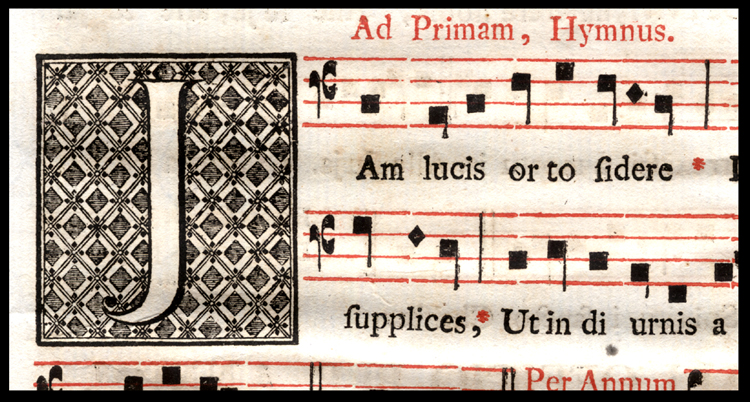
Numes
M 2 box stacked, read bottom to top, read 2 notes left to right. Dots are elongations. iij and ij = repeats. Double bars = break between phrases. Most are neumatic, a little melismatic as well.
2 Parts of the Mass
Proper: Text and/or music change according to the saints day or season
Ordinary: Text/music stays the same every mass
5 Parts of the Ordinary
Kyrie (Lord have mercy), Gloria (Glory to god in the highest), Credo (believe one god almighty), Sanctus (Holy god of hosts), Agnus Dei (Lamb of God)
Hildegard von Bingen
M (1098-1179) writer, visionary, abbess of a convent, excelled at creating sequences and liturgical dramas.
Jutta von Sponheim
M At age 12, got terrible illness and survived, dedicating the rest of her life to God. She became a spiritual leader and taught Hildegard Von Bingen
Tropes
M New addition to pre-existing chant 9-12 centuries, text added most educational and explanatory
Sequences
M Elaborate additions, became separate and stood on their own. (ex: Dies irae). However, catholic church got rid of all but 4.
Organum
M Earliest form of polyphony, based on chant. Two or more melodic lines simultaneously, each with its own independent interest, could be voice parts about 4 or 5 apart. Slightly different rhythms, introduced meter and notation
Variations of Organum
M
Simple/Parallel Organum: Vox principalis, vox organalis
Free Organum: (10th-12th centuries) Note Against Note Counterpoint
Melismatic Organum:
(11-12th centuries) lower chant voice held out in long note values, original voice in free motion above that
The Ars Antiqua
M (12th-13th centuries) The old art, Paris cultural center of Christian world, Louvre started as fortification of city, University of Paris great was great intellectual center for Christianity, Notre Dame and Notre Dame school
Tempus Perfectum
M Way of organizing rhythms, subdivision of 3
Leonin and Perotin
M
Leonin: Mid 12th Century, 1150ish. Mentor of Perotin. Wrote 2 voice polyphony.
Perotin: (12th-eary 13th centuries) took Leonin's style and added voice layers with original composition. 2 voice parts —>3 or 4 parts
Medieval Instruments
M Rebec (Lute), Vielle (Violin), Guitarra Morisca (Guitar), Lute, Pipe or Recorder, Shawm (Oboe), Nakers (Percussion)
Raimbaut de Vaquieras
M (1155-1207) composed Kalenda maya (the 1st of May). Became close with Bonaface of Italy → grew from Jongleur to Troubadour.
Motet
A short piece of sacred choral music, typically polyphonic and unaccompanied.
Tempus Imperfectum
M The division of beats into two equal parts instead of three
Felipe De Vitry
M (1290-1361) French theorist, composer, poet, diplomat, soldier, worked in courts, wrote pieces in Fauvel. Coined Ars Nova.
Ars Nova
M (New Art). Style of polyphony from 14th century France, distinguished from earlier styles by a new system of rhythmic notation that allowed duple or triple division of note values, syncopation, and great rhythmic flexibility
Guillaume de Machaut
M The most important composer of the 14th century, worked in Paris, wrote sacred and secular compositions.
Unified 4 part polyphonic settings of the ordinary mass (4 voice, melodic interest and independence, same 5 movements of mass).
Major Compositions of the Medieval Period
Hildegard von Bingen (1098-1179)
Notable Composition: "Ordo Virtutum" (Musical morality play)
Guillaume de Machaut (c. 1300-1377)
Notable Composition: "Messe de Nostre Dame" (Mass setting)
Pérotin (fl. late 12th-early 13th century)
Notable Composition: "Viderunt omnes" (Polyphonic organum)
Renaissance Return
R Rebirth. Following the Middle Ages, a movement that centered on the revival of interest in the classical learning of Greece and Rome
Martin Luther
R A German monk who became one of the most famous critics of the Roman Catholic Church. In 1517, he wrote 95 theses, or statements of belief attacking the church practices.
Wrote "Ein Feste Burg" (1529)
Kept mass and motet but changed singing to chorale; easily sung, metric, slow and even, syllabic, German, easily harmonized
The Counter Reformation
R The reaction of the Roman Catholic Church to the Reformation reaffirming the veneration of saints and the authority of the Pope (to which Protestants objected). The proceedings almost led to the banning of most music.
Giovanni Pierluigi de Palestrina
R (1525-1594) Felt duty to compose in Counter Reformation, Pope's singer in choir- dedicated to religious music.
Composed “Missa Papae Marcelli”: Polyphonic, homorhythmic ideas, syllabic entrances, text almost lines up, declamation
Renaissance Secular Music
R Lively rhythms, secular text, language of the vernacular, improv and non specified instrumentation
Notre Dame School
R Pioneering French school for Organum. Origin of Gaude Maria Virgo.
Francesco Landini
R (1325-1397) Famous Italian composer who wrote Ecco La Primavera.
Cantus Firmus Mass
Tenor part unites the sections as the Cantus Firmus
Guillame DuFay
R Early composer of Renaissance Music. Belief that church music still needs to be tranquil and include chant and polyphony. Composed L’homme Arme mass (very controversial).
16th Century Motet
Basis of modern motets. Sacred composition w/Latin Text and sections of imitative polyphony alternating with (often homorhythmic) homophony. Brief sections of polyphony imitated. No set place in liturgy, but could be during offertory, communion, or at end.
Josquin Desprez
R (c. 1440-1521) Singer who wanted Expressiveness and Beauty to be a focus of his compositions. Composed Ave Maria… virgo serena. .
Jacques Arcadelt
R (1556-1613) Early/mid composer of Madrigals. Helped to popularize and spread Madrigals around Europe.
Italian vs English Madrigals
Italian Madrigals: Favorite of Italian courts. Short compositions set to 1 stanza of poetry (and usually pastoral themed). Used heavy word painting.
English Madrigals: Popular in late 16th Century. Used translated texts. True English madrigals were usually simpler than Italian
John Farmer
R (f. 1591-1601). Composer of English madrigals. Wrote Fair Phyllis.
Instrumental Music of the Renaissance
R Mostly written for dancing. Instruments included Crumhorns (buzzy), Sackbuts (Trombones), Cornettos/Cornetts.
Basilica San Marco of Venice
R Aka St. Mark’s Basilica. Perfect setup for polychoir/antiphonal music. Instruments slowly introduced (Cornet → Sackbut → String Instruments) to support choir
Giovanni Gabrielli
R (c. 1557-1612): Master of Music for St. Mark’s. Wrote for choirs and instruments. Combined late Renaissance and early Baroque. Noted in the score which instruments are to be used + dynamics.
Major Compositions of the Renaissance Period
Giovanni Pierluigi da Palestrina (1525-1594)
Notable Composition: "Missa Papae Marcelli" (Mass setting)
Thomas Tallis (c. 1505-1585)
Notable Composition: "Spem in alium" (40-part motet)
Josquin des Prez (c. 1450-1521)
Notable Composition: "Ave Maria... virgo serena" (Motet)
The Florentine Camerata Solution
B Idea for New Music: Monody (single voice/melody over simple chords), expressive style, story told by a single voice, and stile rappresentativo
Stile Rappresentativo
B A musical style that is more expressive than standard speech, but not as melodic as song.
L’Euridice
B First ever opera. Written by Jacopo Peri (with additional music by Giulio Caccini). Performed at the Medici Wedding in 1600. Tells the story of Orpheus and Euridice
Baroque Contrasts
B Contrasts: Ornaments vs. Underlying Order, Light vs. Dark, Action vs. Drama, Perspectives, Realism vs. Expression
Reason for Musical Form
Churches/Courts wanted a fast turn around of music, and thus compositions had to be created very quickly
Doctrine of the Affections
B Admiration, Love, Hatred, Desire, Joy, Sorrow, Anger Jealousy → Different key signatures
Baroque Melody
B Not easily singable, but memorable. Continuously unfolding and ornamenting (although most ornaments not written into the score)
Baroque Rhythms
B Same rhythmic patterns that are very repetitious. Rhythms are often driving, with regular accents and meters
Baroque Harmony and Texture
B
Homophonic vocal music and polyphonic instrumental music (instrumental music takes longer to change than vocal music).
Faster harmonic rhythm (more chords, more often).
Mostly just major and minor.
Dissonance for expression
Baroque Tone Color (Timbre)
B Much doubling (unless solo)
Upper strings + Oboes
Lower Strings + Bassoons
Percussion (Timpani) + Horns/Trumpets
Little emphasis on tone color
Baroque Dynamics
B Baroque dynamics are really only Forte and Piano (due to harpsichord which has no dynamics).
Loud = Thick Texture, Faster Rhythm
Soft = Thin Texture, Slower Rhythm
Tuning System
Mean Tone tuning vs Well Tempered Tuning
Cantata
Early secular sectional song containing free expressive style & tuneful, more metrical style
Aria
Early secular, short, strophic vocal songs with a refrain at the beginning and end. Often focused on emotions
Barbara Strozzi
B (1619-1677). Adopted by Guilio Strozzi. Encouraged to perform concerts. Guilio Strozzi created the Academy of the Like Minded → Barbara Strozzi was able to explore music and have some agency
Claudio Monteverdi
B (1567-1643) Transitional composer from Renaissance to Baroque. Wrote 5-8 operas over 35 years. One of the 1st composers attacked for being “too modern” Rhythm based on text + less set up for dissonance
Basso Continuo
Bassline melody is in lowest voice and figured bass written to imply harmony. Most frequently played by keyboard and cello
Recitative
Plot action explained, dialogue, not melodic, disjunct, Little-to-no repetition, mirrors free rhythms of speech
Recitative Seco
Accompaniment by basso continuo w/rolled chords
Recitative Accompagnato
Accompanied by orchestra → saved for highest drama
De Capo Aria
A B A’ form. A’ is ornamented
Castrato
Castrated boys that can sing high. Some did it for fame.
Coloratura
Women that have a high, flexible voice. Became a popular style in Opera
Italian Overture
Overture with 3 parts: Fast, Slow, Fast
French Overture
Dotted rhythms in opening slow section, followed by an imitative fast section. Becomes most popular style.
Masque
B (1603-1649) English form of pre-Opera. A show with dance, poetry, vocal/instrumental songs, and mimes
Concerts
B (1653-1658) When Puritans took over in England, they banned theatre. Concerts (plays set to music) were basically semi-Operas
Henry Purcell
B (1659-1695) Composer who made English Opera Famous with Dido & Aeneas. Used traditional European composition techniques w/ English twist.
Dido & Aenas
B English Opera from 1688. Written for all girls school in England. Main characters mostly women. Opera was only one hour long → quick characterization and moralizing
Jean Baptiste Lully
B (1632-1687) Born as Giovanni Battista Lulli. Musician from Italy brought to France. Became a violinist for Louis XIV. Desperately wanted to be French. Grew to an Opera powerhouse (no French operas without his approval).
Terraced Dynamics
Only forte or Piano
Baroque Functional Harmony
B Key center (not really modes), Logical movement between chords, System of rules, Emphasis on Major and Minor
Figured Bass
Figures & Accidentals under the written bass melody, Implies harmony, Realized by Keyboardist/Chordal instrument
Ground Bass
Repeating bass melody, Serves as underlying harmonic structure
Suite
Collection of “stylized” dances (meant to listen, not dance). Contains Allemande, Courante, Sarabande, Gigue, Bourree, Minuet, Gavotte.