ch11 - the diversity of bacteria and archaea
 Call Kai
 Learn
Learn Practice Test
 Spaced Repetition
 Match
Match Flashcards
 Knowt Play
1/13

There's no tags or description
Looks like no tags are added yet.
Name | Mastery | Learn | Test | Matching | Spaced | Call with Kai | Chat |
|---|
No analytics yet
Send a link to your students to track their progress
14 Terms
diversity of prokaryotes
scientists just beginning to understand vast diversity of microbial life
with better methods for detecting them right now, like metagenomics - detecting bacteria that we can’t grow in the lab
so many more out there that we didn’t even know existed before, and must be more than we’ve been able to detect
only ~6000 of estimated million species of prokaryotes described
950 genera
majority have not been isolated
new molecular techniques aiding in discovery, characterization
metagenomic and WGS: use the techniques to synthesize or sequence the whole genome of an organism, a prokaryote, without having to culture it in the lab first
bcuz the organism is a result of the genes: when we look at the genome, we can characterize them based on their ability to break down or to use certain compounds as a source of nutrient, whether they’re able to do it or not
just from the genes we can make that prediction, even if it can’t be grown in the lab to test out
metabolic diversity of prokaryotes
prokaryotes are metabolically diverse
metabolic diversity: ability to use different substances or chemicals as carbon and energy sources
need both of these in order to live for metabolism
for higher organisms its limited but not for prokaryotes
one of the reasons why it allows microbes to live in more diverse environments than higher organisms
humans are quite limited to where they can live but not prokaryotes
prokaryotes inhabit almost every environment on and in the earth
those environments are providing it with a carbon and an energy source
the microbial world
all living things classified in one of three groups (domains)
organisms in each domain share certain properties
three domains: bacteria, archaea, eukarya
bacteria and archaea - prokaryotes
all single celled organisms
contain no nucleus or any membrane-bound organelles
cytoplasm surrounded by rigid cell wall

archaea that thrive in extreme conditions
similarities to domain bacteria
same shapes
multiply through binary fission
move by means of flagellum
differences from domain bacteria
no peptidoglycan in cell wall, has pseudopeptidoglycan
archaea thrive in extreme environments
high heat, acidity, alkalinity, salinity
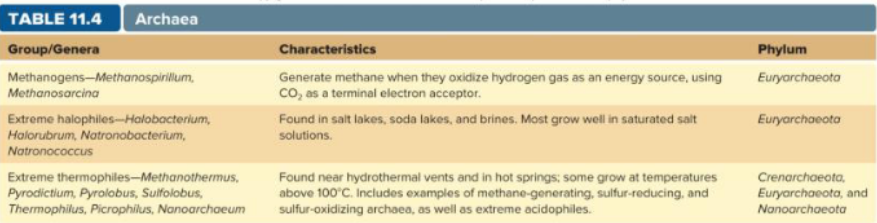
3 groups of archaea
methanogens are exception
methanogens: methane producing archaea/organisms
take CO2 and hydrogen from the environment and turn it into methane gas
extreme halophiles: live in extreme high salt environments
extreme thermophiles: love to live at very hot temperatures, some above boiling
domain bacteria
the most common type in causing human infections/diseases
haven’t been able to find disease causing archaea
members are widely diverse
the most prominent features include
single-celled
specific shapes
rod shaped, spherical, and spiral
rigid cell walls made of peptidoglycan
multiply by binary fission
one cell divides into two (genetically identical)
some are motile
move using flagella
microbial habitats
microbes live in every type of habitat that supports life (has all the required nutrients for growth - food and ability to withstand environment)
extreme environments
terrestrial environments (soil, air)
very high in the sky
some people have taken agar plates there, exposed it to it, closed it, incubated it → growth of microbes
all the water evaporated up there may have microbes in them
aquatic environments (open sea, lakes, streams, ponds, marshes and wetlands, hot springs, arctic ice sheets)
association with insects, plants, and animals
microbes can use these as habitats
extreme environments - hot and cold
hot:
boiling pools
hot springs
hydrothermal vents - 120*C (250*F)
worms with bacteria in folds
TAQ dna polymerase for polymerase chain reactions - Thermus aquaticus
this enzyme wasn’t possible until the worm was discovered
cold:
glaciers and snow fields
red bacteria - pigment allows for the bacteria to harvest energy from sunlight and make it photosynthetic (red pigment)
have to make own food to survive
antarctic ice sheets - 12*C (10*F)
extreme environments - high salt
extreme halophiles
Great Salt Lake, Dead Sea, soda lakes
most can grow in 5-32% NaCl
most higher microorganisms would not be able to survive living in this environment
these microbes can: bacteria, algae, protozoa
most require 9% salt concentration
Owens lake (Sierra Nevada)
reddish coloration due to salt-loving bacteria (halobacterium)
halophile that lives in this lake, and when it grows it produces the red color
extreme environments - alkaline and acidic
alkaline
mono lake (california)
alkaline, hypersaline
anoxic, extremophiles
not much dissolved oxygen in it
the organisms that live in here must be able to tolerate all of these environments in order to inhabit this lake
acidic
sulfolobus
thrives in sulfur-rich, acidic hot springs and soils
contribute to acidity of the environment bcuz they use sulfur as a source of energy
oxidize sulfur to sulfuric acid (very acidic)
require pH between 1-6
grow above 50*C to 85*C

aquatic environments
lack steady nutrient supply
sheathed bacteria form chains of cells within tube
the sheath bacteria live together in the structure called the sheath
sheaths protect, help bacteria attach to solid objects, and helps them share nutrients in the sheath
gram-negative Sphaerotilus, Leptothrix are found a lot and are very long strings of cells that do these things
prosthecate bacteria
have extensions that provide increased surface area for nutrient absorption, some allow attachment
caulobacter
when the two cells divide, the daughter cell has the flagella and will swim away from the mother cell, so that there’s no competition with the mother cell
when the daughter cell is ready to reproduce, it will lose the flagella and will produce something called a stalk and holdfast
stalk: extension
holdfast allows for it to stick itself somewhere on a surface with nutrients and settles down there using the nutrients to reproduce
only then will the cell reproduce
and when it produces a daughter cell, the daughter cell will swim away and when the daughter cell is ready to reproduce, it will do the same thing again
bacteria that prey on other bacteria
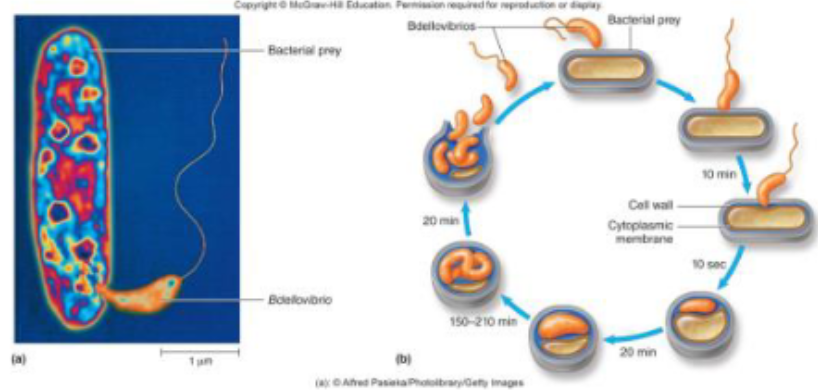
Bdellovibrio
highly motile gram-negative curved rods
prey on E. coli and other gram-negatives
for example: when bdellovibrio infects E. coli, it will get through the outer membrane and into the periplasm (gram - bacteria have a large periplasmic space)
when it gets into the periplasmic space it will start feeding on the gram negative bacteria, starts breaking it down
then it will grow and then reproduce
once its done it will lyse the cell and releases all the progeny/offspring
then they can go on and feed on other gram - bacteria
animals as habitats
bodies provide a variety of ecological habitats for bacteria
skin
typically dry, salty, inhospitable to many microbes
so only bacteria that can tolerate these environments stay and grow
Staphylococcal species: significant component of skin flora
s epidermidis and s aureus
mucous membranes
respiratory, genitourinary, intestinal tracts
Bacteroides - mouth, most abundant in the GI, and genital tracts
Bifidobacterium - GI tract (breastfed babies)


association with animals
humans: some of the normal bacterial flora (human microbiome), the bacteria vary/are diverse
the more diverse your microbiome is, the better it is for you
when you take antibiotics and it destroys some of them and the diversity decreases, it could lead to some types of illnesses and more vulnerable to infections
bioluminescent bacteria: Photobacterium, Vibrio
these can form symbiotic or mutualistic relationships with certain fish, squid
benefits both the animal and the bacteria
help with camouflage, confuse predators and prey
establish relationships with other animals for food and protection
fish: flashlight fish
called that because it has an organ that holds the bacteria on both sides, it starts to glow and offers light for the fish when it goes deeper in the ocean
it gives the bacteria protection and they can have all the food they want from the fish, the fish benefits as well because there’s a built in flashlight → mutualistic symbiosis


association with insects
insects
ants that live in associations with fungi
they want the fungus to grow so they’re taking care of it so it can grow on a particular substrate and the fungus will break down that substrate into a form that the ants can use as a source of food
like us using bacteria to make yogurt
aphids that live in association with bacteria
has a mutualistic association with bacteria
in the gut of this aphid it has a big organ that houses the bacteria
this insect feeds on plant sap - rich in sugar but very low in amino acids or other nitrogenous compounds
how will an insect that feeds only on sap survive?
they survive because of the bacteria
it makes all the essential nutrients that they need, including amino acids for the insect
we know that cuz when we feed it antibiotic it kills the bacteria
these insects don’t live for long after that and never reproduce
association with plants
plants
bacteria that associate with plants
Agrobacterium - plant pathogen
not a good bacterium for plants
produces plant tumors to gain nutrient from the plant (often fatal to plant)
Rhizobium
have a mutually beneficial relationship with plants (legumes)
infects the hair roots of plants, specifically the legumes
like peas, beans, alfalfa, clover
and when they infect it, it will initiate the formation of a structure called the root nodule
these nodules on the hair roots are where the bacteria is
open it up and we see bacteria
the bacteria are doing a very important thing for the plant which is nitrogen fixation
nitrogen fixation used as a nutrient source for plant
results in formation of ammonia which can be converted to nitrate (basically fertilizer for the plant)
will grow faster with Rhizobium
