Immune responses to pathogens
 Call Kai
 Learn
 Practice Test
 Spaced Repetition
 Match
 Flashcards
 Knowt Play
1/32

Earn XP
Description and Tags
fix slide 8
33 Terms

immune defence overview
Why immune responses differ
Where a pathogen lives, its size and its life cycle decide which defences can reach it.


Textbook immunology differentiates between bacterial and viral infection
Which immune response is needed?

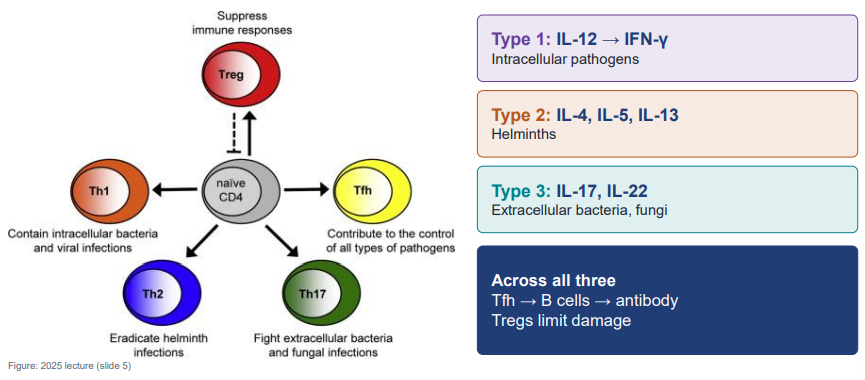
Which immune response is needed?
Specialization of immune responses to pathogens
Distinct polarizing cytokines induce expression of master gene regulators that regulates expression of a signature set of effector cytokines produced by that subset
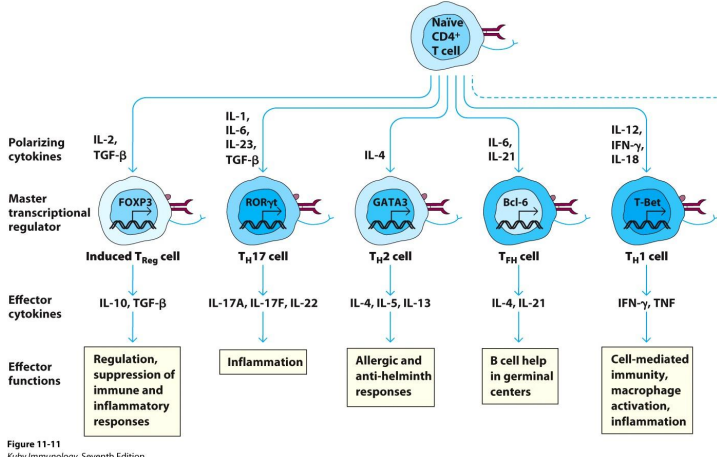
Pathogen-specific immunity
• Extracellular microbes: antibodies, phagocytes, TH17, (TH1)
• Intracellular microbes: antibodies, phagocytes, TH1; CTLs
• Helminth parasites: IgE, eosinophils, basophils, mast cells, TH2
Simplification and dependent on factors including time since infection
From pathogen recognition to adaptive immunity
1) PRRs detect PAMPs
Dendritic cells sense the pathogen (or adjuvant)
2) Dendritic cells prime T cells
MHC II → CD4 · MHC I → CD8, plus costimulation
3) Help, antibody and memory
Days on first exposure; faster the second time

Specialization of immune responses to pathogens
Innate immune system receptors recognize the pathogen:
1. PAMPs found on microbes & multicellular pathogens
2. DAMPs (Damaged self structures)
Immune cells
1. Pattern recognition receptors (PRRs) recognize these structures and
target them for clearance
Families of PRRs recognize a wide variety of PAMP ligands:
1. Toll-like receptors – TLRs – various locations
2. C-type lectin receptors – CLRs – cell surface
3. RIG-I like receptors – RLRs - cytosol
4. Nod-like receptors – NLRs – cytosol
Signalling pathways are activated, contributing to innate/inflammatory
responses and the induction of adaptive immune responses

How the immune system tells: PAMPs and DAMPs

PCA of cytokines
Significant differences in multivariate signature between infection types. Suggests same infectionspecific signatures


The arms race: how pathogens evade
Host counter-moves: NK cells detect MHC I loss · antibody to many epitopes · memory · regulation
to make matters worse: immune damage
First rule out direct pathogen damage: toxins, cell lysis, blood loss
Collateral damage
Effective response injures
bystander tissue
Vet: Mannheimia pneumonia; bovine
TB
Human: TB lung cavities
Miscommunication
Wrong, excessive or misdirected
response
Vet: flea allergy; purpura
haemorrhagica
Human: rheumatic fever
Sabotage
Pathogen hijacks or disables the
response
Vet: BVDV immunosuppression
Human: toxic shock; HIV

immune response to viral infections
• Viruses typically enter host cells through a cell-surface receptor
• Genome replication is often error-prone, leading to mutations
• During replication, viruses trigger humoral and cell-mediated innate
adaptive immune responses
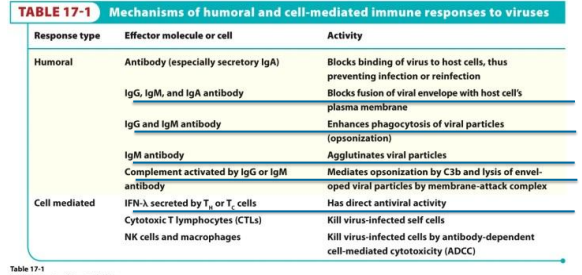
the time course of antiviral immunity
image shows the order of antiviral immune cells that respond, when they respond and their power over time
e.g. ifna and ifnb and nk cells respond first
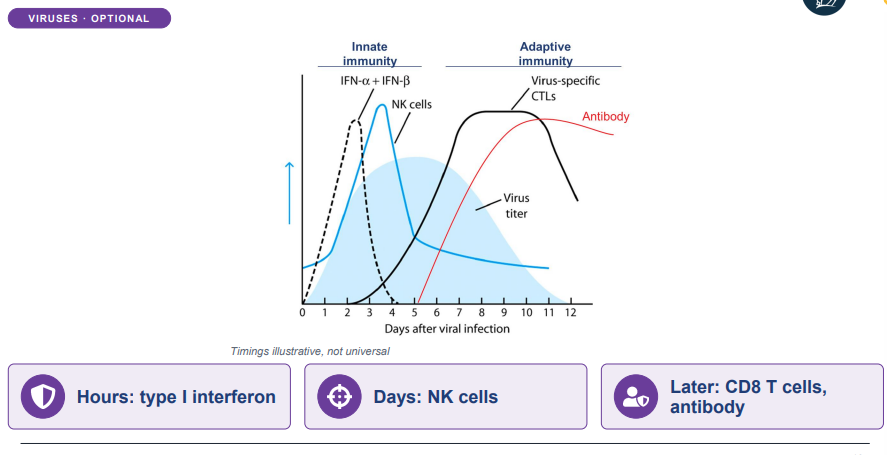
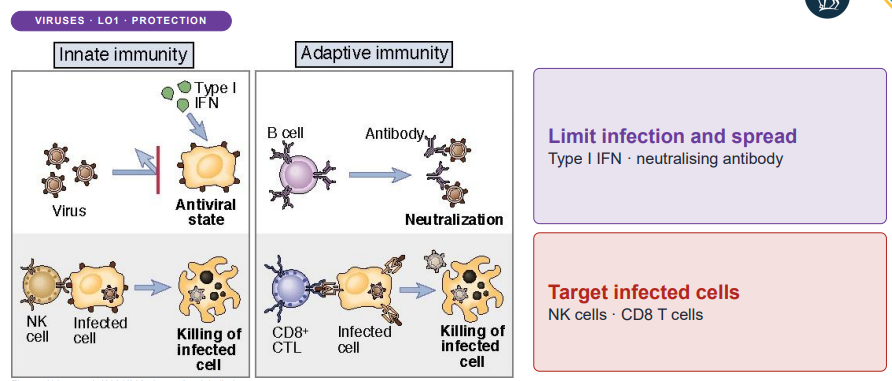
there are 4 main antiviral mechanisms
roles of antibodies and CTLs in adaptive immunity to viruses
• Antibodies neutralize viruses and prevent infection
– Block infectious virus early in course of infection (before entering cells) or after release from infected cells (prevents cell-to-cell spread)
• CTLs (Cytotoxic T lymphocytes (CTLs), often referred to as CD8+ T cells,) kill infected cells and eradicate reservoirs of established infection
– In some latent viral infections (e.g. herpesvirus), CTLs control but do not eradicate the infection;
– defective T cell immunity leads to reactivation of the virus (e.g. immunosuppression caused by leukemia
interferon (Class II) cytokine family
Type I interferons
Secreted by virus-infected cells
• Interferons α, a family of about 20 related proteins
• Interferon β
Type II interferon (aka interferon γ)
• Dimer produced by activated T/NK cells
• Potent modulator of adaptive immunity
Type III interferon family
• Appears to play an important role at epithelial barriers
• Effects are both autocrine and paracrine
Engagement of the Type I IFN receptor (IFNAR) by type I IFN triggers the activation of Interferonstimulated genes (ISGs) that mediate a range of antiviral effects

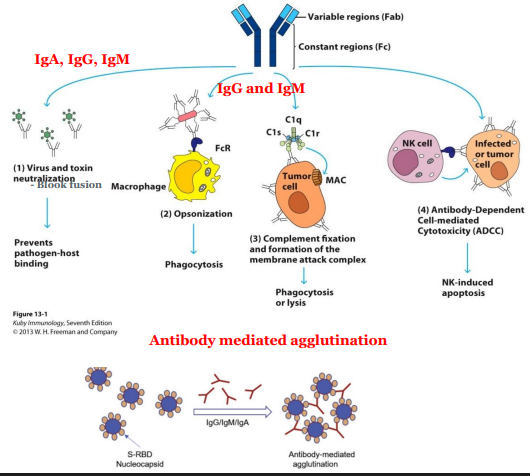
Antibody-mediated effector functions
in image tumour cell can also be virus
how viruses evade: an overview
image shows 4 diff ways highlighted

immune evasion by viruses
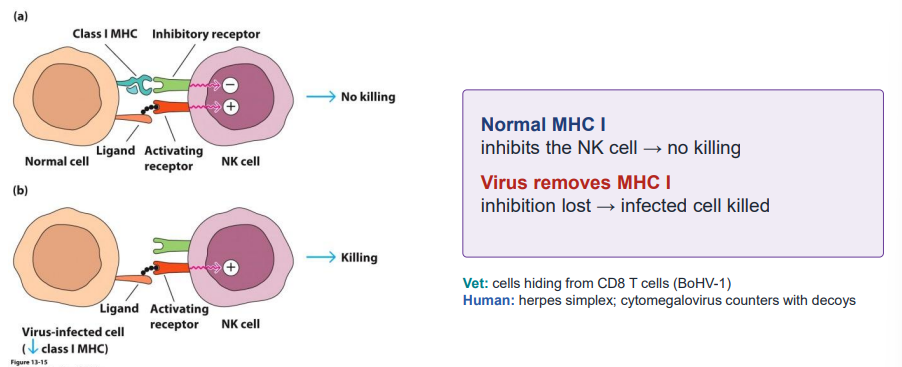
Inhibition of the class I MHC antigen processing pathway
• Different viruses use different mechanisms
• NK cells are the host adaptation for killing class I MHC-negative
infected cells
the slide pic is cut off - take it from recording
same way of discussing card above-The host fights back: NK cells and ‘missing self’
Immune evasion by viruses - jsut summary of what he said so far in lecture
• Inhibition of apoptosis : noncytopathic viruses e.g. pestiviruses
• Inhibition of Type I interferon
- Inhibition of the type I IFN response by blocking PRRS signalling pathways
- Inhibition of type I IFN induction, signalling or ISGs function
Production of immune modulators
• Large viruses (poxviruses) produce their own immunomodulators similar to soluble cytokine receptors may act as “decoys” and block actions of cytokines.
• Immunosuppressive cytokines, e.g. IL-10
Engagement of inhibitory pathways
• LCMV (mice), HIV (humans), bovine leukaemia virus: upregulation of the negative (inhibitory) costimulatory receptor PD-1 on T cells preventing its activation
Infection of immune cells:
• Destroy and dysregulate function e.g. macrophage infection by African swine fever virus

why antiviral responses cause disease
adverse effects of anti-viral immunity
Anti-viral immune responses can also have pathological effects.
• Local acute inflammation (innate response, NK cells, TH1 cells and CTLs) and tissue damage
• Systemic effects of inflammation: most serious. These are normally cytokine mediated (commonly referred to as a cytokine storm) – with type I IFN, TNF-α being responsible for much of the disease associated with highly pathogenic influenza, African and classical swine fever virus infections
• Antibody-dependent enhancement (ADE) of infection: is a process by which Fc receptor bearing cells become infected following uptake of opsonised viral particles. For example, ADE is thought to enhance PRRSV infection of porcine macrophages and Dengue virus infection of human monocytes

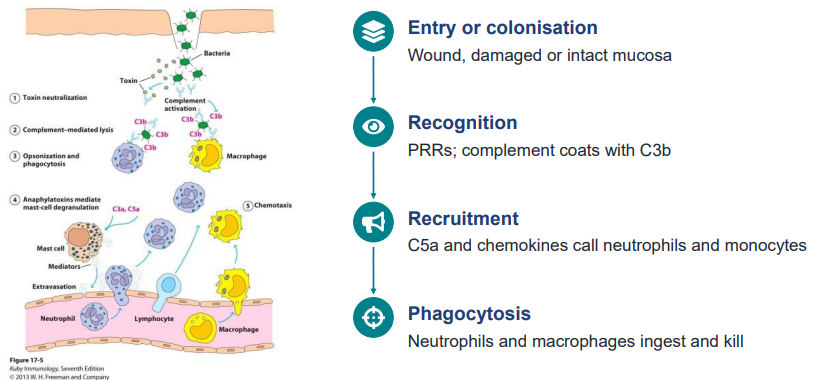
how extracellular bacteria are controlled
bacteria can directly interfere with complements (C3b)
gram positive and negative
not just killing directly but also part of recruitment (C5a)
antibody, complement and phagocytes

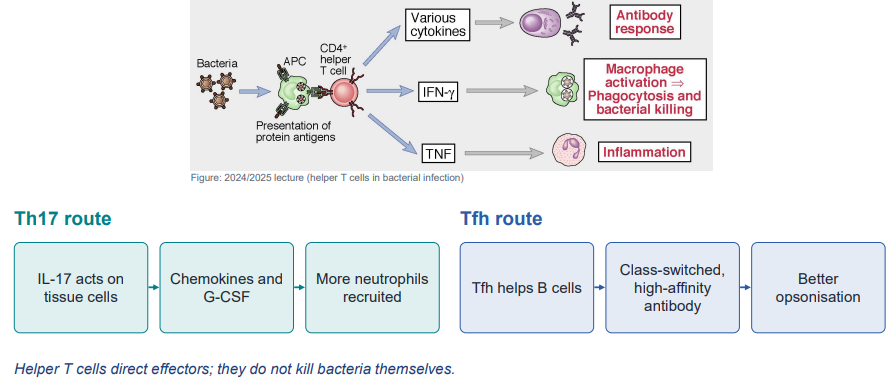
T cells strengthen bacterial killing
Controlling intracellular bacteria

bacterial infections
Bacteria may establish extracellular or intracellular infections
or both!:
Extracellular bacteria
• Antibodies provide several strong mechanisms for elimination of extracellular bacteria e.g.
• Antibodies can neutralise toxins released by bacteria
• Antibodies activate complement that can mediate lysis of bacteria through the MAC
• Both complement component C3b and Ab opsonise bacteria leading to their enhanced phagocytosis by both neutrophils and macrophages
Intracellular bacteria
• Aren’t as strongly affected by Ab (except while outside target cells)
• Require activation of CTL and the macrophages, they
often infect, for clearance

immune evasion by bacteria
Bacteria can evade host defense mechanisms at several different stages:
in pic hyalurinin - hyalurinidase - know about that -smth about digesting the tissue and then making it move across extracellular matrix idk


how bacteria evade: matched to the defence
injurious effects of anti-bacterial immunity
Local: acute inflammation (innate response, TH17 cells, antibodies), tissue
damage
Systemic effects of inflammation (fever, metabolic abnormalities): cytokine
mediated
In severe cases, septic shock
• Shock (hypotension), disseminated intravascular coagulation, metabolic abnormalities
• Caused by cytokines (mainly TNF) induced by LPS (endotoxin), enterotoxins (“superantigens”)
Rare late sequelae: immune complex diseases (e.g. post-streptococcal glomerulonephritis); cross-reactive responses against self tissues (e.g. rheumatic heart disease and streptococci)
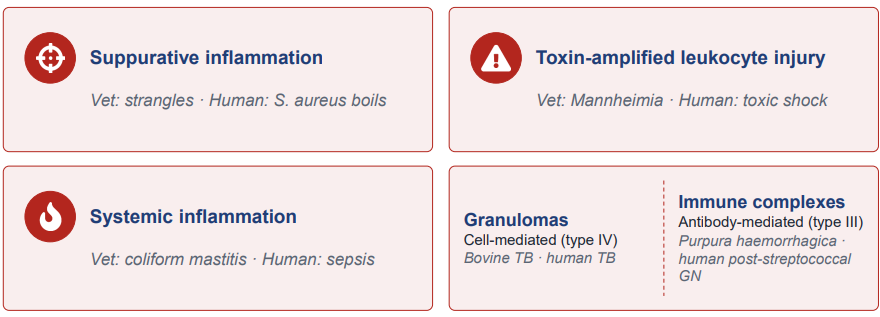
how bacterial infections cause damage
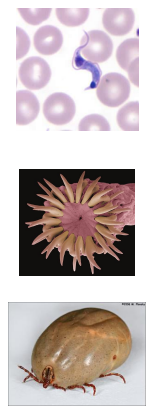
immune response to parasite infections
parasite infections/infestations
Protozoans
• Unicellular eukaryotic pathogens
• May be intracellular or extracellular in location
• May undergo different life cycle stages
Helminths
• Multicellular pathogens – significant challenge cannot be ingested
• Many parasitize the GI tract but others invade tissues
• May undergo different life cycle stages
Ectoparasites
• Multicellular blood feeding arthropods that may also serve as pathogen
vectors
• Limited exposure to the host immune system during blood feeding

adaptive immunity to parasites
Parasite Immune response Effector mechanism
Helminths TH2 cells --> IL-4, IL-5
--> IgE, eosinophils
Eosinophils kill IgE-coated
parasites (form of ADCC)
Protozoa
T cells produce IFN-γ-->
activation of phagocytes
Phagocytes kill parasites
living in endosomes
CD8+ T cells & NK cells
Secretion of cytokines
Role of antibody
e.g. TNF activate
macrophages, neutrophils
to kill parasites
Cytotoxic killing of infected cells
As for other extracellular
microbes

the role of TH2 responses in defence against helminths
Typically enter hosts through intestinal tracts
Exclusively extracellular with multiple life-cycle
stages
Don’t replicate (rather reproduce) in hosts,
limiting initial immune engagement
May decrease external Ag expression or wrap
themselves in host proteins to further limit immunity
Immunity may proceed via induction of IgE
production and recruitment of eosinophils
Induction of TH1 IFN-γ macrophage activation may
also be effective(!)

immune responses to leishmania
▪ Protozoan parasites that lives in macrophage phagosomes
▪ Transmitted by sand flies
▪ Produces one of two syndromes
1. Localized cutaneous self-resolving lesion
2. Systemic visceral leishmaniasis
▪ Resistance is mediated by an effective TH1 response and IFN-γ secretion
Individuals skewed to TH2 response are less likely to resolve leishmaniasis
infections
Protects: IFN-γ activates the infected macrophage
Not sufficient alone: High antibody titre
Damages: Immune complexes → glomerulonephritis

immune responses to ectoparasites
Immune responses are triggered during ectoparasite blood feeding (DAMPs, saliva and mouthpart components)
However, arthropod (partic. tick) saliva contains many
bioactive and immunomodulatory molecules that
cause:
1. Vasodilation
2. Anticoagulation and fibrinolysis
3. Complement inhibitors
4. Chemokine binding
5. Immunosuppressants
6. Wound healing/angiogenesis inhibitors
Consequently, immune responses to ectoparasites are often ineffective.
• However, efforts to develop anti-tick vaccines, which have naturally focused on antigens involved in blood feeding.
• And immunity to a sand fly salivary antigen enhances the host immune response to Leishmania parasites and can provide a protective effect


Trypanosomes: escaping antibody
How parasite infections cause damage

fungal infections
Innate immunity controls most fungal infections
• Commensal fungal and bacterial organisms also help “crowd out”
pathogenic fungi (competition for resources)
—This is why antibacterial medications commonly result in yeast
infections
—Commensal microbes suddenly have no competition for
resources
• PRRs on innate immunity cells keep fungal cells in check
• Induction of phagocytosis helps destroy fungal cells
Fungi have evolved evasion mechanisms
• Capsules that prevent PRRs binding
• Fungi-induced expulsion from macrophages


innate antifungal defence: aspergillus
T cells support antifungal defence


how fungi escape
How fungal infections cause damage
