HAA 10 MIDTERM
 Call Kai
 Learn
Learn Practice Test
 Spaced Repetition
 Match
Match Flashcards
 Knowt Play
1/60

There's no tags or description
Looks like no tags are added yet.
Name | Mastery | Learn | Test | Matching | Spaced | Call with Kai | Chat |
|---|
No analytics yet
Send a link to your students to track their progress
61 Terms

Title: A Walk at Dusk
Artist: Caspar David Friedrich
Date: c. 1835
Technique/material: Oil on Canvas
Significance: Morality and reflection and the cycle of life

Title: Tree Study and Two Views of the Gutzkow Dolmen
Artist: Caspar David Friedrich
Date: March 19, 1802
Technique/material: Pencil on paper
Significance: trees represented life and longevity in the Romantic world

Title: Dolmen in Snow
Artist: Caspar David Friedrich
Date: 1807
Technique/material: Oil on canvas
Significance: represents romanticism, mortality, and spiritual endurance using trees and the dolmen

Title: Arch of Constantine (view to the South)
Artist: N/A, multiple
Date: 315 CE
Technique/material: Relief in marble facade
Significance: celebrate Emperor Constantine the Great’s victory over Maxentius at Battle of Milvian Bridge

Title: Torcello, Last Judgement (West Wall)
Artist: N/A
Date: mid-12th Century
Technique/material: mosaic
Significance: defining masterpiece of High Renaissance, depicts vulnerability and truth on Judgement Day

Title: The Tragedy of Lucretia
Artist: Sandro Botticelli
Date: 1496-1504
Technique/material: tempera and oil on panel
Significance: depicts the assault of Lucretia and fall of Roman monarchy, symbolizing freedom and liberty

Title: Self-portrait
Artist: Giorgio Vasari, Florence
Date: 1571-1574
Technique/material: Oil painting
Significance: depicts himself as a “higher” artist, elevating him from his humble craftsman roots

Title: Arco di Costantino in Roma (Arch of Constantine in Rome)
Artist: Giovanni Battista Piranesi
Date: c. 1748
Technique/material: Etching
Significance: portrayed the arch as grand and dramatized the arch’s role as a symbol of Roman imperial history

Title: Colossus of Constantine (from Basilica of Maxentius, Rome)
Artist: N/A (Rome)
Date: 312 - 315 CE
Technique/material: marble sculpture
Significance: symbolized divine right to rule

Title: Bilderatlas Mnemosyne (Image Atlas of Memory)
Artist: Aby Warburg (1866-1929)
Date: 1924-1929
Technique/material: Photographs
Significance: mapped cultural memory and revolutionized art history, memory, and culture

Title: Creation of the World, in Hartman Schedel, World Chronicle
Artist: Michael Wolgemut
Date: 1493
Technique/material: Woodcut
Significance: establishes chronological, theological, and cosmological framework through which human history is interpreted

Title: Four Riders of the Apocalypse, from the Apocalypse in Pictures
Artist: Albrecht Durer
Date: 1498
Technique/material: woodcut
Significance: signify onset of end-times judgement and unfolding collapse of world order

Title: The Fall of Adam and Eve (from Small Passion)
Artist: Albrecht Durer
Date: 1510
Technique/material: Woodcut
Significance: merges classical humanism, mathematical proportion, and complex medieval moral symbolism, with each animal representing the four bodily humors ( elk/melancholic, rabbit/sensual, cat/cruel, ox/sluggish)
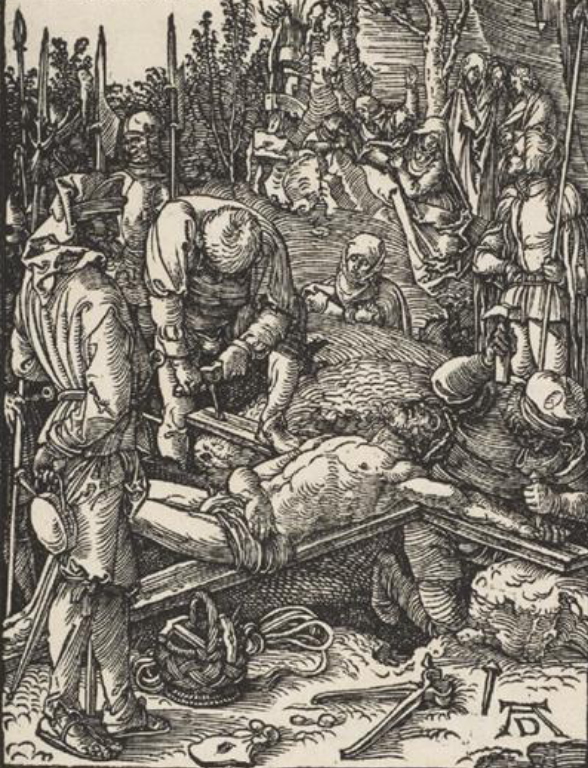
Title: Christ Nailed to the Cross (from Small Passion)
Artist: Albrecht Durer
Date: 1510
Technique/material: woodcut
Significance: emphasizes the brutal, physical reality of Christ’s suffering, human vulnerability, and redemptive sacrifice

Title: The Witch
Artist: Albrecht Durer
Date: c. 1500
Technique/material: engraving
Significance: symbolizes chaotic inversion of nature and morality and witchcraft
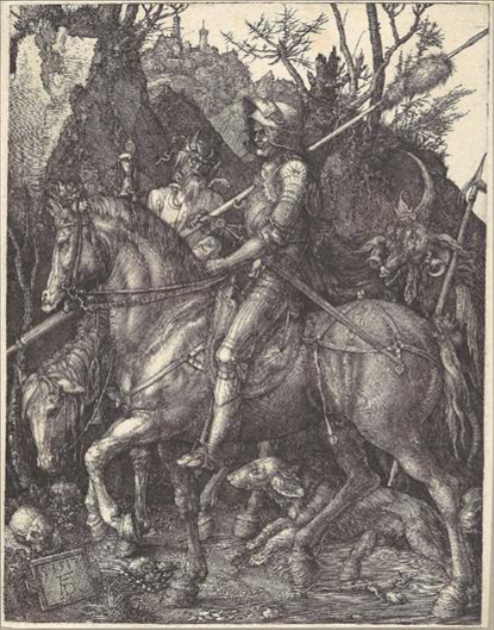
Title: Knight, Death, and the Devil
Artist: Albrecht Durer
Date: 1513
Technique/material: engraving
Significance: Symbolizes moral fortitude, Christian faith, and triumph over mortality and evil

Title: Self-portrait as 12/13-year old Boy
Artist: Albrecht Durer
Date: 1484
Technique/material: silverpoint on prepared paper
Significance: Imitated father’s self-portrait, desired to show his prodigal skills

Title: Self-portrait with Thistle
Artist: Albrecht Durer
Date: 1493
Technique/material: oil on parchment transferred to canvas
Significance: One of the earliest self-portraits, transformed the way artists viewed themselves

Title: Six Pillows
Artist: Albrecht Durer
Date: 1493
Technique/material: pen and ink on paper
Significance: Shows Durer’s skill and practice
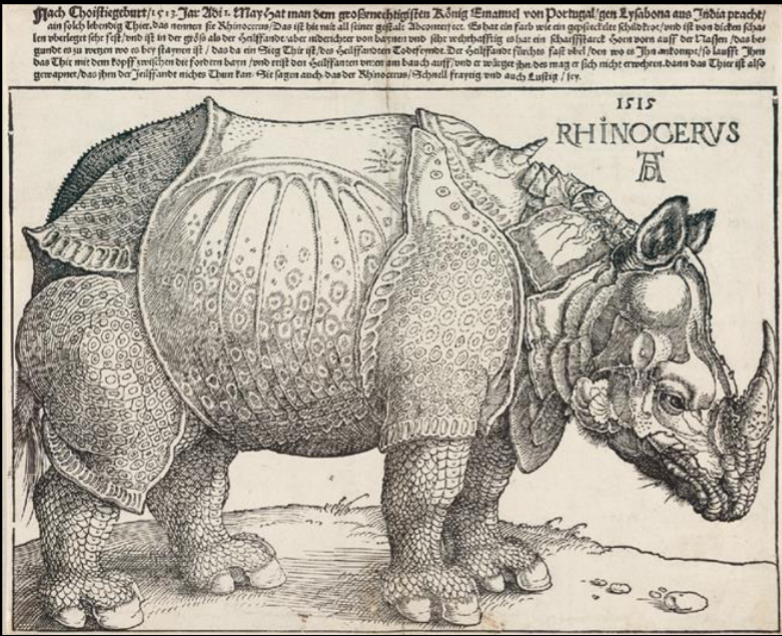
Title: The Rhinoceros
Artist: Albrecht Durer
Date: 1513
Technique/material: Woodcut
Significance: used to depict a rhino for Europeans for over 200 years despite being anatomically incorrect and never having seen a rhino

Title: Self-portrait
Artist: Albrecht Durer
Date: 1500
Technique/material: oil on panel
Significance: Depicted himself as god-like and establish himself as a high-ranking intellectual and artist

Title: Holy Face
Artist: Jan van Eyck and Shop
Date: 1430
Technique/material: oil on panel
Significance: bridged medieval Byzantine iconography with hyper-realistic, human-like style of Northern Renaissance
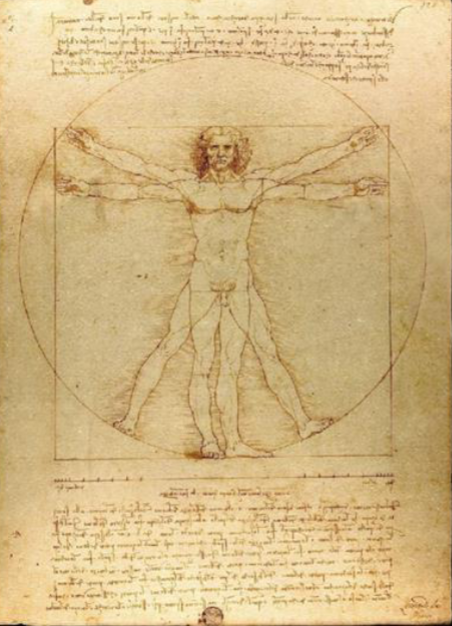
Title: Vitruvian Man
Artist: Leonardo da Vinci
Date: N/A
Technique/material: pen and ink and wash on paper
Significance: bridged art, science, and philosophy

Title: Duho, possibly from Haiti
Artist: N/A
Date: 14th - 15th century
Technique/material: wood
Significance: a ceremonial seat used for high-ranking leaders and officials, used to communicate with spirits

Title: Zemi, from the Dominican Republic
Artist: Taino Artist
Date: c. 1000
Technique/material: wood and shell
Significance: a sacred living spirit and physical object of great power in religious and social life of Taino people

Title: Cotton cemi, from Dominican Republic
Artist: N/A
Date: ca. 1441-1624
Technique/material: teeth/bone, cotton
Significance: held great spiritual power used to guide and protect the living

Title: The Cantino Planisphere
Artist: Anonymous Portuguese cartographer
Date: 1502
Technique/material: ink and pigment on six joined sheets of parchment
Significance: the earliest surviving map to show Portuguese discoveries in East and West

Title: La lettera dellisole che ha trouata nuouamente il Re dispagna, Florence: Laurentius de Morgianus and Johann Petri
Artist: Giuliano Dati
Date: October 26, 1493
Technique/material: woodcut
Significance: depicts the Age of Discovery, shaping European imagination by blending fantasy of new lands with pre-existing myths and legends

Title: South American Scene
Artist: Johann Froschauer (editor)
Date: 1505
Technique/material: hand colored woodcut
Significance: Depicts South Americans from an eye witness standpoint, dramatizing their everyday life

Title: In Allago
Artist: Hans Burgkmair
Date: 1508
Technique/material: woodcut
Significance: depicts a visual of non-Europeans and the origins of ethnography in print

Title: Burning of Idols, to accompany Diego Munoz Camargo, Description of the City and Province of Tlaxcala
Artist: unidentified indigenous artist
Date: c. 1581-84
Technique/material: ink drawing
Significance: symbolizes the violent transformation of pre-Hispanic religious life to new Christian order under Spanish colonial rule

Title: Jesus at the Age of Twelve, Michoacan, Mexico
Artist: Juan Bautista Cuiris
Date: 1590-1600
Technique/material: feathers on paper on copper with gilding
Significance: utilized indigenous medium to depict European Catholic devotional themes

Title: The Mass of Saint Gregory
Artist: Indigenous Nahua artists
Date: 1539
Technique/material: feathers on wood with touches of paint
Significance: oldest surviving feather painting from early post-conquest Mexico

Title: Janus-faced Zemi (Pigorini)
Artist: Taino artist
Date: c. 1510-1515
Technique/material: Caribbean shell beads, European glass beads, mirrors, rhinoceros horn
Significance: dualism of zemi used to represent interconnectedness of opposing states of being

Title: Cotton belt featuring a central cemi figure
Artist: N/A
Date: N/A
Technique/material: Indigenous shell beads and European jet, brass and mirror additions
Significance: used a potential personal talisman to be a status symbol or as a ritual focus

Title: South Wind (Red Fuji, from 36 Views of Mt. Fuji)
Artist: Katsushiksa Hokusai
Date: 1830-33
Technique/material: woodblock print
Significance: captures rare red fuji (symbol of good fortune, protection, and prosperity)

Title: The Mitsui Store on Suruga Street in Edo (36 Views of Mt. Fuji)
Artist: Katsushika Hokusai
Date: 1830-33
Technique/material: woodblock print
Significance: intersection of faith, consumption, and modernity in Edo

Title: Hall of the Five Hundred Arhat Temple (36 Views of Mt. Fuji)
Artist: Katsushika Hokusai
Date: 1830-33
Technique/material: woodblock print
Significance: combined religious devotion, scenic beauty, and everyday life

Title: Mishima Pass in Kai Province (36 Views of Mt. Fuji)
Artist: Katsushika Hokusai
Date: 1830-33
Technique/material: woodblock print
Significance: Fuji is not the main focus, instead it is the large cedar tree is, focusing on a human-nature relationship and cultural/spiritual endurance

Title: Kajikazawa in Kai Province (36 Views of Mr. Fuji)
Artist: Katshushika Hokusai
Date: 1830-33
Technique/material: woodblock print
Significance: Shows unity of foreground/background, combines everyday life with sublime landscape, a hallmark of Hokusai’s style

Title: Viewing Sunset over Ryogoku Bridge from the Ommaya Embankment (36 Views of Mr. Fuji)
Artist: Katsushika Hokusai
Date: 1830-33
Technique/material: woodblock print
Significance: fusion of everyday life and symbolic tradition

Title: The Great Wave [Under the Wave, off Kanagawa] (36 Views of Mt. Fuji)
Artist: Katsushika Hokusai
Date: 1830-33
Technique/material: woodblock print
Significance: depicts nature’s power and symbolizes human fragility, resilience, and eternal contract between chaos and stillness, icon of Japanese culture

Title: Sparrow Dance vol. 3 of Manga (“Misc. Pictures”, set of 15 volumes)
Artist: Katsushika Hokusai
Date: 1815 onward
Technique/material: woodblock print
Significance: combines art (ukiyo-e illustration) and cultural practice (folk tradition)

Title: Sumida River Seen from Azuma Bridge
Artist: Katsushika Hokusai
Date: ca. 1800-1805
Technique/material: woodblock print
Significance: combines landscape and documentation of Edo society, serving as a visual record of everyday life in Edo

Title: Relief fragment - Attendant with Covered Bowl
Artist: N/A
Date: 359-338 BCE
Technique/material: Limestone Relief
Significance: symbol of ritual and courtly service, depicted a linear orientation of a person using shadows
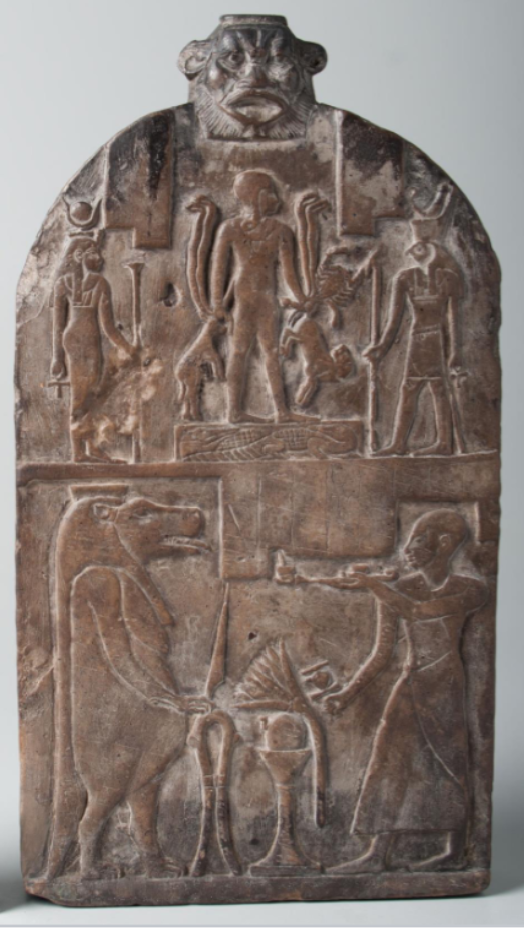
Title: Magical Stele (w/ Human and Divine Figures)
Artist: N/A
Date: 26th-31st dynasty, c. 664-332 BCE
Technique/material: Carved Limestone
Significance: used as a religious amulet and medical talisman; fusion of art, religion, and medicine

Title: Attic Grave Stele: Woman Dying in Childbirth
Artist: N/A
Date: c. 330 BCE
Technique/material: Carved Pentelic marble
Significance: captures a unique/rare depiction of childbirth (seen as ritually impure), showing how Greek revered and feared women’s reproduction

Title: Sarcophagus Sections with Men Fighting Amazons
Artist: N/A
Date: c. 230 CE
Technique/material: Carved Pentelic marble
Significance: depicts mythic battle between Greek men and Amazons, displayed elite taste and cultural sophistication, combining dramatic action, mythic recognition, and symbolic death

Title: Holy Woman
Artist: N/A
Date: c. 1120-1140
Technique/material: Pear wood with traces of polychromy and cracks filled with flax fibers
Significance: glorifies the Virgin and symbolized the union of divine and human natures

Title: Female Figure (One of Three Marys at the Tomb, Santa maria de Taull)
Artist: N/A
Date: c. 1120-1140 (c. 1125 based on HAM)
Technique/material: Wood with traces of polychrome and gesso
Significance: linked to social and artistic life of Enlightenment era, portrait of idealized beauty/symbolic representation of femininity and virtue

Title: Virgin and Child in Majesty (Seat of Wisdom, N. France)
Artist: N/A
Date: c. 1170
Technique/material: polychromed wood
Significance: Virgin is symbolized as seat and source of divine wisdom and mediator between heaven and earth, valued for linear, calligraphic drapery

Title: Eve
Artist: Sebald Beham
Date: 1519
Technique/material: Engraving
Significance: combines theological resonance and artistic achievement, depicting a moral warning against sin
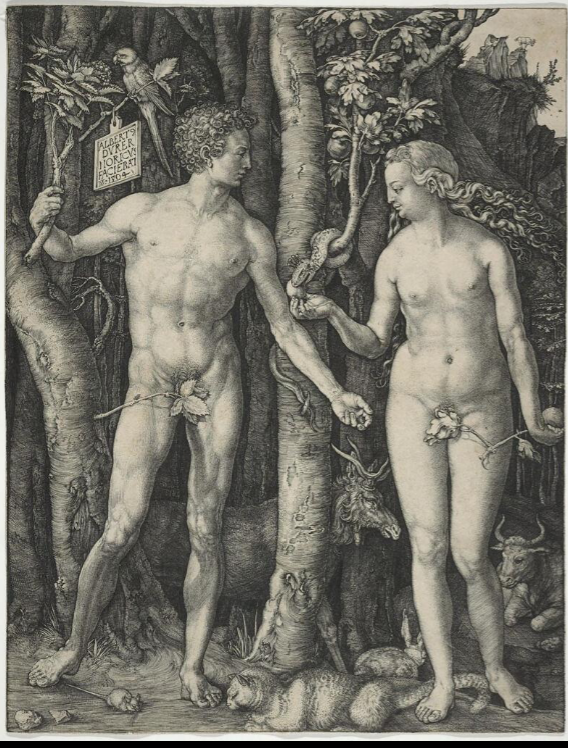
Title: Adam and Eve (The Fall of Man)
Artist: Albrecht Durer
Date: 1504
Technique/material: Engraving
Significance: artistic innovation, symbolic depth, and cultural synthesis, encapsulating Renaissance humanism

Title: Promenade (Young Couple Threatened by Death)
Artist: Albrecht Durer
Date: c. 1497
Technique/material: Engraving printed in black ink on white antique laid paper
Significance: blends secular and the spiritual, serving as a visual reminder of the moral consequences of illicit desire

Title: The Dream of the Doctor (The Temptation of the Idler)
Artist: Albrecht Durer
Date: c. 1498
Technique/material: Engraving printed in black ink on white antique laid paper
Significance: encapsulates the Northern Renaissance’s concern with ethical conduct, interplay of human desire and moral restraint, and Durer’s ability of visual storytelling

Title: Adam and Eve
Artist: Sebald Beham
Date: 16th century
Technique/material: Woodcut on off-white antique laid paper
Significance: combines traditional biblical scenes with humanist/erotic aspects, bridges tradition and early modern exploration of humans

Title: The Bewitched Groom
Artist: Hans Baldung Grien
Date: 1544
Technique/material: Woodcut
Significance: reflects Renaissance’s beliefs about witchcraft and fragility of human soul, serving as a moral warning

Title: Fighting Wild Horses in a Wood
Artist: Hans Baldung Grien
Date: 1534
Technique/material: woodcut
Significance: reflects Baldung’s personal obsession with demonic and sexual, fusion of noble and dangerous imagery and skill

Title: Codex Nuttall (a facsimile of Zouche-Nuttall Codex)
Artist: N/A, multiple
Date: 1902
Technique/material: This facsimile, traced by hand, is mounted on board, connected to form a continuous strip, folded into 44 leaves, the first and last attached to parchment covers
Significance: provides a detailed political and cultural record of pre-Columbian Mesoamerican civilization

Title:A Mexican Catchism in Testerian Heiroglyphs
Artist: N/A
Date: N/A
Technique/material: N/A
Significance: merged Christian doctrine with indigenous visual culture, used during assimilation to convert indigenous population

Title: “The Ideal Atrium”
Artist: Diego Valades
Date: 1579
Technique/material: copperplate engraving
Significance: combines theological vision and political statement, showing how missionaries imagines the Americas under Christian rule and the merge of European religion with Indigenous realities