Nigeria: Political History and Notable Figures and Groups
 Call Kai
 Learn
Learn Practice Test
 Spaced Repetition
 Match
Match Flashcards
 Knowt Play
1/10

There's no tags or description
Looks like no tags are added yet.
Name | Mastery | Learn | Test | Matching | Spaced | Call with Kai | Chat |
|---|
No analytics yet
Send a link to your students to track their progress
11 Terms
Hausa (All Facts)
Kingdoms formed by the namesake ethnic group in modern-day Nigeria
States which were loosely connected through kinship ties with no central authority
Prospered in the form of specialized city-states, such as those where cotton grew well
Igbo (All Facts)
Culture which flourished remarkably in the lower Niger in West Africa
They had no formal system of government
Despite the lack of political unity, they were spiritually united by a religious leader called the “Eze Nri”
Nevertheless, they developed a high standard of craftsmanship in the working of bronze artefacts, which were the first to be made in West Africa
Culture which featured the development tombs which showed the quality of their bronzework, the entombed body of which was that of some important person who had been buried with slaves, possibly the “Eze Nri” himself
Along the regalia and ornaments buried with the entombed are bronze leopard skulls (used as the top of a staff) and a finely decorated fly-whisk handle with a figure on horseback as well as a copper crown, vessels, armlets, and anklets
Near the entombed were sites of a store of ritual objects which further displayed the astonishing technique of the namesake metalworkers
700 - 1902 - Kanem-Bornu Empire (All Facts)
Empire based around Lake Chad that once ruled modern-day Nigeria, Niger, Cameroon, Libya, Algeria, Sudan, and Chad
Empire which was sustained by the prosperous trans-Saharan trade
It was one of the oldest and longest-lived empires in world history and the longest-lived empire in African history
In 1500, Sheikh Mafarma ben Uthman wrote “a history of Bornu” (modern-day Nigeria, Niger, and Chad)
999 - 1805 - Kingdom of Kano (All Facts)
Empire that was inhabited since its first settlers were established there as ironworkers
City which developed its sophisticated urban civilization when Hausa immigrants arrived from the east in the 1000s
City which had a population of aristocrats, merchants, weavers, scholars, smiths, and slaves with protection from the barbarians outside its city gates and walls which were completed by 1150
Some notable rulers included
Bayajida
Gijimasu
Tsaraki dan Gijimasu
1180 - 1897 - Kingdom of Benin (All Facts)
Kingdom whose bronze-casters were known for their “lost wax” technique, developed in the 1200s and introduced by tradition from the Ife
This civilization was known for its remarkably advanced bronze and ivory figures including
ivory leopards, made from five tusks, each with inlaid copper-discs as their spots
bronze heads encased in ring-collars and fantastic helmets
This kingdom is ruled by the “Oba,” who was believed locally to be the reincarnation of the founder of the dynasty that began the namesake kingdom
The “Oba” wore carved ivory, reserved for him
The shrines of his ancestors were decorated with carved tusks
The “Oba’s” grave was surrounded by human heads on stakes, belonging to wives and servants who were to accompany the “Oba” into the next world
1390 - 1410 - Kanajeji Sarki (All Facts)
King of Kano
He raised the power of Kano to new heights
He expanded its territories
It dominated most of Hausaland (northwestern Nigeria)
He
introduced iron helmets to his soldiers
introduced war horses protected by quilted body armor to the Hausa Cavalry
He recognized the tactical value of the horse and built a superb cavalry, its horses upholstered in quilts
introduced imported chain-mail from Mameluke Egypt
made an army which few could withstand and which was one of the most powerful within Africa at the time
Upon his death, the Kingdom of Kano surpassed the power of the Mali Empire, having dominated West Africa at the time

1440 - 1473 - Ewuare (All Facts)
Oba of the Kingdom of Benin
He took over the Kingdom of Benin, killing his predecessor, his own brother, and becoming Oba
There was heavy fighting, many had been killed, and he took the capital of Urbini by storm
The coup brought Benin a new ruler and new kind of government
The old constitution, with the power of the ruler limited by the ozama, or hereditary chiefs, had been abolished
He ordered all free-born citizens to be scarred with facial markings as “slaves of the oba,” in which he made a bid for absolute power
He established a new order of “town” chiefs directly responsible to him, in order to offset the power of the ozama
He rebuilt the capital and renamed it from Urbini to Edo
He expanded the army that brought him to power, leading new conquests beyond Benin’s borders
Katsina (All Facts)
Kingdom which regained its independence from the Songhai Empire in 1554
1570 - 1603 - Idris Aloma (All Facts)
Mai (King) of the Bornu Empire
He was one of the greatest generals of his time
He was also an administrator and a diplomat
He had respects paid to him by the Ottoman Empire and Morocco
He rebuilt a weak and defenseless state, impoverished by famine
His state soon surpassed the decaying Songhai Empire and became the most powerful in Africa between the Niger River and Nile River
He founded a strong army equipped with firearms
His musketeers and camel-borne troops won many campaigns due to their possession of Ottoman Turkish firearms, having conquered the
So
Tuareg
Kano
Kanem
He and his forces spread Islam wherever they went
His chronicler Ahmad ibn Fartua wrote of his rule, “Truth and righteousness came into their own and shone in Bornu”

1576 - 1610 - Amina of Zazzau (All Facts)
Queen of Hausa
She led a military campaign to increase the size of her territory
She was 16 when she began the expansion of her ancestral lands, seeking to widen south and west her “empire” to include the mouth of the Niger River
Her military strength was increased by walled camps and she was paid for her protection in eunuchs and food
She captured the northern cities of Kano and Katsina
She added east-west trade routes to those through the Sahara Desert
She took a lover in every city she captured, but had each one beheaded the next morning
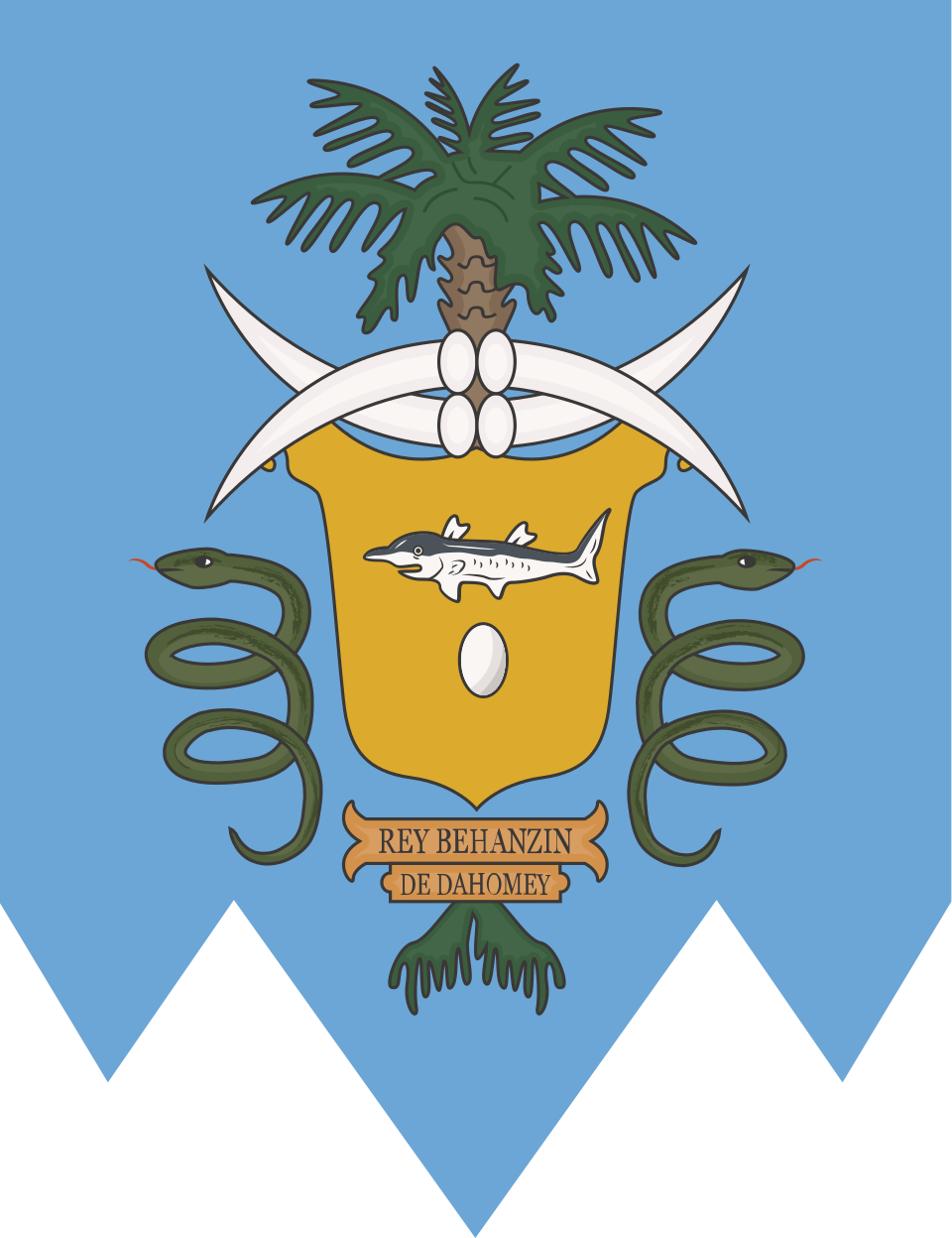
1600 / 1610 - 1904 - Kingdom of Dahomey (All Facts)