BIOLOGY TERM 1 DP1
 Call Kai
 Learn
Learn Practice Test
 Spaced Repetition
 Match
Match Flashcards
 Knowt Play
 Podcast
1/323

Earn XP
Name | Mastery | Learn | Test | Matching | Spaced | Call with Kai | Chat |
|---|
No analytics yet
Send a link to your students to track their progress
324 Terms
State where the first cells originated.
A1.1.1 - Water as medium of life.
The first cells, likely prokaryotes, originated near the ocean floor. Water provided protection from UV radiation, which was stronger at the surface in early Earth, allowing life to develop safely.
State the location of the polar covalent bond in a water molecule.
A1.1.2— Hydrogen bonds as a consequence of the polar covalent bonds within water molecules.
The polar covalent bond is between the oxygen atom and each hydrogen atom in a water molecule.

Explain the sharing of electrons in a water molecule
A1.1.2— Hydrogen bonds as a consequence of the polar covalent bonds within water molecules.
In water, oxygen has 6 valence electrons and hydrogen has 1. Oxygen shares one electron with each hydrogen, forming two covalent bonds.

Explain the partial charges due to polar covalent bonds.
A1.1.2— Hydrogen bonds as a consequence of the polar covalent bonds within water molecules.
Electrons are shared unequally because atoms have different electronegativities. Oxygen is more electronegative, so it has a partial negative charge (δ−); hydrogen atoms have partial positive charges (δ+).

Outline the consequences of the collective strength of hydrogen bonds between water molecules.
A1.1.2— Hydrogen bonds as a consequence of the polar covalent bonds within water molecules.
• The partial charges of water can attract other polar or charged compounds.
• Water molecules can associate via weak hydrogen bonds.
• Hydrogen bonds are transitory: they constantly form, break, and be formed again
Draw and label 4 water molecules in a tetrahedral arrangement
A1.1.2— Hydrogen bonds as a consequence of the polar covalent bonds within water molecules.

Define cohesion.
A1.1.3— Cohesion of water molecules due to hydrogen bonding and consequences for organisms.
Attraction between like molecules (water molecules sticking to each other) via hydrogen bonding.
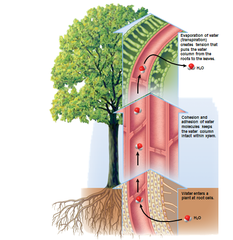
Describe how water moves through the xylem of a vascular plant.
A1.1.3— Cohesion of water molecules due to hydrogen bonding and consequences for organisms.
Water evaporates from leaves in transpiration aided by cohesive tension pulling up the water in a chain-like manner, creating a negative pressure that pulls a cohesive column of water up xylem vessels.
Outline the cause of surface tension.
A1.1.3— Cohesion of water molecules due to hydrogen bonding and consequences for organisms.
Surface tension is caused by cohesive forces between water molecules at the surface. The surface layer experiences an inward force (→←) creating a "skin-like" layer that resists external force.

State a benefit to living things that results from surface tension.
A1.1.3— Cohesion of water molecules due to hydrogen bonding and consequences for organisms.
Surface tension allows small organisms, like water striders, to propel themselves without sinking and move across the water's surface.

Define adhesion.
A1.1.4— Adhesion of water to materials that are polar or charged and impacts for organisms.
Attraction between water molecules and other polar or charged surfaces.
Explain how the properties of water allows it to move through xylem vessels.
A1.1.4— Adhesion of water to materials that are polar or charged and impacts for organisms.
Adhesion is waters ability to stick to other polar molecules such as the xylem cell wall, this movement opposes gravity, traveling at an upward force with minimal energy input. Cohesion allows water to move in a chain-like manner, pulling up other water molecules along. Together, these properties enable capillary action in plants.

Describe how transpiration generates pressure to move water through the xylem.
A1.1.4— Adhesion of water to materials that are polar or charged and impacts for organisms.
Water evaporates from the leaves, creating a negative pressure (tension) that pulls a cohesive column of water upward through the xylem from roots to leaves.
Outline the consequences when a plant is unable to perform transpiration.
A1.1.4— Adhesion of water to materials that are polar or charged and impacts for organisms.
If a plant is unable to perform transpiration, water becomes stuck in the xylem. As a result, the leaves overheat because they cannot cool via evaporation. The high temperature causes enzymes to exceed their optimal range, leading to denaturation and a loss of enzymatic function.
Explain why water is described as a universal solvent.
A1.1.5— Solvent properties of water
Water is considered to be the universal solvent due to its polarity, making it an ideal medium for dissolving substances.
Describe the role of interstitial fluid as a transport medium.
A1.1.5— Solvent properties of water
Interstitial fluids deliver nutrients and O₂ to cells and remove waste products
Explain how blood plasma functions as a transport medium in animals.
A1.1.5— Solvent properties of water
Blood plasma transports nutrients, waste products, hormones, and other substances throughout the body
State an example where hydrophobic insolubility is functional.
A1.1.5— Solvent properties of water
The phospholipid bilayer of cell membranes: the hydrophobic fatty acid tails face inward, forming a nonpolar interior that prevents free passage of ions and polar molecules. The hydrophilic phosphate heads face outward toward the aqueous environment, interacting with water.

Define physical property.
A1.1.6 — Physical properties & aquatic life
An observable/measurable characteristic of a substance.
List physical properties of water consequential for aquatic animals
Buoyancy, viscosity, specific heat capacity, thermal conductivity, surface tension.
Outline the cause and effect of buoyancy in water.
Water is dense, and when an object is placed in it, the surrounding water exerts an upward force on the object. If the upward force balances the object's weight, the object can float or stay suspended. Aquatic organisms benefit because the water supports their bodies, so they use less energy to remain lifted.

Distinguish between buoyancy in water and buoyancy in air.
In water: buoyancy is strong because water is dense. The upward force can easily balance or exceed an organism's weight, allowing fish and other aquatic animals to stay suspended with little effort.
In air: buoyancy is weak because air is much less dense. The upward force is too small to counteract most organisms' weight, so animals like birds must actively generate lift (by wings) to stay aloft.
Explain how fish adjust their buoyancy and movement in water.
The swim bladder is a gas-filled organ that fish inflate or deflate to change their density relative to water. When the swim bladder is inflated, the fish becomes less dense and rises, while deflating it makes the fish denser and causes it to sink. By adjusting the amount of gas, fish can maintain their position at different levels of the water column without continuous swimming, conserving energy.
Define viscosity.
Viscosity is the resistance of a fluid to flow. It is caused by internal friction when one part of the fluid moves relative to another, often influenced by the type of bonding within the fluid or the solutes dissolved in it.

Explain why blood is more viscous than water.
Blood is more viscous than water because it contains suspended cells and dissolved solutes such as proteins and electrolytes, which increase internal friction and resistance to flow.
Define thermal conductivity.
A measure of a materials' ability to transfer heat across a temperature gradient.
Less conductive: heat moves slowly, better at insulating.
More conductive: heat moves rapidly better at dispersing heat.

Outline a consequence of thermal conductivity differences between air and water.
Water's higher conductivity means aquatic animals must thermoregulate differently (more heat loss to water than to air).
Define specific heat capacity.
The quantity of heat required to raise the temperature of a chemical per unit mass

Describe why water has a high specific heat capacity.
Each hydrogen bond is weak but since there are so many of them, a large amount of energy is required to break those bonds.

State two benefits of water's high specific heat capacity for life.
1. Stable aquatic temperatures protect organisms
2. Helps maintain internal body temperatures (thermal buffering).
Describe how the Gavia arctica (Black-throated loon) benefits from the physical properties of water.
Buoyancy: The loon floats with little effort but can reduce buoyancy to dive for fish.
Viscosity: Water's viscosity allows its webbed feet to generate strong thrust when swimming.
Thermal conductivity: Dense, oiled feathers insulate the loon from rapid heat loss.
Specific heat capacity: Stable lake temperatures provide consistent conditions for feeding and breeding.

Describe how the Pusa hispida (Ringed seal) benefits from the physical properties of water.
Buoyancy: The seal is supported by water, making surfacing and resting easier.
Viscosity: Its streamlined body and flippers move efficiently through viscous water.
Thermal conductivity: A thick blubber layer protects it from cold water heat loss.
Specific heat capacity: Stable sea temperatures reduce environmental stress in the Arctic.

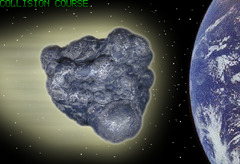
Explain the asteroid hypothesis for Earth's water origin.
A1.1.7— Extraplanetary origin of water on Earth and reasons for its retention. (AHL)
Scientists believed that water on Earth originated from asteroids carrying ice that collided with the planet.
State two reasons water was retained on early Earth.
A1.1.7— Extraplanetary origin of water on Earth and reasons for its retention. (AHL)
1. Earth's gravity is sufficient to hold water vapor
2. Maintains stable temperatures that prevent water from extreme evaporation

Why is the presence of water considered fundamental in the search for extraterrestrial life?
A1.1.8— Relationship between the search for extraterrestrial life and the presence of water. (AHL)
Because water is essential for known life processes, so its presence increases the likelihood that a planet could support life.
Define the "Goldilocks zone" in relation to extraterrestrial life.
A1.1.8— Relationship between the search for extraterrestrial life and the presence of water. (AHL)
The orbital distance around a star where temperatures are suitable for liquid water to persist on a planet's surface.

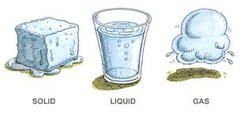
Explain why the Goldilocks zone is significant for water's three phases.
A1.1.8— Relationship between the search for extraterrestrial life and the presence of water. (AHL)
Within this zone, water can exist as solid, liquid, and gas. Too much heat causes water to evaporate, while too little causes it to freeze.
State the two primary functions of nucleic acids
Pass information between cell generations (DNA replication)
Code for protein production
State the two types of nucleic acids used in cells
DNA - passes hereditary information through cell generations + makes RNA (transcription)
RNA - makes proteins during translation. mRNA, tRNA, rRNA main types of RNA involved in protein synthesis
Why is DNA considered as the genetic material of all living organisms
All organisms use DNA as their genetic material.
DNA in organisms show evolutionarily relationships --> evidence for universal common ancestry
State why RNA viruses do not falsify the claim that all living things use DNA as the genetic material
Some viruses do not use DNA as genetic material, use RNA, but not considered living organism as not made of cells
List the three components of a nucleotide.
1. Nitrogenous base (purine + pyrimidine)
2. 5 carbon pentose sugar (ribose or deoxyribose)
3. Phosphate group (- charge)
The basic structure of a single nucleotide

Define "backbone" as related to nucleic acid structure
Nucleic acids (DNA + RNA) have backbone of sugar-phosphate.
Two ends: 5' ends w/phosphate
3' ends w/pentose
Phosphate + sugar share electrons covalently --> strong bond, thus nucleotides maintained in sequence, which is essential for DNA replication, storing, and expression
Explain how nucleotides connect to form a nucleic acid polymer
Phosphate in one nucleotide connects to third carbon atom of sugar in another nucleotide
State the names of the nitrogenous bases found in DNA and RNA
Nitrogenous bases found in nucleic acids:
DNA = Adenine, Cytosine, Guanine, Thymine
RNA = Adenine, Cytosine, Guanine, Uracil
State a similarity and a difference between the nitrogenous bases
Similarity: All contain nitrogen atoms
Difference: different structures (amount of rings)
Outline how the sequence of bases in a nucleic acid serves as a 'code'
DNA + RNA nucleotides arranged in specific order with each serving as a genetic code for storing information
Define gene
Arrangement of nitrogenous bases in DNA nucleotides that codes for protein
Describe the condensation reaction that forms a polymer of RNA from RNA nucleotides
RNA's backbone formed through condensation reaction
In reaction, monomer nucleotides combine and form RNA polymer chain
--> 5' phosphate group on one nucleotide forms covalent bond with 3' carbon on ribose of another nucleotide
Identify the monomer and polymer of an RNA molecule
Monomer = nucleotides
Polymer = combined monomers
Describe the structure of a DNA double helix
Two sugar-phosphate backbones connected by hydrogen bonds
Outline the complementary base pairing rule, including the type and number of bonds between bases
Adenine pairs w/Thymine (two hydrogen bonds)
Guanine pairs w/Cytosine (three hydrogen bonds)
Define antiparallel in relation to DNA structure
Strands run in opposite directions
--> at each of double helix, one 5' strand and one 3' strand
Compare and contrast the structures of DNA and RNA
Both have sugar-phosphate backbones
However, DNA = double helix (two strands), RNA = one strand
Compare and contrast the functions of DNA and RNA
Both very important for organisms
DNA passes hereditary information between cell generations + makes RNA during transcription
RNA codes for making proteins during translation
Compare and contrast the location of DNA and RNA in prokaryotic and eukaryotic cells
Eukaryotic cells: both located in different areas
--> DNA in nucleus, RNA transported to cytoplasm for translation after being made in nucleus
Prokaryotic cells: both located in separate locations as well
--> DNA in nucleoid, RNA in cytoplasm
Outline the role of complementary base pairing in maintaining the DNA sequence during DNA replication
DNA replication = semi-conservative --> each strand serves as template for new strand
DNA has polymerase III (enzyme), reads template and adds complementary DNA nucleotides to make strand w/same sequence of template
--> two identical DNA molecules
Outline the role of complementary base pairing in transmitting the genetic code in transcription and translation
Transcription:
RNA polymerase builds RNA strand by reading DNA template
→ adds complementary RNA nucleotides
Translation:
Amino acids brought to ribosome by tRNA--> pairs w/mRNA temporally through complementary base pairing
Outline why there is a limitless diversity of DNA base sequences
Nitrogenous bases in nucleotides able to be in any order in strand of any length --> limitless capacity
Define universal in relation to the genetic code
With only few adjustments, all living organisms use same genetic code --> common ancestry
Outline why conservation of the genetic code across all forms of life is evidence of common ancestry
Minor variations, every organism uses same genetic code --> explains common ancestry as this genetic code was carried by the universal common ancestry of life --> passed over time to descendants
Outline the impact of DNA directionality on DNA replication
DNA replication is 5' to 3'
--> 5' phosphate end added to 3' deoxyribose end of growing DNA strand
Nucleotides only able to be added to growing end of 3' polymer
Outline the impact of DNA directionality on transcription
RNA polymerase only able to add nucleotides to 3' end of growing polymer
5' phosphate end added to 3' ribose end of growing RNA strand
--> Transcription 5' to 3' as well
Compare and contrast the structures of purines and pyrimidines
Nitrogenous bases have difference structures
Purines = double ringed
Pyrimidines = singular ringed
State that in DNA, a purine forms hydrogen bonds with a pyrimidine
Purine A forms with pyrimidine T (2 hydrogen bonds)
Purine G forms with pyrimidine C (3 hydrogen bonds)
State two consequences of purine-to-pyrimidine bonding on the structure of DNA
1. Since connected by hydrogen bonds, double helix very stable
2. Width dimensions of pairs identical
--> sugar-phosphate backbone consistent diameter throughout molecule
Describe the structure of eukaryotic DNA and associated histone proteins during interphase (chromatin)
DNA in eukaryotic cells packaged/coiled into nucleosomes, which is one length of DNA wrapped around 8 histones
Outline the mechanism of histone-DNA association
DNA is negatively charged, electromagnetically attracted to positive histones
State the experimental question being tested in the Hershey and Chase experiment
Is DNA or protein the genetic material of organisms?
Outline the procedure of the Hershey and Chase experiment
Hershey and Chase used radioactive isotopes to tag atoms of bacteriophage virus
DNA contains phosphorus, not sulfur
Protein contains sulfur, not phosphorus
→ marked bacteriophage with radioactive isotopes of those elements
→ placed separate, detectable tags on DNA and protein parts of virus
Explain how the results of the Hershey and Chase experiment supported the notion of nucleic acids as the genetic material
After second round where they tested to see if DNA had been used to infect bacteria cells, showed that it was present
Next round further proof as next generation of virus contained radioactive DNA --> molecule passed down generations, thus DNA MUST BE genetic material
Outline the use of radioisotopes as research tools
Ex. In Hershey experiment, radioisotopes of atoms used to track movement of DNA + protein between cell generations to determine which was genetic material
Describe implications of Chargaff's data that showed a 1:1 ratio of purine to pyrimidine in a sample of DNA
Adenine (purine) percentage equal to Thymine (pyrimidine)
Guanine (purine) percentage equal to Cytosine (pyrimidine)
Carbon atoms can form four covalent bonds with other atoms which can be...
Two single covalent bonds or one double covalent bond.
Covalent bonds between atoms are formed by...
The negatively charged shared electrons being attracted to the positively charged nuclei of both atoms, forcing two adjacent atoms to share a pair of electrons.
The consequence of covalent bonds is the creation of...
Stable molecules based on carbon, which can have complex structures.
Define common functional groups
Specific arrangements of atoms within a molecule that result in particular chemical properties.
Some common examples of functional groups include...
Hydroxyl (-OH) and carboxyl (C=O) groups
The four major classes of carbon compounds used by living organisms are...
Carbohydrates, lipids, proteins, and nucleic acids.
An example of a branched chain molecule is...
Fatty acids with branched chains of up to 20 carbon atoms.
An example of an unbranched chain molecule is...
Methane, a single carbon atom with four single covalent bonds to hydrogen.

An example of a single ring molecule is...
Thymine, with a single ring composed of carbon and nitrogen atoms.

An example of multiple ring molecule is...
Adenine, with two rings both with carbon and nitrogens and sharing of electrons in the ring

Monomers are...
Small, individual subunits that serve as the building blocks for larger molecules. In the context of macromolecules, they are the basic units that can be linked together to form polymers.
Polymers are...
Large molecules composed of repeating units (monomers) that are covalently bonded together. They have a high relative molecular mass, typically exceeding 10,000 atomic mass units.
Condensation reactions are...
Chemical processes in which two molecules are linked together while simultaneously releasing a smaller molecule, often water.
Condensation reactions are responsible for...
Connecting monomers to form polymers in macromolecules.
Condensation reactions involve...
The removal of a hydroxyl group (—OH) from one molecule and a hydrogen from another, allowing a covalent bond to form between the two molecules.
Condensation reactions is supplied by...
Adenosine triphosphate (ATP), a molecule that stores and transfers energy within cells.
ATP provides...
The necessary energy for the synthesis of macromolecules like polysaccharides, polypeptides, and nucleic acids.
Polysaccharides are formed through condensation reactions in which monosaccharides (like glucose) are linked together by...
Glycosidic bonds. In the case of unbranched chains, these glycosidic bonds are typically 1->4 linkages. For branched polysaccharides, a 1->6 linkage forms side-branches.
Polypeptides are created by condensation reactions that connect...
Amino acids through peptide bonds, releasing water in the process.
Nucleic acids, like DNA and RNA, are constructed through...
Condensation reactions that link nucleotides together, with the removal of water, to form a polymer.
Hydrolysis reactions involve...
The breakdown of larger molecules into their constituent monomers through the addition of water molecules. These reactions are essential for the digestion and deconstruction of polymers into their smaller components.
The digestion of polysaccharides, polypeptides, and nucleic acids is...
A process that occurs in cells, as well as in the gut of animals and in the environment.
During digestion, hydrolysis reactions...
Break down these complex molecules into their simpler forms, such as monosaccharides, amino acids, and nucleotides, which can be absorbed and used by organisms.
Monosaccharides have...
Between three and seven carbon atoms.
Pentoses have...
Five carbons.
Hexoses have...
Six carbons.