ARTH EAA
 Call Kai
 Learn
 Practice Test
 Spaced Repetition
 Match
 Flashcards
 Knowt Play
1/43

There's no tags or description
Looks like no tags are added yet.
44 Terms

Polo Player, Tang dynasty, 618–907. Painted unglazed earthenware; woman in sports

Petroglyphs, Bangudae, Ulsan City, South Korea, c. 6000-1500 BCE; animal life on both sea and land; differing in profiles (front/profile, top view)

Comb-pattern Jeulmun vessel, excavated from Amsa-dong, Kangdong-gu, Seoul, c. 4000-3000 BCE, Neolithic Period. Terra-cotta with incised decoration; coil-made, cone-shape suggests that it was held up/stabilized by being placed into a shallow dirt hole in the floor before being used to contain anything; porous/cannot hold liquids effectively, most likely used to store food
Register: a horizontal section of a work, usually a clearly defined band or line
Chevron: pattern in the shape of a V or upside-down V

Flame vessels, from Sasayama, Niigata prefecture, Japan, Middle Jomon period, c. 2500 BCE, Neolithic Period. Terra-cotta; rise in temperature during the Middle Jomon period —> increase in food supply —> increase in population —> more time for expressing artistically
Wide/flared mouths, surface decorations, horizontal registers with vertical lines that divide portions of lower registers into panels, wavy lines/curlicues that are reminiscent of ocean waves; suggestive animal designs but not actually representative of animals
Cockscomb or flame-like embellishments are distinctive to the Middle Jomon period
Soot and residue inside most vessels suggest purpose of cooking food

Guan (jar), Neolithic period, Machang phase of the Maijayao culture, c.2350-2050 BCE. Terracotta with pigments (painting for ornamentation: black for outlines/emphasis; reddish hue for fill); zoomorphic, abstract & represational; slip to create a pleasant background
Amphora: an ancient pottery vessel with a narrow neck, large oval body, and two handles, used for storage or bulk transportation of foodstuffs

Head from Niuheliang, Liaoning provinc, Hongshan culture, China c. 4000-3000 BCE, Neolithic Period. Earthenware and jade; excavated from a complex that included graves, sacrificial pits, and temple ruins → head may have had a ritual function; naturalism
Found with many pregnant human figurines —> head depicts a goddess of fertility
Goes against the typical patriarchal societies of the time; could suggest that Hongshan culture could’ve been a matriarchal society
Hongshan culture is known for its painted pottery and jade objects of animal forms

Bi (disk), Neolithic period, Liangzhu culture, China, c. 3200-2000 BCE. Jade/nephrite; associated with Tian, the celestial aspect of the cosmos/heaven by the Zhou culture; Jades were major status symbols because they accompanied elite burials; covered those who passed with jade pieces to honor them

Cong (tube), Neolithic period, Liangzhu culture, China, c. 3500–2000 BCE. Jade/nephrite; usually accompanied elite burials; associated with the earth by the Zhou culture
Can have incised detailed linear, abstracted animal mask images/motifs

Drawing of a Liangzhu gravesite (Burial M3), Sidum, Wujin county, Changzhou, Jiangsu, late Liangzhu culture, c. 2320 BCE.
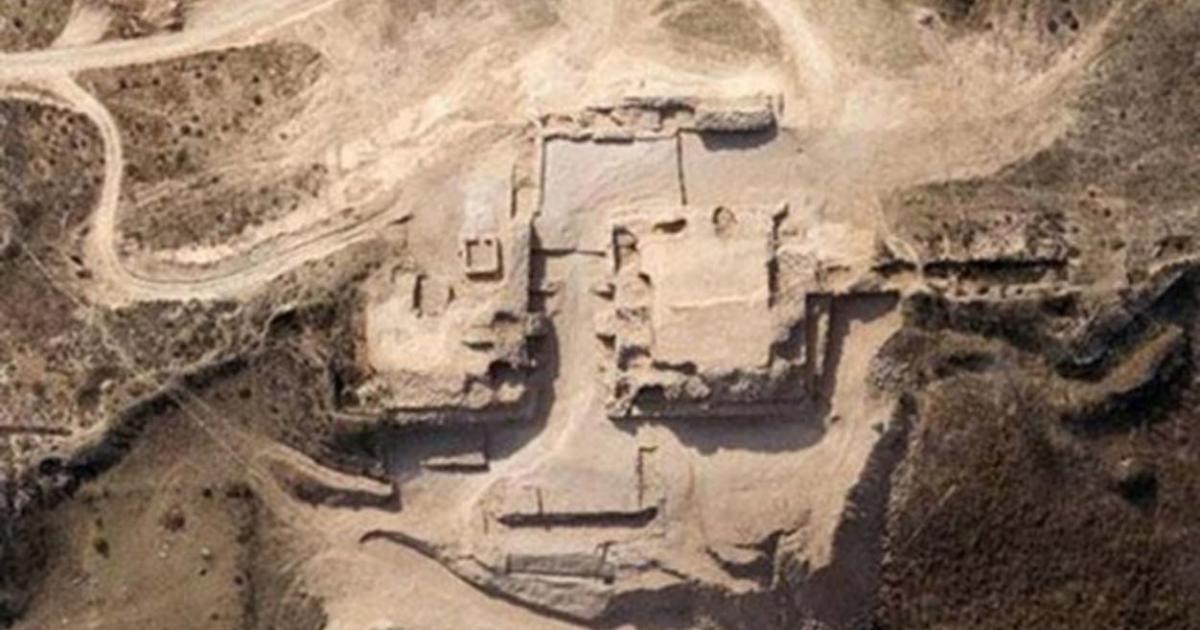
Eastern gate of the Shimao site, Shaanxi province, China, c. 2000 BCE. Contains largest known Neolithic city in East Asia (nearly 1000 acres); walled districts with numerous burials, house foundations, two kilns, a multi-stepped terrace, platforms/guardhouses/gates made of stone-lined and rammed earth; robust fortifications indicate a history of warfare

Plan of the eastern gate of the Shimao site, Shaanxi province, China, c. 2000 BCE.

Dogū, Final Jōmon period, c. 1000–400 BCE, Neolithic Period. Terra-cotta; symmetrical composition, vertical alignment, swirling surface patterns (tattoos or clothing embellishments) gives sense of movement in clothing but static form
Purposefully broken, possibly as part of a ritual/ceremonial activity as an offering; wishing for a successful childbirth process for a mother
Hollow body could suggest it being a “residence for a soul”
To protect something, break something → “break a leg” as a good luck symbol
Female figure (possibly a fertility/motherhood figurine due to the wide hips and breasts), exaggerated goggle eyes

Cavalryman and horse, from Pit 2, tomb complex of the First Emperor of Qin, China, Qin dynasty, c. 210 BCE.

Figure of an elephant, Fu Hao’s tomb, Anyang, Henan, China, Shang dynasty, c. 1200 BCE or slightly earlier. Jade/nephrite; some body parts are simplified, some are more detailed like mouth and trunk; pattern of hooked spirals; pendant

Yue (ceremonial ax), from the tomb of Fu Hao, Anyang, Henan, China, Shang dynasty, c. 1200 BCE. Bronze; suggests that there was a lot of ritual killing (most likely human and animal sacrifice); human head detail that is nearly engulfed by the profiles of two creatures (tigers?)
Symmetrical, square spirals and curlicules
Patina: a layer of colored applied to, or occurring along with related physical changes naturally over time upon, an object
Inscription with Fu Hao’s name illustrating her ownerhsip

Oracle bone, Shang dynasty, c. 1300–1050 BCE. Fragment of tortoise plastron; bottom part of the turtle, or the shoulder blades of ox; only a king could offer part of an ox during offerings; writing was bound to divination, ritual, and power

Fang ding with taotie (composite animal mask) design, from the tomb of Fu Hao, Anyang, Henan, China, Shang dynasty, c. 1200 BCE or slightly earlier. Bronze; Sometimes in sets or pairs
Cooking vessel for most likely grain, meat, vegetables
Sees the profile of a creature with a gaping mouth; dragons arranged bilaterally – emphasis on bilateral symmetry
Flanges; thing that is sticking out and aligning with the nose of the vessel/symmetry line
Bosses/round knob-like projections

Fang ding with human face, from Ningxiang, Hunan, China, c. 1200– c. 1050 BCE. Bronze; C-shaped ears, horns; Symmetrical, sculpting is much more pronounced; corner flanges; Horns and eyes on the legs, flanges also on the legs; creating another animal mask on the legs; Culture may have adopted ritual food offerings of the Shang; anthropomorphic rare in Shang culture

Standing figure from Pit 2, Sanxingdui, China, c.1300-c. 1100 BCE. Bronze; found in sacrificial pit with animal bones; dumping ground for ritual/sacrificial items; stylized human figure; elephant tusks found in the sacrificial pit (harvested specifically for ivory and ritual purposes); legs are like elephant trunks/tusks; eyes, horns; zoomorphic styles again; robe has a lot of linear designs/patterns (embroidery); headdress/crown; enlarged hands show that emphasis was on hands being used for ritual purposes/superpowers; hands are also rounded and circular, almost as if he was supposed to be holding an elephant tusk or something else for ritual purposes
Angry/intense almost facial expression characterized by the slanted eyes, eyebrows, and very linear and limited detailed mouth; likely a person of authority; indicates a different set of religious beliefs and practices than the Shang
Skinny, long silhouette draws attentiont o face

Liaoning-type (Gojoseon) Dagger (Mumun period, c. 100-c.400 BCE, Korea)
Dragon is master of all situations, thus containing all qualities of a capable ruler; lute-shaped profile known as Liaoning/Gojoseon
Saw-toothed patterns, triangles, and lozenges/diamond shapes; uses bivalves instead of piece-mould bronze casting
Socially prestigious object
Low relief ornate sculpture for designs

Xing Hou Gui (vessel) (dedicated to the Duke of Zhou, early to middle Western Zhou dynasty, c. 1050-771 BCE)
Bonze; gui is a food-serving vessel
Square spirals, hooks, eyes in high relief, handles have dragon-like zoomorphic legs, four zoomorphic handles that divide it into quadrants, looks like an elephant, cicadas on handles in triangle shape (associated with rebirth/renewal)
Inscription with information about its contexst and function
Lost-wax method of creating metal sculpture; clay mold surrounds wax model, then fired, wax will melt away and molten metal can be poured in to fill the space
Filigree: lace-like design typically on gold or silver, ornate tracery
Inlays: decoration into the surface of a base material

Hu with pictorial decoration (Eastern Zhou period, mid-sixth to mid-fifth centuries BCE)
Hu: wine vessel; can tell by narrower mouth and neck, ring handles
Divided into registers; bronze with metal inlay (precious metals, gold, silver leaf); then burnished
Pictorial representation of human activities (women on top registers, men on lower registers); emphasis on clarity rather than naturalism

Rack of Bells (tomb of the Marquis Yi of Zeng; Suxian, Hubei, China)
Bronze and lacquered wood
64 bells + 1 gift bell; arranged on three different levels; each bell can produce two tones, mallets and wooden poles needed to play certain bells; bells decorated with snake-like forms and bosses
Piece-mold casting for some of the bronze, some lost-wax casting as well; stencil usage for the surface to create beautiful, intricate designs repeated across bell structure
Important Confucious ideal of court/sacred music

Conquest and the Terra-cotta Army of the First Emperor of Qin (tomb complex of the First Emperor of Qin, Pit 2, c. 210 BCE)
Terracotta, life-sized; main complex not opened yet due to trying to preserve suspected objects in tomb + not received approval from Chinese gov
Simplified but naturalistic style, attention to details of dress, posture and expression represent ideal soldiers ready to defend
Modular manufacturing to maintain efficiency and variation in creation; assembly line

Funerary banner of the Lady of Dai (From Mawangdui Tomb 1, Changsha, Hunan province, China; Early second century BCE; ink and color on silk)
Buried with charcoal and white clay so that her body did not decompose; lacquer vessels for ritual and everyday use, fully stocked pantry, silk textiles, wooden figurines of servants, four nesting coffins with the funerary banner on the top of the innermost coffin
T-shaped painting separated into registers representing vising and invisible world/realms (heaven, earthly world, watery hell); depicts journey of the soul to the afterlife; includes ideas from both Confucianism and Daoism as well as other cosmological/religious ideas
Crescent moon and nine red suns; toad and crow; symmetry; animals in pair, shown in profile; vertical composition; first attempt at trying to portray 3D space through overlapping of three lady attendants; mythological creatures (dragons)

Tomb of Liu Sheng (d. 113 BCE; Mancheng, Hebei province, China, Western Han dynasty)
antique bi at the crown of head, several jade plugs to seal bodily orifices
Jade burial suit only permitted for nobles; to achieve immortality
3000+ pieces of jade plaques sewn together with gold thread; believed that jade could preserve body in afterlife —> immortality; people believed that ground and ingested jade could lead to immortality
Lacquer coffins inlaid with jade; other burial items were bronzes, pottery, lacquer, jade, weapons, armor, coins, textile, objects for medicinal purposes, chariots, sacrificial horses

Incense burner in the form of the Island of the Immortals (From Tomb 1, Mancheng, Hebei, Western Han Dynasty, c. 113 BCE)
Bronze inlaid with gold; inlaid gold technique used was introduced by nomads
Suggested belief of an island populated by Daoist immortals
Stylized waves on bowl-shaped base; foot of writing auspicious dragons (water and rain); and imaginary mountain as the top; some animals and human figures
Thought to perhaps bridge gap between mundane world and island of immortals; when incense is burned, the smoke resembles chi/breath force coming out of imaginary mountains

Scene of the Raising of the Cauldron (Wu Family Shrines, Jiaxiang county, Shandong province, China, Eastern Han dynasty, c. 147-151 CE; from the later Han period)
Ink rubbing of a stone relief
Depiction of the story of the mythical Nine Cauldrons (auspicious number 9); failed attempt of First Emperor of Qin to recover the cauldron, thus he didn’t have the Mandate of Heaven; dragon acts as an instrument of heaven and cuts the rope so emperor cannot possess bronze cauldron
Cauldrons represented the realm and bestowed political legitimacy
No attempts at illusionism or really portraying space

Painted lacquer basket and lid (From Tomb 116, Lelang (Nangnang, North Korea), Eastern Han dynasty, first century CE)
Basketry and lacquer; from tomb of minor official
Seated two or three in a group; communicating with one another; fgures rendered with overall liveliness and naturalism and are inserted into narrative contests
Reflects Confucian value of filial piety

TLV-pattern mirror (Excavated from a Lelang tomb; Han dynasty; bronze)
Patten named after similar Roman letters I, L, V (although other similar mirrors, I looks more like T, so TLV mirrors)
Mirrors considered magical objects that protect against harm, ensure well-being throughout life; TLV pattern originates in a board game called liubo, in which the prize for winning was immortality (important Daoist idea)
Part of the middle can be used to thread string/ribbon to wear mirror on the body
Cosmological reference: circle is heaven, square is earth, line engravings have animals representing the four cardinal directions (red bird, turtle and snake, green dragon, white tiger)

Jar Artwork (Japan, Yayoi period, c. 100-300)
Earthenware with incised decoration; Yayoi pottery with smooth surface, balanced shape; stacking coils for body, pottery wheel for foot and mouth; incised decoration has short, parallel striations
Red hue from clay, dark gray areas caused by ash in kiln
Purposes vary from everyday use to ceremonial rituals/burials; this jar seems to be for food storage due to small size and stout shape
Burnishing for smooth surface

Dotaku (bronze bell) (Reportedly from a site in Kagawa prefecture, Japan, Yayoi period, second to first century BCE)
Bell-like objects; certain areas marked off for design, cross-hatching background everywhere else; match-stick figures in square areas with scenes (salamander and dragon fly, figure dancing/leaping with ax, hunting animals, figures preparing food/pounding rice, storehouse raised on stilts
Served ritual purposes; indicate status as only elites could hold them
Some are plain, some are designed with low relief patterns (saw-tooth pattern, spirals on upper loop and side flanges)

Sword blades, halberd, spearhead, tubular beads, magatama bead, and mirror (From Yoshitake Takagi, Fukuoka prefecture, Japan, Yayoi period, second century BCE)
Bronze and steatite
Magatama (E- or C-shaped beads) Beads important for trade; objects were probably found in elite tombs
Bronze swords and mirror were symbolic; style of blades and mirror suggest contact between Korean peninsula and Japanese archipelago
Three objects for regalia: sword, mirror, and jade bead

Sword blades, halberd, spearhead, tubular beads, magatama bead, and mirror (From Yoshitake Takagi, Fukuoka prefecture, Japan, Yayoi period, second century BCE)
Key-hole shaped tomb – shape may be related to beliefs about mythical Queen Mother of the West (a Daoist deity); tombs are also very large
Three concentric moats demarcate the boundary between the world of the living and world of the dead
Kofun: ancient tomb; sometimes containing gold and gilt-bronze crowns, jade ornaments, bronze mirrors, iron weapons, equestrian trappings, high-fired gray stoneware (sueki - “offering ware”)
Marked on the outside with haniwa
Haniwa: hollow terracotta figures, architectural forms, and cylinders; mostly cylindrical in form; initially had adornments that were only shields, parasols, and houses, later developed human forms and animals

Haniwa warrior (lizuka-cho, ota City, Gumma prefecture, Japan, Kofun period, 6th century CE)
Earthenware; clay slabs, coils, incisions to add patterns on armor, cuts to form warrior’s eyes
Shapes of Haniwas (both warrior, horse, and others) suggest that haniwa had symbolic functions in the afterlife
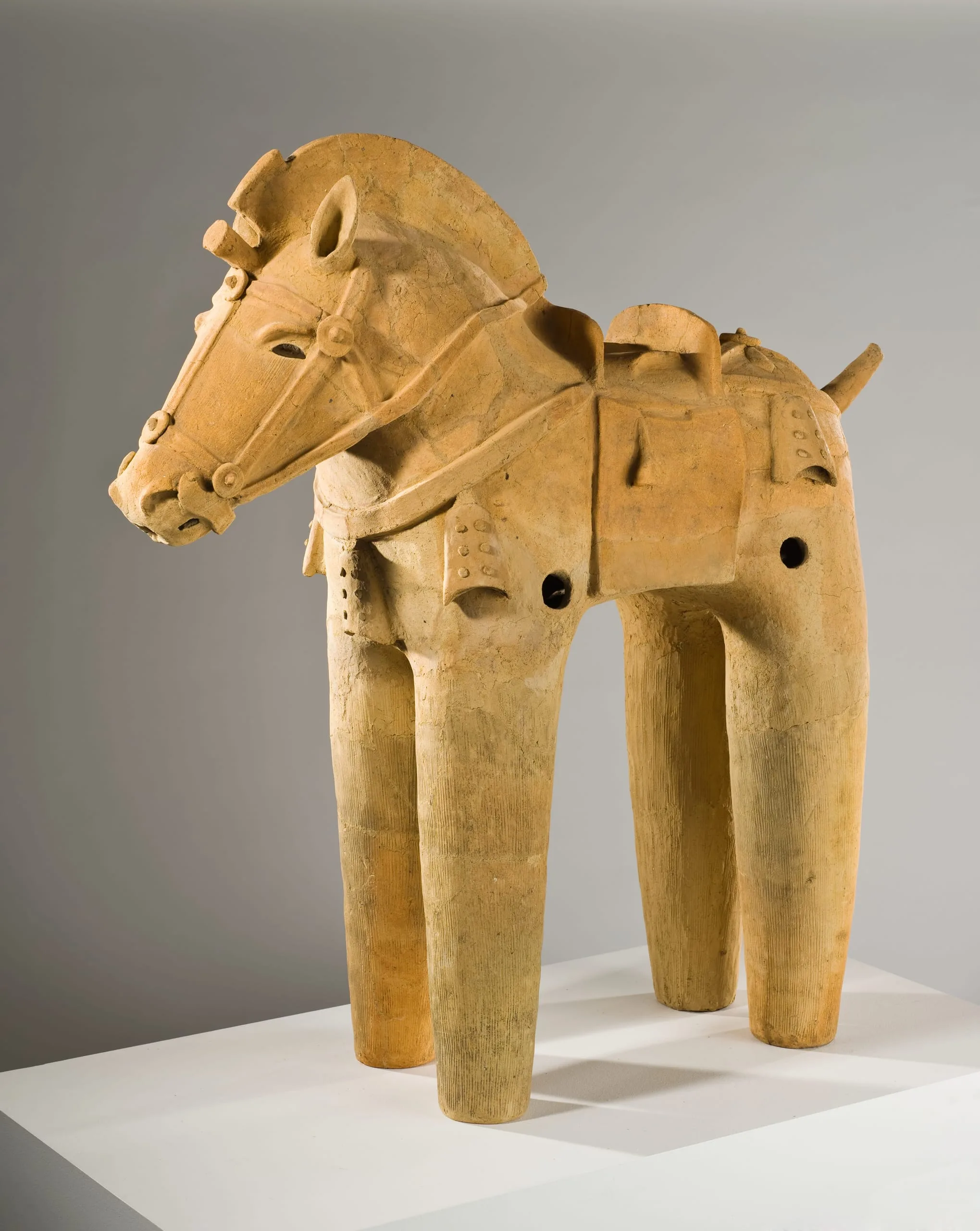
Haniwa Horse (Kofun period, Japan, 6th century)
Earthenware; clay slabs, coils
Simplified form yet still distinctively lively
Shapes of Haniwas (both warrior, horse, and others) suggest that haniwa had symbolic functions in the afterlife

Mirror with design of four buildings (Samita Takarasuka Tomb, Kawaicho, Kita-Katsuragi County, Nara prefecture, Japan, early Kofun period, 4th century CE)
Bronze
Demonstrates status; features four different buildings radiating from central knob; central knob can be threaded with ribbon
Mirrors are associated with female power (Daoist Queen Mother of the West; Shinto sun goddess Amaterasu), and seem to aid in legitimizing women rules of the first centralized state in the Japanese archipelago

Mural Painting of Hunting Scene (Mural on the west wall of the main chamber, Muyongchong Tomb, Tonggou, near present-day Ji’an, China, Three Kingdoms period, Goguryeo Kingdom, 5th century CE)
In hilly terrain, hunters mounted on horseback use bows and arrows to capture wild prey (tiger, buck doe)
Parthian-shot: a tactical skill in which a hunter turns backwards for hunting while their horse is in full gallop
Corbeled vault, lantern ceiling, genre painting

Incense Burner (Neungsan, Buyeo prefecture, Chungcheon Province, Three Kingdoms period, Baekje kingdom, sixth century CE)
A dragon (auspicious) supports the lotus flower base
Gilt bronze, excavated from the site of a Buddhist temple patronized by the Baekje royal family
May have been used in ceremonies (Buddhist rituals, court rituals, ancestral veneration)
The lid is shaped like a mountain topped by a phoenix; dragon-phoenix pairing suggest masculine/feminine principles that bring all matter into being
Five mountain ranges, five musicians, five waterfowl (five resonates the the Daoist idea of the five elements – wood, fire, earth, metal, water)

Silla Royal Tombs and Crown (Silla kingdom, excavated from the north mound of the Great Tomb at Hwangnam (Hwangnamdaechong), Korea, c. 450-500 CE)
Gold and jade; most likely belonging to an aristocratic woman
Beat gold into thin layer and then attach many adornments (round coins/petals that dangle from the base of the crown) and shape into projections that resemble tree branches; curved jades
Nomadic people were very good with metalwork and often carried small metalwork pieces and chieftains would wear gold crowns
Projections associated with shamanism; Koreans still practice shamanism
Similar designs between the nomadic cultures in India’s Tillya Tepe crown and Korea’s Silla crown
Orchid Pavilion Preface (Tang dynasty copy attributed to Feng Chengsu after a lost original by Wang Xishi)
Handscroll; ink on paper; art of calligraphy can be traced back to Eastern Jin official Wang Xizhi
Both standard script and semi-cursive (cursive, standard, draft cursive, clerical, small seal, great seal); in Chinese calligraphy, writing is believed to convey an individual’s moral character; brushstrokes for characters in calligraphy must occur in a strict order
Connection between writing style and moral fiber led to the recognition of writing as art
The Six Canons of Painting in Chinese Painting Theory
Animation through spirit consonance; translated by the phrase sympathetic responsiveness of the vital spirit (capturing the spirit of the subject (relates to chi & daoism), not necessarily its physical likeness)
Structural method in the use of the brush (skeleton or composition created by the brush)
Fidelity to the object in portraying forms (has to have some sort of naturalism elements to represent the subject)
Conformity to kind in applying colors
Proper planning in the placing of elements (creating 3-dimensional space within a two-dimensional plane)
Transmission of experience of the past in making copies (copying the artwork to learn and eventually develop personal style; Confucianism values of respecting your teacher’s teachings)

Admonitions of the Instructress to Court Ladies ( Tang dynasty copy of a fourth- or fifth-century handscroll painting by Gu Kaizhi)
Ink and color on silk
Context of Confucian virtues – bravery and courage; reflecting on one’s inner character
Negative space
2 characteristics of East Asian painting are present: handscroll formatting (read right to left) and integration of words and images (alternating sequences of texts and scenes)
Scene 4: mirror multiply points of view and invite readers to reflect on the variety of ways of seeing the painting
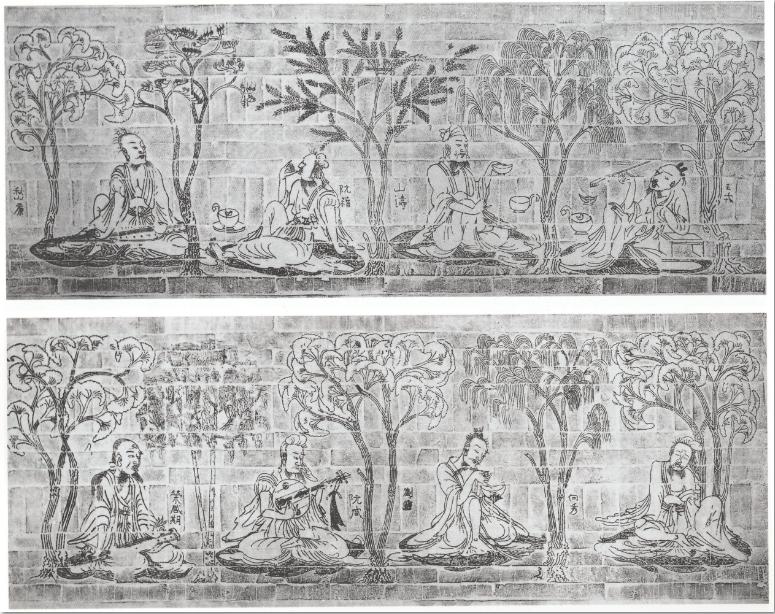
Seven Sages of the Bamboo Grove and Rong Qiqi (Rubbing of tomb tile relief, Nanjing, Jiangsu province, China, Eastern Jin dynasty c. 5th century)
Ink on paper
Characters are identified by name and are separated by trees (trees function as compositional dividers)
The Seven Sages refused to serve the government during a time of unrest before the Eastern Jin, living simpler lives in pursuit of the Daoist Way
Isometric perspective rendering allows for 3D images