Topic 1: Cells
 Call Kai
 Learn
Learn Practice Test
 Spaced Repetition
 Match
Match Flashcards
 Knowt Play
1/79

There's no tags or description
Looks like no tags are added yet.
Name | Mastery | Learn | Test | Matching | Spaced | Call with Kai | Chat |
|---|
No analytics yet
Send a link to your students to track their progress
80 Terms
Describe the difference between magnification and resolution
Magnification refers to the enlargement of an image, its how big an object looks under the microscope
Resolution is how clear and detailed the image is and is the ability to distinguish between two points. (so a higher resolution gives a sharper image)
Describe the advantages and disadvantages of using a light microscope
Advantages:
Cheap and easy to use
Can see living things
Disadvantages:
Low magnification and resolution
Describe the advantages and disadvantages of using an electron microscope
Advantages:
Can see tiny details
Higher magnification and resolution
Disadvantages:
Expensive
Can’t look at living things
What are the differences in magnification and resolution between electron and light microscopes
Light Microscope:
Magnification = up to about 1,500 times
Resolution = about 200 nanometers
Electron Microscope:
Magnification = up to about 2,000,000 times
Resolution = Around 0.2 nanometers
Why can Electron microscopes magnify much more + show much finer details than Light microscopes?
They use a beam of electrons instead of light
Eye Piece Function
Magnifies the image
Objective Lens
captures and reflects the light reflected from an object
Nose Piece
Holds the objective lenses and attaches them to the microscope head
Stage
Where the slides are placed for observation
Stage Clips
holds the slides in place
Rough Focus Wheel
to move the objective lenses towards or away from the slides
Fine Focus Wheel
to sharpen the focus quality of the image after using the rough focus wheel
Iris Diaphragm
Allows you to adjust the amount of light passing through
Light
Projects light onto the slide to see what is on it
Name a piece of apparatus that you can use to help measure a specimen
eyepeice graticule
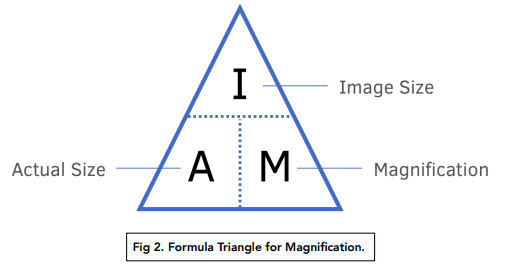
Magnification Formula
magnification = size of image/size of real object.
Why was iodine solution added to the layer of the onion cells
To stain the cells
Why was a thin layer of onion cells used
To allow light to pass through the cells
Nucleus
Contains genetic material (DNA)
Cytoplasm
Where chemical reactions happen
Mitrochondria
Respiration releases energy here
Cell Membrane
It controlls what goes in and out
Ribosomes
They make proteins
Chloroplast
Absorb light for photosynthesis
Vacuole
filled with sap, keeps the cell turgid
Cell wall
made of cellulose, contains its shape
Slime Capsule
Provides protection
Flagella
it allows movement
Plasmid
small circular peice of DNA with the info for things such as ambiotic resistance
genetic material
loop of DNA that has the information to control the bacterium’s activities. (NOT ENCLOSED IN A NUCLEUS)
What are the 3 things only in plant cells
Vacuole
Chloroplast
Cell Wall
Prokaryotes and Eukaryotes
Prokaryotes:
Bacterial cells
single celled
Eukaryotes:
Animal and Plant
In you
Multicellular
Three differences between prokaryotes and eukaryotes
E = has mitrochondria
P = does not
E = has nucleus
P = does not
E = does not
P = has slime capsule
Relative size of bacterial cells (prokaryotic) and animal + plant cells (eukaryotic)
Prokaryotic =
0.2-2.0 micrometers (um)
Eukaryotic =
10-100 micrometers (um)
The difference in how the genetic material is found within eukaryotic and prokaryotic cells
Eukaryotic -
Their genetic material (DNA) is enclosed inside a nucleus
The genetic material (DNA) is arranged in linear chromosomes
They also have other genetic material (DNA) in organelles like mitochondria and chloroplasts
Prokaryotic -
Their genetic material (DNA) is not in a nucleus, its found in a region called the nucleoid
The genetic material (DNA) is usually in a single circular chromosome
They can also have small, extra pieces of genetic material (DNA) called plasmids
Specialised Cells in plants + animals
Plants:
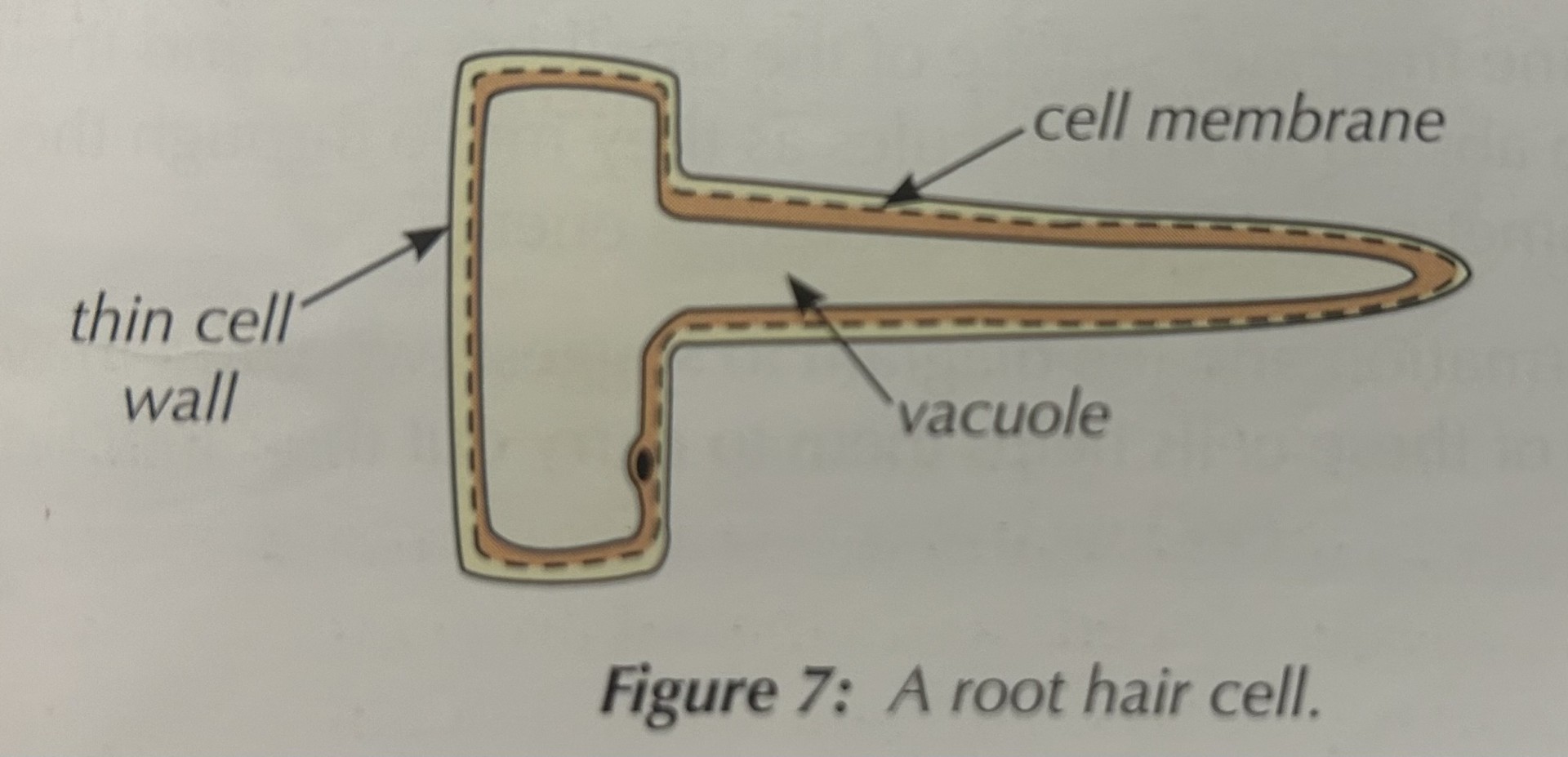
Root Hair Cell
Xylem cell
Pholem cell
Animals:
Sperm Cell
Nerve Cell
Muscle Cell
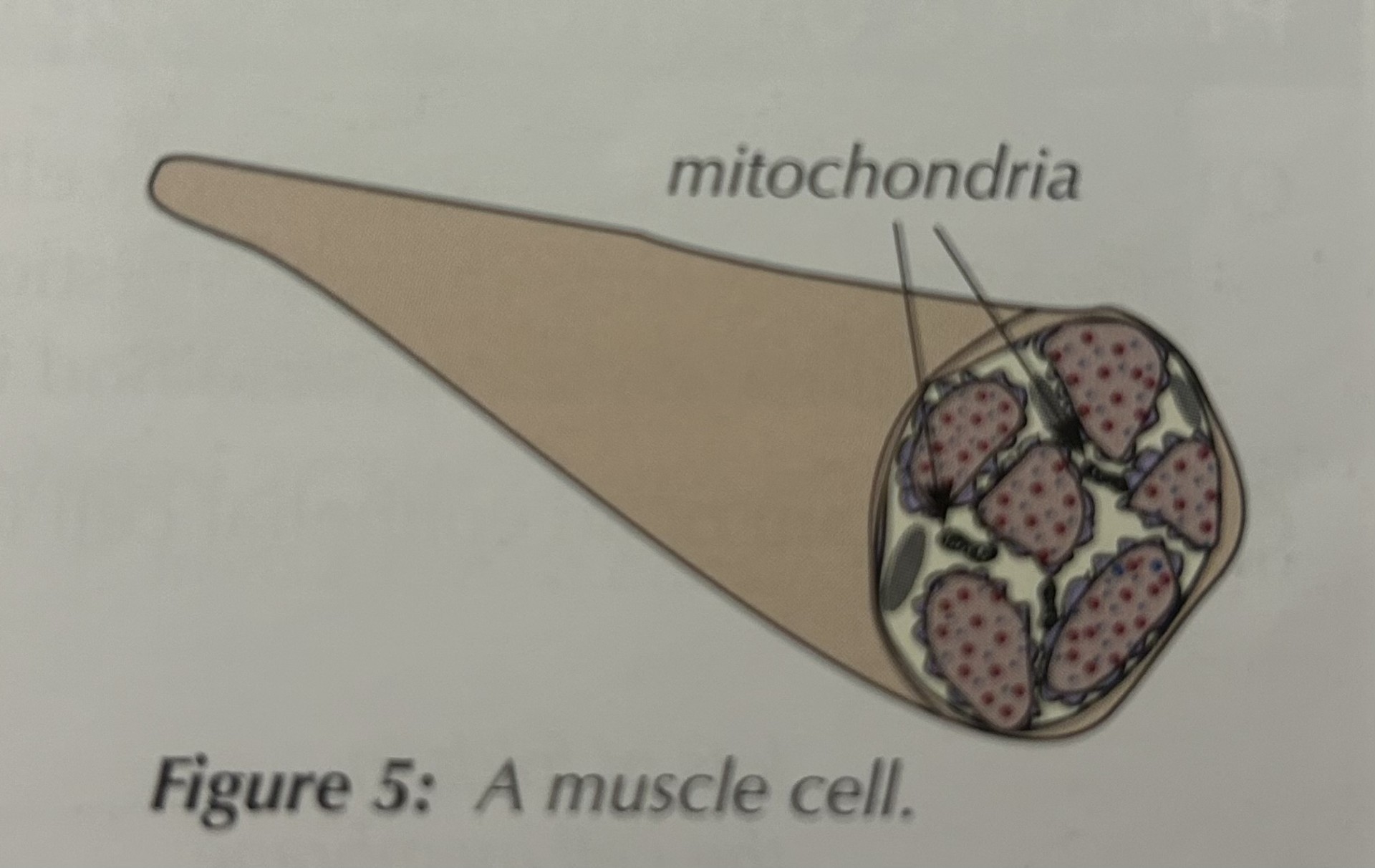
How a muscle cell is specialised (in Animals)
Structure:
Long + elastic, to contract and relax
Many mitochondria, to release energy for movement
Function:
Contracts to produce movements in organs + the body
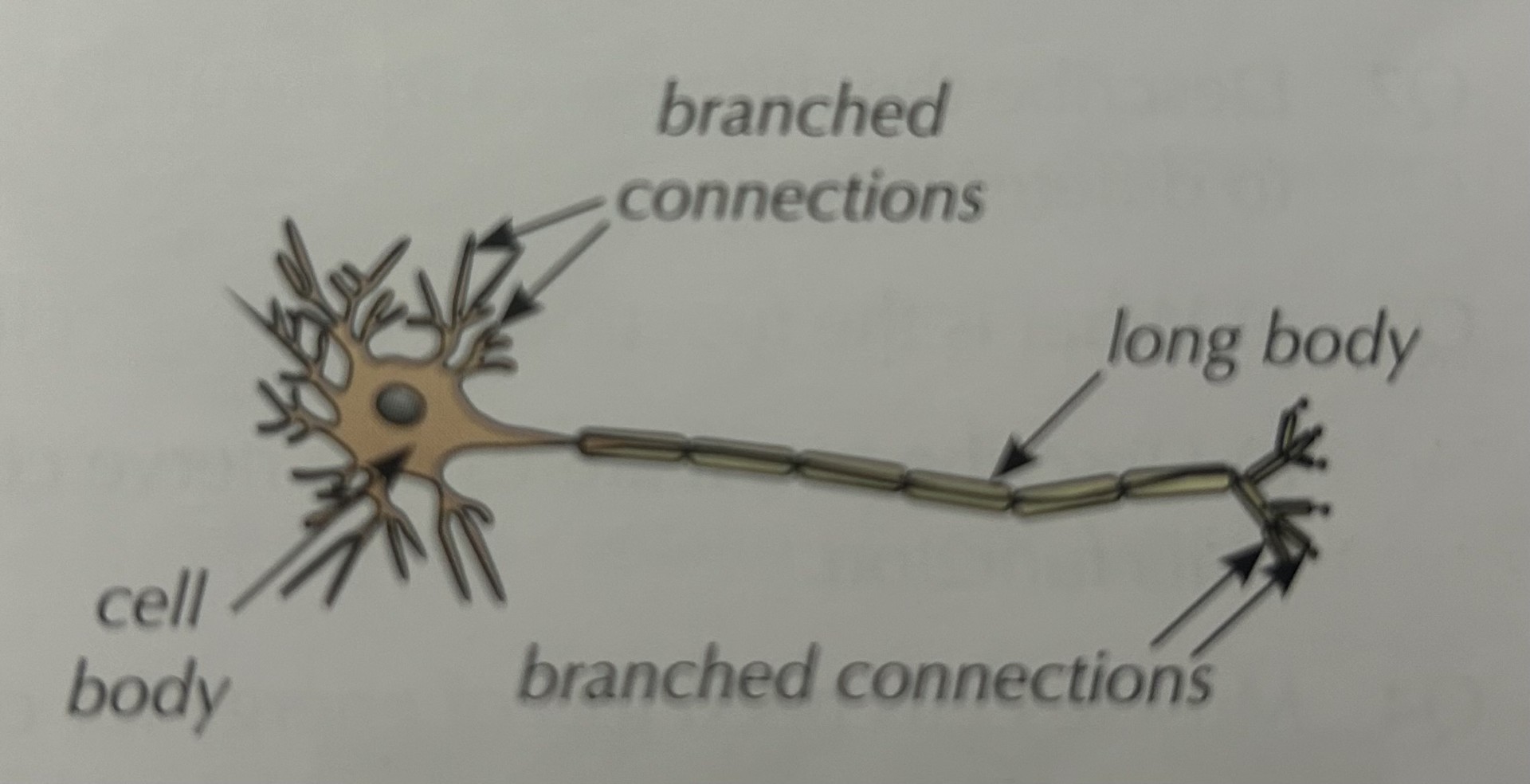
How a nerve cell is specialised (in Animals)
Structure:
They are extremely long cells
They have many branches at both ends to connect to other nerve cells
They long axes (main branch) is covered in fat to prevent the electrical impulses affecting the surrounding parts of your body (insulation)
Function:
To carry nerve impulses around your body
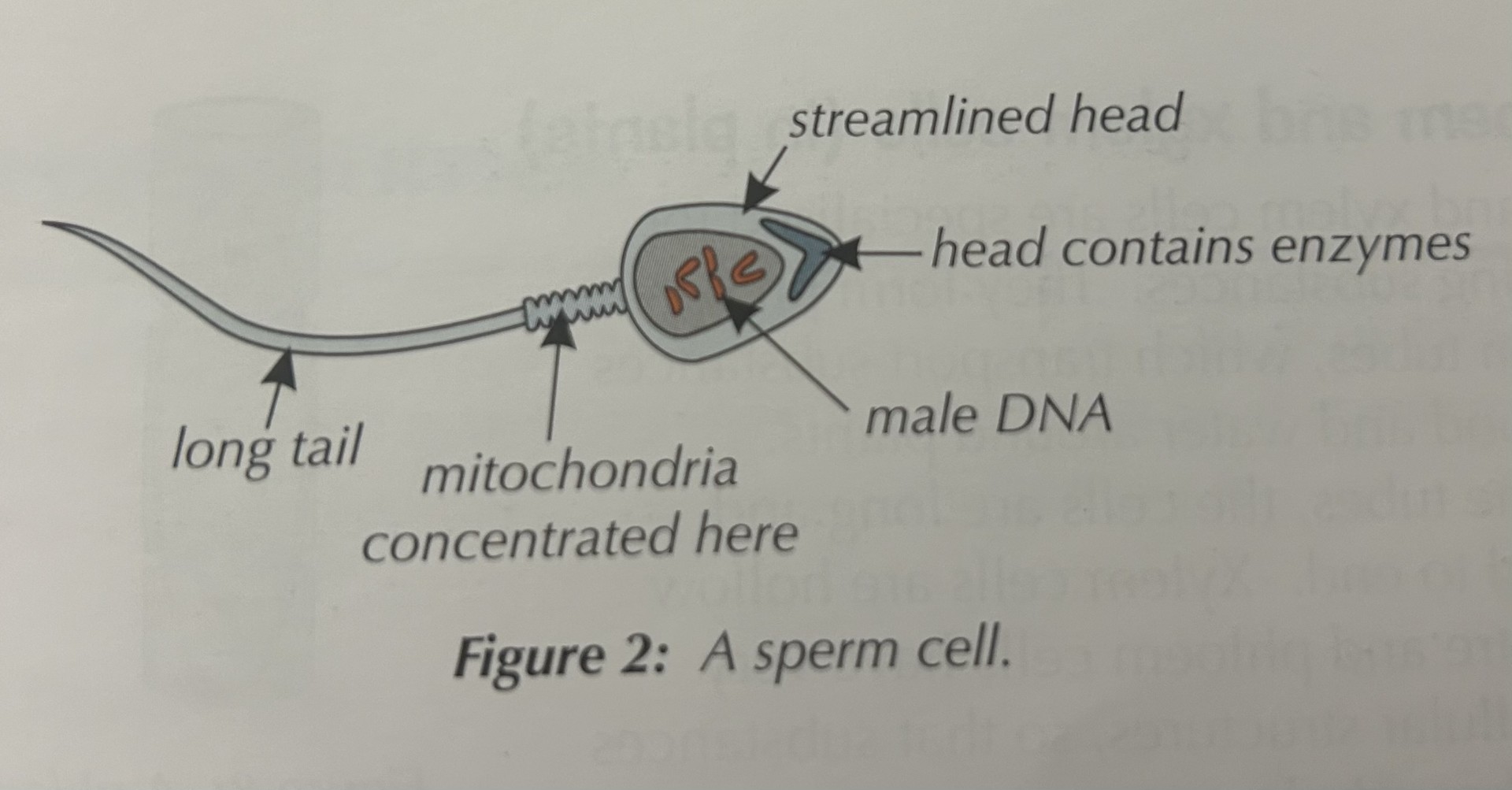
How a sperm cell is specialised (in Animals)
Structure:
Long tail (flagellum), for swimming to the egg
Lots of mitrochondria, to produce energy for movement
Head with enzymes, to break into the egg
Function:
Reaches + fertilises the egg
How a root hair cell is specialised (in Plants)
Structure:
Large surface area to absorb lots of water and minerals
No chloroplasts as found below ground, where there is no sunlight
Function:
Absorbs minerals and water from the soil
What is transported in phloem and xylem
Phloem:
Sugars and amino acids
Xylem:
Water and dissolved minerals
What direction are substances transported in phloem and xylem
Phloem:
Both directions, up + down
Xylem:
Upwards, from the root to the rest of the plant
Name + describe the transportation process in phloem and xylem
Phloem:
= Translocation
High pressure pushes sugars from leaves to other parts of the plant
Xylem:
= Transpiration
Water + dissolved minerals are pulled up the plant
Describe the structure of the vessel phloem
Living cells connected end to end with holes in the walls called sieve plates. These make the substance go up and down the cell
Describe the structure of the vessel xylem
Long + hollow - long tubes with hollow centre
Made with dead cells - leaves space for water to move through
Thick walls - the walls are made of lignin which helps the plant stay strong + sturdy and supports water flow
Connected cells - the cells are connected from end to end, with holes in their walls that let water move slowly
Differences + Similarities between phloem and xylem
Similarities:
Thick Walls
Differences:
Phloem - living cells, cytoplasm, sugars, energy needed
Xylem - dead cells, no cytoplasm, water, no energy needed
Explain why animals have specialised cells
They become specialised for its job, they develop different subcellular structures and turn into different types of cells to carry out specific jobs efficiently
used for repairing and replacing cells, such as skin or blood cells
Specialised cells in animals and plants
Animals:
In most animal cells, the ability to differentiate is then lost after they become specialised
The cells that differentiate in mature animals are mainly used for repairing and replacing cells, such as skin or blood cells
Most types of animal cells differentiate at an early stage
Plants:
Lots of plant cells don’t ever lose the ability to differentiate
What is diffusion
Diffusion is the net movement of particles from an area of high concentration to an area of low concentration down a concentration gradient until it is evenly spread out
Where does diffusion happen
In both solutions and gases - because the particles in these substances are free to move about randomly
How to predict which way substances will move across a cell membrane
Just like with diffusion in air, particles flow through the cell membrane from where there’s a higher concentration (more of them) to where there’s a lower concentration (fewer of them)
There only moving about randomly, so they go both ways - but if there are a lot more particles on one side of the membrane, there’s a net (overall) movement from that side
What substances are transported in and out of cells by diffusion
Oxygen + Carbon dioxide in gas exchange
The waste product urea from cells into the blood plasma for excretion in the kidney
What affects diffusion
Temperature - the higher the temperature, the faster the rate of diffusion. This is because the particles have more energy, so they move around faster
Surface Area - the larger the surface area (eg, the cell membrane), the faster the rate of diffusion. This is because more particles can pass through at once
Concentration Gradient - The bigger the concentration gradient, the faster the rate of diffusion. This is because the net movement from one side is greater.
What is osmosis
Osmosis is the movement of water particles from high concentration (of water) to low concentration (of water) across a partially permeable membrane
What is a partially permeable membrane
A partially permeable membrane is just one with very small holes in it. So small only tiny molecules (like water) can pass through them, as bigger molecules (like sucrose, a sugar) can’t
What happens during the movement of water molecules through the membrane during osmosis
The water molecules pass both ways through the membrane during osmosis. This happens because water molecules move about randomly all the time.
Movement of water molecules in and out of cells
If a cell is short of water, the solution inside it will become quite concentrated (there’ll be a low concentration of water molecules). This means the solution outside the cell is more dilute (there’s a higher concentration of water molecules), and so the water will move into the cell by osmosis.
If a cell has lots of water, the solution inside it will be more dilute, and water will be drawn out of the cell and into the fluid outside by osmosis.
what is osmosis a type of
diffusion
Using ideas about osmosis to explain why maintaining constant internal conditions in living organisms is important.
It manages osmosis balance, which allows water to go in and out of the cell through the cell wall without the cell bursting or shriveling. Maintaining isotonic conditions ensures efficient cellular function and survival.
osmosis in animal cells
Animal cells burst if too much water enters the cell as they do not have a cell wall to hold the cell together.
If animal cells loose too much water, they shrivel
Differences between diffusion + osmosis
Diffusion can involve any type of molecules, such as gases, liquids, or solids, whereas osmosis refers to the movement of water molecules
Diffusion does not require a membrane as the molecules move freely across the space, whereas osmosis requires a partially permeable membrane
In diffusion, molecules move in all directions from high concentration to low concentration, whereas in osmosis, water moves from the side with higher water concentration
Write a suitable plan to investigate into the effect of salt or sugar solutions on plant tissue
Cut up a potato into identical cylinders and measure their masses
Get some beakers with different sugar solutions in them. One should be pure water and another should be a very concentrated sugar solution. then you can have a few others with concentrations in between.
Place one potato cylinder in each beaker. Leave them in the beakers for twenty four hours.
Take the cylinders out, dry them with a paper towel and measure their masses again.
If the cylinders have drawn in water by osmosis, they’ll have increased in mass. If water has been drawn out, they’ll have decreased in mass.
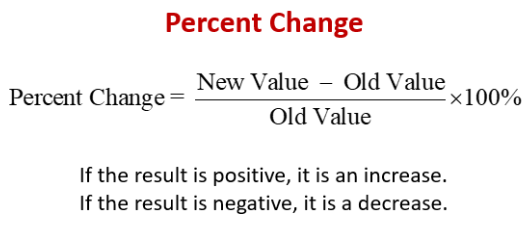
Then calculate percentage change in mass and then plot your graph.
Salt and sugar experiment variables
Dependent Variable:
the cylinder mass
Independent Variable:
the concentration of the sugar solution
Controlled Variable:
the volume of solution
the temperature
the time
the type of sugar used
Salt and sugar experiment errors
If some potato cylinders were not fully dried, the excess water would give a higher mass
If water evaporated from the beakers, the concentrations of the sugar solutions would change
Use osmosis to explain the effect of placing plant tissue in salt or sugar solutions.
If you put plant tissue in salty or sugary water, water moves out of the cells (because there’s more salt/sugar outside) the cells shrink + the plant becomes floppy.
If you put the plant tissue in pure water, water moves into the cells. The cells swell + the plant stands up straight.
This is because of osmosis - water moves to where there is less water to balance things out.
Calculate percentage change
What is Active Transport
Active Transport is the movement of particles from low concentration to high concentration against the concentration gradient - the way it wants to be going, requiring energy (APT)
What is APT
APT is a molecule produced during respiration that every cell in your body can use for energy
What does active transport do
Active transport moves substances from a more dilute solution to a more concentrated solution (against a concentration gradient). This requires energy from respiration.
Examples of active transport
Active transport allows mineral ions to be absorbed into plant root hairs
from very dilute solutions in the soil. Plants require ions for healthy
growth
It also allows sugar molecules to be absorbed from lower concentrations
in the gut into the blood which has a higher sugar concentration. Sugar
molecules are used for cell respiration
Active transport in the gut
Active transport is used in the digestive system when there is a lower concentration of nutrients in the gut, but a higher concentration of nutrients in the blood
here’s how it works:
when there’s a higher concentration of glucose and amino acids in the gut they diffuse naturally into the blood BUT sometimes there’s a lower concentration of nutrients in the gut than there is in the blood
This means that the concentration gradient is the wrong way. This is where active transport comes in
Active transport allows nutrients to be taken into the blood, despite the fact that the concentration gradient is the wrong way. This is essential to stop us starving. It means that glucose can be taken into the bloodstream when its concentration in the blood is already higher than in the gut. The glucose can then be transported to cells, where it’s used for respiration.
Explain why active transport is important for living organisms
It allows substances to move against the concentration gradient, which helps maintain the appropriate balance of substances in the cell.
Some improvements/limitations to a representational model that shows active transport.
Improvements
show ATP being used
show different types of transport proteins and how they work
Limitations
too simple
not showing movement
Explain the differences between diffusion, osmosis, and active transport.
Diffusion + Osmosis are passive, whereas Active Transport is active
Diffusion + Osmosis go from high concentration to low concentration, whereas Active transport goes from low concentration to high concentration
Diffusion substances are small molecules, Osmosis substances are water molecules, and Active Transport substances are large molecules
Describe how the effectiveness of exchange surfaces is increased
Exchange Surfaces are adapted to maximise effectiveness:
They have a thin membrane, so substances only have a short distance to diffuse. (Short diffusion pathway)
They have a large surface area so lots of a substance can diffuse at once
Exchange surfaces in animals have lots of blood vessels, to get stuff into and out of the blood quickly
Gas exchange surfaces in animals (eg alveoli) are often ventilated too - air moves in and out
Use ideas about surface area to volume ratio to describe why multicellular organisms need exchange surfaces.
In single-celled organisms, gases and dissolved substances can diffuse directly into or out of the cell across the cell membrane. It’s because they have a large surface area compared to their volume, so enough substances can be exchanged across the membrane to supply the volume of the cell.
Multicellular organisms have a smaller surface area compared to their volume - not enough substances can diffuse from their outside surface to supply their entire volume. This means they need an exchange surface for efficient diffusion.
What does the surface area to volume ratio show
A ratio shows how big one value is compared to another. The larger an organism is, the small its surface area is compared to its volume.
Explain how the small intestine is adapted for exchanging materials
The inside of the small intestine is covered in millions and millions of tiny projections called villi
Villi increase the surface area so that digested food is absorbed much more quickly into the blood
Villi have a single layer of surface cells
Villi have a very good blood supply to assist quick absorption
Explain how gills in fish are adapted for gas exchange
Each gill is made of lots of thin plates called gill filaments, which give a large surface area for exchange of gases so the rate of diffusion increases
The gill filaments are covered in lots of tiny structures called lamellae, which increase the surface area even more
The lamellae have lots of blood capillaries to speed up diffusion between the water and the blood
They also have a thin surface layer of cells to minimise the distance that the gases have to diffuse
Blood flows through the lamellae in one direction and water flows over in the opposite direction,this maintains a large concentration gradient between the water and the blood
The concentration of oxygen in the water is always higher than in the blood, so as much oxygen as possible diffuses from the water into the blood
Explain how the leaves in plants, are adapted for gas exchange
The underneath of the leaf is an exchange surface. It’s covered in little holes called stomata which carbon dioxide diffuses in through and oxygen and water vapour diffuse out of
The flattened shape of the leaf increases the area of this exchange surface so that it’s more effective
The walls of the cells inside the leaf form another exchange surface. The air spaces inside the leaf increase the area of this surface so there’s more chance for carbon dioxide to get into the cells
Has guard cells which can close the stomata to prevent the plant from loosing too much water and wilting