Monitoring the anaesthetised and Critically Ill Patient
 Call Kai
 Learn
 Practice Test
 Spaced Repetition
 Match
 Flashcards
 Knowt Play
1/26

There's no tags or description
Looks like no tags are added yet.
27 Terms
The only difference between anesthetic drugs and toxins is the…?
DOSE
Often what goes wrong with anesthesia is the drugs → alteration to respiration, circulation, homeostasis
Using drugs blunts the compensatory mechanisms designed to correct disruptions to homeostasis, therefore anesthesia must correct that itself

What aspects of normal bodily functions are we trying to preserve in anesthesia?
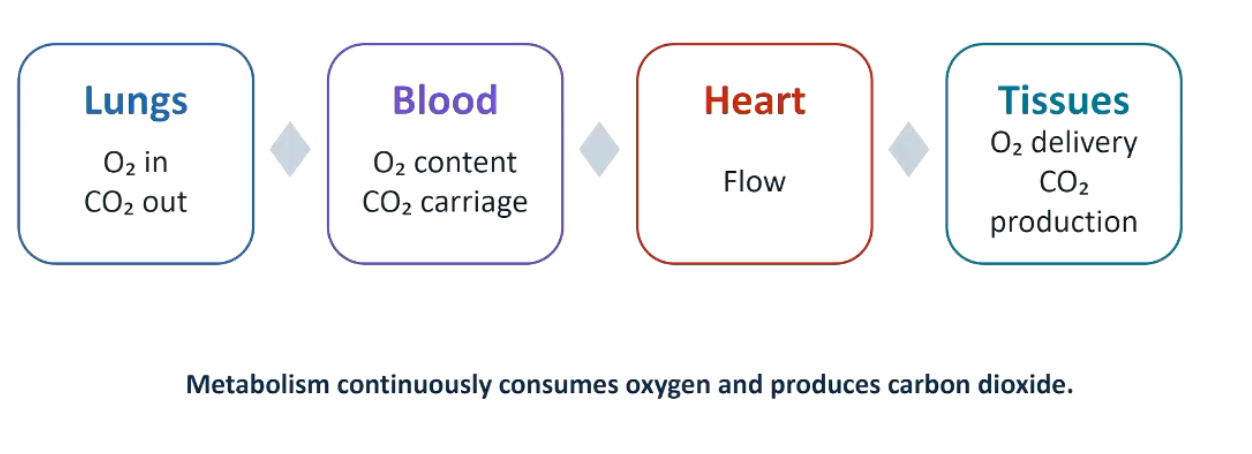
Oxygen delivery links ____, ____ and _____.
lungs, blood, circulation
DO₂ (Oxygen Delivery): Measured in milliliters of oxygen per minute (mL O₂/min).
CO (Cardiac Output): The volume of blood pumped by the heart per minute, measured in liters per minute (L/min). It acts as the "traffic flow" or rate of circulation.
CaO₂ (Arterial Oxygen Content): The amount of oxygen contained in a specific volume of arterial blood, measured in mL O₂/dL (or mL O₂/L with a conversion factor). It acts as the "cargo density" of oxygen carried by red blood cells

How do we perform manual monitoring of the patient under anesthesia?

What are the main indicators of anesthetic depth and how do you interpret it?
Interpret as a pattern: No single sign reliably defines surgical depth across every species, drug combination and procedure.
• Movement or response to stimulation
• Jaw tone - want to be relaxed, becomes more slack as depth increases
• Eye position - if conscious will look around, should rotate ventrally, if too deep eye comes back up and returns to central location
• Palpebral reflex - should be abolished under a suitable plane
• Respiratory pattern - symp. → increase due to nociception if too shallow, decrease (Along with HR) if too deep
• Heart-rate and blood-pressure response
Might need to vary depth depending on what you are doing
• Drugs administered, timing and surgical stimulus
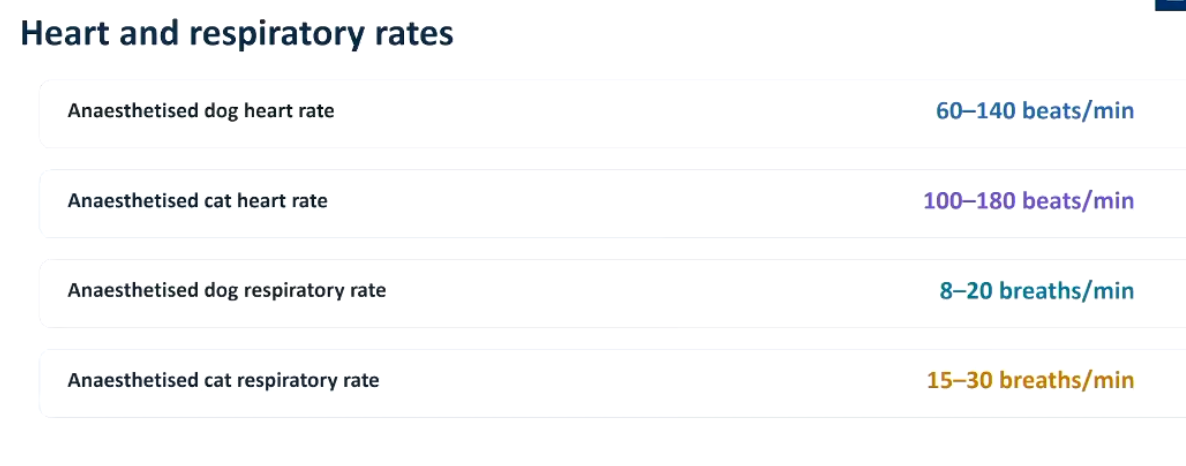
Describe the typical heart and respiratory rates for dogs AND cats under anesthesia.
**Interpret with size, drugs, depth, disease and preceding trend
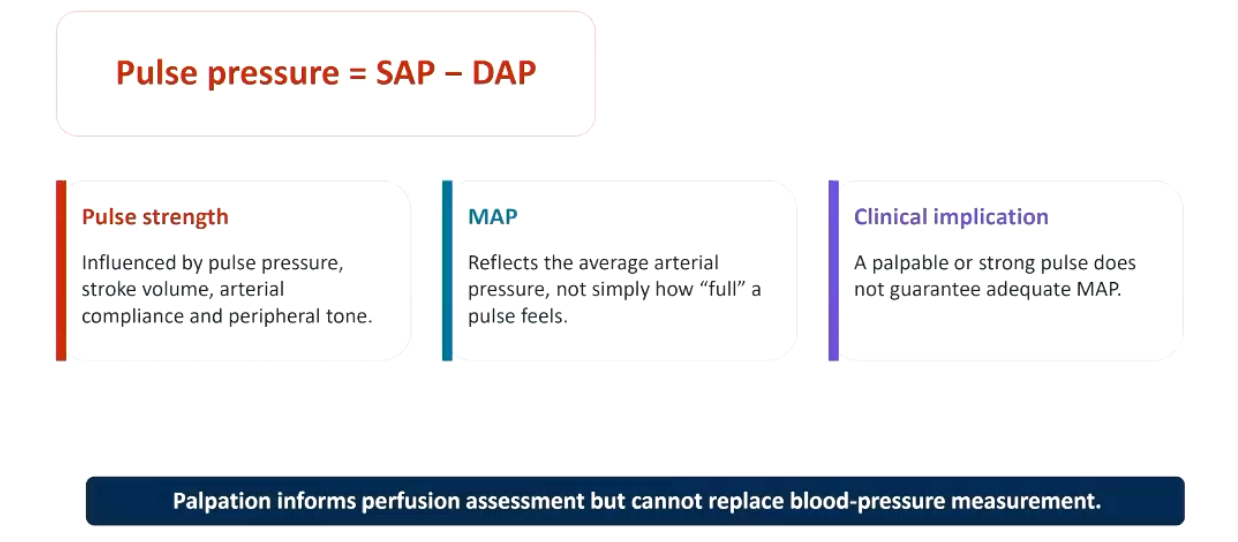
When evaluating pulses, what aspects should you feel, compare and monitor?
What does disagreement mean?

Is pulse quality equivalent to blood pressure?
Why is recording a trend in anesthesia so important?
• Values at regular intervals
• Anaesthetic depth and surgical events
• Drugs, fluids and ventilation changes
• Abnormal findings
• Interventions
• Response to intervention
Why it matters?
Identifies deterioration, Links cause and effect, Supports handover, Creates a contemporaneous clinical record - legal requirement
A treatment is not fully monitored until its effect has been reassessed and recorded.
What is the difference between oxygenation and ventilation?
Oxygenation is about getting oxygen (O₂) into the blood.
Ventilation is about moving air in and out of the lungs to clear out carbon dioxide (CO₂).
How PT can have 100% oxygenation but be hypo ventilating: If a patient is on oxygen (like a nasal cannula or mask), their lungs are filled with a high concentration of O₂. Even if they are only taking a few shallow breaths per minute, there is enough oxygen in their air sacs to keep their blood highly saturated. However, because they aren't breathing deeply or frequently enough, CO₂ builds up rapidly in their bloodstream.

How does pulse oximetry work?
Gives profile of what passes through: The oximeter measures this light absorption to calculate the percentage of red blood cells carrying oxygen, displayed as your SpO2 level
Probe struggles to make measurement in poorly perfused tissue

What is the difference between PaO2 and SpO2?
PaO2 measures the pressure of oxygen dissolved in arterial plasma via a blood draw, while SpO2 estimates the percentage of hemoglobin saturated with oxygen peripherally using a pulse oximeter
Accuracy & Limitations: PaO2 directly assesses lung gas-exchange function and acid-base balance. SpO2 is fast and convenient, but can be inaccurate during low blood perfusion or in conditions like carbon monoxide poisoning where it falsely reads normal.
High SpO2 values plateau even if PaO2 changes significantly at the upper end.
A critical threshold occurs around an SpO2 of 90%, which generally corresponds to a PaO2 of 60 mmHg. Below this point, tiny drops in saturation cause steep, dangerous drops in oxygen partial pressure.
What are important SpO2 values to know?
SpO2 100% does not demonstrate adequate ventilation or oxygen delivery.

How do we determine if the SpO2 is believable?
• Assess the patient first
• Compare displayed pulse rate with ECG or palpation
• Inspect the plethysmographic waveform or signal indicator
• Check contact, positioning and tissue compression
• Consider movement, ambient light and pigmentation
• Consider vasoconstriction, hypotension and hypothermia
• Move or replace the probe while continuing assessment
Validate the signal, but do not dismiss a low value simply because the signal is poor, check it and keep coming back and checking it.
What can cause a low SpO2?

What does capnography measure?

Why does Co2 rise when ventilation falls?
Ventilation failure: If mechanical or manual ventilation drops—due to equipment issues, blocked tubes, or shallow settings—the extra surgical CO₂ load combined with metabolic CO₂ cannot be breathed out, causing end-tidal CO₂ (ETCO₂) levels to spike quickly.

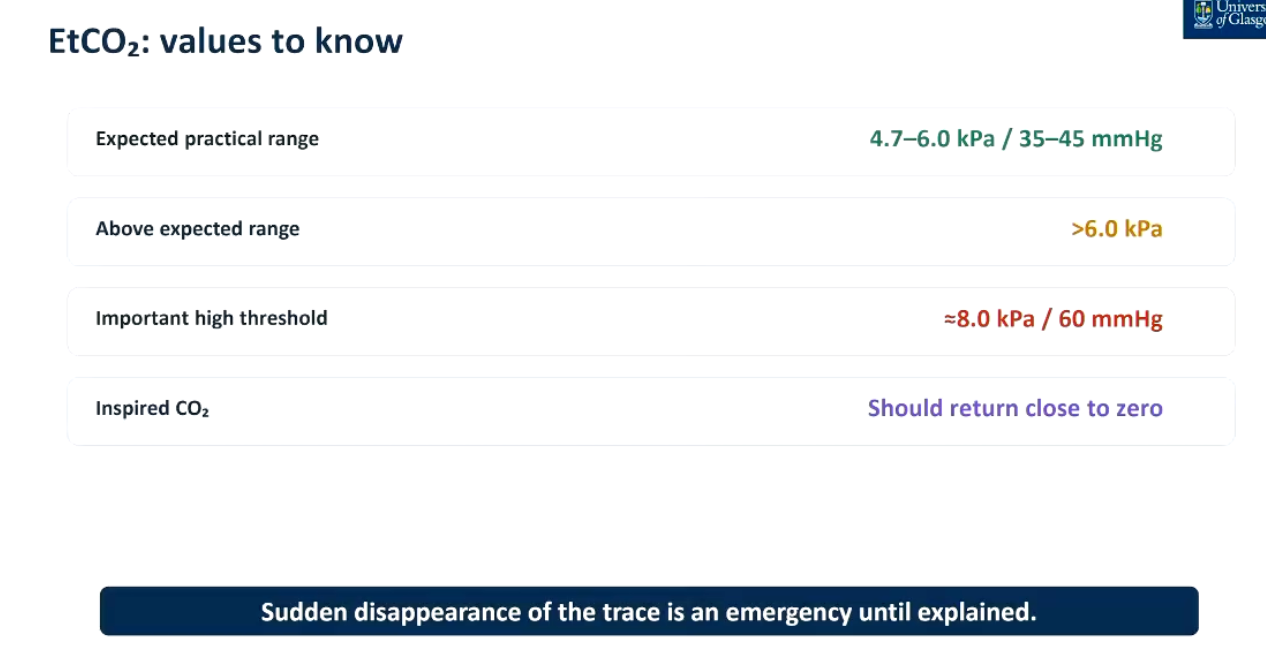
What are the important EtCO2 values to know?
The capnograph should be read in the same order every time, why is this?
• Is a waveform present?
• What is the respiratory rate?
• What is the EtCO2?
• Does the inspiratory baseline return towards zero?
• Is the expiratory upstroke appropriate?
• Is the alveolar plateau recognisable?
• Has the waveform changed?
Ideally should be rectangular
The trace adds context
A number alone may miss rebreathing, obstruction, spontaneous effort, sampling problems or abrupt loss of ventilation.
Shape + value = interpretation
What are some common capnograph shapes?

What does the ECG measure, what is it useful and what does it not measure?
Measures ELECTRICAL activity, not how much output by the heart

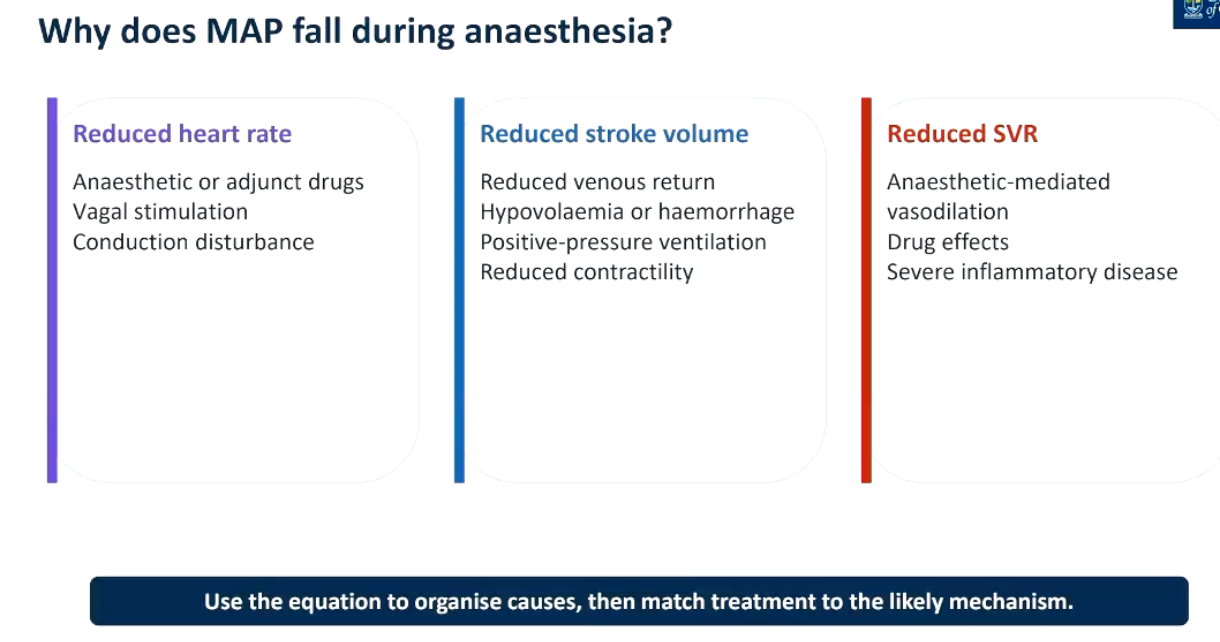
What generates the mean arterial pressure?
Definition: Systemic vascular resistance is the measure of force or resistance the heart must overcome to pump blood through the body's blood vessels (excluding the lungs).
Details: It is a key factor in controlling blood pressure. Narrowed blood vessels increase SVR, while widened vessels decrease it.

Why might the MAP fall during anesthesia?
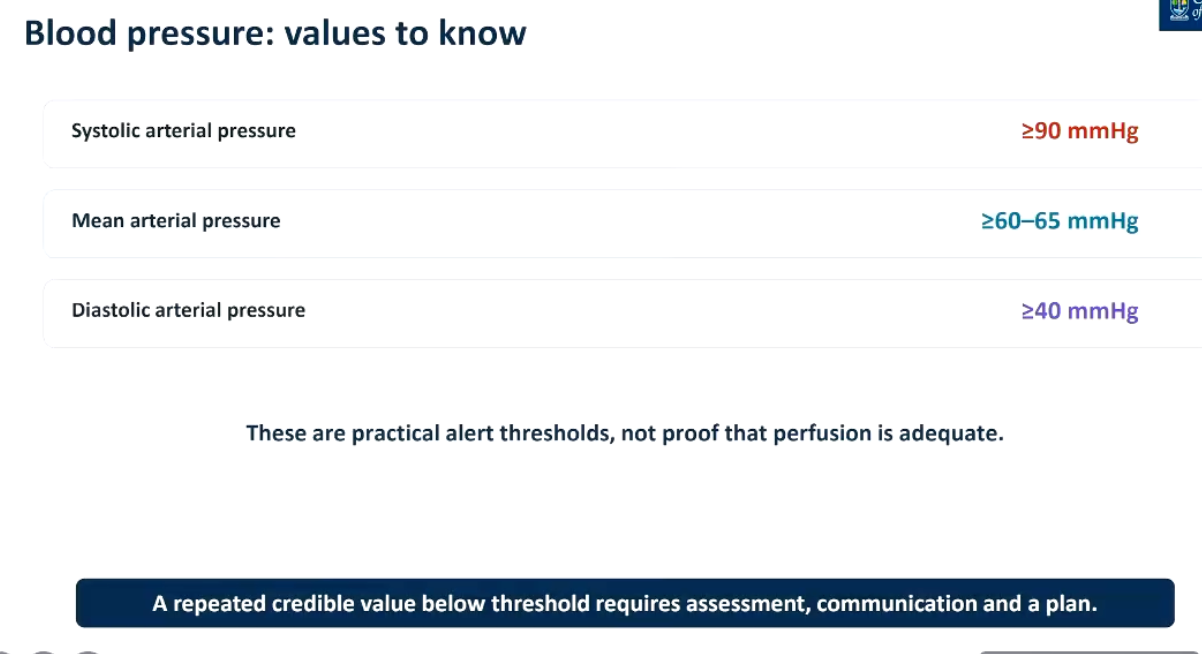
What are important blood pressure values to know?
What are some methods of indirect blood-pressure monitoring?

How should you respond to hypotension with a PT under anesthesia?
• Confirm the value and assess the palpable pulse
• Check cuff size, site and signal quality
• Review anaesthetic depth
• Assess heart rate and rhythm
• Consider venous return and haemorrhage
• Consider contractility and vascular tone
• Communicate, agree an intervention, reassess and record
Avoid reflex treatment
Hypotension does not automatically mean "give fluids".
Use the MAP equation to identify the likely mechanism.
Confirm → interpret mechanism → intervene appropriately → reassess.
What are important tissue, metabolism and other monitoring you can perform during anesthesia?
Choose monitoring that answers a physiological question and changes patient care.
Temp drop enormously → expect drop in CO2
