AOS 1 - Nervous System & Stress
 Call Kai
 Learn
 Practice Test
 Spaced Repetition
 Match
 Flashcards
 Knowt Play
1/56

There's no tags or description
Looks like no tags are added yet.
57 Terms
explain the neural pathway of a conscious response
the sensory stimuli comes into contact with the sensory receptors
sensory neural message is transmitted via afferent pathways in the SNS, then up the spinal cord to the brain
the brain processes this sensory message via interneurons into a motor message, initiating a conscious motor response
the motor neural message is transmitted via efferent pathways down the spinal cord, then through the SNS to the skeletal muscle
the skeletal muscle carry out the conscious motor response to the sensory stimuli
what is a spinal reflex
an unconscious response to sensory stimuli that initiated by interneurons in the spinal cord independently from the brain
explain the neural pathway of a spinal reflex
a dangerous or harmful sensory stimuli is detected by the sensory receptor, which is transmit this sensory message via sensory neurons through afferent pathways in the SNS to the spinal cord
interneurons in the spinal cord immediately relays this sensory neural signal from sensory neurons to a motor mourn as a motor neurone signal, initiating an automatic and unconscious motor response
the motor message is transmitted via motor neurons through efferent pathways in the SNS to skeletal muscle, which carry out this unconscious motor response to the dangerous or harmful stimuli
the sensory message continues to travel via afferent pathways in the spinal cord to the brain and then the brain independently reregisters the sensation that trigged the spinal reflex and pain is experienced.
explain the process of synaptic transmissions
neurochemicals are produced in and released from axon terminal in presynaptic neuron into synaptic gap where nuerochemicals bind to receptor sites on the dendrites of postsynaptic neurons and affect the postsynaptic neuron
what is the main excitatory neurotransmitter in the NS
Glutamate
what is glutamates function
important in learning and memory as it enables synaptic plasticity
what is the main inhibitory neurotransmitter in the NS
GABA
what is GABAs function
regulates activation of postsynaptic neuron which helps to reduce anxiety and helps prevent seizures
how can nueromodulateors modulate the effects of neurotransmitters
changing neurotransmitters release patterns and changing the responsiveness of receptor sites of neurotransmitter to enhance inhibitory or excitatory effect
what are 2 types of neuromodulators
dopamine and serotonin
what type of effect does dopamine have
can have excitatory or inhibitory effect
what is dopamines function
coordinates voluntary motor movements, experience of pleasure and reward based learning
what type of effect does serotonin have
inhibitory
what is serotonins function
regulation of mood and sleep
what is synaptic plasticity
ability for synaptic connections to change over time in response to activity or experience
what are the 3 mechanisms of synaptic plasticity
sprouting, rerouting and pruning
what is sprouting
the ability for dendrites or anode to develop new branches to increase reach of neuron and enables the formation of new synaptic connections
how does sprouting occur
due to consent activation
what is rerouting
the ability of a neuron that is connected to a damaged neuron to create an alternative synaptic connection with an undamaged neuron
when does rerouting occur
after brain damage or when breaking out of old habits
what is pruning
the elimination of synaptic connections that are not adequately activated
what is long term potential
long lasting straightening go synaptic connections that are regularly coactivated
what is long term depression
long lasting weakening of synaptic connections between neurons that are not regularly coactivated
explain how long term potential, long term depression and mechanisms of synaptic plasticity in changing an old skill into a new old
as new skill is learnt LTP strengthens neural pathways involved with skill though the repeated coactivation of pathways each time it is practiced. This involves sprouting where new synaptic connections form to support new skill. LTD weakens neural pathway that is involved in old skill due to low levels of activation leading to during on connections. LTP and LTD work together to weaken old skill and strengthen new one.
what is stress
a psychological and physiological experience that occurs when an individual encounters something that significant demands their attention and/or efforts to cope
what is a stressor
a stimulus that prompts the stress response
what is the flight, fight, freeze response
an involuntary automatic response to a threat
what does flight, fight and freeze mean in a flight, fight, freeze response
flight - escaping threat
fight - confronting threat
freeze - immobility in presence of threat
what is cortisol
a hormone released during feeling stress to keep body aroused
what is the biological model to stress
GAS model
what are the 3 stages of the GAS model
alarm reaction, resistance and exhaustion
what are the 2 stages of alarm reaction
shock and counter shock
what is the shock stage of the GAS model
when stressor is seen and brief decrease in bodily arousal, body acts as physically injured
what is the counter shock stage of the GAS model
the sympathetic NS is activated and a FFF response occurs
what is the resistance stage of the GAS model
if stressor is not dealt with there is an activation of the parasmypathetic NS and all unnecessary physiological processes shut down
what is the exhaustion stage of the GAS model
bodys resource have depleted and person is more vulnerable to disease and mental disorders
a strength of the GAS model
recognises a predictable pattern of physiological responses
a limitation of the GAS model
only focuses of biological aspects of stress and ignores psychological factors
what is the psychological model to stress
transactional model of stress and coping
describe the sequence of the transnational model of stress and coping
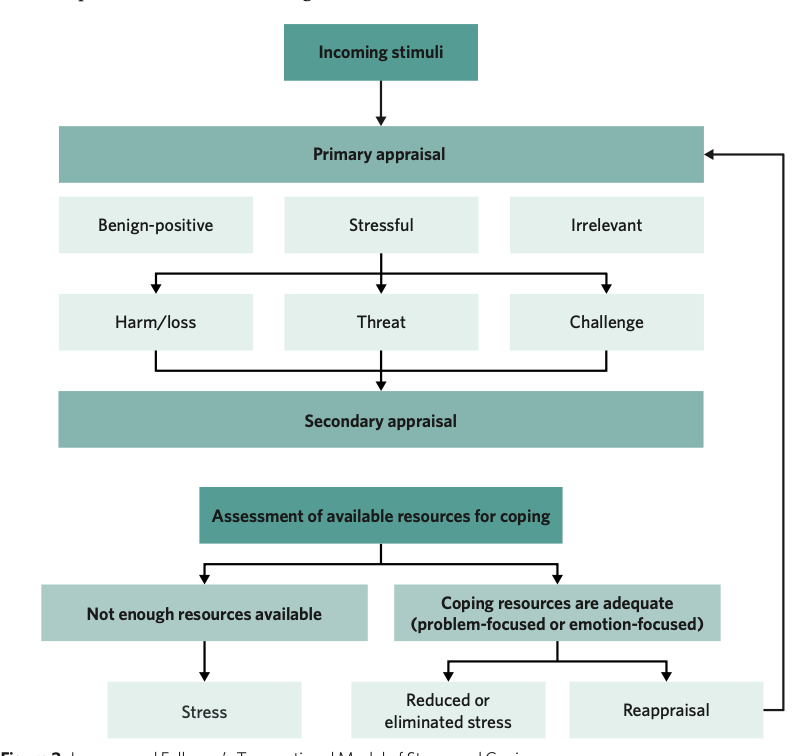
what is the benign-positive stage
stimulus is seen as neutral or good
what is the irrelevant stage
stimulus does not affect individual
what is the stressful stage
stimulus brings on worry
what is the harm stage
stressor causes damage to individual
what is the threat stage
stressor is potentially causing damage to individuals future
what is the challenge stage
stressor has potential in providing a positive opportunity for change
what is a strength of the transactional model of stress and coping
allows one to track the subjective stress response of an individual
what is a limitation of the transactional model of stress and coping
does not include the biological processes of stress
what is the effects on gut when stress is balanced and individual maintains good diet
there is a positive balance of microbes in guts microbiota ad digestion and excretion is regular
what is the effects on brain when there is balanced microbes
encourages positive mindset on diet and lowers secretion of stress hormones
what is the effects on gut when stress NOT is balanced and individual DOESNT maintain good diet
there is a negative balance of microbes in guts microbiota ad digestion and excretion is irregular
what is the effects on brain when there is inbalanced microbes
discourages healthy diet and increases production of stress hormones
what is coping
the process of dealing with stress
what is context-specific effectiveness
when coping strategies which use are appropriate for unique stressor
what is coping flexibility
individuals ability to adjust to change their coping strategies sending on unique stressor
what is an approach strategy
directly confronts source of stressor
what is an avoidance strategy
evading stress well seeking to reduce stress