10.3 Dementia & Alzheimer's
 Call Kai
 Learn
 Practice Test
 Spaced Repetition
 Match
 Flashcards
1/17

There's no tags or description
Looks like no tags are added yet.
18 Terms
alzheimer's disease (n.)
A progressive brain disease and common cause of dementia that damages memory and thinking

cognition (n.)
The ability to think, learn, remember, understand, and make decisions

cognitive impairment (n.)
Difficulty with memory, thinking, understanding, judgment, or decision-making

confusion (n.)
Difficulty thinking clearly or understanding what is happening

de-escalation (n.)
Calm techniques used to reduce tension, agitation, or unsafe behavior
delirium (n.)
A sudden, often reversible change in attention, awareness, and thinking

delusion (n.)
A firmly held false belief that is not based in reality

dementia (n.)
A group of symptoms involving ongoing decline in memory and thinking that interferes with daily life

hallucination (n.)
Seeing, hearing, feeling, smelling, or tasting something that is not present

hoarding (n.)
Collecting and keeping excessive items, often because of anxiety or impaired judgment

memory loss (n.)
Reduced ability to remember information or experiences

pacing (n.)
Repeated walking back and forth, often caused by restlessness or unmet needs

perseveration (n.)
Repeating the same word, question, idea, or action

redirection (n.)
Gently guiding attention from an unsafe or upsetting behavior to another activity or topic
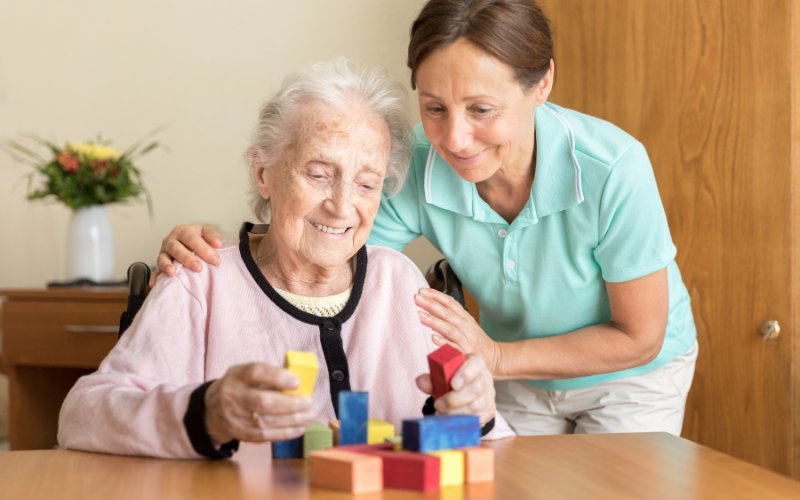
reminiscing (n.)
Talking about and recalling past experiences

sundowning (n.)
Increased confusion or agitation in the late afternoon or evening
validation therapy (n.)
Responding to the feelings behind a person's words without arguing about their reality

wandering (n.)
Moving about without a clear purpose or into unsafe areas
