chemistry - unit 1 - section 4: energetics
 Call Kai
 Learn
 Practice Test
 Spaced Repetition
 Match
 Flashcards
 Knowt Play
1/19

Earn XP
Description and Tags
20 Terms
what is enthalpy?
when a chemical reaction occurs there is normally a change in energy
the enthalpy change in reaction
the heat change in a reaction at constant pressure
symbol and units of enthaply change of a reaction
symbol = delta H with underground symbol
units = KJmol^-1
underground symbol stands for standard conditions

standard conditions:
100KPa
298K
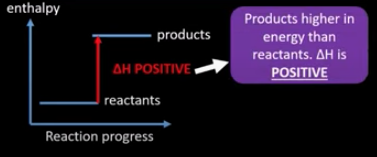
endothermic reaction
reactions that absorb energy from the surroundings
energy profile of an endothermic reaction
example of endothermic reaction

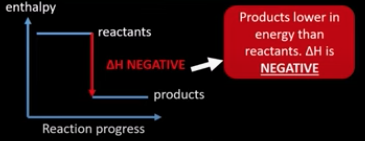
exothermic reaction
reactions that reales energy to the surroundings
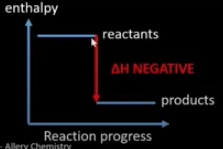
energy profile of exothermic reactions
example of exothermic reactions

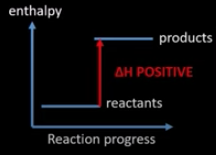
bonds broken
to break a bond energy needs to absorbed.
bonds are broken in the reactants and this is an endothermic process so delta H is positive
if more energy is needed to break bonds than energy given out when bonds are formed the reaction will be endothermic
bonds made
when bonds are formed energy is released
bonds are made when products are being produced and this is an exothermic reaction so delta H is negative
if more energy is released when bonds are formed than what was needed to break initial bonds the reaction will be exothermic
mean bond enthalpy
bonds of the same type don’t all have the same amount of energy
enthalpy change formula
enthalpy change = total energy to break bonds - total energy released forming bonds
calorimetry
used to work out the enthalpy change of combustion
calorimetry - method
a fuel is burned to raise the temperature of the water by a specific amount.
weight the fuel before and after burning to work out the mass of fuel burned
a lid is placed on top to prevent heat loss and windshields placed by the flame to prevent a draught moving the flame to prevent a draught moving the flame.
calorimetry formula
q=m x c x delta T
q = (J)
m = (g)
t = (k)
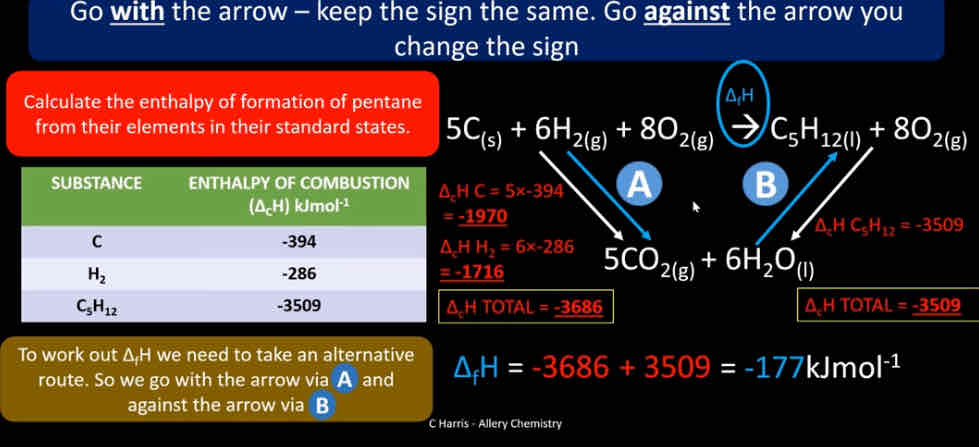
hess’s law
the total enthalpy change of a reaction is independent of the route taken
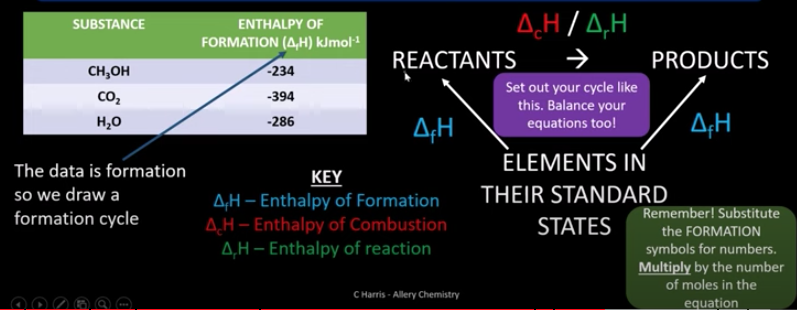
hess’s law - formation
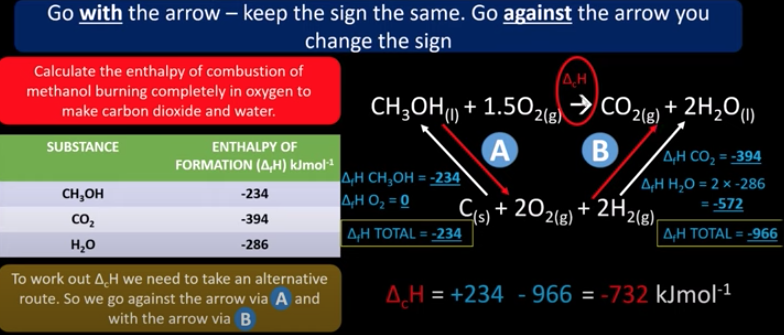
Hess’s law - combustion