Physical Science 101 (chapters 1-5)
 Call Kai
 Learn
Learn Practice Test
 Spaced Repetition
 Match
Match Flashcards
 Knowt Play
1/139

Earn XP
Description and Tags
im DIE!
Name | Mastery | Learn | Test | Matching | Spaced | Call with Kai | Chat |
|---|
No analytics yet
Send a link to your students to track their progress
140 Terms
Aristole
classified motion into 2 kinds
Natural Motion
motion that is straight up or straight down (created by Aristotle)
Violent Motion
imposed motion resulting from an external push or pull (Aristotle)
Galileo
Italian scientist who demolished Aristotle assertions of motion in early 1500s.
Inertia
property of things to resist change
Mass
Quantity of matter in an object
Mass (in terms of interia)
measure of inertia or sluggishness that an object exhibits in response to any effort made to start it, stop it, or change its state of motion in any way.
Greater MASS equals…
greater interia
smaller mass equals…
smaller interia
Weight
amount of gravitation pull on an object
proportional to mass
Twice the MASS = ____
Half the MASS = ____
Twice the WEIGHT
Half the WEIGHT
Volume
involves how much space an object occupies
Kilogram
standard unit of measurement for mass
1kg of materials usually weighs _____
10 Newtons
Equation for Density
in grams per cubic centimeter or kilograms per cubic meter

Force
simply push or a pull
Net force
combination of all forces that act on an object
Net force (in terms of motion)
changes an object’s motion
Equilibrium rule
The vector sum of forces acting on a non-accelerating object or system of objects equal zero
Equlibrium Rule

Dynamic Equilibrium
an object that moves in constant velocity is in _________
Support Force
is a force that supports an object on the surface against gravity
Is also Normal Force
Friction
resistive force that opposes the motion or attempted motion of an object through a fluid or past another with which it is in contact
Friction (terms of surfaces)
between 2 surfaces, the amount depends on the kind of material
Speed
described as distance covered per amount of travel time
Equation for Speed

Average Speed
total distance traveled divided by travel time
Equation for Average Speed

Instantaneous speed
speed at any instant of time
Motion Relativity
Everything is always moving
Acceleration
the rate at which velocity changes with time. The change in velocity may be in magnitude, in direction or both.
Equation for Acceleration

Free Fall
when the only force acting on falling object is gravity (with negligible air resistance), the object is in a state of _______
Newton’s 1st Law of Motion (What law does it contain?)
Law of Interia
Law of Interia
every object continues in state of rest or of uniform speed in a straight line unless acted on by a non-zero force
Newton’s Second Law of Motion (What law does it contain?)
Law of accerelation
Law of acceleration
acceleration produced by a net force on an object is directly proportional to the net force, is in the same direction as the net force, and is inversely proportional to the mass of the object
Equation of Newton’s Second Law

When acceleration is g ______
free fall
(Acceleration)
small net Force, large mass = __________
large net force, small mass = ___________
small acceleration
large acceleration
Free fall (terms of acceleration)
object in free fall accelerates toward Earth at 10 m/s per second
(acceleration) x2 force on x2 mass equals
same acceleration as half the force on half the mass
Non-free fall
When acceleration is less than g; occurs when two forces act on a falling object
Terminal velocity
when force of air resistance becomes equal to object’s weight; continues falling at constant velocity with no acceleration
Interaction
occurs between 1 thing and another
Newton’s Third Law of Motion (What law does it contain?)
Law of action and reaction
Law of action and reaction
whenever 1 object exerts a force on a 2nd object, the 2nd object exerts an equal and opposite force on the 1st.
are equal in strength and opposite in direction; always act on different objects
Momentum
inertia in MOTION
defined as the product of mass and velocity
Equation of momentum
mass, velo

(Momentum)
high mass OR high velocity results in ________
high mass AND high velocity results in _________
low mass or low velocity results in __________
low mass AND low velocity results in __________
high momentum
highER momentum
low momentum
lowER momentum
Impulse
product of force and contact time
Impulse Equation
force, time

(Impulse)
Great force for Long time equals ___________
Great force for short time equals ____________
Large Impulse
Smaller Impulse
Impulse (in terms of momentum)
the change in momentum of an object is EQUAL to the impulse applied to it (force multiplied by the time interval during which force is applied)
Equation of Impulse (in terms of momentum)
mass, velo

Increasing momentum
apply great force for long time produces great increase in momentum
Decreasing momentum
over long time results in smaller force
Decreasing momentum over a short time
short time interval produces large force
A system will have the same momentum both before and after any interaction occurs. When momentum doesnt change we say it’s ________
conserved
Law of conservation of momentum
in absense of external force, momentum of system remains unchanged
Law of conservation of momentum equation
mass x velo = mass x velo

Collisions
when objects collide in absense of external forces
(Collisions)
Net momentum before collision SHOULD EQUAL
Net momentum after collision
Elastic collision
a collision whereupon objects collide without permanent deformation or the generation of heat
(velocity either completely transferred or 0, not neccessarily lost)
Inelastic collision
a collision whereupon collding objects become tangled or coupled together, generating heat. (often sticky)
Work
defined as product of force exerted on an object and the distance the object moves
only done when fore succeeds in moving the body it acts upon
Work Equation
force x distance (work is in joules)

Energy
defined as that which produces changes in matter (measured in Joules)
Effects of energy observed only when:
it is being transferred from 1 place to another
OR
it is being transformed from1 form to another
Power
measure of how FAST work is done
Power Equation
Work/time
(units in Joule per second or watt)

Potential Energy
stored energy due to position, shape, or state In stored state, energy has potential for doing work
Gravitational Potential Energy
amount is possesed by elevated object is equal to work against gravity in raising it
Gravitational Potential Energy equation
mgh = GPE
mass, gravity, height
Work Energy Theorem
when work is done on an object to change its KE, amount of work done is EQUAL to change in Kinetic Energy
Kinetic Energy
defined by energy moving body
Kinetic Energy Equation
mass, velocity

Work Energy Theorem Equation
force, distance = mass velocity

Machines
a device for multiplying force or change the direction of force
Similarities of Kinetic Energy and Momentum
both depend on mass and velocity
Differences of Kinetic Energy and Momentum
Kinetic energy is a scalar quantity (size)
Momentum is a vector quantity (size and direction)
Law of conservation of Energy
in absence of external work input or output, the energy of a system remains UNCHANGED
energy no created no destroyed
Machine Equation
work input = work output
(fd) = (fd)
Efficiency
how effective a device transforms or transfers useful energy
Efficiency Equation

(Efficiency)
a machine with low efficiency —> ________
greater amount of energy wasted as HEAT
Solar Power
Sunlight Power = 1kW per square meter
Hydrogen Creation (electrolysis)
when eletric current passes through conducting water, bubbles of hydrogen form at 1 wire and oxygen at the other wire
Hydrogen Fuel
energy in sunlight converted to electric energy in photovoltaic solar cells
Moon maintains a __________, which ensures a nearly circular motion around and around Earth rather than into it. This path is similar to the paths of planets around the Sun
tangential velocity
Newton’s Law of Universal Gravitation
every body in universe attracts every other body with a mutually attracting force
Newton’s Law of Universal Gravitation Equation
G = gravitational constant
m = mass
f = force
r = distance

Gravitational constant equation

Gravitational constant
proportional constant in Newton’s law of gravitation; has the same magnitude as the gravitational force between two 1kg masses that are 1 meter apart
(Newton’s Law of Universal Gravitation)
greater mass1 and mass2 RESULTS IN
greater FORCE of attraction between them
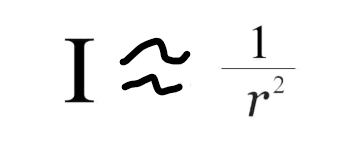
Inverse-square law
relates intensity of an effect to the inverse square of the distance from the cause
Inverse-square law equation
r means distance
Weightlessness
condition wherein a support force is lacking (like free fall)
Projectile
any object that moves through th air or through space under influence of gravity
Parabola
curved path of projectile