BIO 130 EXAM #4
 Call Kai
 Learn
 Practice Test
 Spaced Repetition
 Match
 Flashcards
 Knowt Play
1/142

There's no tags or description
Looks like no tags are added yet.
143 Terms
What makes up the digestive system
alimentary canal
accessory digestive organs
teeth, tongue salivary glands, liver, gallbladder, and pancreas are what organs of the digestive system
accessory digestive organs

a
mouth

b
pharynx
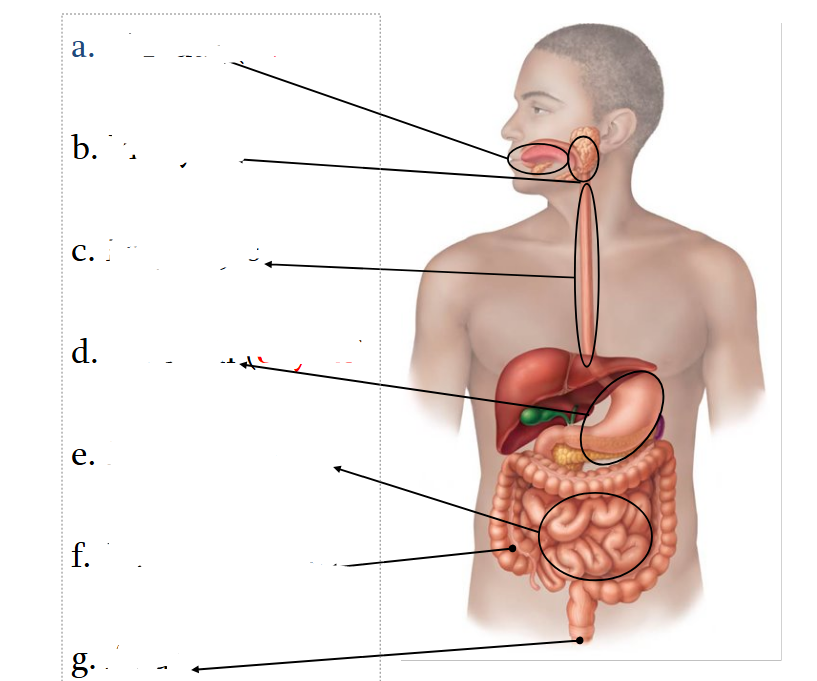
c
esophagus

d
stomach

e
small intestine

f
large intestine

g
anus
what is bolus
when you mix food with saliva
what is chyme
bolus mixed with acid and enzymes of the stomach
blous happens where
in the mouth
chyme happens where
in the stomach
the oral cavity is also called
the mouth

1
soft palate
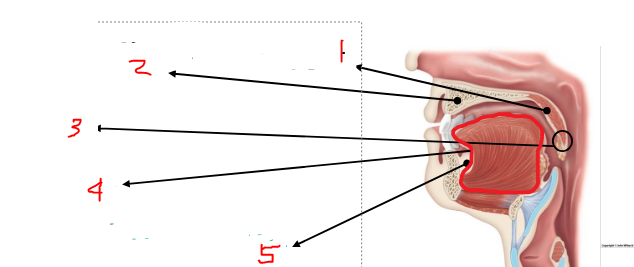
2
hard palate

3
uvula

4
tongue

5
lingual frenulum
the fold of mucous membrane that connects the tongue to the oral cavity is called the
lingual frenulum
how many salivary glands do we have
3
what are the 3 salivary glands
parotid gland
submandibular gland
sublingual gland
what 3 things is in our saliva
water
lysozyme
salavary amaylase (enzyme that breaks down carbs)
Babies have how many teeth
20a
adults have how many teeth
32
which is harder bones or teeth
teeth

1
central incisors

2
lateral incisors
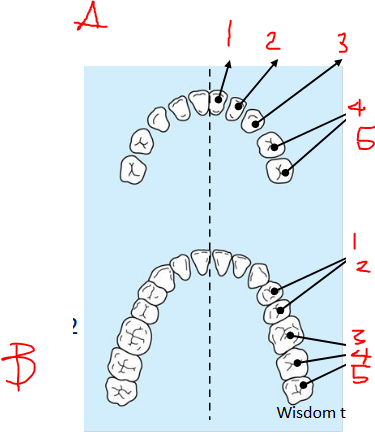
3
canine

4
molars
5
molars

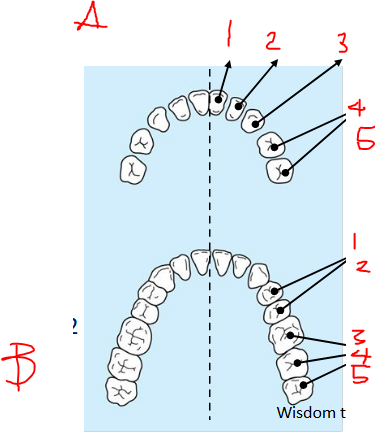
1 (bottom)
bottom left pre molars #1

2 (bottom)
bottom left premolar #2

3 bottom
bottom left molar #1

4 bottom
bottom left molar #2

5 bottom
bottom left molar #3

1
crown

2
neck

3
root

4
enamel

5
dentin

6
pulp

7
root canal

8
gingiva
blood vessels and nerves are located inside what part of the tooth
pulp
what is gingiva
gum
the inflammation of the gum is called
gingivitis
the pharynx plays a part in what role of the body
breathing and swallowing food
which part of the pharynx is part of the digestive system
oropharynx and laryngopharynx
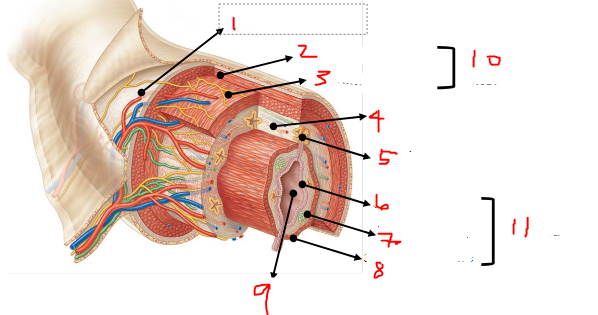
the esophagus has how many layers
4
what are the layer of the esophagus
mucosa - innermost
submucosa - submucosal nerve plexus
muscularis externa - myenteric nerve plexus
serosa

1
serosa

2
longitudinal layer

3
circular layer

4
submucosa

5
glands

6
epithelium

7
laminal region
8
smooth muscle
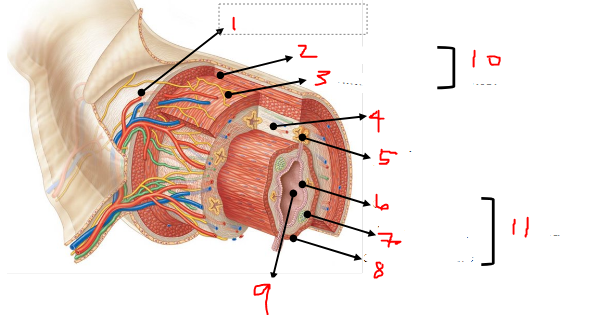
9
lumen
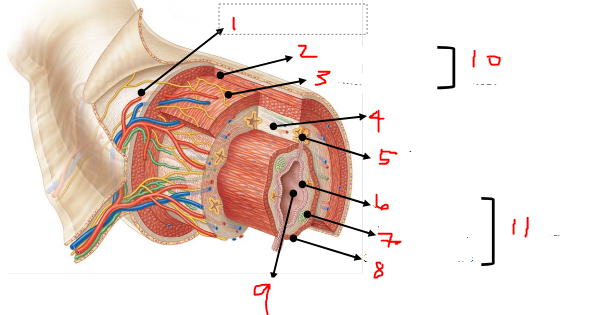
10
muscularis externa

11
mucosa
acid reflux of the stomach does what
heartburn
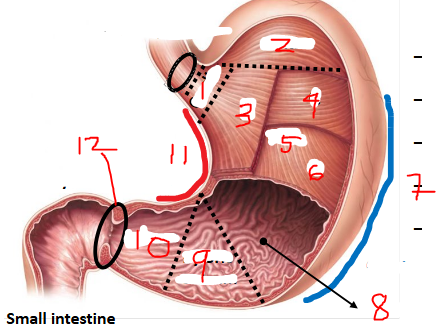
1
cardia
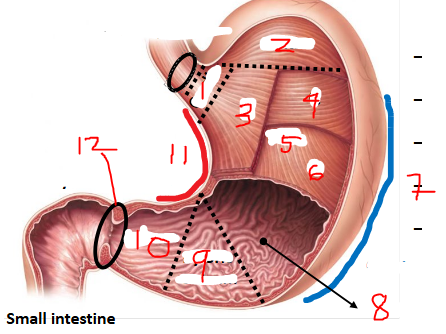
2
fundus
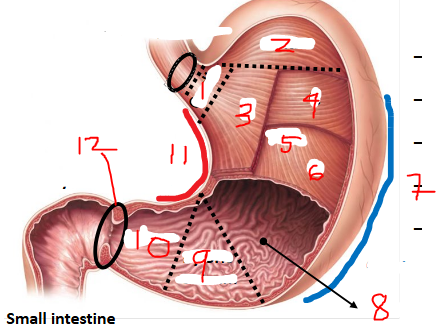
3
longitudinal body

4
circular body

5
body

6
oblique body

7
greater curvature

8
rugae of mucosa
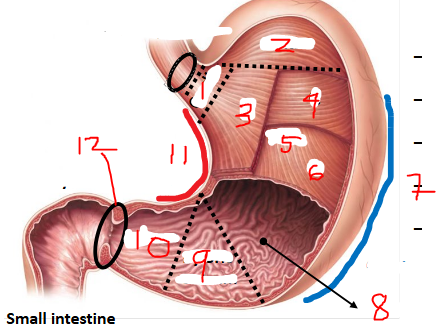
9
pyloric antrum
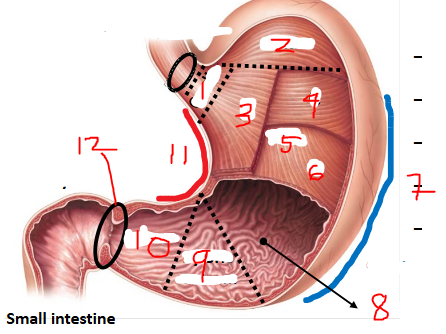
10
pylorus

11
lesser curvature

12
pyloric sphincter (valve)
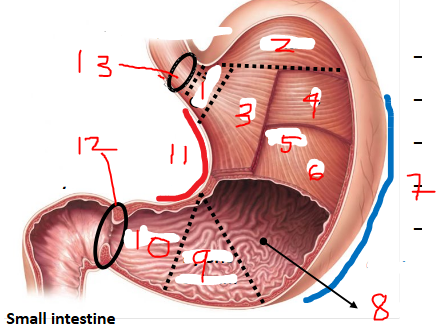
13
cardiac sphincter
what do the sphincters do
a circular muscle that closes when it contracts and opens when it relaxes
the control of how long food stays in the stomach is due to what sphincter
pyloric
bacteria that can survive stomach acid and cause ulcers is called
H. pylori
parietal cells, chief cells and enteroendocrine cells (G cells) are located where
in the gastric pits
what cell synthesizes HCI and gives the stomach its acid
parietal cells
what cells breakdown proteins using pepsinogen + HCI to make pepsin
chief cells
which cell produces gastrin to activate parietal and chief cells
enteroendocrine cells

1
gastric pits

2
surface epithelium

3
mucous neck cells

4
parietal cells

5
gastric glands
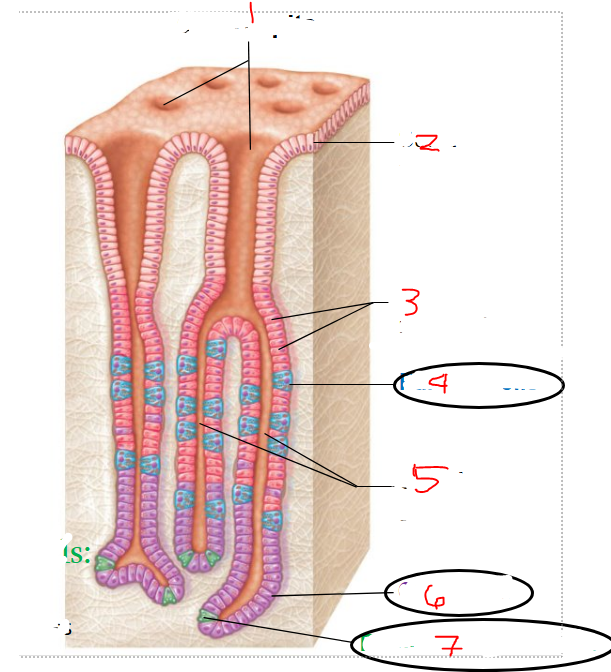
6
chief cells

7
enteroendocrine cells
what cells synthesize mucus
mucous neck cells
serosa of the abdominal cavity is called
peritoneum
what holds the large intestine in place
mesocolon
what holds the small intestine in place
mesentery
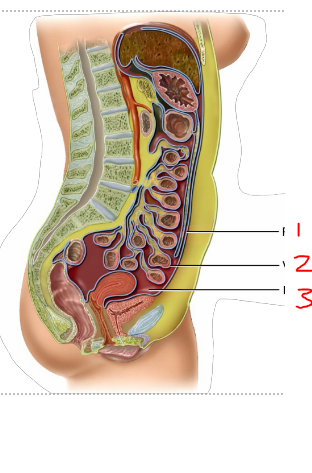
1
parietal peritoneum

2
visceral peritoneum

3
peritoneal cavity

1
mesocolon

2
mesentery
duodenum, jejunum and ileum are part of which intestine
small intestine