20. Detailed MoA/IRAC Group insecticides

0.0(0)
Studied by 0 people
call kaiCall Kai
Locked
learnLearn
examPractice Test
spaced repetitionSpaced Repetition
heart puzzleMatch
flashcardsFlashcards
GameKnowt Play
Card Sorting

1/12

encourage image

There's no tags or description

Looks like no tags are added yet.

Last updated 11:08 AM on 8/31/26
Name
Mastery
Learn
Test
Matching
Spaced
Call with Kai
Chat

No analytics yet

Send a link to your students to track their progress

13 Terms

1
New cards

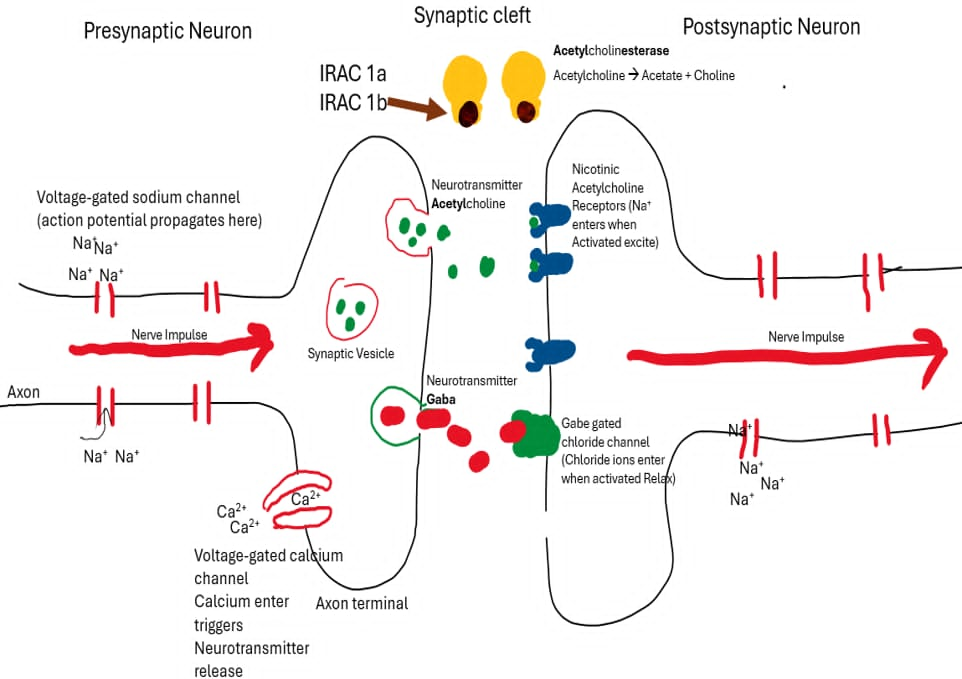
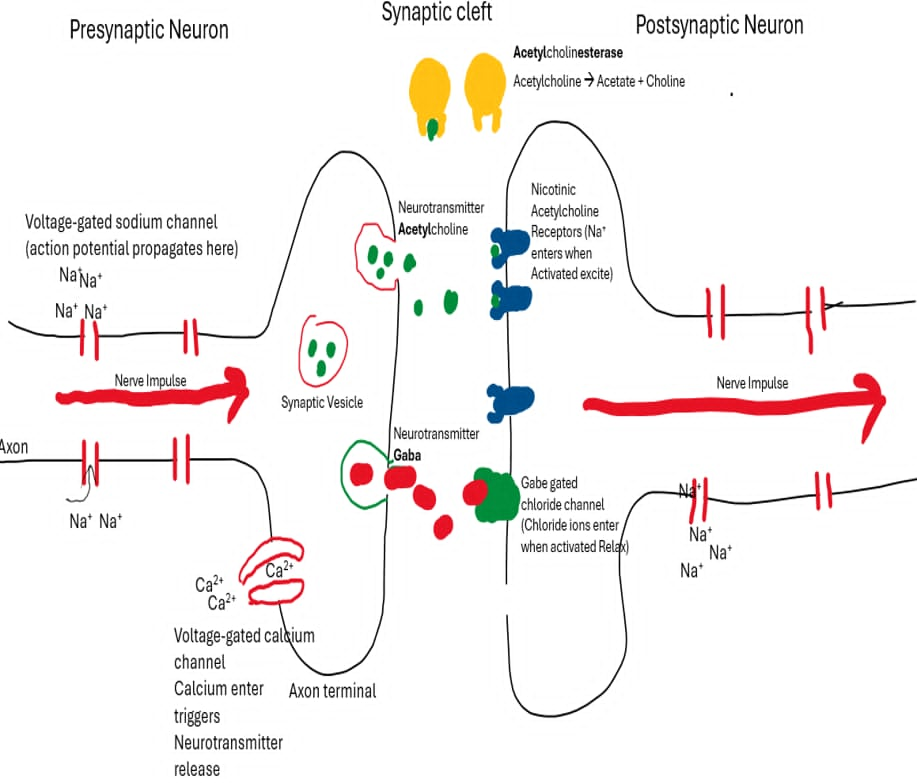
Explain the Nerve Process - Acetylcholine

  • Electrical Nerve impulse (action potential) reaches the Presynaptic Nerve terminal

  • Voltage-gated Ca²⁺ channels open → Ca²⁺ enters the presynaptic terminal.

  • The calcium influx triggers the synaptic vesicles to release acetylcholine into the synaptic cleft.

  • Acetylcholine diffuses through the synaptic cleft and binds to Nicotinic Acetylcholine Receptor found on the postsynaptic membrane.

  • The receptor channels open → positive ions, mainly Na⁺, enter → the postsynaptic membrane depolarises

  • If threshold is reached, a new action potential is generated and the nerve signal continues

  • Acetylcholinesterase (AChE) rapidly breaks ACh down into acetate + choline → stopping the signal.

  • Choline is transported back into the presynaptic terminal and reused to synthesise new acetylcholine

<ul><li><p>Electrical Nerve impulse (action potential) reaches the Presynaptic Nerve terminal</p></li><li><p>Voltage-gated Ca²⁺ channels open → Ca²⁺ enters the presynaptic terminal. </p></li><li><p>The calcium influx triggers the synaptic vesicles to release acetylcholine into the synaptic cleft.</p></li><li><p>Acetylcholine diffuses through the synaptic cleft and binds to Nicotinic Acetylcholine Receptor found on the postsynaptic membrane.</p></li><li><p>The receptor channels open → positive ions, mainly Na⁺, enter → the postsynaptic membrane depolarises</p></li><li><p>If threshold is reached, a new action potential is generated and the nerve signal continues</p></li><li><p>Acetylcholinesterase (AChE) rapidly breaks ACh down into acetate + choline → stopping the signal.</p></li><li><p>Choline is transported back into the presynaptic terminal and reused to synthesise new acetylcholine </p></li></ul><p></p>
2
New cards

Explain the MODe of action for IRAC group 1A and 1B

  • Target site: Acetylcholinesterase (AChE)

  • 1a – Carbamates

  • 1b – Organophosphates


  • Active constituents: Bendiocarb (1A) and Chlorpyrifos(1B)

  • Carbamates and organophosphates inhibit Acetylcholinesterase, preventing acetylcholine from being broken down.

  • Acetylcholine Builds up in the Synaptic Cleft

  • Acetylcholine keeps activating nicotinic acetylcholine receptors

  • Continued never stimulation/overexcitation

  • Tremors/twitching → paralysis → Death


<ul><li><p>Target site: Acetylcholinesterase (AChE)</p></li><li><p>1a – Carbamates </p></li><li><p>1b – Organophosphates </p></li><li><p></p></li><li><p>Active constituents: Bendiocarb (1A) and Chlorpyrifos(1B) </p></li><li><p>Carbamates and organophosphates inhibit Acetylcholinesterase, preventing acetylcholine from being broken down.</p></li><li><p>Acetylcholine Builds up in the Synaptic Cleft </p></li><li><p>Acetylcholine keeps activating nicotinic acetylcholine receptors</p></li><li><p>Continued never stimulation/overexcitation </p></li><li><p>Tremors/twitching →  paralysis →  Death</p></li></ul><p></p>
3
New cards

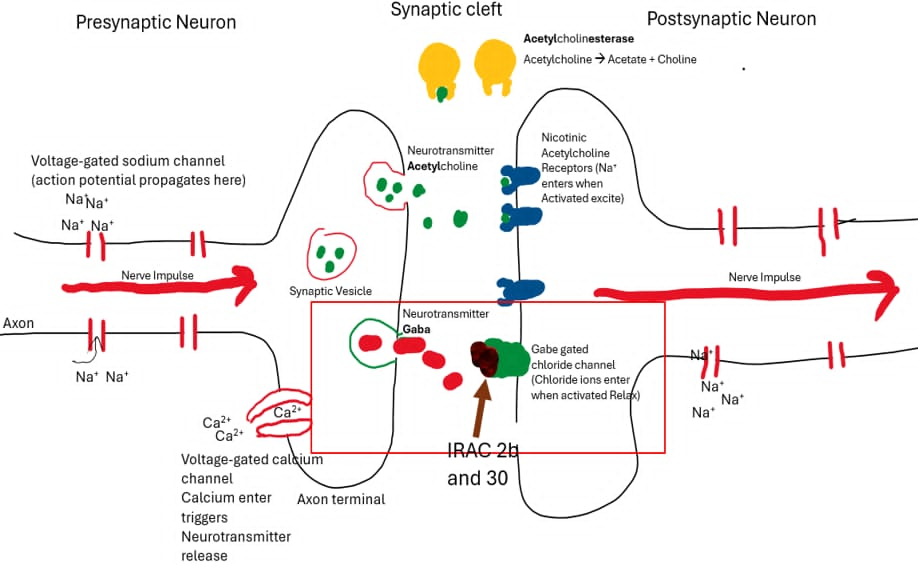
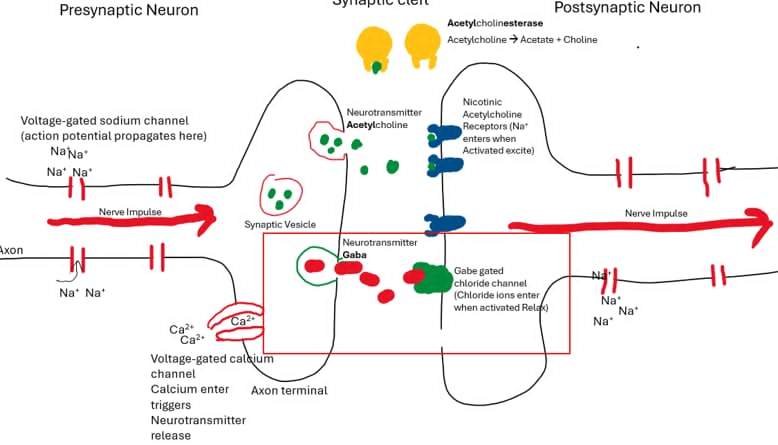
Explain the Normal GABA Process

Normal GABA Proces

GABA is released from the presynaptic neuron.

GABA binds to GABA-gated chloride channels on the postsynaptic neuron.

The chloride channel opens → Cl⁻ enters the neuron.

This hyperpolarises/inhibits the neuron, making it less likely to fire.
<p>Normal GABA Proces</p><p>GABA is released from the presynaptic neuron.</p><p>GABA binds to GABA-gated chloride channels on the postsynaptic neuron.</p><p>The chloride channel opens → Cl⁻ enters the neuron.</p><p>This hyperpolarises/inhibits the neuron, making it less likely to fire.</p>
4
New cards

Explain the MODE of action for IRAC group 1A and 1B

IRAC Group 2B

  • Target site: GABA-gated chloride channels

  • Class: Phenylpyrazoles (fiproles)

  • Active constituent: Fipronil


  • Fipronil blocks GABA-gated chloride channels.

  • Cl⁻ cannot enter normally.

  • GABA cannot properly inhibit/hyperpolarise the neuron.

  • The neuron remains overexcited.

  • Tremors → paralysis → death


  • IRAC Group 30

  • Target site: GABA-gated chloride channels — different binding site from 2B

  • Class: Meta-diamides / Isoxazolines

  • Active constituent: Broflanilide


  • Broflanilide inhibits GABA-gated chloride

  • Cl⁻ cannot enter normally.

  • GABA cannot properly inhibit/hyperpolarise the neuron.

  • The neuron remains overexcited.

  • Tremors → paralysis → death


<p>IRAC Group 2B</p><ul><li><p>Target site: GABA-gated chloride channels</p></li><li><p>Class: Phenylpyrazoles (fiproles)</p></li><li><p>Active constituent: Fipronil</p></li></ul><p></p><ul><li><p>Fipronil blocks GABA-gated chloride channels. </p></li><li><p>Cl⁻ cannot enter normally. </p></li><li><p>GABA cannot properly inhibit/hyperpolarise the neuron. </p></li><li><p>The neuron remains overexcited. </p></li><li><p>Tremors → paralysis → death</p></li></ul><p></p><p></p><p></p><ul><li><p>IRAC Group 30</p></li><li><p>Target site: GABA-gated chloride channels — different binding site from 2B</p></li><li><p>Class: Meta-diamides / Isoxazolines</p></li><li><p>Active constituent: Broflanilide</p></li></ul><p></p><ul><li><p>Broflanilide inhibits GABA-gated chloride</p></li><li><p>Cl⁻ cannot enter normally. </p></li><li><p>GABA cannot properly inhibit/hyperpolarise the neuron. </p></li><li><p>The neuron remains overexcited. </p></li><li><p>Tremors → paralysis → death</p></li></ul><p></p>
5
New cards

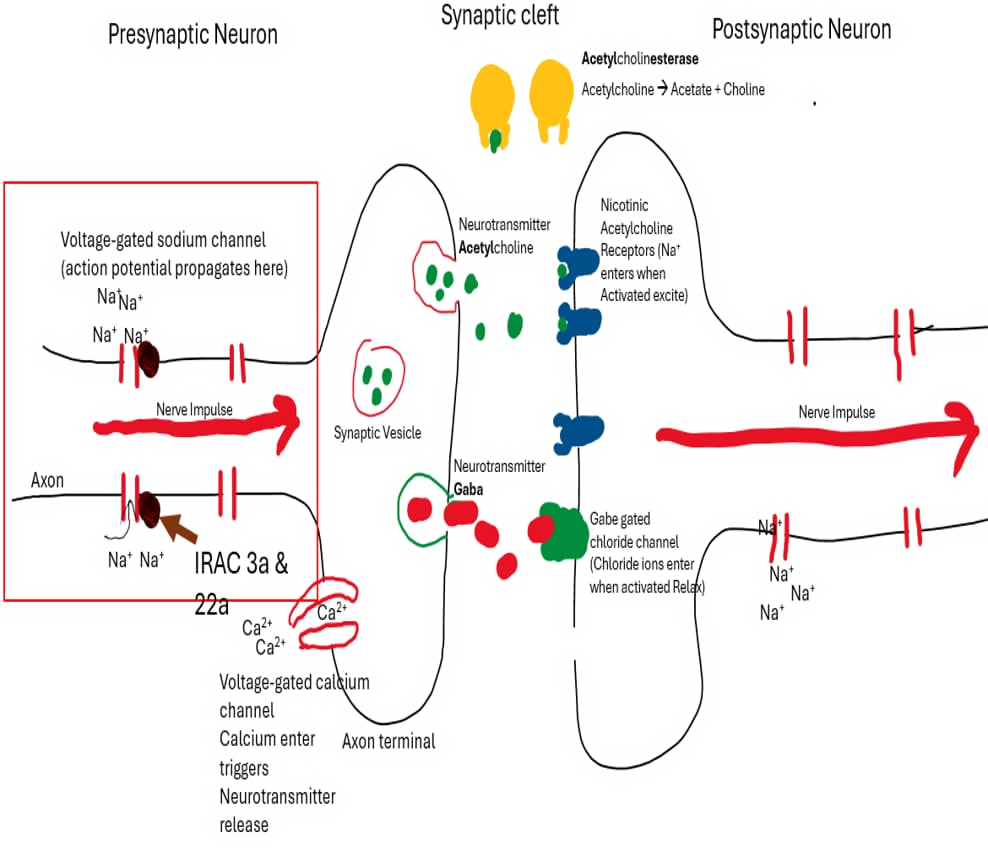
Explain the MODE of action for IRAC group 3A and 22A

IRAC Group 3A

Target site: Voltage-gated sodium channels on axons of neurons

Class: Synthetic pyrethroids

Active constituent: Bifenthrin or Deltamethrin


  • Synthetic pyrethroids bind to voltage-gated sodium channels.

  • They cause the sodium channels to stay open longer than normal.

  • More Na⁺ enters the neuron than normal.

  • The neuron keeps firing repeatedly.

  • This causes overexcitation.

  • Tremors → paralysis → death


RAC Group 22A

Target site: Voltage-gated sodium channels on axons of neurons

Class: Oxadiazines

Active constituent: Indoxacarb


  • Indoxacarb blocks voltage-gated sodium channels.

  • The sodium channels cannot function/open normally.

  • Little or no Na⁺ enters the neuron.

  • The action potential cannot continue along the axon.

  • The nerve stops firing.

  • This causes flaccid paralysis.

  • Paralysis → death


<p>IRAC Group 3A</p><p>Target site: Voltage-gated sodium channels on axons of neurons</p><p>Class: Synthetic pyrethroids</p><p>Active constituent: Bifenthrin or Deltamethrin</p><p></p><ul><li><p>Synthetic pyrethroids bind to voltage-gated sodium channels. </p></li><li><p>They cause the sodium channels to stay open longer than normal. </p></li><li><p>More Na⁺ enters the neuron than normal. </p></li><li><p>The neuron keeps firing repeatedly. </p></li><li><p>This causes overexcitation. </p></li><li><p>Tremors → paralysis → death</p></li></ul><p></p><p></p><p>RAC Group 22A</p><p>Target site: Voltage-gated sodium channels on axons of neurons</p><p>Class: Oxadiazines</p><p>Active constituent: Indoxacarb</p><p></p><ul><li><p>Indoxacarb blocks voltage-gated sodium channels. </p></li><li><p>The sodium channels cannot function/open normally. </p></li><li><p>Little or no Na⁺ enters the neuron. </p></li><li><p>The action potential cannot continue along the axon. </p></li><li><p>The nerve stops firing. </p></li><li><p>This causes flaccid paralysis. </p></li><li><p>Paralysis → death</p></li></ul><p></p>
6
New cards

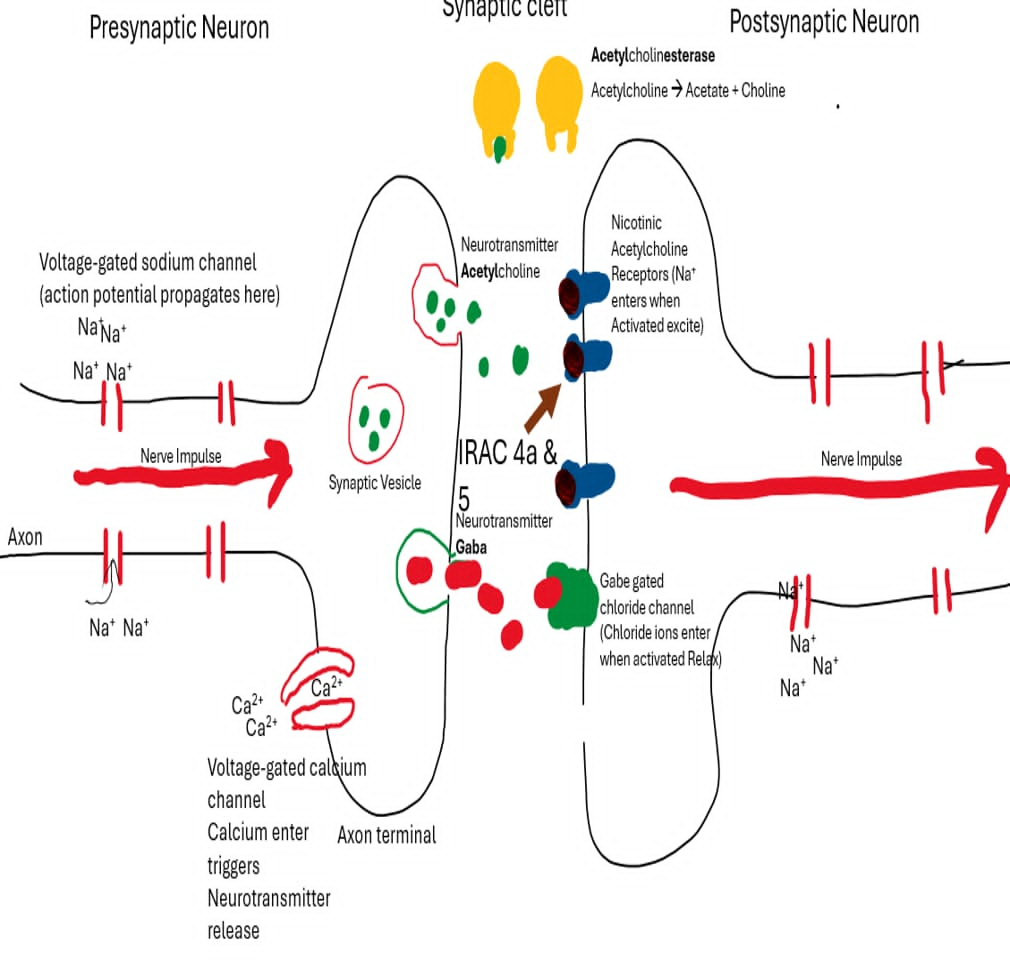
Explain the MODE of action for IRAC group 4A and 5

IRAC Group 4a

Target site: Nicotinic acetylcholine receptors (nAChRs) on postsynaptic neurons

Class: Neonicotinoids

Active constituent: Imidacloprid or Dinotefuran


  • Neonicotinoids bind to the acetylcholine site on nicotinic acetylcholine receptors.

  • The receptors become abnormally/continuously activated.

  • More Na⁺/positive ions enter the neuron than normal.

  • The neuron is continuously stimulated.

  • This causes overexcitation.

  • Tremors → paralysis → death


IRAC Group 5

Target site: Nicotinic acetylcholine receptors (nAChRs) — different binding site from Group 4A

Class: Spinosyns

Active constituent: Spinosad


  • Spinosad bind to the acetylcholine site on nicotinic acetylcholine receptors.

  • The receptors become abnormally/continuously activated.

  • More Na⁺/positive ions enter the neuron than normal.

  • The neuron is continuously stimulated.

  • This causes overexcitation.

  • Tremors → paralysis → death


<p>IRAC Group 4a</p><p>Target site: Nicotinic acetylcholine receptors (nAChRs) on postsynaptic neurons</p><p>Class: Neonicotinoids</p><p>Active constituent: Imidacloprid or Dinotefuran</p><p></p><ul><li><p>Neonicotinoids bind to the acetylcholine site on nicotinic acetylcholine receptors. </p></li><li><p>The receptors become abnormally/continuously activated. </p></li><li><p>More Na⁺/positive ions enter the neuron than normal. </p></li><li><p>The neuron is continuously stimulated. </p></li><li><p>This causes overexcitation. </p></li><li><p>Tremors → paralysis → death</p></li></ul><p></p><p></p><p></p><p>IRAC Group 5</p><p>Target site: Nicotinic acetylcholine receptors (nAChRs) — different binding site from Group 4A</p><p>Class: Spinosyns</p><p>Active constituent: Spinosad</p><p></p><ul><li><p>Spinosad bind to the acetylcholine site on nicotinic acetylcholine receptors. </p></li><li><p>The receptors become abnormally/continuously activated. </p></li><li><p>More Na⁺/positive ions enter the neuron than normal. </p></li><li><p>The neuron is continuously stimulated. </p></li><li><p>This causes overexcitation. </p></li><li><p>Tremors → paralysis → death</p></li></ul><p></p>
7
New cards

Explain the Normal GABA Process

Normal Glutamate Process

  • Glutamate is released from the presynaptic neuron.

  • Glutamate binds to glutamate-gated chloride channels on the postsynaptic neuron.

  • The chloride channel opens → Cl⁻ enters the neuron.

  • The neuron becomes more negative (hyperpolarised).

  • The neuron is inhibited/relaxed and less likely to fire.


<p>Normal Glutamate Process</p><ul><li><p>Glutamate is released from the presynaptic neuron. </p></li><li><p>Glutamate binds to glutamate-gated chloride channels on the postsynaptic neuron. </p></li><li><p>The chloride channel opens → Cl⁻ enters the neuron. </p></li><li><p>The neuron becomes more negative (hyperpolarised). </p></li><li><p>The neuron is inhibited/relaxed and less likely to fire.</p></li></ul><p></p>
8
New cards

Explain the MODE of action for IRAC group 6

IRAC Group 6

Target site: Glutamate-gated chloride channels

Class: Avermectins / Milbemycins

Active constituent: Abamectin


  • Abamectin allosterically activates glutamate-gated chloride channels.

  • The chloride channels remain excessively activated/open.

  • Cl⁻ continues entering the neuron.

  • The neuron becomes excessively hyperpolarised/inhibited.

  • The neuron cannot fire normally.

  • Flaccid paralysis → death


<p>IRAC Group 6</p><p>Target site: Glutamate-gated chloride channels</p><p>Class: Avermectins / Milbemycins</p><p>Active constituent: Abamectin</p><p></p><ul><li><p>Abamectin allosterically activates glutamate-gated chloride channels. </p></li><li><p>The chloride channels remain excessively activated/open. </p></li><li><p>Cl⁻ continues entering the neuron. </p></li><li><p>The neuron becomes excessively hyperpolarised/inhibited. </p></li><li><p>The neuron cannot fire normally. </p></li><li><p>Flaccid paralysis → death</p></li></ul><p></p>
9
New cards

Explain the Normal Mitochondrial ATP Production

Normal Mitochondrial ATP Production

  • The electron transport chain uses energy to pump H⁺ from the mitochondrial matrix into the intermembrane space.

  • H⁺ builds up in the intermembrane space.

  • This creates a proton (H⁺) gradient across the inner mitochondrial membrane.

  • H⁺ flows back into the matrix through ATP synthase.

  • ATP synthase uses this flow to produce ATP (energy).


<p>Normal Mitochondrial ATP Production</p><ul><li><p>The electron transport chain uses energy to pump H⁺ from the mitochondrial matrix into the intermembrane space. </p></li><li><p>H⁺ builds up in the intermembrane space. </p></li><li><p>This creates a proton (H⁺) gradient across the inner mitochondrial membrane. </p></li><li><p>H⁺ flows back into the matrix through ATP synthase. </p></li><li><p>ATP synthase uses this flow to produce ATP (energy).</p></li></ul><p></p>
10
New cards

Explain the MODE of action for IRAC group 13 and 20A

IRAC Group 13

Target site: Mitochondrial oxidative phosphorylation / proton gradient

Class: Pyrroles

Active constituent: Chlorfenapyr


  • Chlorfenapyr ultimately causes H⁺ to leak back across the inner mitochondrial membrane without passing through ATP synthase.

  • The proton gradient collapses.

  • ATP synthase loses the H⁺ gradient it needs to produce ATP effectively.

  • ATP production fails → energy failure → death


IRAC Group 20A

Target site: Mitochondrial Complex III — Qo site

Class: Hydramethylnon

Active constituent: Hydramethylnon


  • Hydramethylnon blocks electron transport at mitochondrial Complex III.

  • The electron transport chain cannot function normally.

  • H⁺ pumping is reduced/disrupted.

  • The proton gradient cannot be maintained properly.

  • ATP production fails → energy failure → death


<p>IRAC  Group 13</p><p>Target site: Mitochondrial oxidative phosphorylation / proton gradient</p><p>Class: Pyrroles</p><p>Active constituent: Chlorfenapyr</p><p></p><ul><li><p>Chlorfenapyr ultimately causes H⁺ to leak back across the inner mitochondrial membrane without passing through ATP synthase. </p></li><li><p>The proton gradient collapses. </p></li><li><p>ATP synthase loses the H⁺ gradient it needs to produce ATP effectively. </p></li><li><p>ATP production fails → energy failure → death</p></li></ul><p></p><p></p><p>IRAC Group 20A</p><p>Target site: Mitochondrial Complex III — Qo site</p><p>Class: Hydramethylnon</p><p>Active constituent: Hydramethylnon</p><p></p><ul><li><p>Hydramethylnon blocks electron transport at mitochondrial Complex III. </p></li><li><p>The electron transport chain cannot function normally. </p></li><li><p>H⁺ pumping is reduced/disrupted. </p></li><li><p>The proton gradient cannot be maintained properly. </p></li><li><p>ATP production fails → energy failure → death</p></li></ul><p></p>
11
New cards

Explain the Normal moulting/metamorphosis process

Normal process

  • Before moulting, the insect begins forming a new cuticle/exoskeleton beneath the old one.

  • Chitin synthase produces chitin, an important structural component of the new cuticle.

  • The old exoskeleton is shed.

  • The new cuticle expands and hardens


12
New cards

Explain the MODE of action for IRAC group 15

IRAC Group 15

Target site: Chitin synthase 1 (CHS1) / chitin synthesis

Class: Benzoylureas

Active constituent: Diflubenzuron


Diflubenzuron inhibits chitin synthesis by affecting CHS1.

The new cuticle/exoskeleton cannot form properly.

When the insect attempts to moult, the new cuticle is weak or defective.

The insect cannot complete moulting normally.

Moulting failure → death

<p>IRAC Group 15</p><p>Target site: Chitin synthase 1 (CHS1) / chitin synthesis</p><p>Class: Benzoylureas</p><p>Active constituent: Diflubenzuron</p><p></p><p>Diflubenzuron inhibits chitin synthesis by affecting CHS1. </p><p>The new cuticle/exoskeleton cannot form properly. </p><p>When the insect attempts to moult, the new cuticle is weak or defective. </p><p>The insect cannot complete moulting normally. </p><p>Moulting failure → death</p>
13
New cards

Explain the MODE of action for IRAC group 28

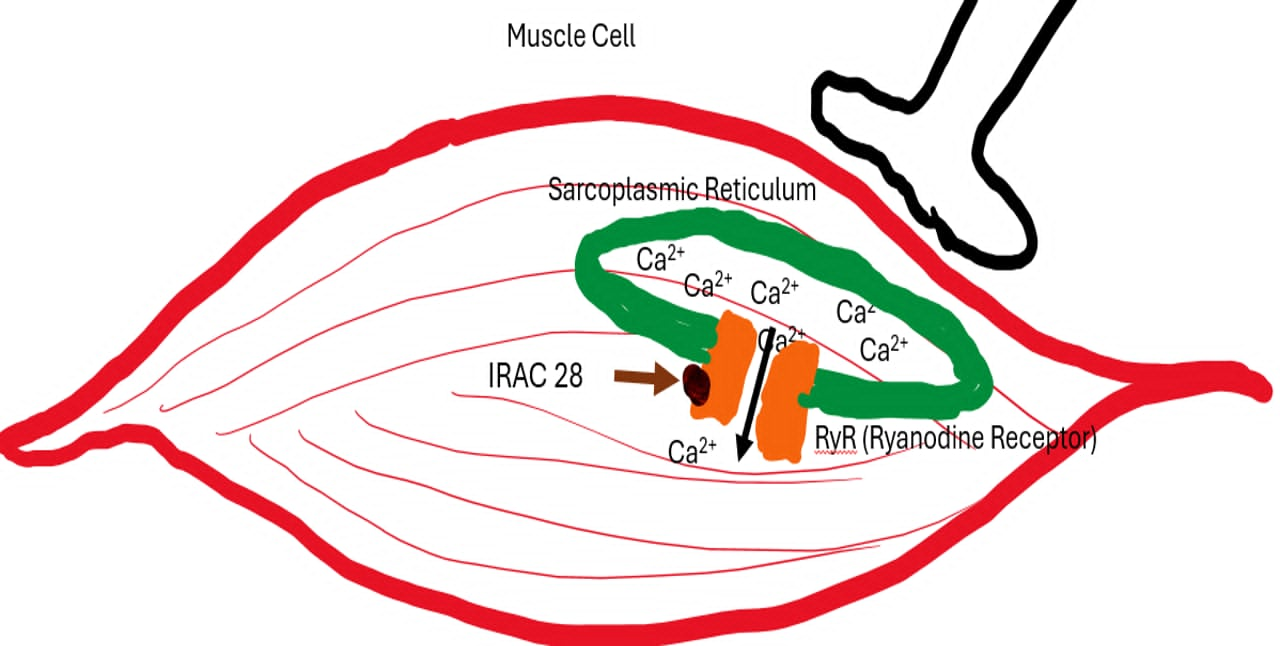
IRAC Group 28

Target site: Ryanodine receptor (RyR) on the sarcoplasmic reticulum of muscle cells

Class: Diamides

Active constituent: Chlorantraniliprole


  • Diamides bind to the RyR and hold it open.

  • Ca²⁺ continuously leaks from the sarcoplasmic reticulum into the sarcoplasm/cytoplasm.

  • This causes uncontrolled muscle contraction.

  • Calcium stores in the sarcoplasmic reticulum become depleted.

  • The muscle can no longer contract properly.

  • Flaccid Paralysis → death


<p>IRAC Group 28</p><p>Target site: Ryanodine receptor (RyR) on the sarcoplasmic reticulum of muscle cells</p><p>Class: Diamides</p><p>Active constituent: Chlorantraniliprole</p><p></p><ul><li><p>Diamides bind to the RyR and hold it open. </p></li><li><p>Ca²⁺ continuously leaks from the sarcoplasmic reticulum into the sarcoplasm/cytoplasm. </p></li><li><p>This causes uncontrolled muscle contraction. </p></li><li><p>Calcium stores in the sarcoplasmic reticulum become depleted. </p></li><li><p>The muscle can no longer contract properly. </p></li><li><p>Flaccid Paralysis → death</p></li></ul><p></p>