Lecture 13 - Neuromuscular Transmission
 Call Kai
 Learn
 Practice Test
 Spaced Repetition
 Match
 Flashcards
 Knowt Play
1/11

There's no tags or description
Looks like no tags are added yet.
12 Terms
Role of Motor Neurons
control muscle contraction
all voluntary muscle contractions are coordinated by primary motor cortex
signals sent through upper and lower motor neurons —> contraction of muscle targets

Chemical Synapse
occurs between neurons and NMJ
secrete neurotransmitter molecules that activate receptors
Fast Transmission: Neurotransmitters act directly on ligand-gated channels in postsynaptic membrane
Slow Transmission: Neurotransmitters act indirectly by binding to receptors that activate intracellular signalling molecules that activate ion channels and other processes
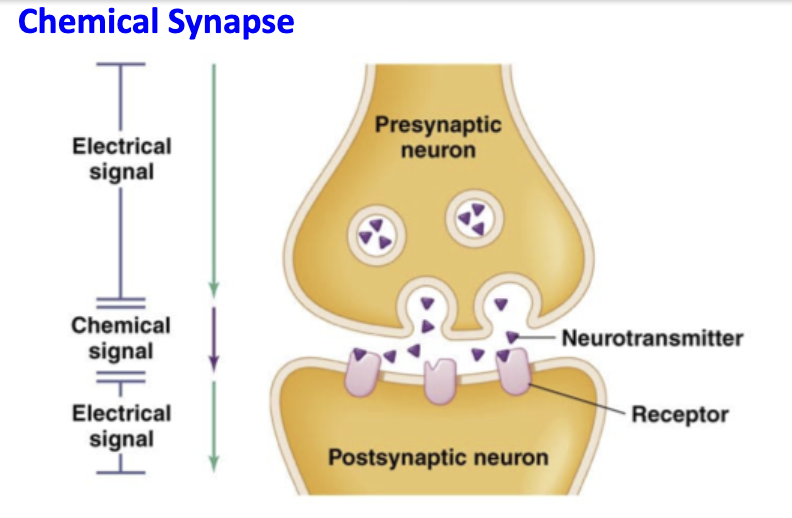
Explain chemical synapses at the NMJ
Synaptic terminal on presynaptic side; synaptic vesicles in nerve terminal store neurotransmitter
Action potential in motor neuron releases vesicle content
Receptors on postsynaptic membrane bind neurotransmitter
Binding of neurotransmitter to ligand-gated ion channels on muscle, leads to a change in membrane permeability; usually the opening of ion channels
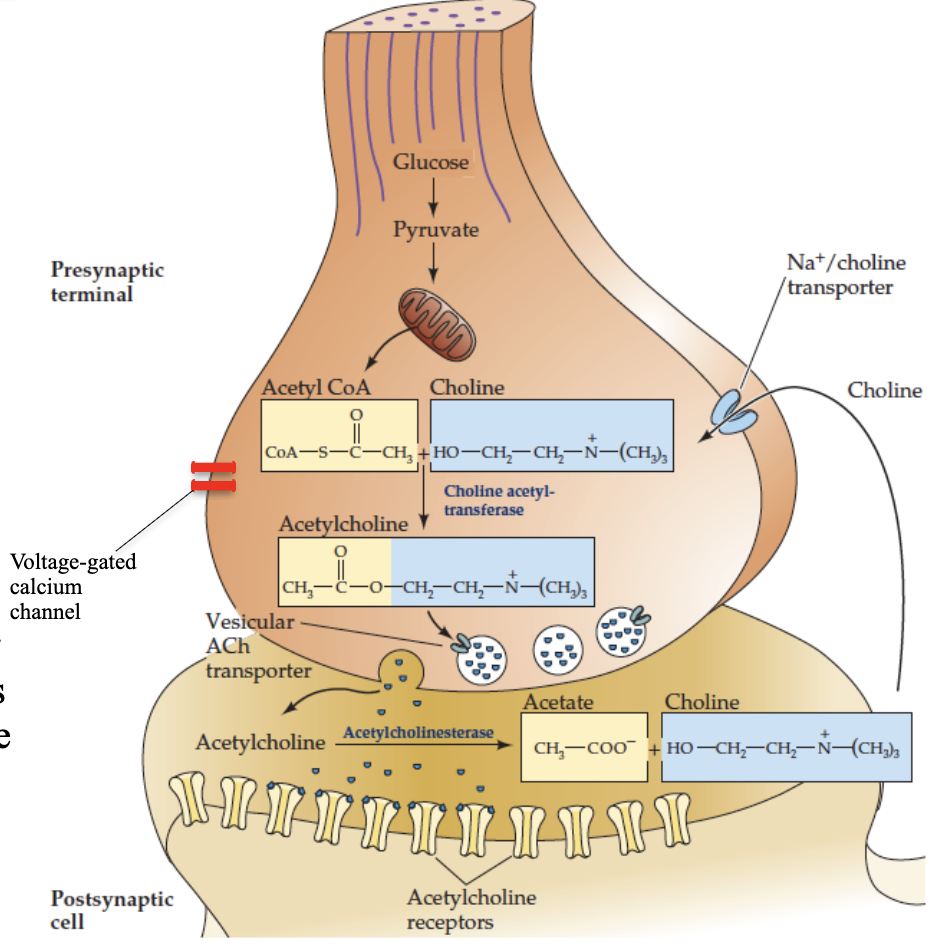
Role of Acetylcholine
acts via fast transmission
nicotonic acetylcholine receptors
transmembrane protein complex composed of 5 subunits
binds to 2 alpha subunits —> 1 molecule per subunit
at postganglionic cells of vertebrate autonomic NS and vertebrate neuromuscular junction
acts via slow transmission
muscarinic-type-a G protein coupled receptor
acetylcholine binds to G-protein coupled receptor
activates G-protein complex on cytoplasmic side to further activate ion channels in postsynaptic membrane
in target cells of parasympathetic NS (of ANS) of vertebrates
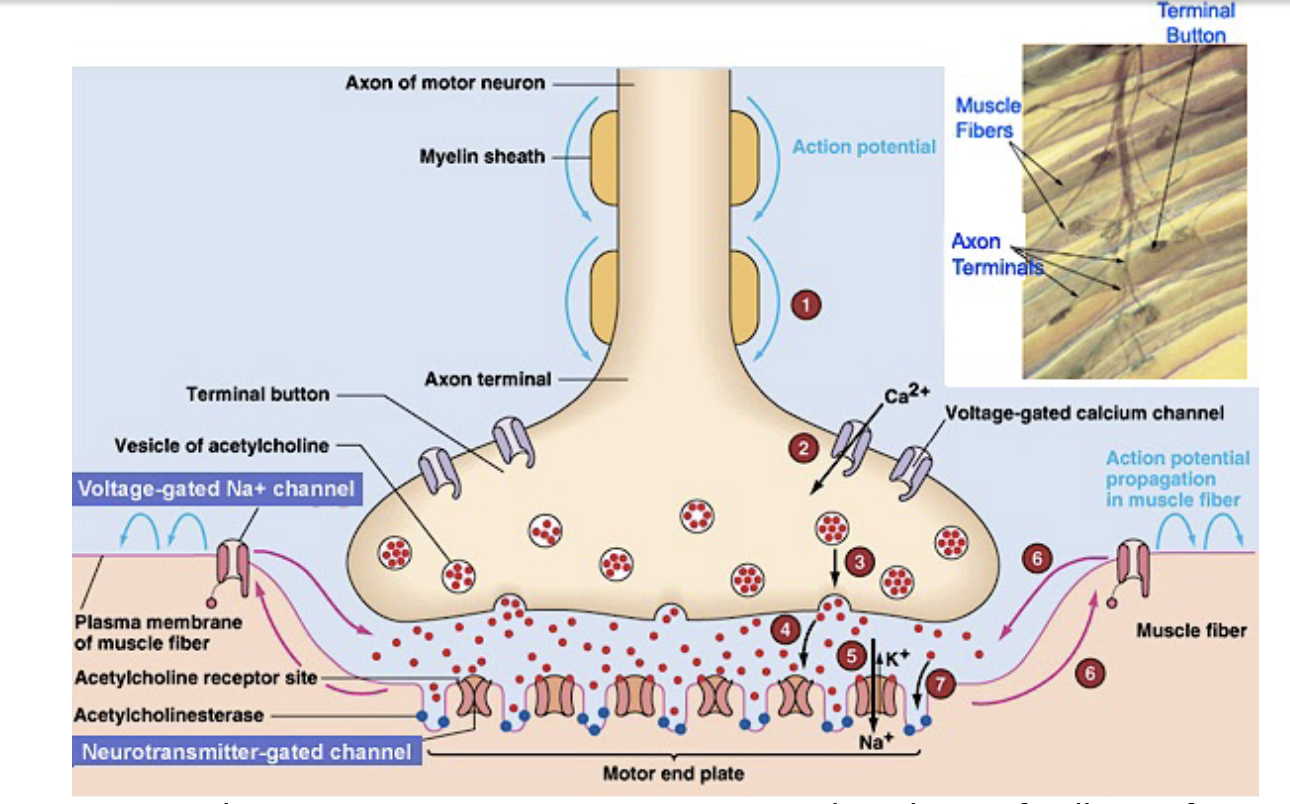
The NMJ
AP in presynaptic motor neuron causes the release of millions of acetylcholine molecules
depolarization of muscle cell causes postsynaptic AP due to opening of voltage-gated Na+ and K+ channels
Electrical Synapse
rare
direct flow of electrical current from one cell to the next through gap junctions

End Plate Potential (EPP)
end-plate potential (EPP) = localized electrical depolarization of a skeletal muscle fiber membrane at the neuromuscular junction triggered by the neurotransmitter acetylcholine
causes opening of voltage-gated Na+ channels
Ach- induced depolarization causes EPP
Once acetylcholine binds to AChR, have opening of Ach channels which causes muscle depolarization
Depolarization leads to opening of sufficient number of neighbouring voltage-gated Na+ channels in the muscle membrane so that reach threshold for an action potential
