3.2.2 all cells arise from other cells
 Call Kai
 Learn
 Practice Test
 Spaced Repetition
 Match
 Flashcards
 Knowt Play
1/20

There's no tags or description
Looks like no tags are added yet.
21 Terms
what’s mitosis used for
-growth
-replacement
-repair
-reproduction
what’s the cell cycle
the life of a cell from one division to the next
what’s the two phases of the cell cycle
interphase
mitosis
interphase
During interphase the DNA is unravelled, and replicated to double its genetic content. the organelles are replicated and its ATP content is increased
G1- cell grows back to original size, organelles replicated, cellular checks made to ensure DNA is in good enough condition to be replicated and if not the division may be terminated
S - cell continues to grow, DNA replicated, chromosomes duplicated
G2 - spindle proteins synthesised, energy stores increased, organelles copied e.g. mitochondria
mitosis
Prophase- chromosomes condense and become visible, centrioles move to opposite poles
Metaphase- chromosomes line up along equator, nuclear membrane disappears, centrioles create spindle fibres which join to the centromere of the chromosomes
Anaphase- spindle fibres contract and separate sister chromatids to opposite poles of the cell
Telophase- 2 new nuclear membranes form around each set of chromosomes, cytoplasm and cell membrane begin to split
cytokinesis
formation of a cleavage furrow, which pinches the cell in two, producing two genetically identical daughter cells
structure of a chromosome

how many chromosomes do sperm and egg cells have
both have 23 (combine to make 46 during fertilisation)
how to calculate the mitotic index
mitotic index= no. of cells with visible chromosomes
——————————————————-
total no. of cells observed
what’s the mitotic index
the proportion of cells in a tissue sample undergoing mitosis
what’s mitosis and the cell cycle controlled by
genes
what can cause the formation of a tumour
if there’s a mutation in the gene that controls the cell cycle, the cells can grow out of control. the cells remain in the cycle and continue to divide uncontrollably, forming a tumor
what can result in mutations
-carcinogenic agents (viruses, ionising radiation, chemicals)
definition of the tumor
a mass of identical cells formed by uncontrolled cell division
examples of genes that control gene mutations
oncogenes:
-encode proteins that stimulate the cell cycle by allowing cells to pass checkpoints
tumor suppressor genes:
-encode proteins that stop the cell cycle by blocking the checkpoints
two types of tumors
Benign:
-enclosed in a capsule and grow slowly in the centre
-don’t invade surrounding tissue
-not cancerous
-easily removed via surgery
Malignant:
-grow quickly
-spread to surrounding tissue
-cancerous
- more difficult to treat without removing the whole tissue
what’s a metastasis
a tumor that has spread to the blood/lymphatic system therefore can spread to other parts of the body, causing secondary tumours there
how to treat cancer
⭐️tumor cells divide much more frequently than normal cells, so the treatments are more likely to kill tumor cells
Chemotherapy:
prevents the DNA from replicating, inhibits metaphase by interfering with spindle formation
what steps are taken to reduce the impact of cancer treatment on normal body cells
repeated treatments are given with periods of non-treatment breaks in between
a chunk of tumor is often removed first with surgery
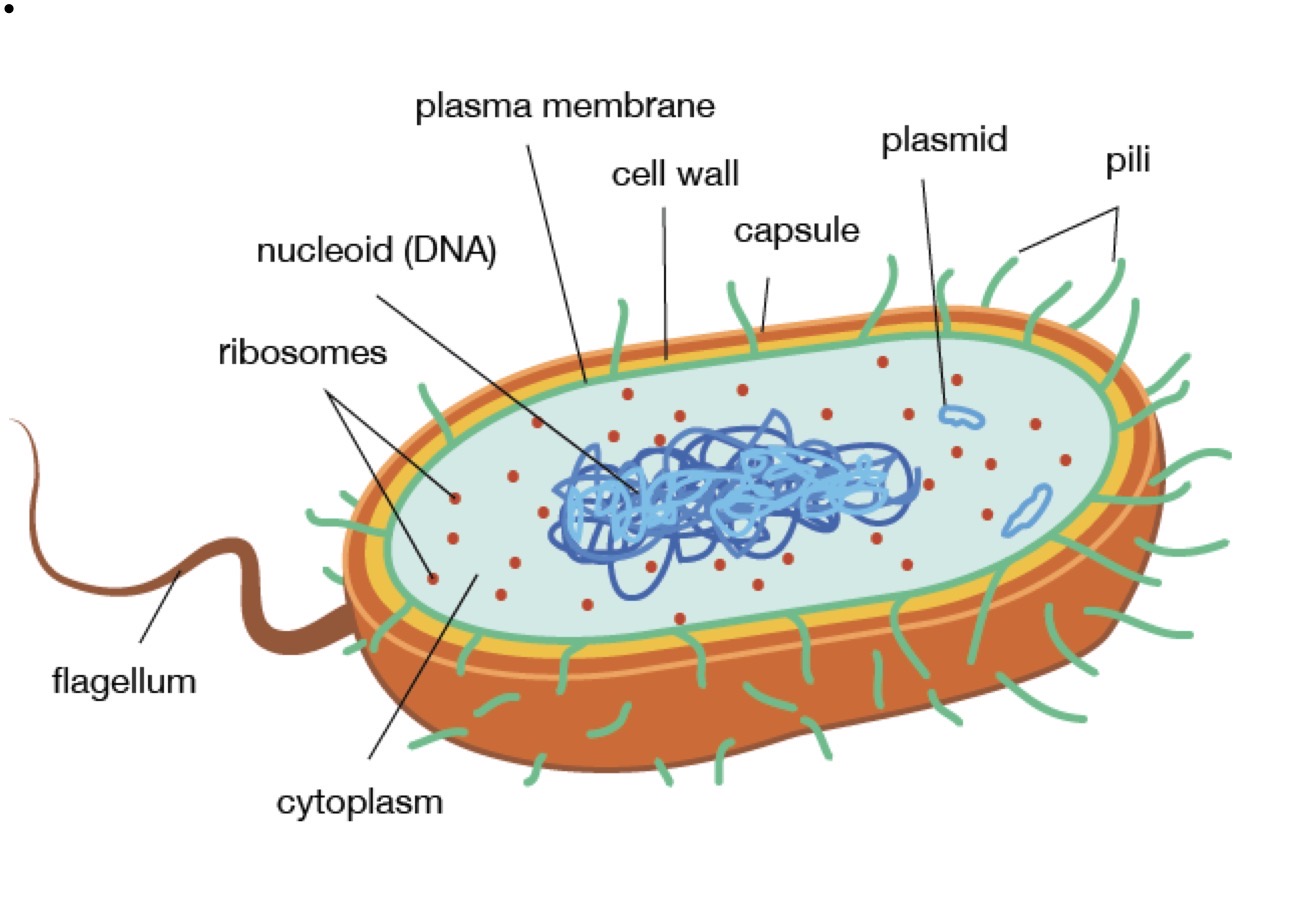
structure of a prokaryotic cell