Week 10: Traditional foods, food security, and Indigenous food sovereignty
 Call Kai
 Learn
 Practice Test
 Spaced Repetition
 Match
 Flashcards
 Knowt Play
1/16

There's no tags or description
Looks like no tags are added yet.
17 Terms
Traditional Foods
“Plants and animals harvested from the local environment” are central to health and culture for Indigenous peoples worldwide
What do you personally consider as “traditional foods” in your family? (are there certain foods that make up traditions in your family?
Traditional Food Systems
All food within a particular culture, available from local resources and is culturally accepted
Includes the sociopolitical meanings, acquisition/ processing techniques, use, composition and nutritional consequences for people using the food
TFS are health enhancing
TF are highly nutritious
Practicing TFS are physically and mentally demanding
Encourages social roles and responsibilities
Maintains/ promotes cultural and intergenerational knowledge
Encourages local, traditional economy
Locally acquired and offset market food cost
Supports care for land and water
Food Security
-access to healthy or traditional foods
-diverse diet
-proximity/ geographic access to foods
-know how to use/cook the foods available to you
“When all people, at all times, have physical and economic access to the food they need for a healthy, active life“
“Ensuring that everyone has physical, social, and economic access to sufficient, safe, and nutritious food that aligns with their food preferences and dietary requirements for a healthy lifestyle”
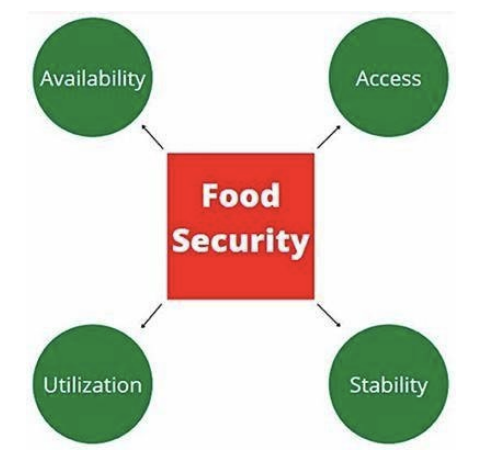
Four key factors of food security
Availability of adequate food supplies
Access to sufficient food
Stability of supplies
Cultural acceptability
*5th key factor: stability of all of these 4 factors
1. Availability of Adequate Food Supplies
There must be enough food to ensure that each person's daily energy and nutrient needs can be met
Minimum caloric intake (e.g., quantity)
Quality of food also important
2. Access to Sufficient Food
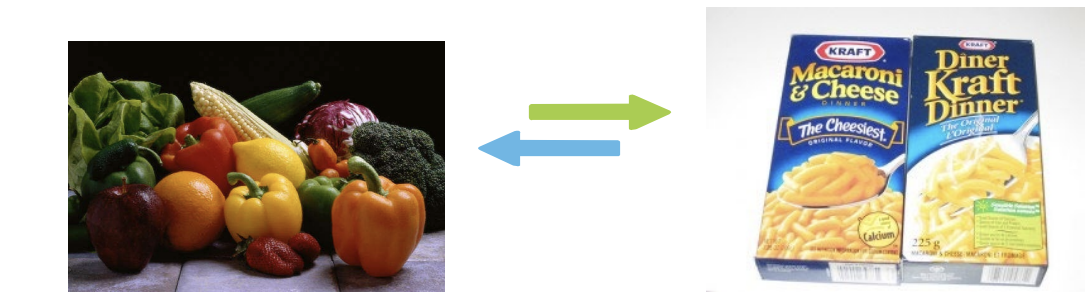
Even in a country/community with adequate food supplies, food security does not occur when some citizens cannot afford to buy enough food and/or grow or harvest their own
3. Stability of Supplies
Fluctuations in food availability or accessibility can leave people vulnerable
Droughts, floods, sharp price increases, seasonal unemployment, changes to weather patterns/climate change
living in specific isolated places means you are completely dependant of transport of imported food
4. Cultural Acceptability
Access to food must align with the cultural norms, preferences, and dietary practices of a specific population.
Food is not just about sustenance; it is deeply intertwined with cultural identity, traditions, and social practices.
How do processes of environmental dispossession uniquely impact Indigenous food security?
Availability of food supplies
transportation chains
displacement
plantations
Access to sufficient food
healthy, nutritious food
Stabilities of supplies
natural variations
climate change
reservation limitations
Cultural acceptability
traditional food
environmental dispossession
governmental policies
Nutrition Transition
The shift in dietary consumption and energy expenditure that coincides with economic, environmental, demographic, and epidemiological (disease) changes
Change from traditional diets towards foods higher in fats, meats and sugar
Rise in sedentary lifestyles
Dietary Change
Access to TFS are changing over time
These changes are neither planned nor self-initiated
These relate to consequences of other events in the environment (physical, social, political, cultural, historical) and include:
Health education programs/ interventions
Reduction in food supplies
How does environmental change fit in here?
Food Insecurity
The inability to acquire or consume an adequate diet quality or sufficient quantity of food in socially acceptable ways, or the uncertainty that one will be able to so
Poverty is the leading factor underlying food insecurity
Associated with various chronic conditions, mental health problems, and other diseases and infections, including increased hospitalization & premature mortality
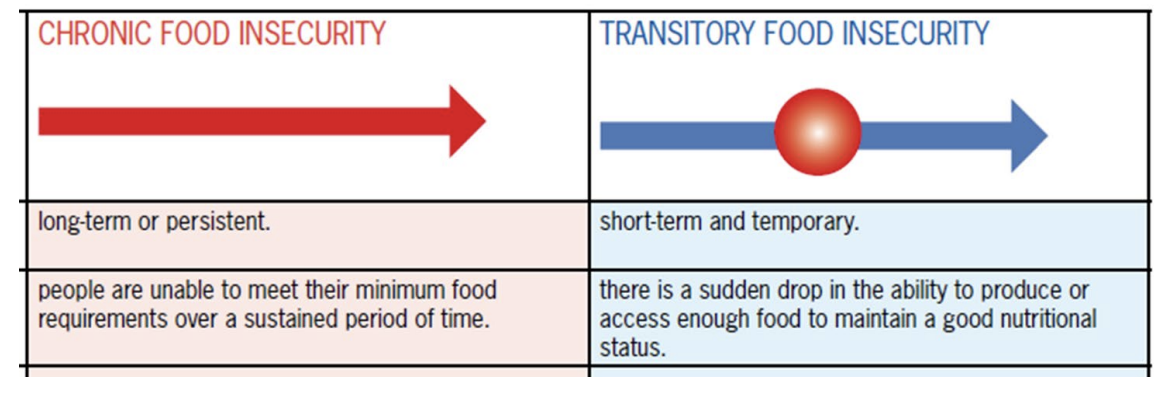
chronic food insecurity vs transitory food insecurity
Food-insecure households in Canada
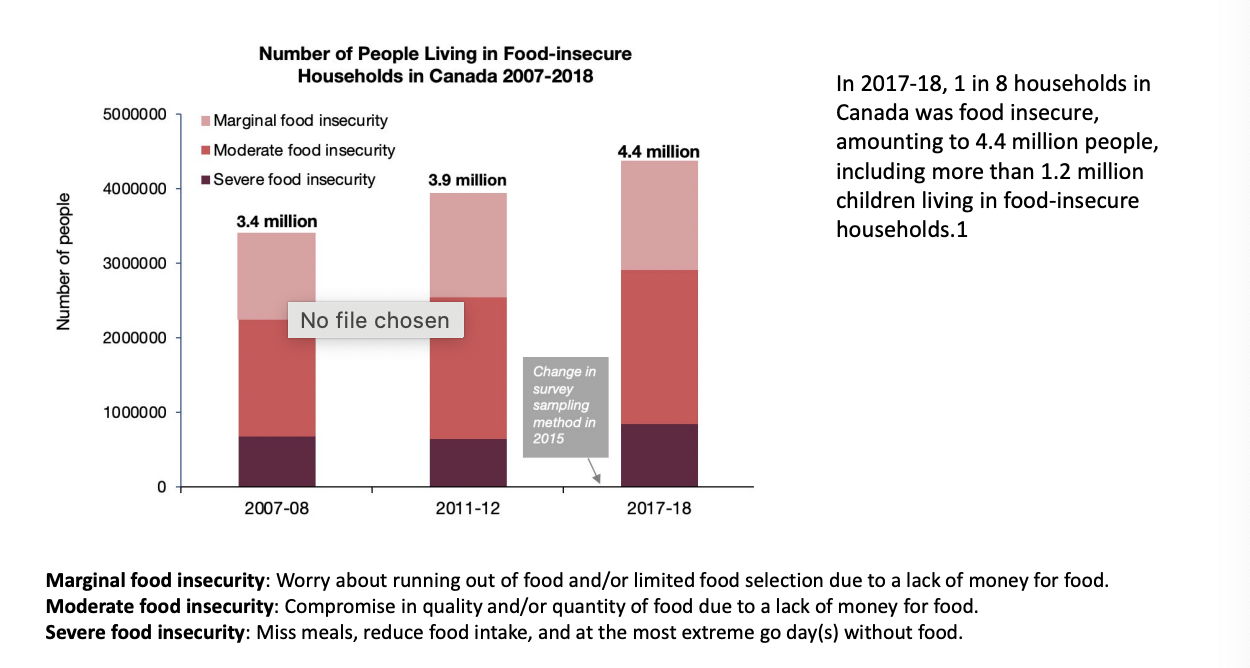
In 2017-18, 1 in 8 households in Canada was food insecure, amounting to 4.4 million people, including more than 1.2 million children living in food-insecure households
Food insecurity and the urban context
Addressing Indigenous food insecurity will require both economic and cultural solutions
Income is a great challenge
Place / Geography also figures heavily
Lacking access to cultural knowledge and Land
Indigenous Food Sovereignty
The right and ability of Indigenous Peoples and communities to know, consume and share traditional foods in a generative way that draws from and cares for local knowledge, resources, relationships, and Lands
Remembering, sharing and practicing cultural knowledge about foods and medicines