Computer all for 1 mqa second term.
 Call Kai
 Learn
 Practice Test
 Spaced Repetition
 Match
 Flashcards
 Knowt Play
1/57

There's no tags or description
Looks like no tags are added yet.
58 Terms
Personal protective equipment
Proper safety equipment worn to maintain safety and protect both components from damage and individuals from harm depending upon the hazards involved (e.g., safety glasses, gloves, hearing protection).
Eye protection
Safety glasses or goggles that help protect eyes from harmful materials such as particles, sparks, or chemicals.
Hand protection
Gloves typically made of rubber, leather, or anti-static materials that protect hands from heat, cuts (sharp edges), or electrical shock.
Hearing protection
Earplugs or earmuffs meant to reduce noise levels that can hurt hearing.
Respiratory protection
Masks or respirators that filter dust, fumes, or harmful gases from the air.
Footwear
Safety shoes or boots that are either slip-resistant or have steel toes to protect feet from heavy or sharp items, heavy tools, falling robot parts, or slippery floors.
Body protection
Sturdy clothing or lab coats made of heat-resistant or nonconductive material to protect against burns, cuts, chemical exposure, and clothing binding to equipment.
face shields
A see-through plastic guard that protects the whole face, serving as an added layer of protection during cutting, grinding, or machining operations.
5S method
An abbreviation of Japanese origin, initially developed as a workplace organization method in manufacturing, engineering, and robotics to attain accuracy, efficiency, safety, and productivity in daily task execution
Safety symbols
Visual representations using a combination of illustrations and colors with specific meanings to identify hazards (e.g., Cross/First Aid, Danger Keep Out, Danger Do Not Enter, Warning, Caution, Crush Zone).
ventilation
Having a properly ventilated space for soldering to avoid inhaling harmful fumes produced when joining delicate connections in robotic circuits.
powering down before adjustments
Turning off a device's power prior to making any connections or adjustments to avoid short circuits, prevent electrical shock, and avoid damaging components.
Electrostatic discharge protection
(ESD) Properly handling electronic components to avoid static electricity discharge that can damage sensitive microcontrollers and sensors.
Battery and power supply safety
Taking extra precautions when handling batteries and power supplies commonly used in robotics because they can overheat or explode.
Insulated tools
Using insulated tools when working with live circuits to reduce the risk of electrical shock
Double checking connections
Making a habit of double-checking wiring connections before powering up a circuit to prevent damaging components in robotic systems.
Voltage
V): The difference in electric potential between any two points in a circuit; referred to as the "Electrical Push" that pushes electric charges through a circuit.
Current
(I): The flow of electric charges (electrons) through a circuit
Resistance
(R): The opposition to the flow of electric current, controlling or slowing down the number of electrons that get through a circuit.
Ohm’s law
The principle describing the relationship between voltage, current, and resistance in an electrical circuit, stating that the amount of current (I) is directly proportional to voltage (V) and inversely proportional to resistance (R)
Autonomous systems
Systems powered by small processors (microcontrollers) that sense what is happening, decide what to do, and act on their own (e.g., automatic doors, automated traffic lights)
Microcontroller
Compact integrated circuits that serve as the "brain" of a device; they receive signals from input sensors, process information, and send output signals to components like motors or lights.
Arduino UNO
An open-source electronic platform containing a small board with all necessary components to read inputs and control outputs; popular for beginners and experts due to its flexibility and easy programming environment
Microcontroller
(ATmega328P): The brain of the Arduino board; executes uploaded code from a computer and controls other components accordingly
digital input/output pins
(0–13): Pins that can be configured as either input or output pins for digital signals
Analog input pins
(A0–A5): Pins that read analog signals from sensors (e.g., light sensors, temperature sensors)
Power pins
Pins containing 3.3V, 5V, GND (Ground), and Vin to provide or receive power from devices or other microcontrollers.
USB port
Used to upload code from a computer to the board and power the board.
Power jack
Allows powering the Arduino board with an external power adapter or battery
Reset button
Restarts the microcontroller and restarts the uploaded program from the beginning during boot-up without needing to re-upload the code.
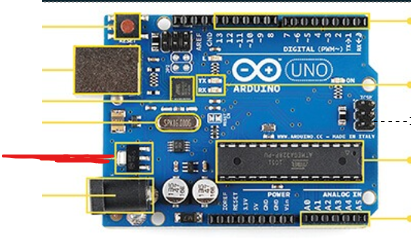
Voltage regulator
: Regulates incoming voltage so the board can function properly without damage
Crystal oscillator
Keeps track of timing (integer for timing) for scheduled events, such as blinking an LED at a certain interval.
TX/RX leds
Transmit (TX) and Receive (RX) LEDs that display data being sent or received through the USB cord; highly useful for debugging communication.
ICSP header
Allows direct programming of the microcontroller or communication with other devices using Serial Peripheral Interface (SPI).
sort, set in order, shine, standardize, sustain
give me fiveS in english ver
Seiri, seiton, seiso, seiketsu. shitsuke
give me fiveS in japanese ver
Sort
Separate essential items from non-essential clutter;
english ver
seiri
Separate essential items from non-essential clutter;
jap ver
Set in order
Arrange all necessary tools, parts, and hardware systematically in designated locations for rapid identification and retrieval.
eng ver
Seiton
Arrange all necessary tools, parts, and hardware systematically in designated locations for rapid identification and retrieval.
jap ver
shine
Clean and inspect tools, machinery, and workstations regularly to maintain safe operating conditions.
eng ver
seiso
Clean and inspect tools, machinery, and workstations regularly to maintain safe operating conditions.
japan ver
standardize
Formulate clear routines, checklists, and standardized procedures to maintain sorting, orderliness, and cleanliness across the workspace.
eng ver
seiketsu
Formulate clear routines, checklists, and standardized procedures to maintain sorting, orderliness, and cleanliness across the workspace.
jap ver
sustain
Build self-discipline and daily operational habits to ensure established workplace standards are observed continuously.
eng ver
shitsuke
Build self-discipline and daily operational habits to ensure established workplace standards are observed continuously.
japan ver
Georg simon ohm
who is that person that said “current is directly proportional to voltage and inversely proportional to resistance
reset switch
what is this one

USB connector
whayt
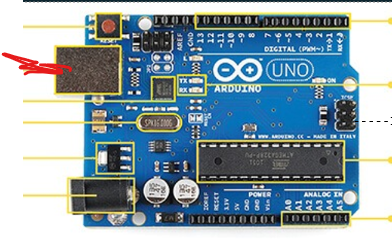
USB interface chip
what

Crystal oscillator

voltage regulator
power port

digital pins

TX RX leds

ICSP header

Microcontroller

analog input pins
