Exam 3 - Invert Zoology
 Call Kai
 Learn
Learn Practice Test
 Spaced Repetition
 Match
Match Flashcards
 Knowt Play
1/104

Earn XP
Description and Tags
Chapters 13 -
Name | Mastery | Learn | Test | Matching | Spaced | Call with Kai | Chat |
|---|
No analytics yet
Send a link to your students to track their progress
105 Terms
Lophotrochozoa
shells
spicules
calcareous
chaetae
Phylum Mollusca
Synapomorphies
reduced coelom
open circulatory system - hemoceal
mantle - epidermal layer
calcareous sclerites/shell
muscular foot - locomotion
radula - specialized feeding structure
heart - single ventricle
ctenidia - function as “gills”

Mantle
Epidermal layer in mollusca
Radula
Specialized feeding structure in mollusca
Ctenidia
Function as “gills” for mollusca
Phylum Mollusca - Class Caudofoveata
Aplacophorans - imbricating scales
loss of foot

Phylum Mollusca - Class Solenogastres
Aplacophorans - copulatory spicules
loss of ctenidia

Phylum Mollusca - Class Gastropoda
Snails, slugs, limpets - torsion, operculum
Only mollusks found in terrestrial environments

Torsion
Twisting body mass 180 degrees in mollusca
Operculum
Trap-door, hard lid-like structure in mollusca
Phylum Mollusca - Class Bivalvia
Clams - 2 shell halves, loss of radula

Phylum Mollusca - Class Scaphopoda
Tusk shells - loss of heart and ctenidia

Phylum Mollusca - Class Cephalopoda
Nautilus, Squid, Octopus - closed circulatory system, modified foot
Chambered shell to fill with gases to help float - Nautilus

Phylum Mollusca - Body Plan
Microscopic to 13 meters long
Three regions:
Head
Foot
Visceral mass (surrounded by mantle)
Body Wall
cuticle
epidermis
muscles - three layers
Shell (black)
aragonite or calcite
outer prismatic layer - shiny
inner laminar layer (Nacre)

Phylum Mollusca - Class Gastropoda Body Plan
Spiraled shell
Shell loss
Torsion
Spire

Spire
Last whirl of the shell in gastropods
Phylum Mollusca - Class Caudofaveata Locomotion
Infaunal burrowers
Peristaltic movements
Phylum Mollusca - Class Solengastres Locomotion
symbiotic or cnidarians
Phylum Mollusca - Class Gastropoda Locomotion
creeping sole
swimming
distinct foot
contraction waves
Phylum Mollusca - Class Bivalvia Locomotion
distinct foot
infaunal burrowers
epifaunal
swimming
Phylum Mollusca - Class Cephalopoda Locomotion
Modified foot
Crawling
Swimming (jet propulsion)
contract muscles, pull water into mantle activity
relax muscles, expels water through siphon
Phylum Mollusca - Feeding
Radula - can extend
browsing and scraping
herbivory
carnivorous grazing
predation
Phylum Mollusca - Class Gastropoda Feeding
Primarily eating microalgae
Carnivorous
borers
buccal mass
venom injecting teeth on proboscis
parasitism
kleptocnidae
symbiosis
Phylum Mollusca - Class Polyplacophora Feeding
Herbivorous grazers
Small invertebrates
Phylum Mollusca - Class Monoplacophora
Limpet-like - deep sea
Phylum Mollusca - Class Polyplacophora
Chitons - 8 shell valves
Phylum Mollusca - Class Monoplacophora Feeding
Deposit - feeders
Phylum Mollusca - Class Scaphopoda Feeding
Sticky terminal bulb and tentacles
Phylum Mollusca - Class Cephalopoda Feeding
Predatory carnivores
Neurotoxin
Phylum Mollusca - Class Bivalvia Feeding
No radula
Suspension feeding
ctenidia - gills to filter
siphons
Deposit feeding
Sessile predators
Symbiosis
Phylum Mollusca - Digestion
Complete gut
extra cellular digestion in stomach (most common)
or
intracellular digestion in digestive gland
Phylum Mollusca - Circulation/Gas exchange
Open circulatory system (hemocoel)
hemocyanin - copper
secondarily closed in cephalopods
Gas exchange
ctenidia or gills
body surface
pneumostome (lung) - only in terrestrial mollusks
Phylum Mollusca - Excretion/Osmoregulation
Paired tubular nephridia
aquatic turns waste into ammonia
marine - osmoconformers
freshwater to waste into hypoosmotic urine
Terrestrial turns waste into uric acid
Phylum Mollusca - Nervous System
Anterior ganglia
Paired ventral nerve cords
pedal
visceral
Cephalopoda - extreme cephalization
Phylum Mollusca - Sense Organs
Chemoreceptors
osphradia - on the gills
rhinophores - only in nudibranchs
Photoreceptors
eyes
mantle eyes
Olfactory organs
Statocysts - helps with knowing what is up and down
Tactile receptors
Phylum Mollusca - Cephalopoda
Countershading - helps camoflauge
Chromatophores - pigment containing cells controlled with muscle contractions
Bioluminescent
Ink - melanin and mucous, for defense and predation
Phylum Mollusca - Reproduction
Gonochoristic - separate sexes
Hermaphroditic - both male and female reproductive organs
Precopulatory behaviors - trying to “show off”
terrestrial gastropods
cephalopods
Phylum Mollusca - Development
Indirect
trocophore larva
veliger larva (gasropoda/bivalvia) - distinct larval stages
glochidium larva (FW parasitic)
Mixed
brood trochophore
release veliger
Direct
brood between gills
cephalopods - lecithotrophic
Phylum Nemertea
Ribbon Worms
few mm - several meters long
benthic marine organisms
coelomate (functionally acoelomate)
eversible proboscis

Phylum Nemertea - Body Plan
Body wall
epidermis: tacticle sensory cells, mucous gland cells, replacement cells
dermis
circular and longitidinal muscles
mesenchyme
Phylum Nemertea - Support and Locomotion
Muscles
Hydrostatic mesenchyme
Cilia - small worms
Peristaltic waves - bigger worms
Undulatory swimming
Phylum Nemertea - Feeding and Digestion
Active predators
proboscis
Scavengers
Ectoparasites
Complete gut
Phylum Nemertea - Circulation and Gas Exchange
Closed Circulatory System
hemoglobin
Diffusion
Phylum Nemertea - Excretion and Osmoregulation
Protonephridia for both
Phylum Nemertea - Nervous System and Sense Organs
Cerebral ganglion
Pair of longitudinal nerve cords
Tactile
Eyes
Chemosensory - very advanced
Statocysts
Photoreceptors - eye like structures to perceive light
Phylum Nemertea - Reproduction and Development
Regeneration/Fragmentation
Sexual
External fertilization
Direct development - most common
Indirect development
pilidium larva
Phylum Nemertea - Importance
Food web balance
Venom
Regeneration
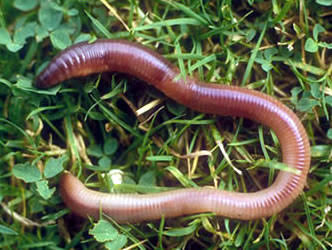
Phylum Annelida
Segmented
Serial homology - metamerism, repeated structures in the body
0.5 mm to 3 m long
marine, brackish, freshwater, terrestrial
Phylum Annelida - Synapomorphies
Metamerism - serial homology
Chaetae - made of chitin
Phylum Annelida - Four Regions
Four regions
prostomium - head
peristomium - region around the mouth
segments - body
pygidium - posterior end
Cirri
Phylum Annelida - Segmented Trunk
Chaetae
Parapodia
notopodium
neuropodium
Phylum Annelida - Body Structure
Cuticle - outer layer
Epidermis
Peritoneum - lining the coelom
Muscles
Phylum Annelida - Support and Locomotion
Hydrostatic skeleton
Crawling/Swimming
Polyonidae - scaleworms
Burrowing
Tube-dwellers
Bioturbation - introducing air into the sediment
Phylum Annelida - Raptorial Feeding
Hunting predators
small invertebrates
dead organic material
other worms
Ambush predators
Phylum Annelida - Deposit Feeding
Unselective
Selective
Phylum Annelida - Suspension Feeding
Tube dwellers
Permanent burrows
Radioles - structure that captures food particles
Phylum Annelida - Symbioses
Parasitism
Phylum Annelida - Digestion
Complete gut
Foregut
poison, esophageal, and mucus glands
Earthworms: crop and calciferous glands
Midgut
endodermally derived
secretory cells
Hindgut
excretion
Phylum Annelida - Circulation/Gas exchange
Closed circulatory system
blood movement via muscles
pumping organs
hemoglobin
Phylum Annelida - Excretion/Osmoregulation
Metanephridia
nephrostomes
ammonia
Osmoregulation
marine - osmoconformers
estuarine - osmoregulators
terrestrial - osmoregulators/conformers
freshwater - osmoregulators
Phylum Annelida - Nervous System
Central nervous system
Dorsal Cerebral Ganglion: forebrain, midbrain, hindbrain
Paired circumcenteric connectives
Ventral longitudinal nerve cord(s)
Phylum Annelida - Sense Organs
Tactile receptors
Photoreceptors
Chemoreceptors
nuchal organs - pit with cilia inside
Statocysts
Phylum Annelida - Asexual Reproduction
Regeneration
Neuroendocrine secretions
Epitoky - clonal reproduction
Phylum Annelida - Sexual Reproduction
Gonochoristic
External fertilization - indirect development
Internal fertilization - mixed or direct development
Epitoky - epitokes release gametes into environment
Hermaphroditic
clitellates - clitellum
Phylum Annelida - Development
Trochophore larva
Direct development - little metamorphosis
Clitellates - cocoon
Phylum Annelida - Importance
Bioturbation - introducing oxygen into the sediment
Important food source
Predators
Lophophorates
Lophophore
Prosome, Mesosome, Metasome
Sessile
U-shaped gut
Marine (few freshwater)

Phylum Phoronida - Body Plan
Cylindrical tube
Intertidal - 400m
1-25 cm
Trimeric coelomates
Hydrostatic qualities

Phylum Phoronida - Feeding/Digestion
Hollow tentacles
Ciliary-mucus suspension feeders
U-shaped gut
Intracellular digestion
Phylum Phoronida - Circulation and Excretion
Extensive closed circulatory system
close association with stomach
Gas exchange in tentacles
Two metanephridia
nephrostomes
gametes
Phylum Phoronida - Nervous System
Lacks cerebral ganglion
Sensory neurons
Phylum Phoronida - Reproduction
Regeneration
Asexual
transverse fission
budding
Sexual
gonochoristic/hermaphroditic
internal fertilization
broadcast spawning
Phylum Bryozoa - Body plan
Colonies
Cystid
Polypide
autozooid
heterozooid
Hydrostatic skeleton
fluid-filled coelom
muscles
Zooid interconnections
pores
funiculus

Phylum Bryozoa - Feeding/Digestion
Lophophore
Suspension feeders
Intra and extracellular digestion
Phylum Bryozoa - Circulation/Excretion
No structural circulatory system
diffusion
coelom, pores, funiculus
Gas exchange polypide
Brown bodies
Phylum Bryozoa - Nervous System
Cerebral ganglion and circumoral nerve ring
Tactile receptors
tentacles
avicularia
Larvae
apical organ
pyriform organ
Geotaxis
Phototaxis
Phylum Bryozoa - Asexual Reproduction
Regeneration
Budding
Statoblasts
Phylum Bryozoa - Development
Indirect development
Radial holoblastic cleavage
Free-swimming larvae
lecithotrophic or planktotrophic
ancestrula
Phylum Brachiopoda - Body Plan
Dorsoventrally oriented valves
All depths
204 cm
Pedicle - foot
Shells, hard structures
Mantle

Phylum Brachiopoda - Feeding and Digestion
Lophophore
tentacle bearing arms
always protected
Suspension feeders, ciliary current
Intracellular digestion
Phylum Brachiopoda - Circulation/Excretion
Open circulatory system
contractile heart
canals (no vessels)
Gas exchange in tentacles and mantle
Two metanephridia
nephrostomes
gametes
Phylum Brachiopoda - Nervous System
Dorsal and ventral cerebral ganglia
circumcentric nerve ring
Sensory organs
tactile receptors
chemoreceptors
statocysts
eyes in larvae
Phylum Brachiopoda - Reproduction and Development
Sexual
gonochoristic
external fertilization
broadcast spawning
Holoblastic radial cleavage
Indirect or mixed development
Lecithotrophic
Lophophorates - Importance
Food
Bioindicators
Evodevo
Reef stabilization
Habitat
Sedimentary rock dating
Link pelagic primary production to benthic ecosystem
Phylum Phoronida - Development
Sprial cleavage
Actinotroch larvae
Phylum Bryozoa - Sexual Reproduction
Hermaphroditic
Internal fertilization
Spawning or brooding of embryos
Rhoupazoa
Duo-gland organs
Acoelomate
No anus
Phylum Platyhelminthes
Unsegmented
Triploblastic
Acoelomate
Bilateral symmetry
Incomplete gut
Cephalization
Free-living
Parasitic
trematodes (flukes)
monogeneans (flukes)
cestodeans (tapeworms)
Internal plumbing
Unilateral movement
Higher energy demands
Neoblasts
Phylum Platyhelminthes - Body Plan
Free-living
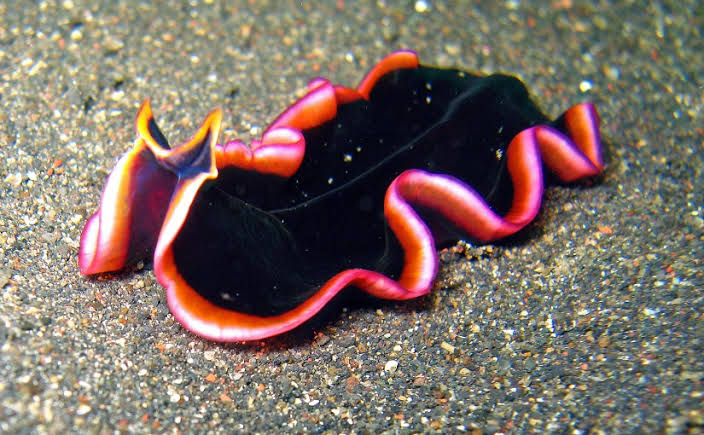
dorsoventrally flattened
head with ventral mouth
Parasitic
flukes (oval/leaf shaped with hooks/suckers)
tapeworms (ribbon like) - scolex, neck, proglottids
Phylum Platyhelminthes - Body wall
Free living
epidermis with gland cells and nerve endings
rhabdoids
Flukes and Tapeworms
tegument
microtriches
Phylum Platyhelminthes - Support/Locomotion
Hydrostatic mesenchyme
Free living
cilia powered gliding
Flukes
adhesive organs (hooks)
Tapeworms
scolex
Phylum Platyhelminthes - Free-living Feeding & Digestion
carnivorous predators or scavengers
chemoreception
Incomplete gut - mouth, pharynx, intestine, initial digestion extracellular
Phylum Platyhelminthes - Flukes and Tapeworms Feeding & Digestion
Eat host tissue
Flukes
mouths
Tapeworms
across tegument
alter host behavior
Phylum Platyhelminthes - Circulation/Osmoregulation
No circulatory system
Excretion
protonephridia
Phylum Platyhelminthes - Free-living Nervous System
Net like
Ladder like
CNS
Receptor types
tactile
chemo
statocysts
photo - negatively phototactic
Phylum Platyhelminthes - Flukes and Tapeworms Nervous System
Ladder-like
Tactile receptors
Phylum Platyhelminthes - Asexual reproduction
Free living
transverse fission
regeneration
Flukes
intermediate hosts
Phylum Platyhelminthes - Free-living sexual reproduction
Hermaphroditic - separate gonopores
Zygotes retained by parent or laid in egg masses
oviparous/ovoviviparous
direct development
spiral cleavage
Phylum Platyhelminthes - Fluke Sexual Reproduction
Hermaphroditic
High fecundity
Single host
Holoblastic cleavage
Phylum Platyhelminthes - Tapeworm Sexual Reproduction
Hermaphroditic
High fecundity
One or more intermediate host