L21: Herbivore diet composition
 Call Kai
 Learn
 Practice Test
 Spaced Repetition
 Match
 Flashcards
 Knowt Play
1/18

There's no tags or description
Looks like no tags are added yet.
19 Terms
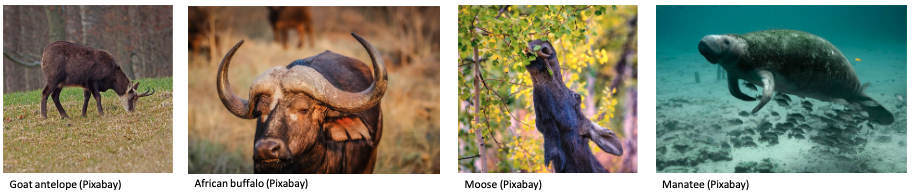
What do grazers and browsers eat
Eat leaves, stems, vegetative parts of plants
Includes algae (marine mammals), and lichen
Does not include fruit, seeds, nectar, pollen, fungi
Seasonal changes of plant chemical composition in deer

How do herbivore deers eat
forage and brows composition
CP in deer
CP is seasonal
< 7% (DMB) from late winter to early spring
~ 15-20% (DMB) in the summer
CP quantity fluctuates with cell wall content
Fibre in deer
Cell wall content – hemicellulose, cellulose, lignin
> 50% (DMB) in late winter
~ 30% (DMB) in mid-summer
** Significant increase from summer into winter season
NFE in deer
Soluble carbohydrates (cell content → NFE)
• ~ 40% (DMB) year-round
Ash in deer
~ 5% (DMB) year-round
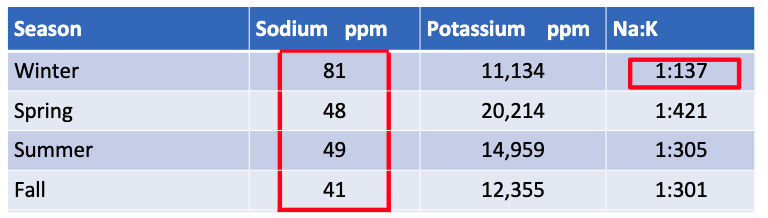
Na and K in white-tailed deer diet
You want the Na:K ratio to be 1:4
Most herbivores need 0.15% Na (DMB) in diet, so 1500 ppm
EE in deer
< 5% (DMB) year-round
Herbivores accessibility
Changes with season
As snow depth increases
Smaller browsers may gain access to browse that is normally too high to reach like leaves, twigs, and other high-growing vegetation
Larger herbivores may be too heavy to walk on top of the snow, and so they sink. Which makes accessing browse more difficult
Some herbivores may need access to the forage below the snow
Walking through snow and cratering in snow→ Increases energy expenditure

Herbivores minerals
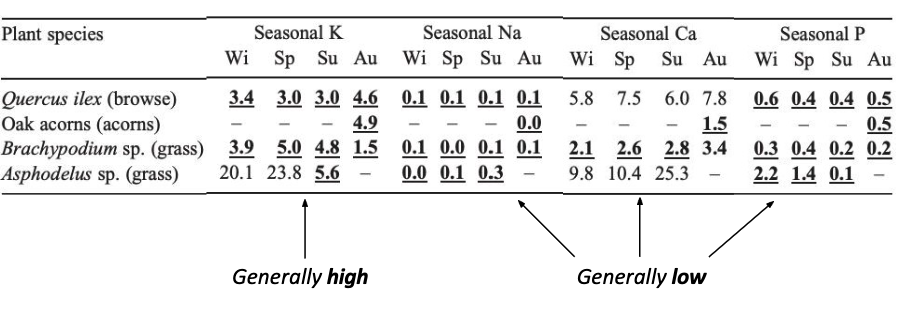
Na, K, (Na:K), Ca, P, (Ca:P)
Na, Ca, P may be low in many plants; ** if P is high, could be due to phytate
K typically very high in most plants
Na:K and Ca:P may be unbalanced
Ca and P in browse and forage
You want the Ca:P ratio to be 2:1
Phytate
Principle P storage form in many plants
Forms complexes with metals or proteins
↓ bioavailability in the GIT
Considered an anti-nutrient
Herbivores ruminants mineral content
Alternative importance for salt licks
Counterbalance of ruminal acidosis
Healthy rumen pH is 5.5-7.0
If diet is really high in starch, pH can drop as low as 4.0

Herbivore vs. carnivore digestive efficiencies
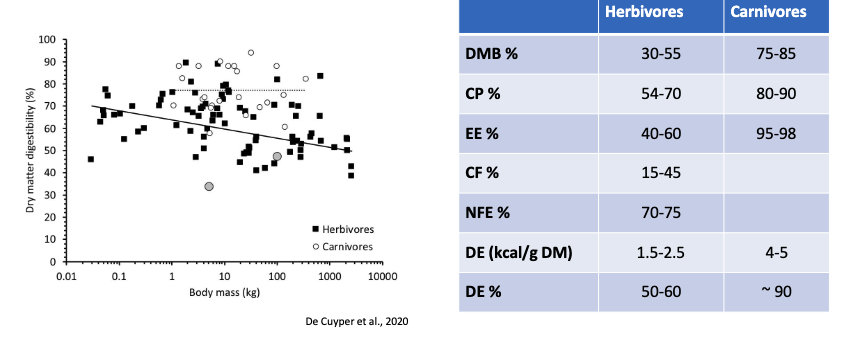
Herbivore vs carnivore 24-hr activity budget

Herbivores granivores, what do they eat
Dry-fruit eating frugivores
Eat cereal grains, nuts, seeds
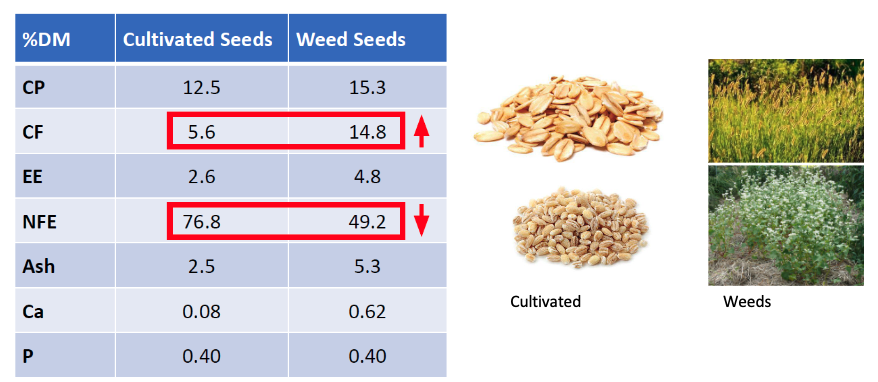
Nutrients in parts of seeds
• Germ is high in EE
• Endosperm is high in NFE
• Husk is high in CF

How do granivores deal with the husk in weed seeds
Remove the husk → takes more time, but ↑ digestibility
Eat the husk → less time to forage, but ↓ digestibility
Phosphorus content in seeds
Some P stored as phytate in seeds
Mostly concentrated in the husk
Reduces digestibility of other nutrients (CHO, CP, EE)
Plant phytases turn phytate into available P when seeds sprout
What do mycophagists eat
fungi eating animals